
1
What is the derivative of 4?
MATHEMATICS · GRADES 10-12
This document was made by AI and there may be mistakes. If a question or answer looks wrong, use the Flag a mistake button to let Brett know so he can fix it.
This is how you know a flat, unchanging quantity has no rate of change at all. A fixed monthly fee never goes up or down no matter how much time passes, so its rate of change is zero. It sounds obvious, but it is the rule that lets you ignore the constant parts of a problem and focus on the parts that actually change.
Constant rule: the derivative of a constant is 0.
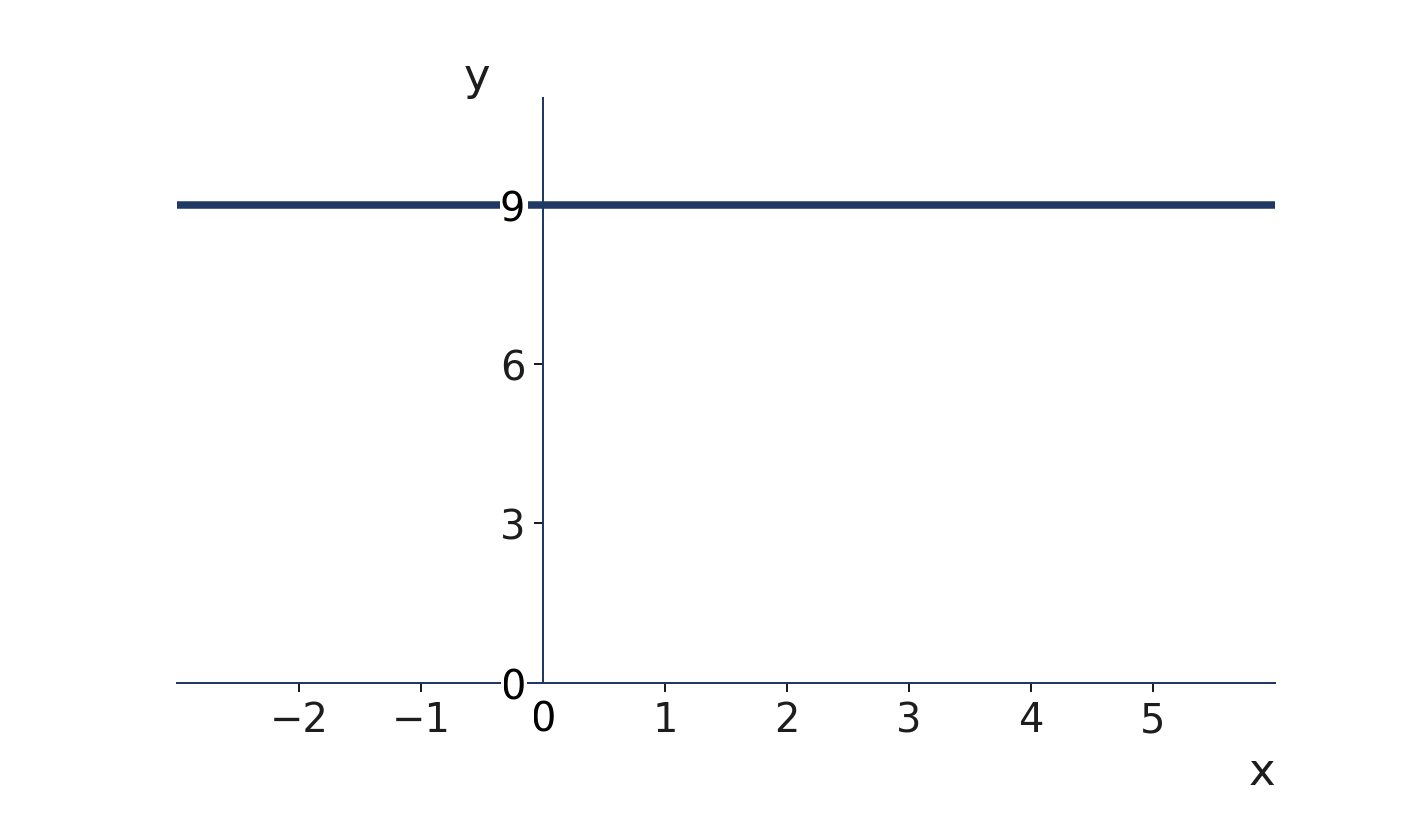
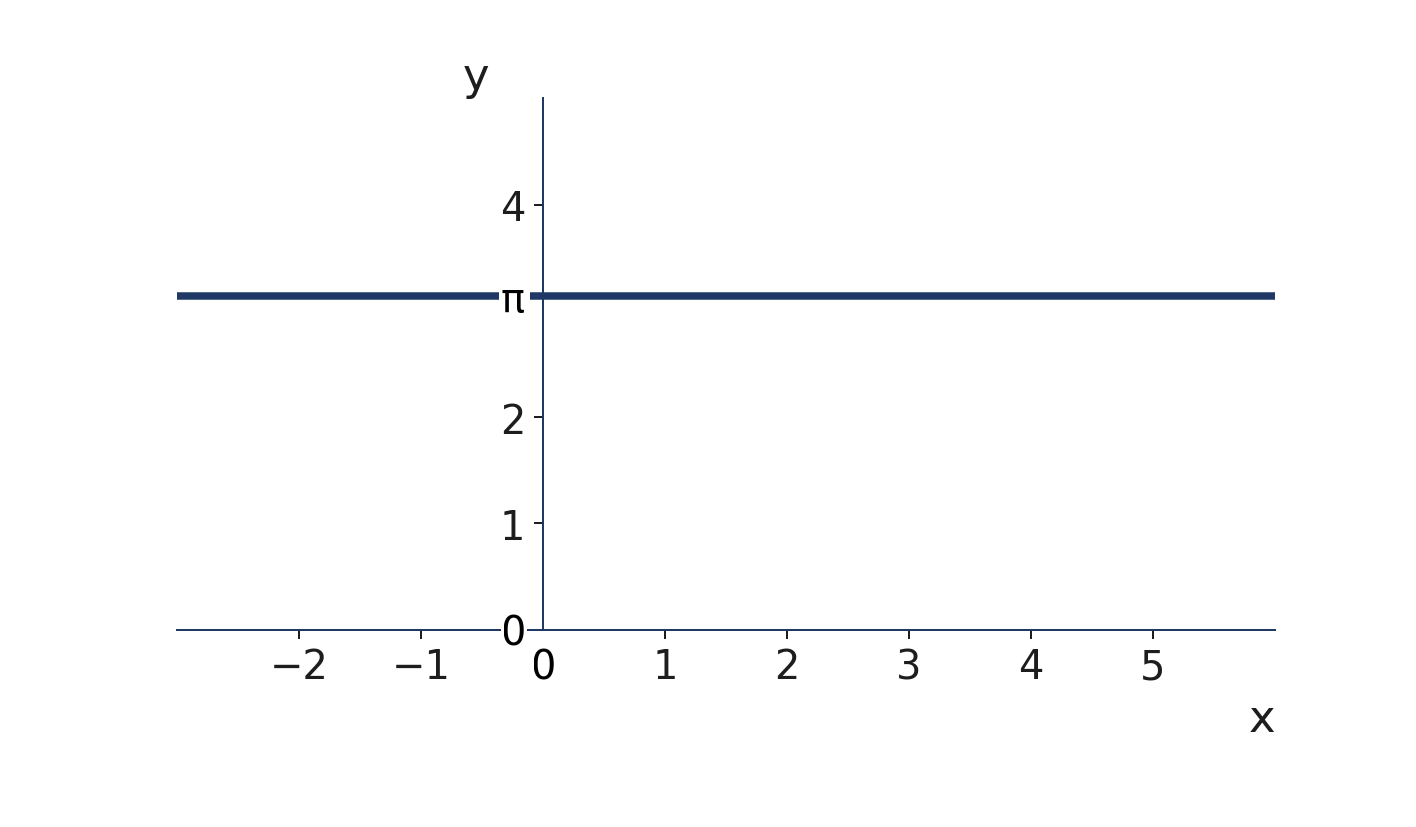
A constant never changes, so its rate of change is zero. Its graph is a horizontal line, and a horizontal line has slope 0.
Differentiate
Solution
9 is a constant, so it never changes.
A quantity that never changes has no rate of change, so its derivative is 0.
So f'(x) = 0
Differentiate
Solution
Pi is a constant number, about 3.14.
A constant never changes, so its rate of change is 0.
So its derivative is 0
What is the derivative of 4?
What is the derivative of 2³?
What is the derivative of 0?
If f(x) = 6, what is f'(x)?
Why is the derivative of a constant 0?
What is the derivative of 1/2?
In x² + 8, what is the derivative of the constant part, 8?
What is the derivative of the square root of 2?
A road is perfectly flat. What is its slope?
A parking fee is a flat 12 dollars, the same no matter how long you stay. What is the rate of change of the fee with respect to time?
Your score: 0 / 10
1. 0
2. 0
3. 0
4. 0
5. A constant does not change, so its rate of change is 0
6. 0
7. 0
8. 0
9. 0
10. 0