1
Apples cost $3 per kilogram, with no starting fee. Is the cost direct or partial variation?
MATHEMATICS · GRADES 7-9
This document was made by AI and there may be mistakes. If a question or answer looks wrong, use the Flag a mistake button to let Brett know so he can fix it.
This is how you tell a pure per-item cost from a cost with a starting fee. Apples priced by the kilogram cost nothing if you buy nothing, but a taxi fare starts with a flag drop before you travel a single metre. Knowing which kind you are dealing with tells you whether the total starts at zero or at a set amount. It is the difference between a bill that is all usage and a bill that has a base charge.
Direct variation passes through (0, 0): y = kx, with no added constant.
Partial variation has an added starting value: y = mx + b, so when x is 0, y is b, not 0. Check for the added constant to tell them apart. The amount the cost goes up by for each extra unit of x is called the rate of change. That starting value is also called the initial value: it is what y is when x is 0.
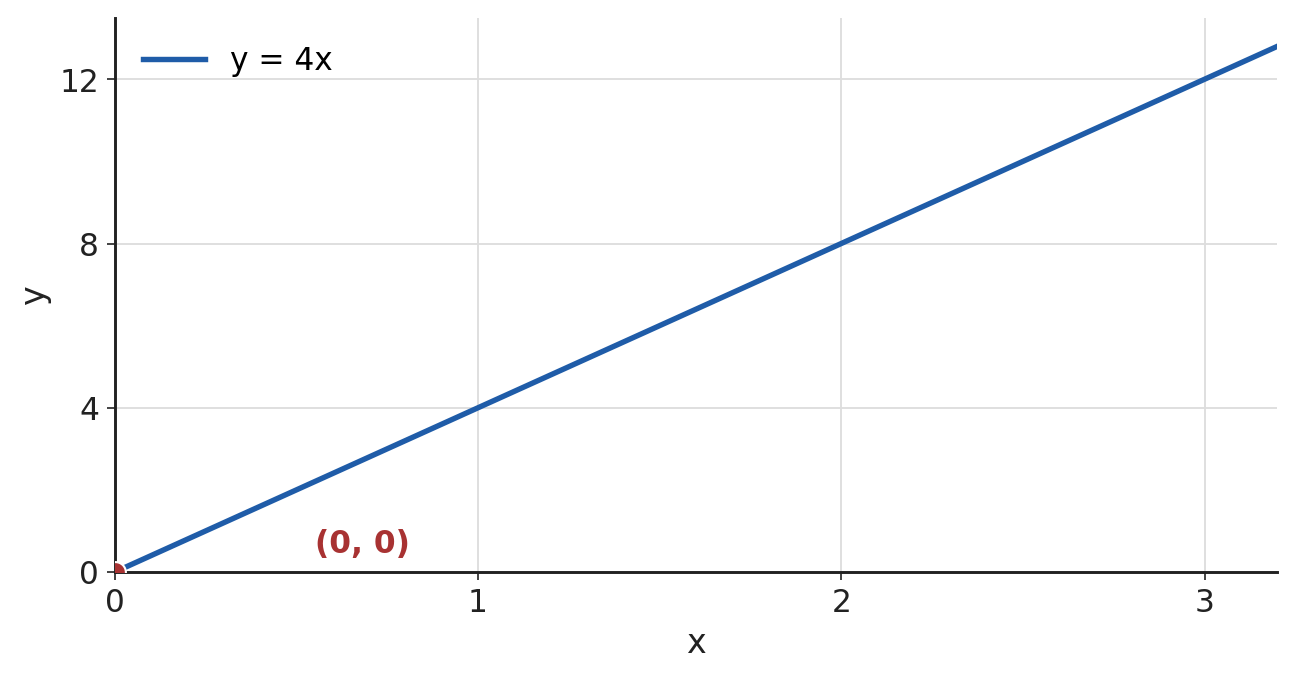
Is
Solution
Check for a starting value: there is no added constant.
The line passes through (0, 0), since 4 × 0 = 0
It is direct variation.
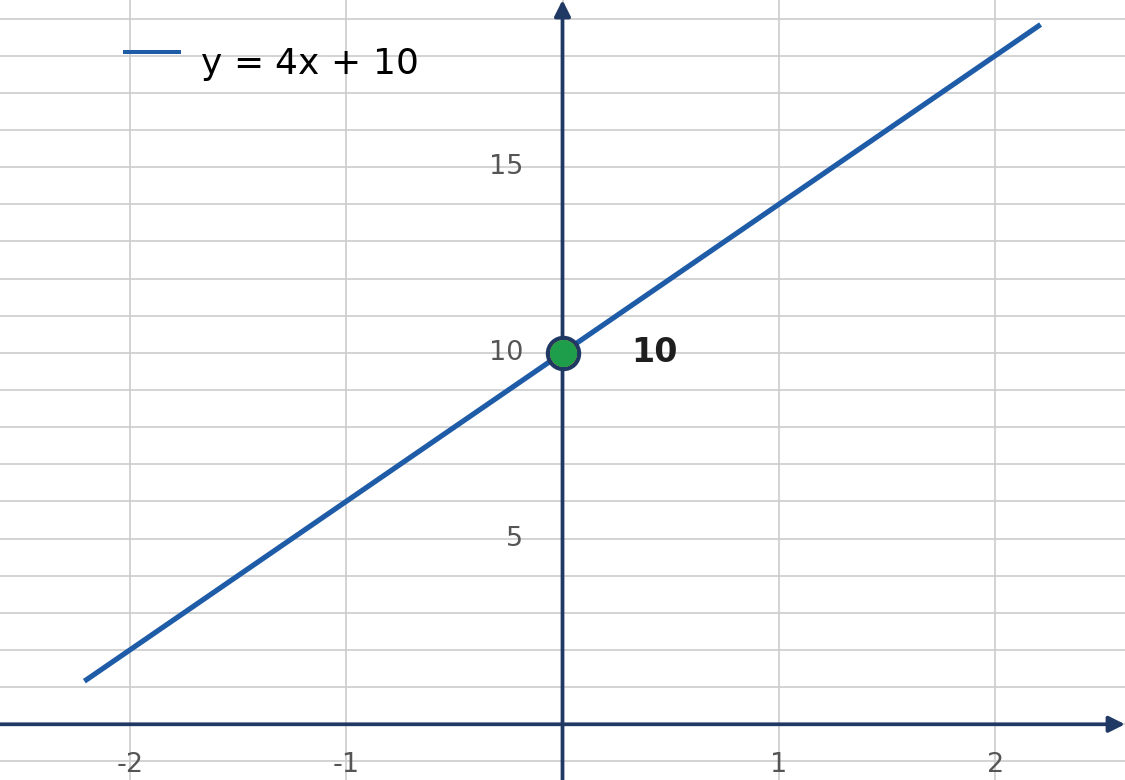
Is y = 4x + 10 direct
Solution
Check for a starting value: there is an added 10.
When x = 0, y = 10, not 0.
It is partial variation.
Apples cost $3 per kilogram, with no starting fee. Is the cost direct or partial variation?
A taxi charges a $10 flag drop plus $2 per kilometre. Is the fare direct or partial variation?
The table shows hours worked and pay. Is the pay direct or partial variation?
Hours worked and pay
| Hours worked | Pay |
|---|---|
| 0 | $0 |
| 1 | $15 |
| 2 | $30 |
| 3 | $45 |
A phone plan costs $20 a month plus $5 per gigabyte of data. What is the initial value?
Is y = 3x + 5 direct or partial variation?
Is y = 7x direct or partial variation, and what is its initial value?
A gym charges a $30 joining fee plus $25 a month. Write the cost rule and say whether it is direct or partial variation.
The graph of a delivery cost passes through (0, 0). Is the cost direct or partial variation?
A plumber charges $50 to visit plus $80 per hour of work. What is the rate of change?
A babysitter charges $12 per hour with no starting fee. What is the rate of change and the initial value?
Your score: 0 / 10
1. Direct
2. Partial
3. Direct
4. $20
5. Partial
6. Direct, initial value 0
7. Partial, y = 25x + 30
8. Direct
9. $80 per hour
10. $12 per hour, initial value $0