
1
State the fundamental theorem, part 2.
MATHEMATICS · GRADES 10-12
This document was made by AI and there may be mistakes. If a question or answer looks wrong, use the Flag a mistake button to let Brett know so he can fix it.
This is how you work out a total that builds up over time, like the distance a car travels from its speed at each moment. If you know how fast something is changing at every instant, this is the idea that turns all those little changes into one total. It is how engineers work out the distance from a speed reading, how scientists total the flow of water over a day, and how a phone works out the distance you ran from your pace at each moment.
Fundamental theorem of calculus: the definite integral of f from a to b is F(b) - F(a), where F is any antiderivative of f.
Find the antiderivative, work it out at the top and bottom limits, and subtract.
Use the fundamental theorem for the integral of 2x
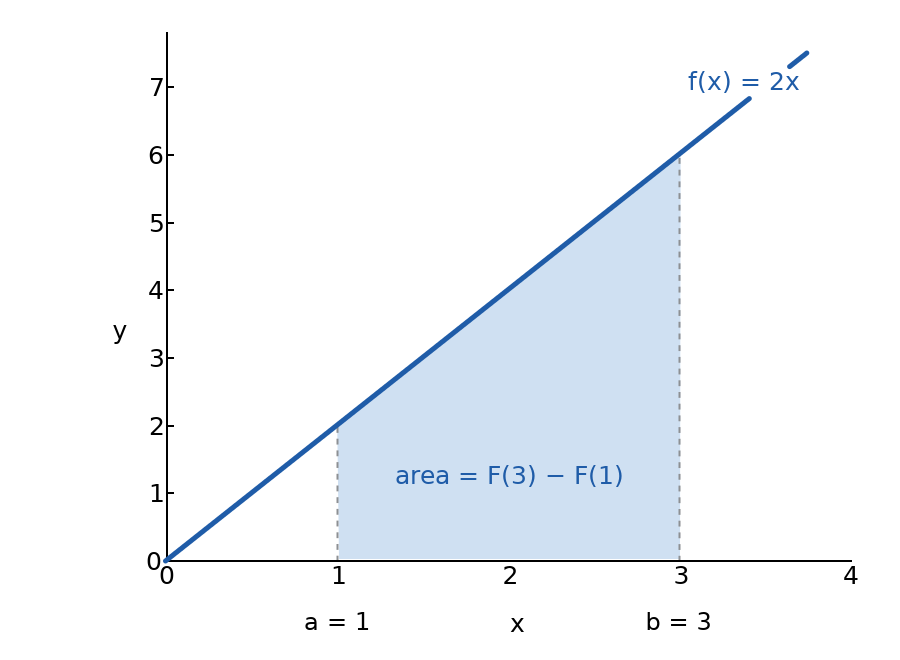
Solution
Antiderivative: 2x² ÷ 2 = x²
Evaluate: at 3, 9; at 1, 1.
Subtract: 9 - 1 = 8
Use the fundamental theorem for the integral of 3x²
Solution
Antiderivative: 3x³ ÷ 3 = x³
Evaluate: at 2, 8; at 0, 0.
Subtract: 8 - 0 = 8
State the fundamental theorem, part 2.
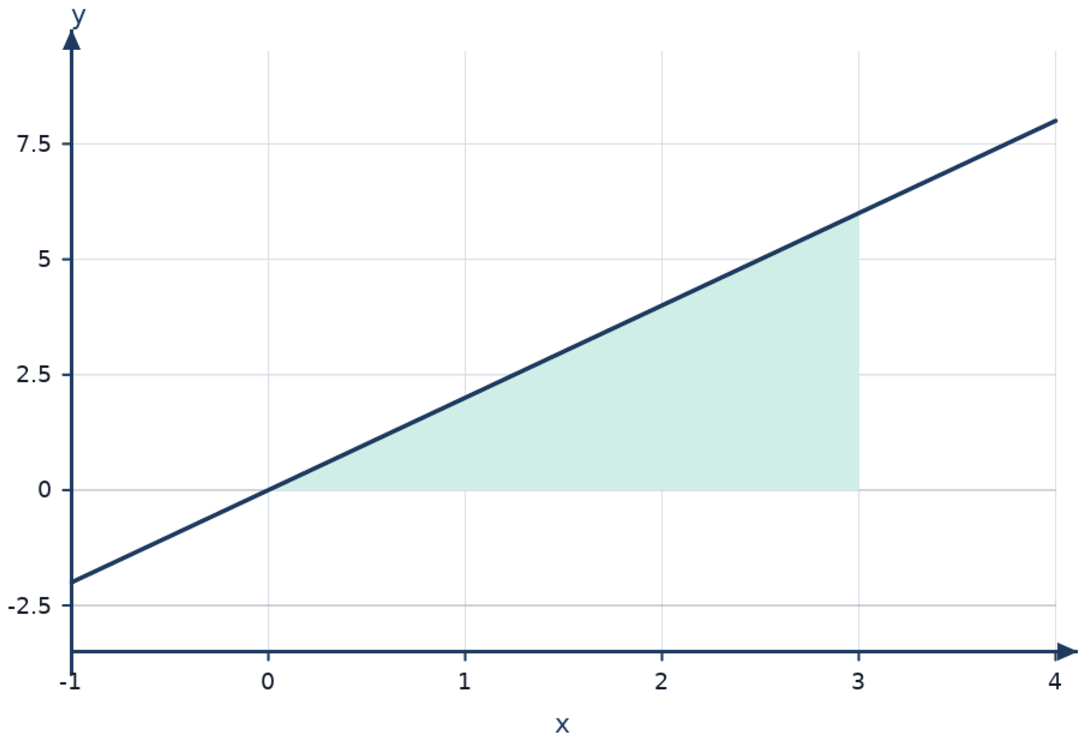
What is the integral of 2x from 0 to 3, using the theorem?
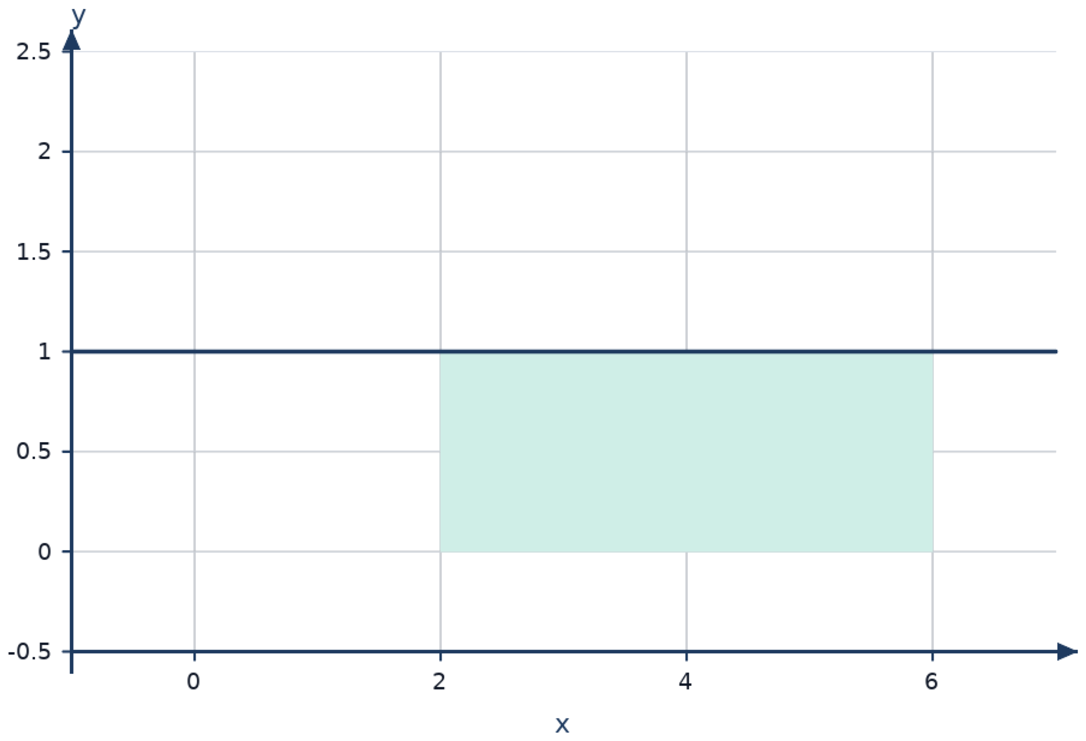
What is the integral of 1 from 2 to 6?
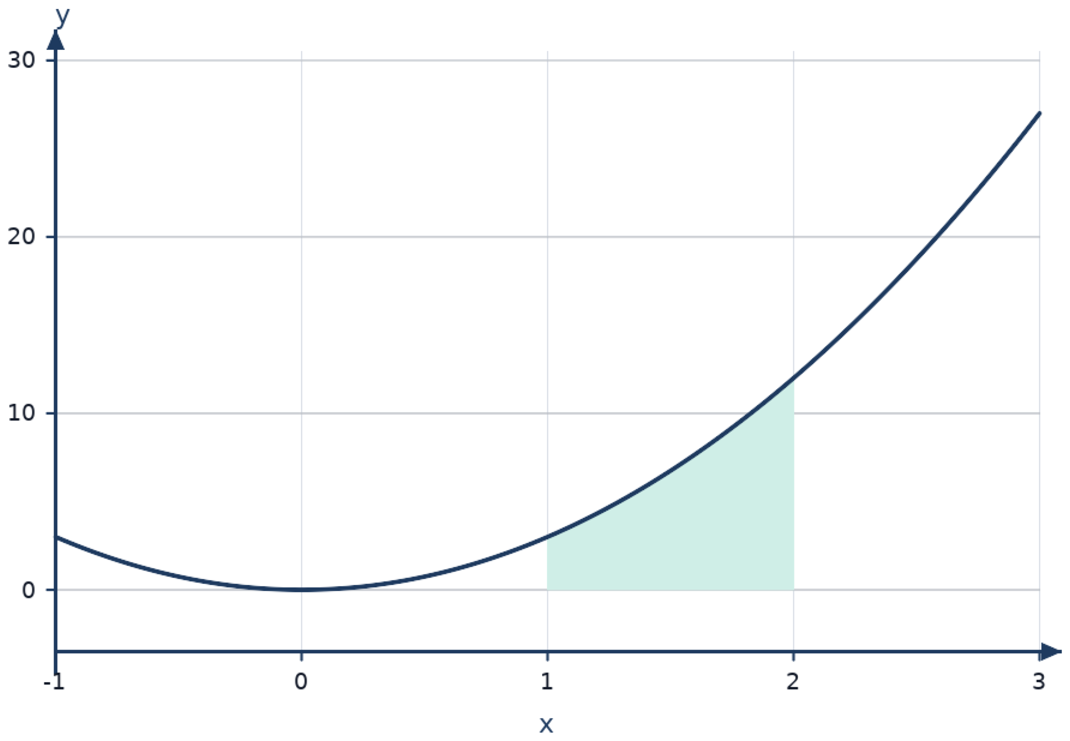
What is the integral of 3x² from 1 to 2?
What does the fundamental theorem connect?
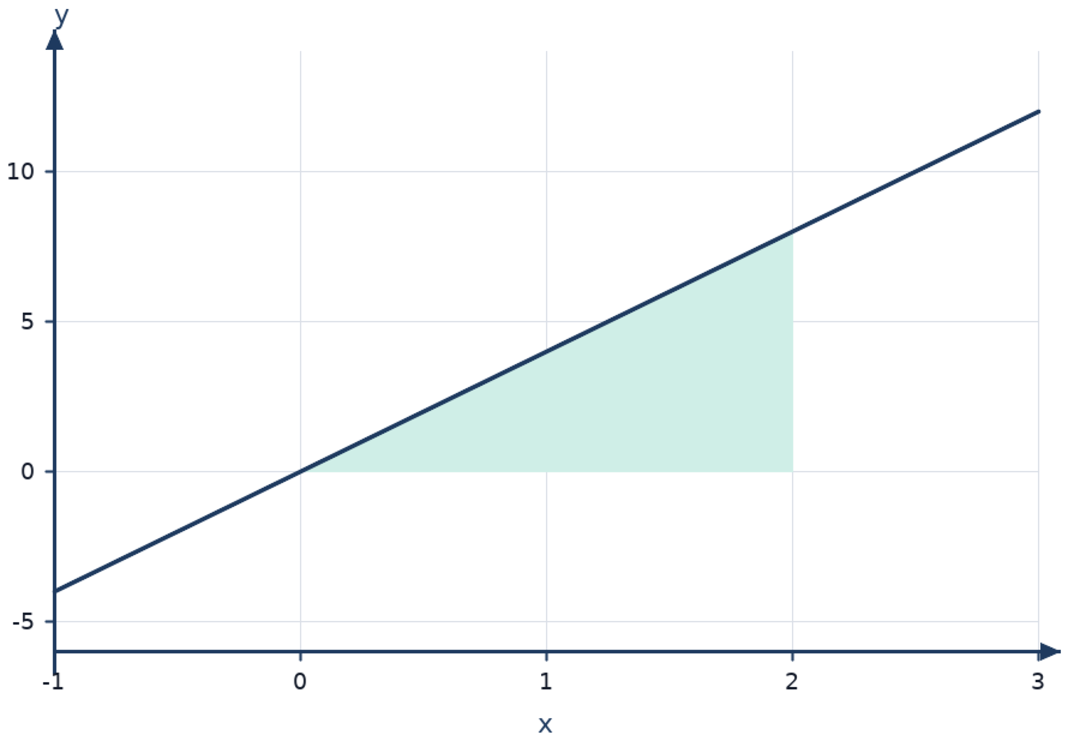
The graph shows the area under y = 4x from 0 to 2. What does the fundamental theorem say this area equals?
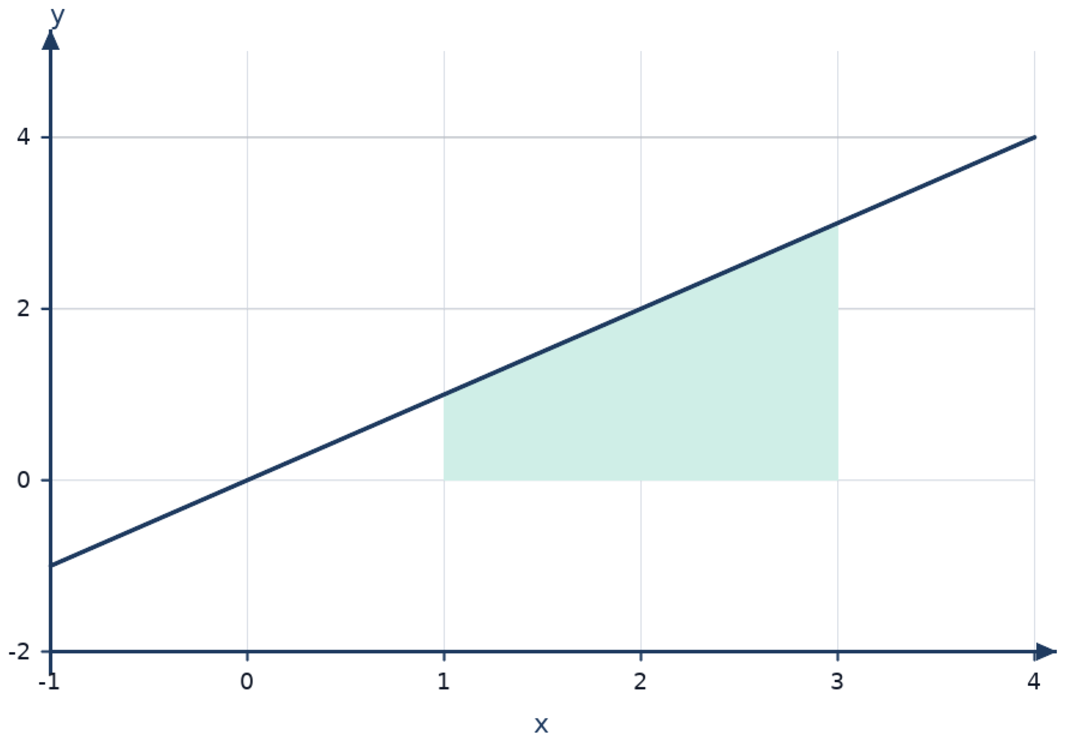
What is the integral of x from 3 to 1?
Why do you subtract the lower evaluation?
What is the integral of 2 from 0 to 0?
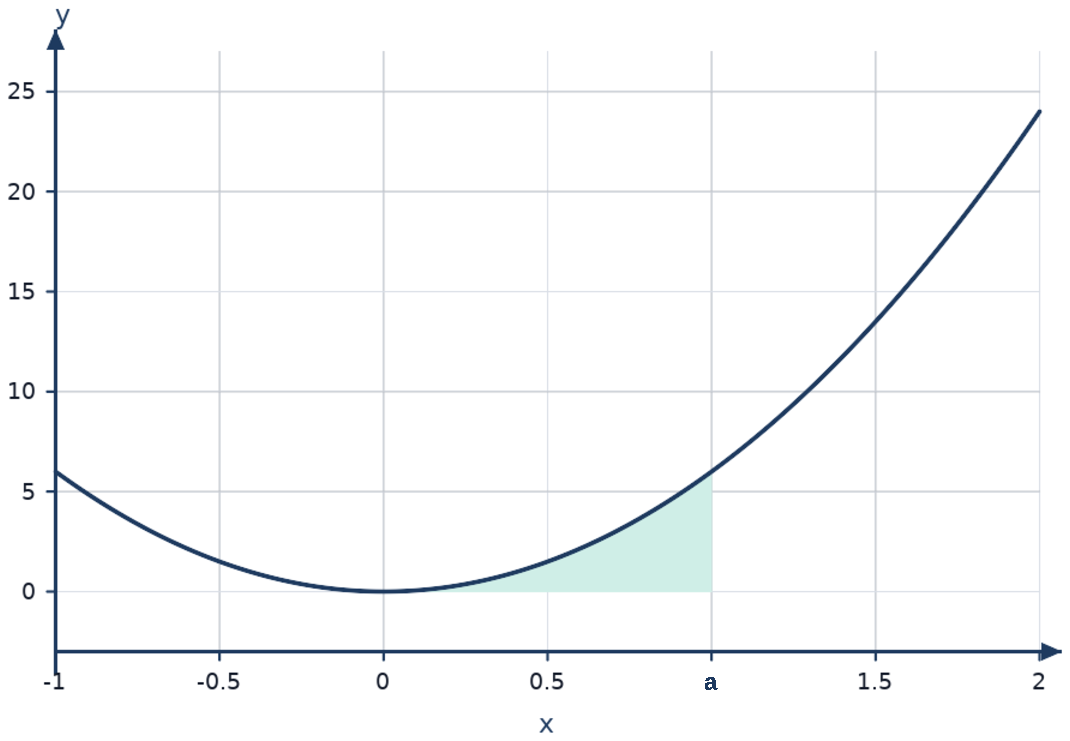
Find the number a so that the integral of 6x² from 0 to a equals 2.
Your score: 0 / 10
1. The integral from a to b of f(x) equals F(b) − F(a), where F is an antiderivative of f
2. 9
3. 4
4. 7
5. Differentiation and integration
6. F(2) − F(0)
7. -4
8. To count only the accumulation between the two limits
9. 0
10. 1