
1
One die roll: chance of a 2 or a 5?
MATHEMATICS · GRADES 10-12
This document was made by AI and there may be mistakes. If a question or answer looks wrong, use the Flag a mistake button to let Brett know so he can fix it.
This is how you work out the chance of one thing or another when both cannot happen at once, like rolling a one or a six on a single die. You use it whenever two outcomes cannot both happen, like drawing one card that cannot be both a heart and a spade. A game designer uses it to set fair odds, and a forecaster uses it when rain or snow are the two options for one afternoon. Knowing how to combine those chances tells you the real odds of either outcome happening.
Two events are mutually exclusive when both cannot happen at once, and then P(A or B) = P(A) + P(B).
If both can happen on one trial, they are not mutually exclusive and you cannot just add.
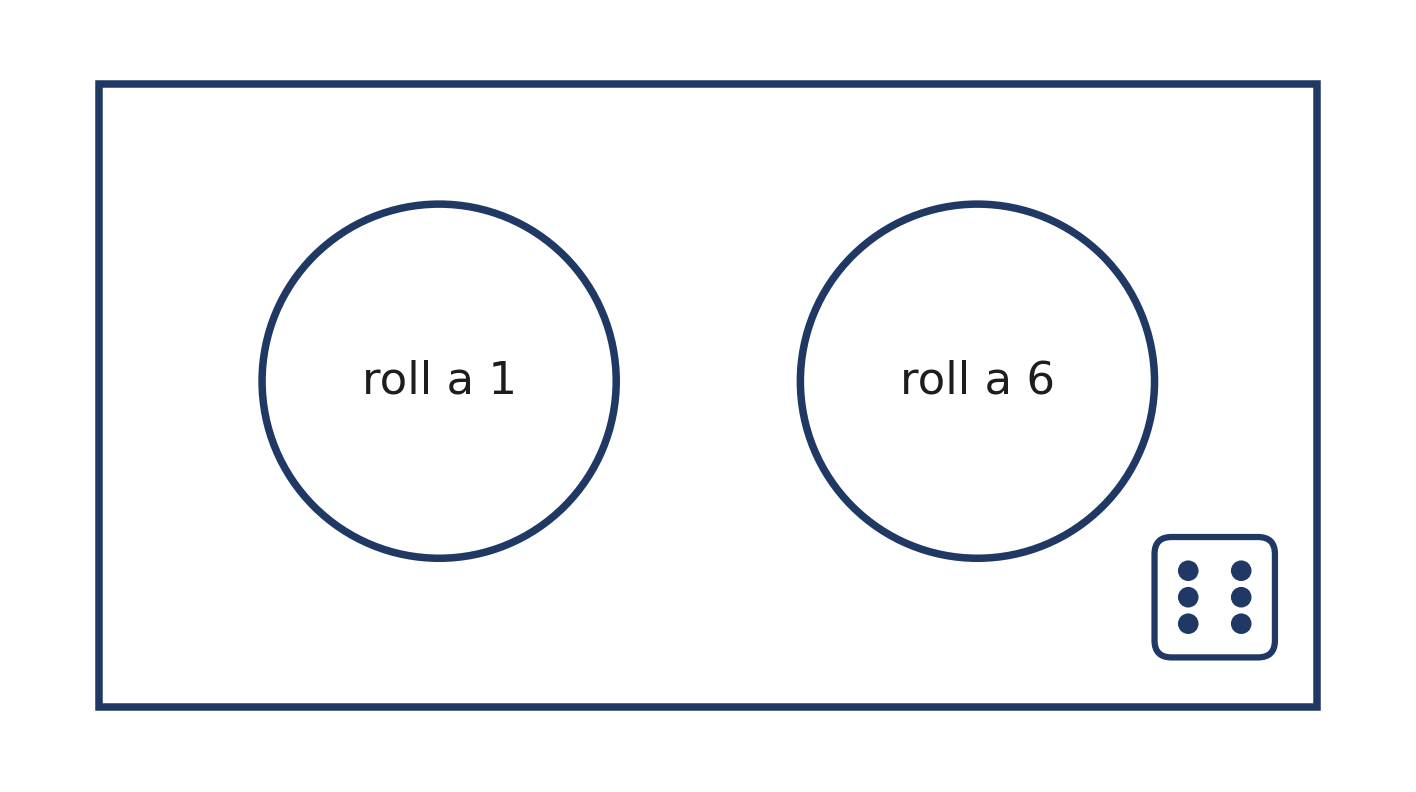
One die is rolled. What is the chance of a 1 or a 6?
Solution
A single roll cannot be both 1 and 6, so the events are mutually exclusive.
Chance of 1 is 16, chance of 6 is 16.
Chance of either = 16 + 16 = 13
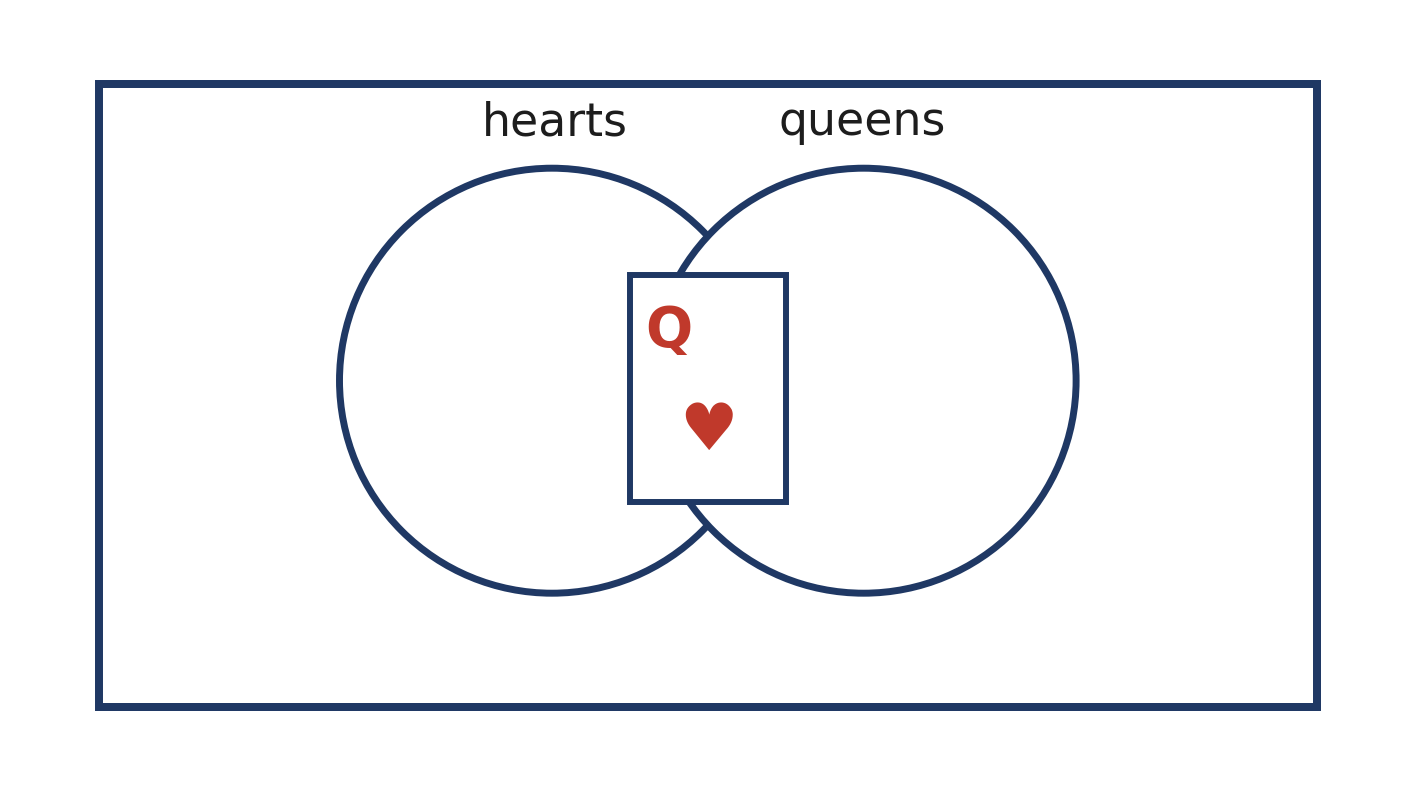
Are drawing a heart and drawing a queen mutually exclusive?
Solution
The queen of hearts is both a heart and a queen.
So both can happen on one draw.
No, not mutually exclusive.
One die roll: chance of a 2 or a 5?
One card draw: chance of an ace or a king?
What does mutually exclusive mean?
One die roll: are even and odd mutually exclusive?
One card draw: are red and black mutually exclusive?
One die roll: chance of a 3 or a 4 or a 5?
One coin toss: are heads and tails mutually exclusive?
What is P(A or B) for mutually exclusive events?
One die roll: are rolling a 6 and rolling an even number mutually exclusive?
One card draw: chance of a heart or a spade?
Your score: 0 / 10
1. 13
2. 213
3. Two events that cannot both happen
4. Yes
5. Yes
6. 12
7. Yes
8. P(A) + P(B)
9. No
10. 12