
1
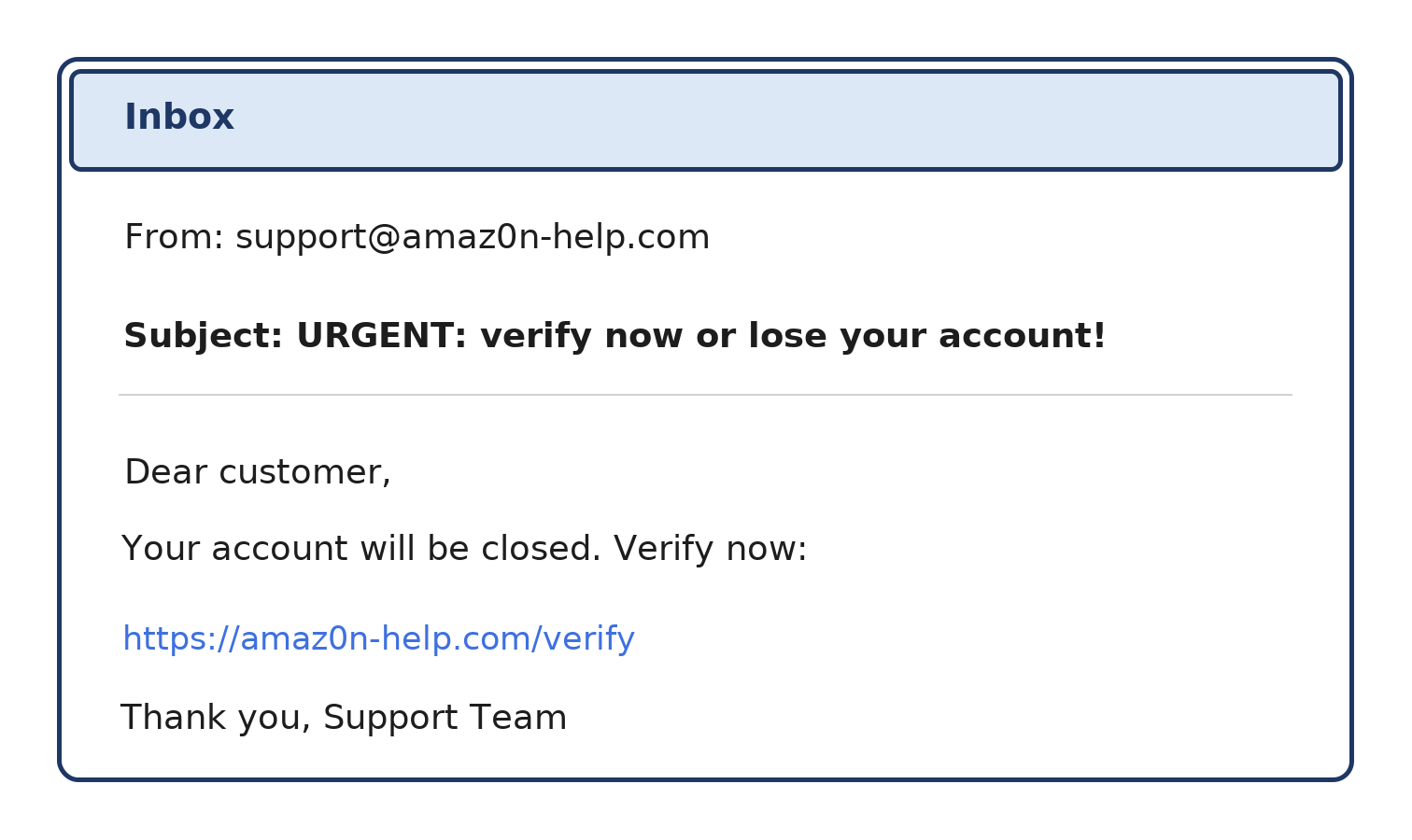
Read this email: From: [email protected]. Subject: URGENT: verify now or lose your account! The link goes to a strange address. Which two signs show it is phishing?
COMPUTING AND DIGITAL LITERACY
This document was made by AI and there may be mistakes. If a question or answer looks wrong, use the Flag a mistake button to let Brett know so he can fix it.
This is how you spot a fake message pretending to be your bank or a delivery company before you click a link or hand over your password. A scammer sends a message that looks urgent, like your account is locked or your parcel is stuck, because urgency makes people click before they think. The giveaways are usually small, like a strange sender address, a link that does not match the company, or a message asking for a password a real bank would never ask for. Stopping to check the sender before you click is the habit that keeps your money and your accounts safe.
Phishing: a phishing message pretends to be from a company you trust, uses urgency to make you click, and asks for a password, a fee, or bank details.
Check the sender address letter by letter for lookalike spellings, such as a zero for the letter o. Ask whether you entered anything or expected the message. Real prizes never ask for a fee, and real companies never ask for your password by message. Do not click: go to the real site yourself.
An email arrives from [email protected], with the subject 'URGENT: verify now or lose your account!', and a link to a strange address. Is it phishing, and what should you do?
Solution
From: [email protected] (note the 0)
Subject: URGENT: verify now or lose your account!
Link goes to a strange address, not amazon.com.
Look at the sender address one letter at a time and watch for spellings that only look right.
Notice the pressure: urgent threats are a classic scam tactic.
Do not click. Go to the real site yourself by typing its address, or contact the company another way.
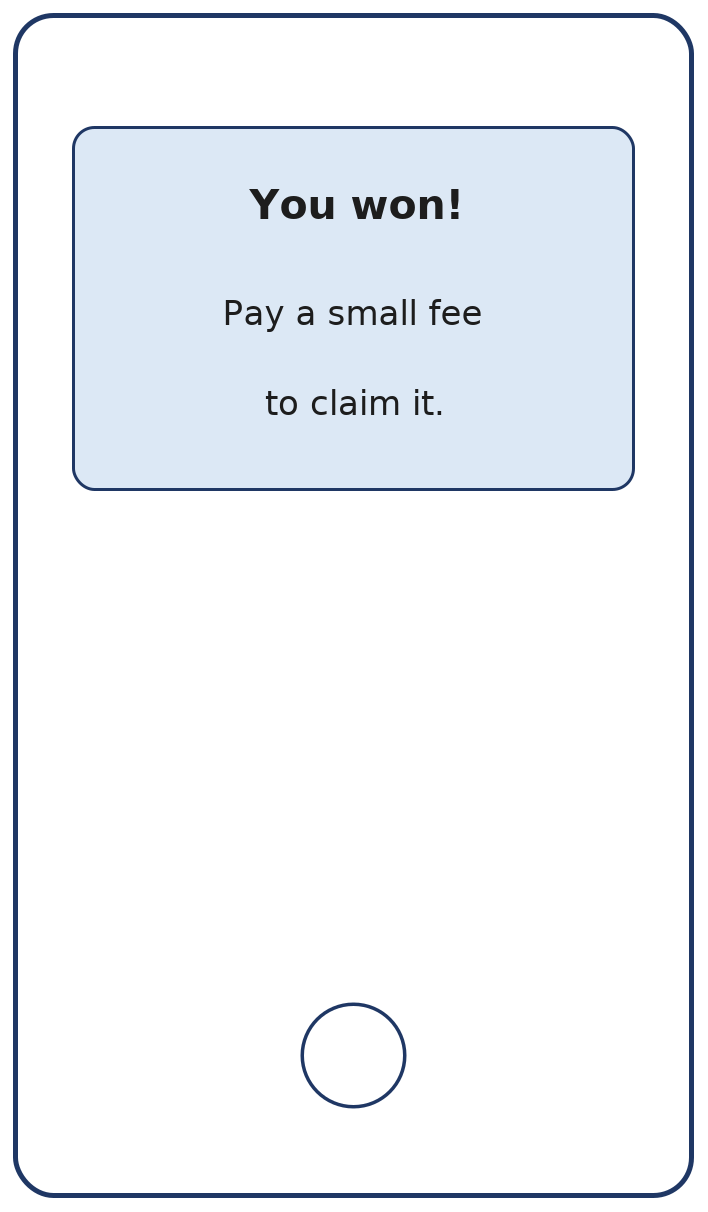
You get a message saying 'You won! Pay a small fee to claim it,' but you never entered a contest. What should you do?
Solution
Message: 'You won! Pay a small fee to claim it.'
Check: you never entered a contest.
Action: delete it and report it; real prizes do not ask for fees.
Ask yourself whether you typed anything in, or were expecting a message like this.
Remember that real prizes do not demand a fee, gift cards, or bank details to claim.
Delete the message and report it using the report button or your provider's scam report.
Read this email: From: [email protected]. Subject: URGENT: verify now or lose your account! The link goes to a strange address. Which two signs show it is phishing?
Read this email: From: [email protected]. Subject: Your account will close today! Click here. The link goes to paypal-secure-login.net, not paypal.com. What does the link tell you?
What should you check first in a suspicious email?
A message has a familiar logo but a strange sender address. Is it genuine?
A message from a friend's account says they are stuck abroad and asks you to send a gift card code right away. You were not expecting this. What should you do?
You get a message: 'You won a phone! Pay $10 to claim it.' You never entered a contest. What should you do?
You get a message: 'You won $500! Send your bank details to claim it.' What should you do?
Why do real prizes never ask for a fee to claim them?
What is phishing?
Why do scammers use urgent language?
Your score: 0 / 10
1. The sender address uses a 0 instead of an o, and the urgent threat pressures you to act.
2. The link does not match the real company, so the email is phishing.
3. The sender's real address, letter by letter
4. Probably not: logos are easy to copy, so check the sender address.
5. Do not send a code; contact your friend another way to check
6. Do not pay; delete it and report it.
7. Do not send bank details; delete it and report it.
8. Because a real prize is already yours; a fee is how the scam takes your money.
9. A fake message pretending to be a trusted company to steal details
10. To rush you into acting before you check