
1
200 kWh at $0.15 per kWh. What is the usage charge?
PRACTICAL AND FINANCIAL LITERACY
This document was made by AI and there may be mistakes. If a question or answer looks wrong, use the Flag a mistake button to let Brett know so he can fix it.
This is how you check your electricity, water, or gas bill, so you can see what you used, spot a charge that looks wrong, and find ways to use less. A bill that jumps without a reason might mean a leak, a faulty meter, or a charge that does not belong to you. A household that watches its usage can see which month used the most and work out why. Reading the bill instead of just paying it is what keeps a small error from becoming a big one.
Total = usage charge + fixed charge.
Usage charge = amount used × rate. The fixed charge stays the same no matter how much you use.
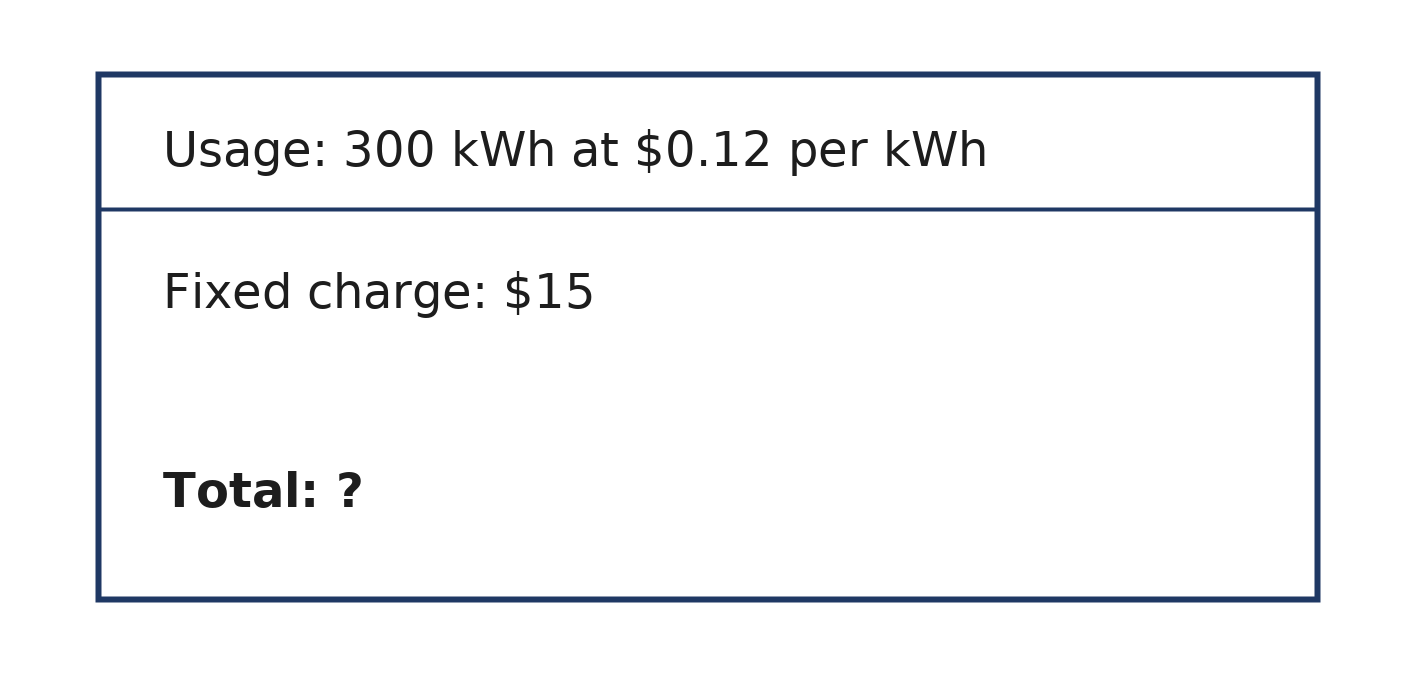
An electricity bill shows usage of 300 kWh at $0.12 per kWh and a fixed charge of $15. What is the total bill?
Solution
Usage: 300 kWh at $0.12 per kWh.
Usage charge = 300 x $0.12 = $36
Fixed charge: $15. Total = $36 + $15 = $51
Multiply usage by the rate: 300 x 0.12 = 36 usage charge.
Find the fixed charge, which does not depend on usage: $15.
Add them: 36 + 15 = 51 total.
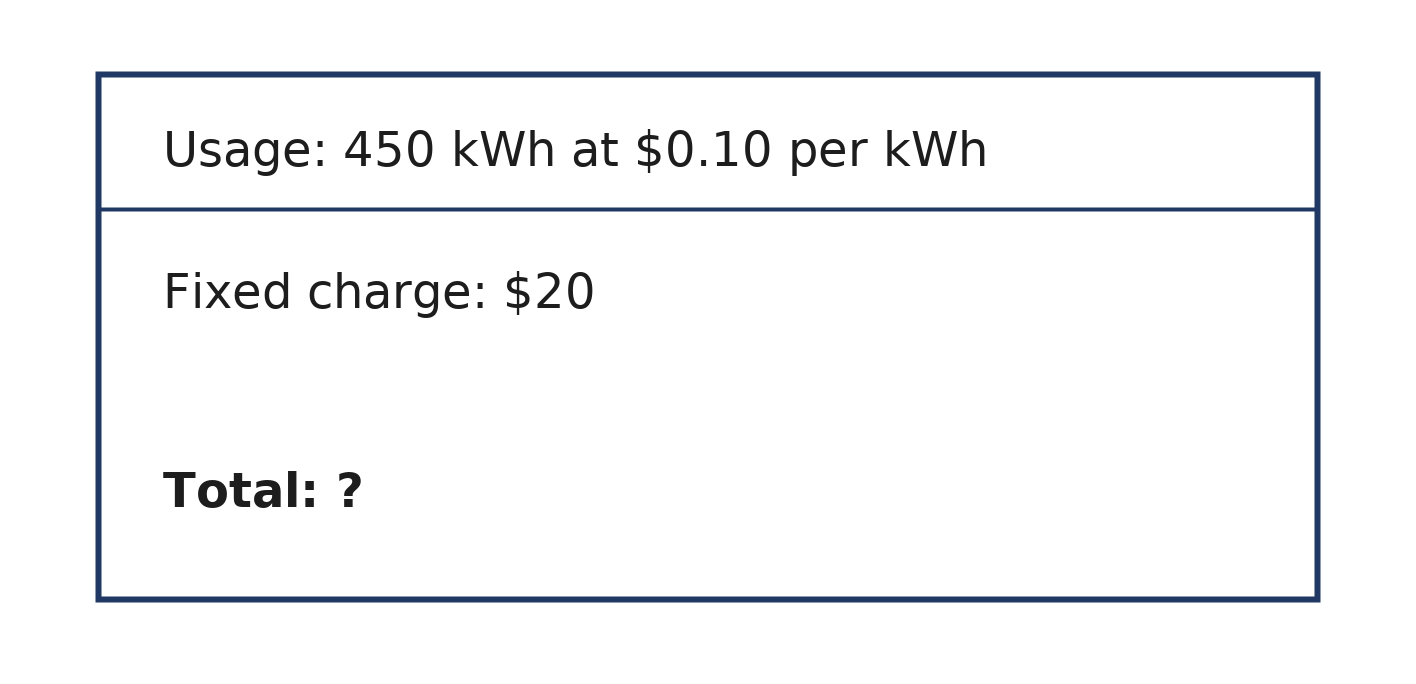
Usage is 450 kWh at $0.10 per kWh and the fixed charge is $20. What is the total bill?
Solution
Usage: 450 kWh at $0.10 per kWh.
Usage charge = 450 x $0.10 = $45
Fixed charge: $20. Total = $45 + $20 = $65
Multiply: 450 x 0.10 = 45
Add the fixed charge: $20.
Total: 45 + 20 = 65
200 kWh at $0.15 per kWh. What is the usage charge?
The usage charge is $30 and the fixed charge is $12. What is the total?
The usage charge is $36 at a rate of $0.12 per kWh. How many kWh were used?
The total bill is $65. The usage charge is $45. What is the fixed charge?
What is a fixed charge?
What does kWh measure?
Usage doubles and the rate stays the same. What happens to the usage charge?
How can you lower an electricity bill?
What should you check first if a bill looks far too high?
What is the due date on a bill for?
Your score: 0 / 10
1. 30
2. 42
3. 300
4. 20
5. A charge that stays the same whatever you use
6. Energy used: one kilowatt running for one hour
7. It doubles
8. Use less energy, or use it at cheaper times if your plan allows
9. The meter reading and usage compared with past bills
10. The date by which payment must arrive