1
Heat flows from where to where?
SCIENCE FOUNDATIONS
This document was made by AI and there may be mistakes. If a question or answer looks wrong, use the Flag a mistake button to let Brett know so he can fix it.
This is how you explain why a hot drink cools down, why a fridge needs power to stay cold, and why no engine can ever be perfectly efficient. A hot drink cools because heat flows from hot to cold on its own, and a fridge has to spend electricity to push heat the other way. A car engine turns some of its fuel into motion and the rest into waste heat, and no engine can ever turn it all into motion. Heat always spreads out unless you spend energy to hold it back, and that one idea explains a cooling coffee, a running fridge, and a car engine.
Basic thermodynamics: heat flows from hot to cold on its own.
First law: energy is conserved, never created or destroyed, only changed from one form to another. Second law: heat will not flow from cold to hot by itself, so some energy is always wasted as heat and no engine can ever be 100 percent efficient.
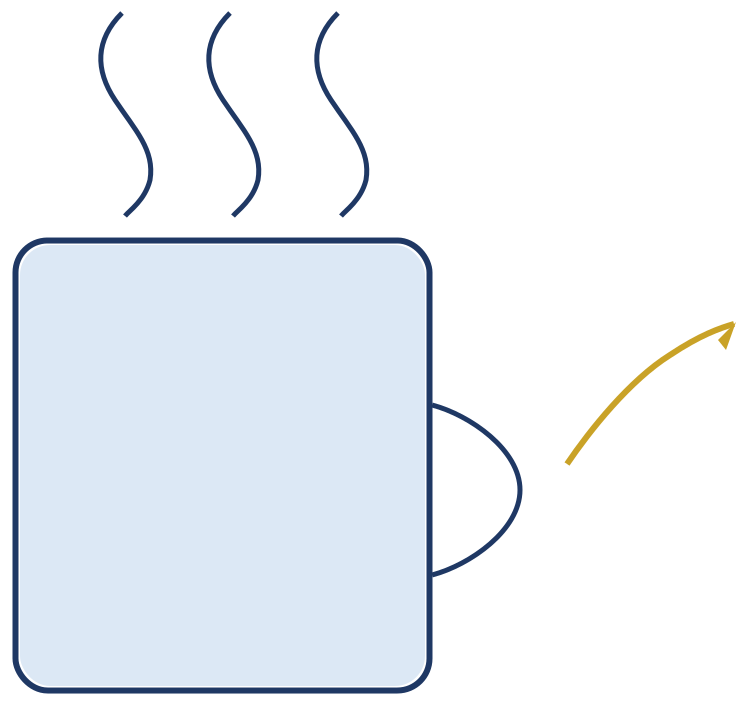
A hot drink cools in a cold room. Which way does heat flow?
Solution
Left alone, heat moves from hot things to cold things. The drink is hot, the room is cold.
Heat flows out of the drink, into the room.
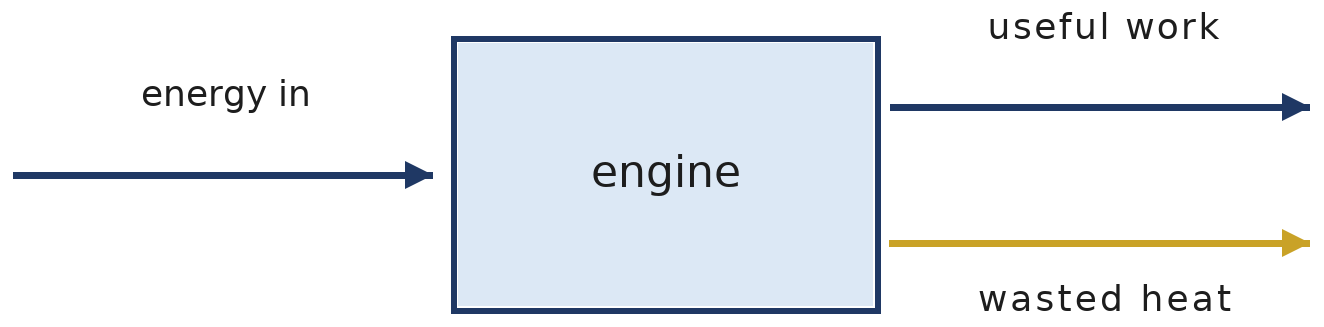
Can an engine be 100 percent efficient?
Solution
No. The second law says some energy is always wasted as heat, so no engine can ever turn it all into motion.
No, some energy is always wasted as heat.
Heat flows from where to where?
A warm laptop sits on a cool desk. Which way does heat flow?
A cold can of drink is left in a warm room. Which way does heat flow?
A hot metal block is placed on a cold metal block. Which way does heat flow, and what happens to the temperatures?
A gas takes in 80 J of heat and does 30 J of work. What is the change in its internal energy?
An engine takes in 100 J of heat and turns 40 J into useful work. How much energy is wasted as heat?
A heat engine works between 600 K and 300 K. What is its maximum efficiency?
Can heat flow from cold to hot by itself?
Where does wasted energy go in an engine?
A fridge moves heat from inside (cold) to outside (warm). Why does this not break the rule that heat flows from hot to cold by itself?
Your score: 0 / 10
1. From hot to cold
2. From the laptop to the desk
3. From the room to the can
4. Heat flows from the hot block to the cold block; the hot block cools and the cold block warms
5. 50 J
6. 60 J
7. 50%
8. No
9. Out as waste heat
10. The fridge uses electricity to do work that moves the heat