1
Classify each of these into its macromolecule family: sucrose, cholesterol, albumin and RNA.
SCIENCE FOUNDATIONS
This document was made by AI and there may be mistakes. If a question or answer looks wrong, use the Flag a mistake button to let Brett know so he can fix it.
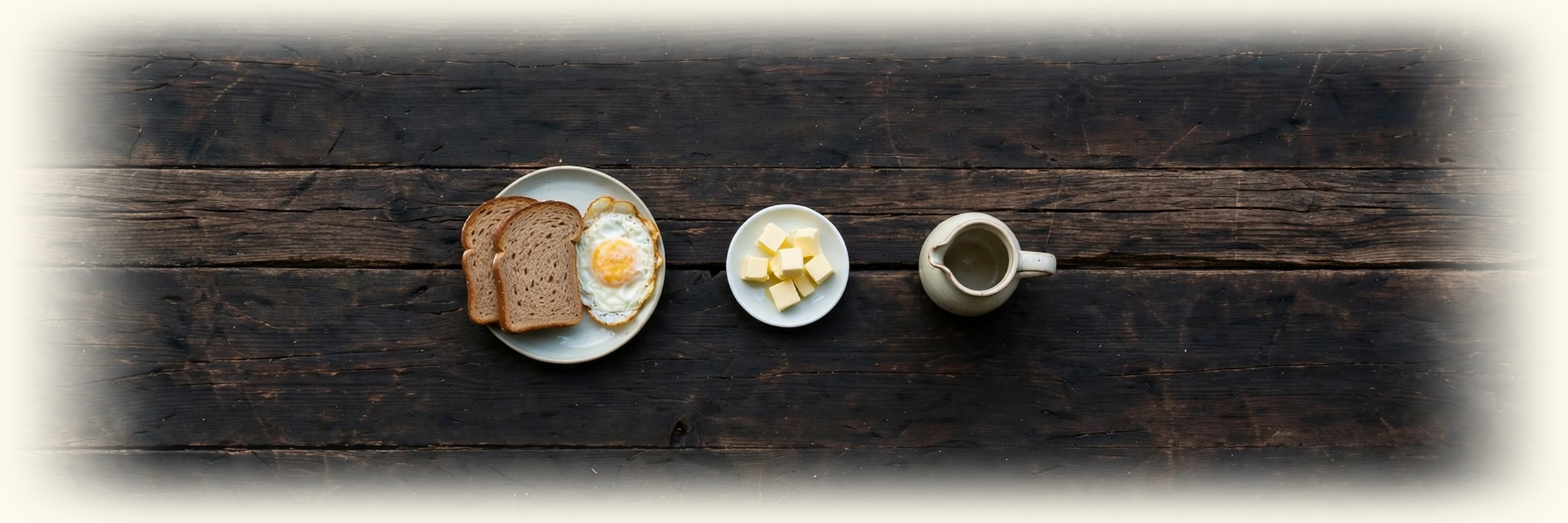
This is how you explain what food is actually made of, like the starch in bread, the fat in butter, the protein in eggs, and the DNA in every cell. Bread is mostly starch, which your body breaks down for energy, and eggs are mostly protein, which your body uses to build and repair. Butter is fat, which stores energy, and every cell in your body holds DNA, which carries the instructions for building all of it. A nutrition label is really a list of these big molecules, and knowing them tells you what a meal is actually giving your body.
Biological macromolecules: carbohydrates are sugars and starches, for energy and structure. Lipids are fats and oils, for long-term energy and membranes. Proteins are made of amino acids, for structure and enzymes. Nucleic acids are DNA and RNA, and they store the instructions. They are built from small units called nucleotides.
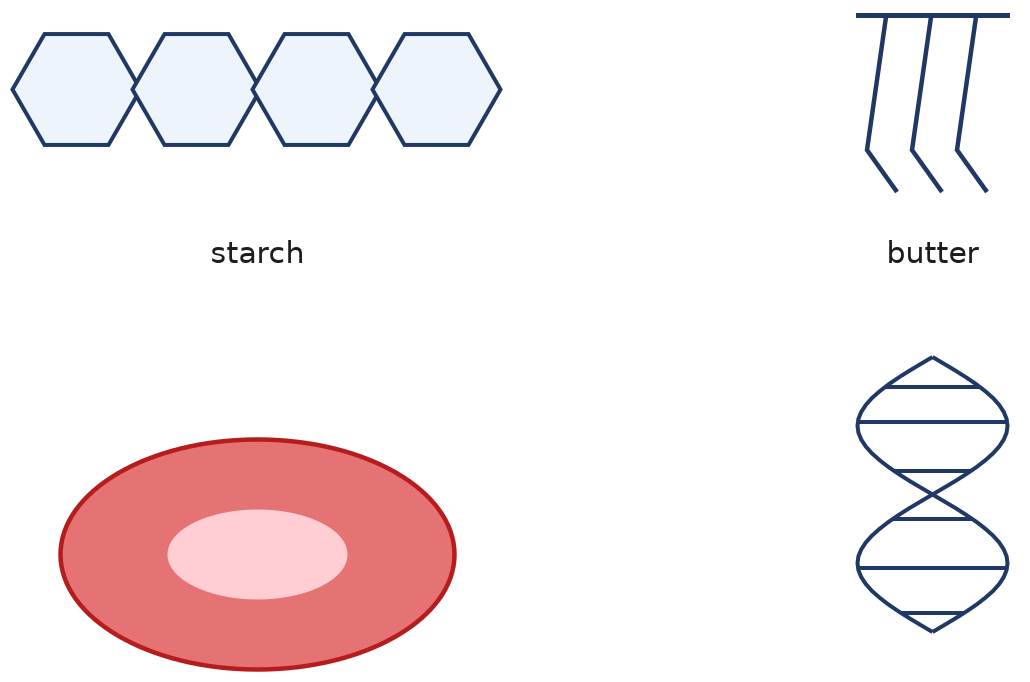
Classify starch, butter, haemoglobin, and DNA.
Solution
Starch is a carbohydrate and butter is a lipid, both for energy storage.
Haemoglobin is a protein that carries oxygen.
DNA is a nucleic acid that carries instructions.
The result is starch carbohydrate, butter lipid, haemoglobin protein, DNA nucleic acid.
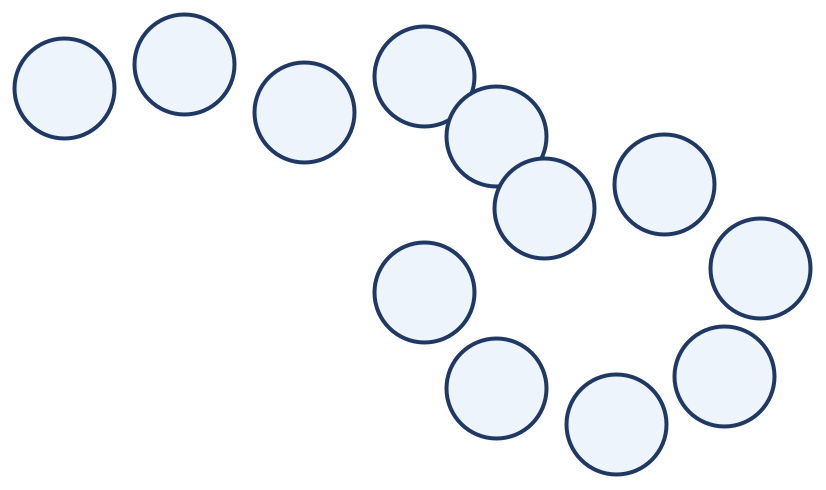
What are proteins made of?
Solution
Recall the building blocks: amino acids.
Amino acids join in chains to make proteins.
State the monomer.
The result is amino acids.
Classify each of these into its macromolecule family: sucrose, cholesterol, albumin and RNA.
What are carbohydrates made of?
What are nucleic acids made of?
Amino acids join in chains to make which family of macromolecules?
Four macromolecule families?
Carbohydrate example?
Lipid example?
Nucleic acid examples?
Which family stores instructions?
Which family includes fats and oils?
Your score: 0 / 10
1. Sucrose carbohydrate, cholesterol lipid, albumin protein, RNA nucleic acid
2. Glucose, a monosaccharide
3. Nucleotides
4. Proteins
5. Carbohydrates, lipids, proteins, nucleic acids
6. Starch
7. Butter
8. DNA, RNA
9. Nucleic acids
10. Lipids