
1
What is the slope formula?
SCIENCE FOUNDATIONS
This document was made by AI and there may be mistakes. If a question or answer looks wrong, use the Flag a mistake button to let Brett know so he can fix it.
This is how you read speed and acceleration straight off a graph, like finding how fast a cyclist is going from the slope of a distance-time graph. A steep slope means the cyclist is moving fast, a flat slope means they have stopped, and a slope that gets steeper means they are speeding up. A coach reading a race graph can see exactly when a runner sped up and when they slowed down, without timing every step. The slope of the line is the speed, written right there in the shape of the graph.
Calculating slopes on motion graphs: slope = riserun.
On a position-time graph the slope is the velocity, and on a velocity-time graph the slope is the acceleration.
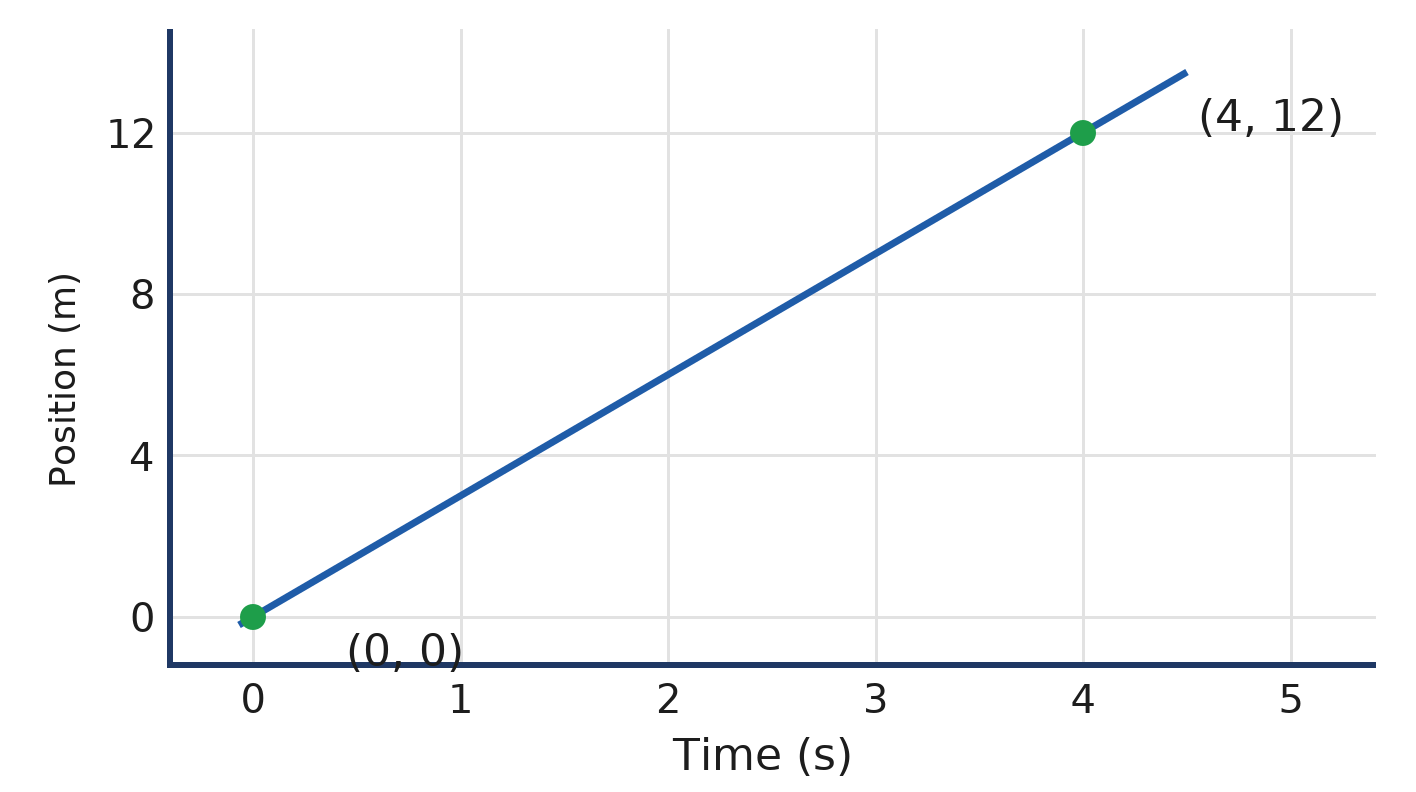
Position-time: points
Solution
Find the rise: 12 - 0 = 12 m
Find the run: 4 - 0 = 4 s
12 ÷ 4 = 3
Slope = 3 m/s
The result is slope 3 m/s, so velocity 3 m/s.
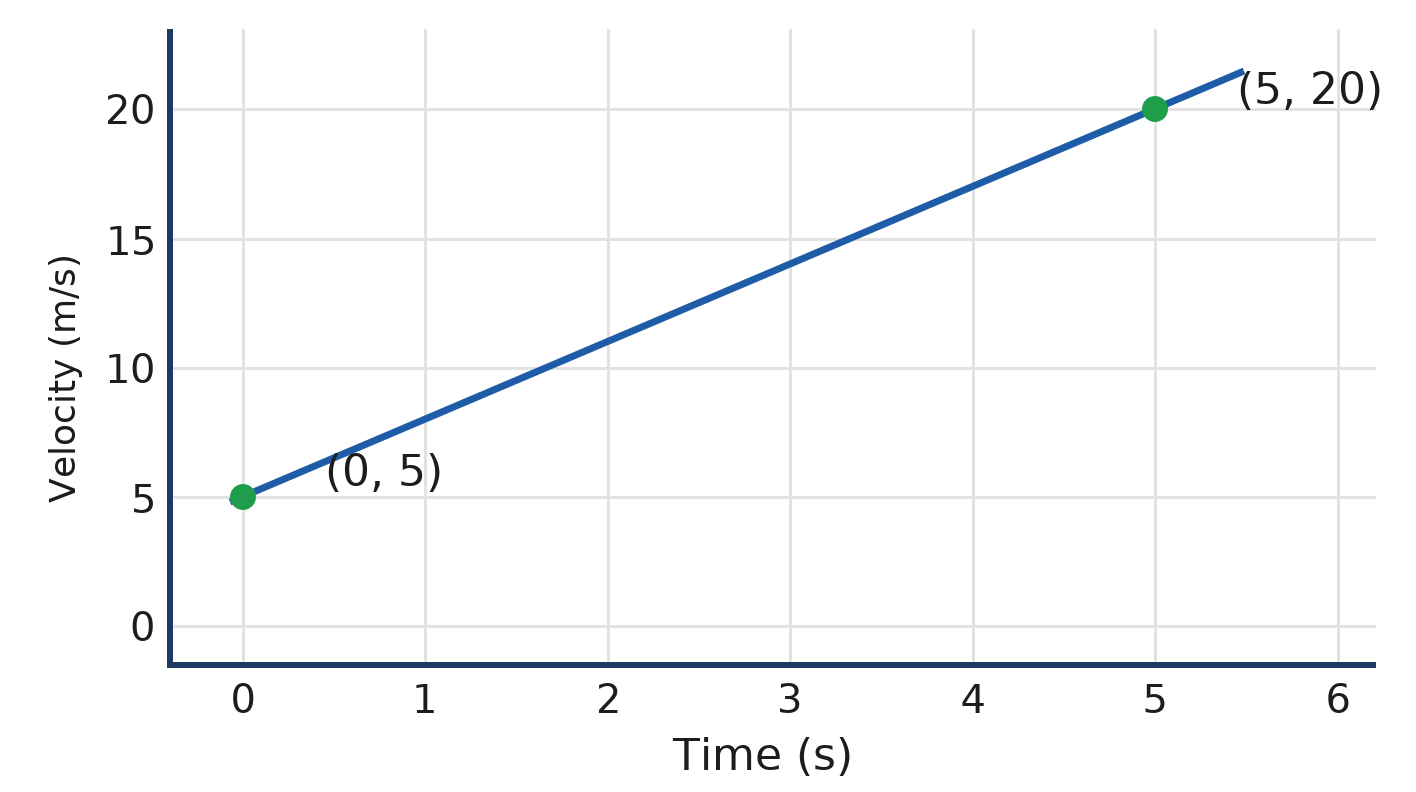
Velocity-time: points
Solution
Find the rise: 20 - 5 = 15 m/s
Find the run: 5 - 0 = 5 s
15 ÷ 5 = 3
Slope = 3 m/s²
The result is slope 3 ms², so acceleration 3 ms².
What is the slope formula?
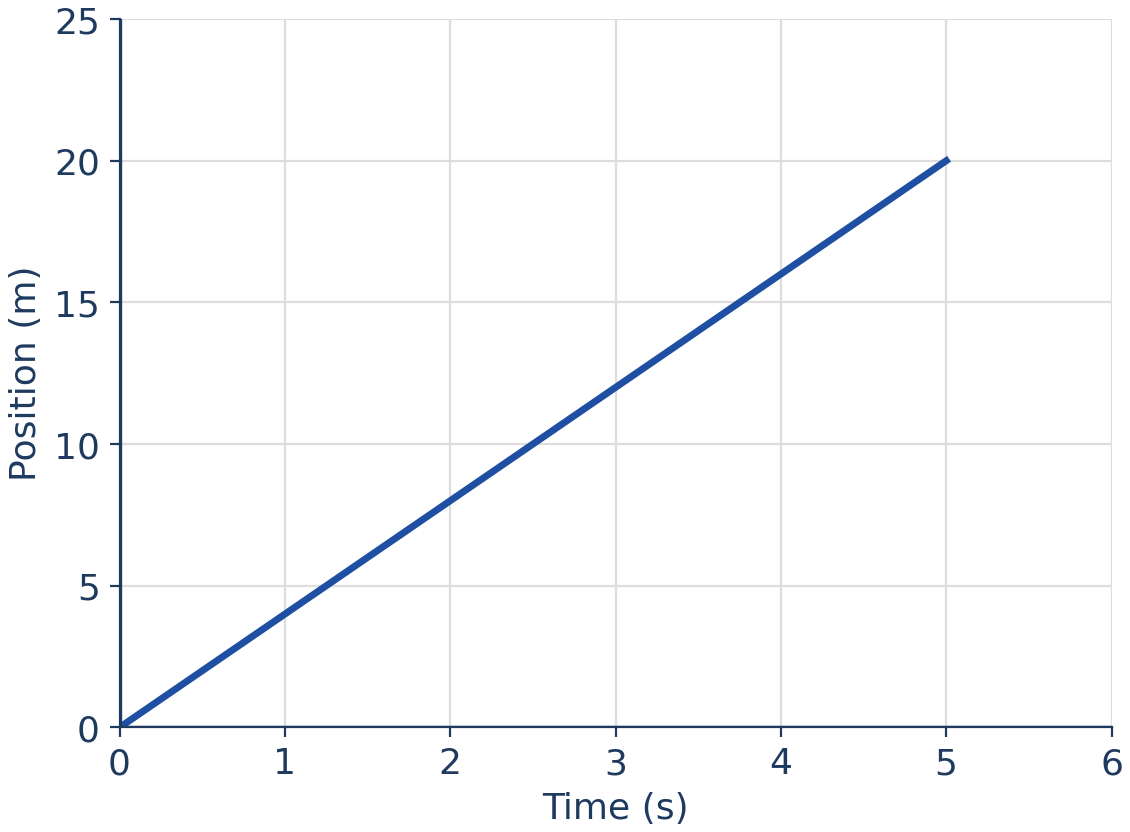
Look at the position-time graph. What is the slope?
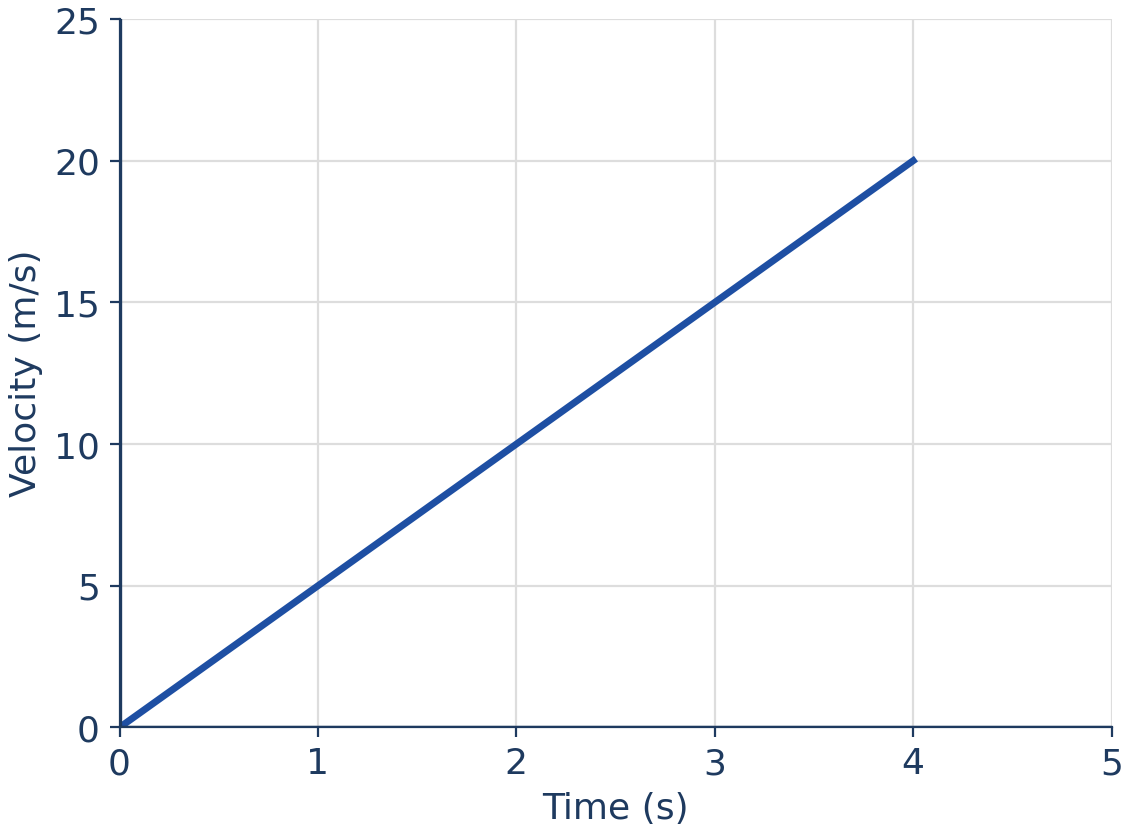
Look at the velocity-time graph. What is the slope?
What does the slope of a position-time graph give?
What does the slope of a velocity-time graph give?
The position-time graph shows points A and B. Read their coordinates from the graph, then find the slope.
The velocity-time graph shows points A and B. Read their coordinates from the graph, then find the slope.
What is rise?
What is run?
Why do you use two points to find the slope?
Your score: 0 / 10
1. Rise divided by run
2. 4 m/s
3. 5 ms²
4. Velocity
5. Acceleration
6. 5m/s
7. 3ms²
8. Vertical change
9. Horizontal change
10. One point alone gives no change