1
What sits in the middle of the membrane, facing away from the water on both sides?
SCIENCE FOUNDATIONS
This document was made by AI and there may be mistakes. If a question or answer looks wrong, use the Flag a mistake button to let Brett know so he can fix it.
This is how you explain the gate that controls what gets into and out of every cell in your body, like a border crossing that lets nutrients in and keeps harmful things out. A cell membrane lets water and nutrients pass, blocks harmful substances, and opens for signals the cell needs to hear. Without that gate, a cell could not keep what it needs inside or keep danger outside. Every cell in your body depends on this thin gate to stay alive and do its job.
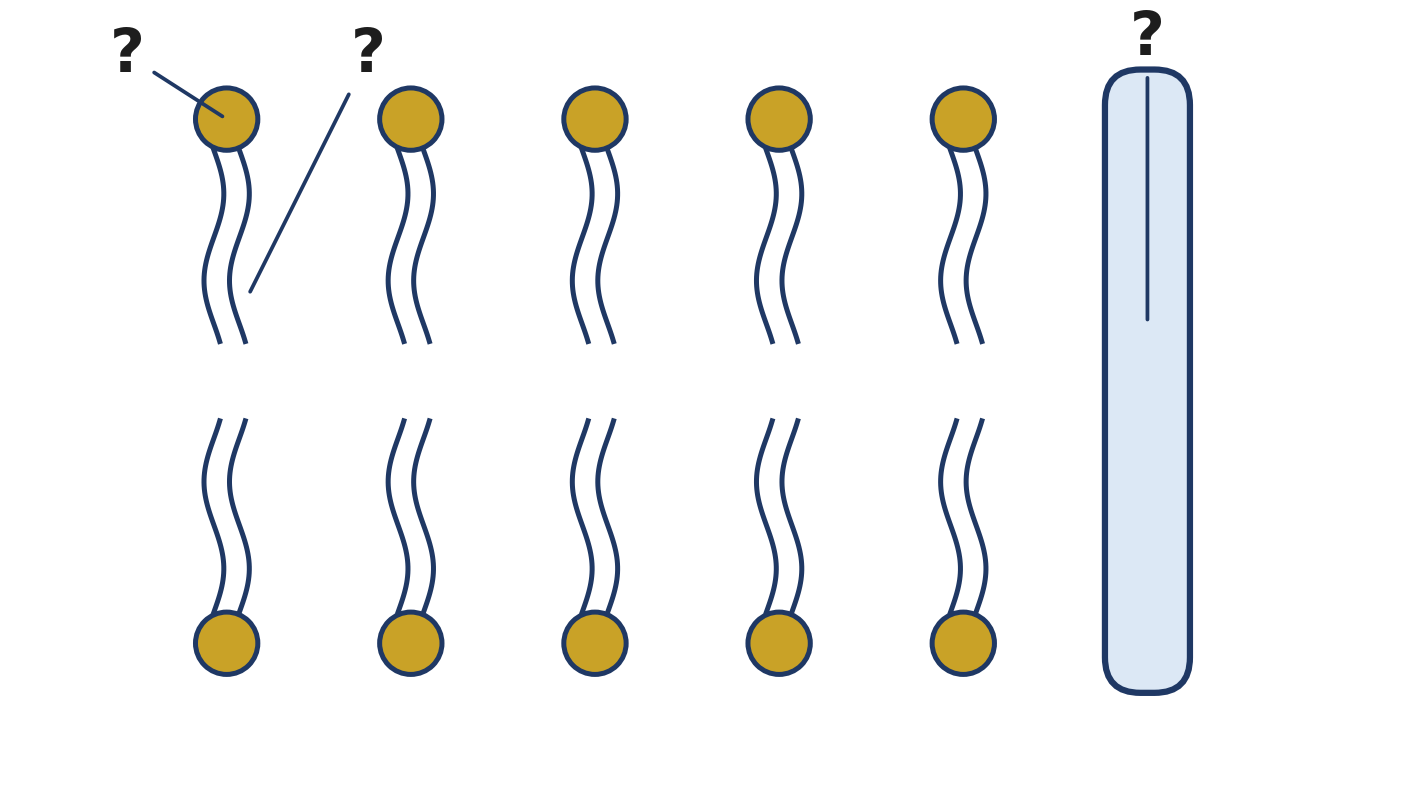
Draw and label a cell membrane section.
Solution
Draw two rows of phospholipids: heads facing out, tails facing in.
Place protein channels spanning the bilayer.
Label heads hydrophilic, tails hydrophobic, proteins as channels.
The result is bilayer with heads out, tails in, proteins spanning it.
Scientists call this arrangement the fluid mosaic model: fluid because its parts move around, and mosaic because it is made of many different parts fitted together.
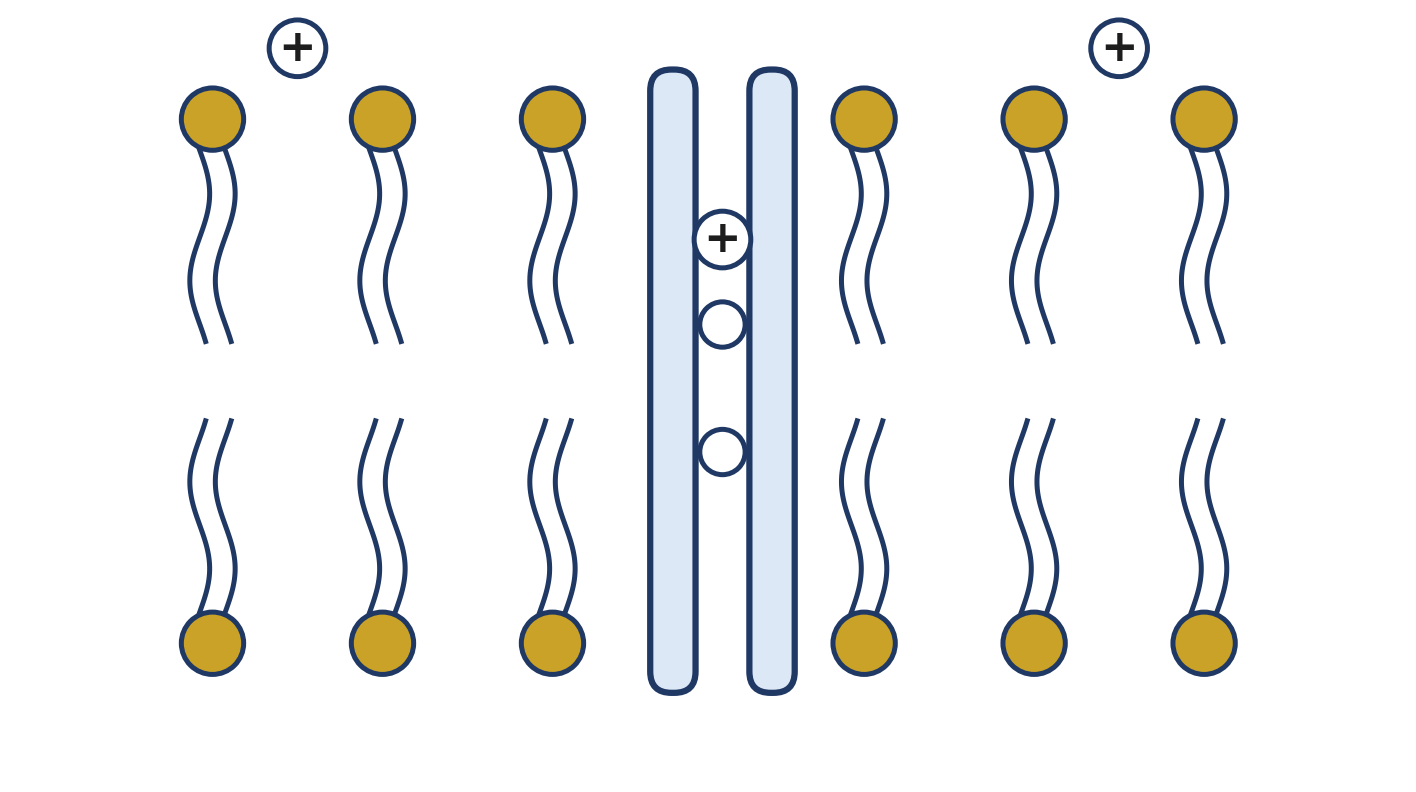
Why can small non-polar molecules cross easily but ions cannot?
Solution
Check the barrier: the hydrophobic tails repel charged ions.
Small non-polar molecules dissolve through the tails.
Conclude: ions need channels, non-polar molecules do not.
The result is ions need protein channels; non-polar molecules pass.
What sits in the middle of the membrane, facing away from the water on both sides?
What part of a phospholipid is attracted to water?
Which molecule crosses the membrane most easily?
A charged ion is outside a cell. Why can it not cross the membrane on its own, and how does it get in?
Membrane made of what?
Heads are hydrophilic or hydrophobic?
Tails are hydrophilic or hydrophobic?
What is the model of the membrane called?
What do proteins do in the membrane?
Why is the membrane called fluid?
Your score: 0 / 10
1. The hydrophobic tails
2. The head
3. Oxygen
4. The hydrophobic tails repel it, so it needs a protein channel
5. A phospholipid bilayer
6. Hydrophilic
7. Hydrophobic
8. Fluid mosaic model
9. Channels and carriers
10. Its parts move