
1
A swimmer swims 50 m down the pool, then 50 m back. What are the distance and the displacement?
SCIENCE FOUNDATIONS
This document was made by AI and there may be mistakes. If a question or answer looks wrong, use the Flag a mistake button to let Brett know so he can fix it.
This is how you tell the difference between the total kilometres on your odometer after a winding drive and how far you actually ended up from home in a straight line. A runner who does ten laps of a track covers a long distance but ends up right where they started. A delivery driver cares about the road distance, while a pilot flying straight cares about the displacement. Knowing the difference tells you when the length of the journey matters and when only the start and finish count.
Distance versus displacement: distance is the total length of the path travelled, and it is never negative.
Displacement is the straight-line distance from the start to the finish, with direction, and it can be zero even when the distance is not.
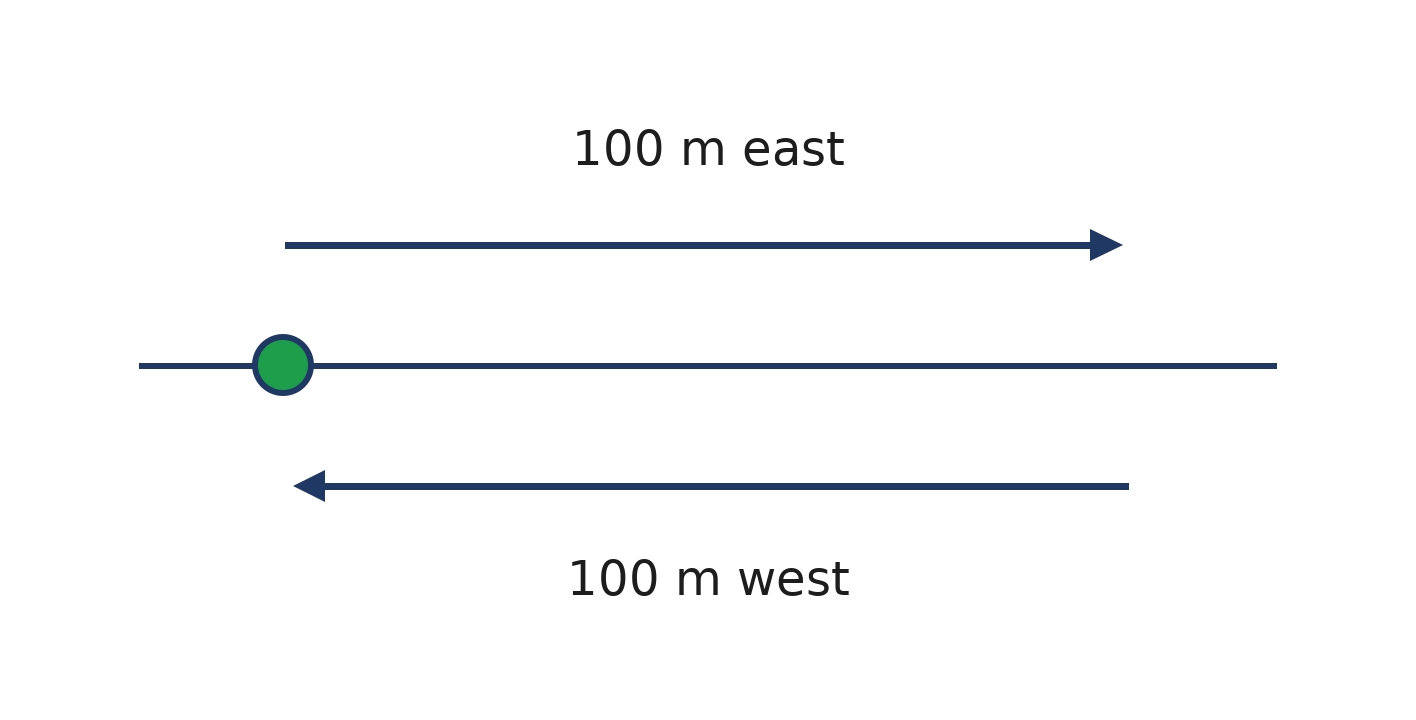
A runner goes
Solution
Add the path:
100 + 100 = 200 m
Find start to finish: the runner ends where she started.
State displacement: zero.
The result is distance 200 m, displacement 0 m.
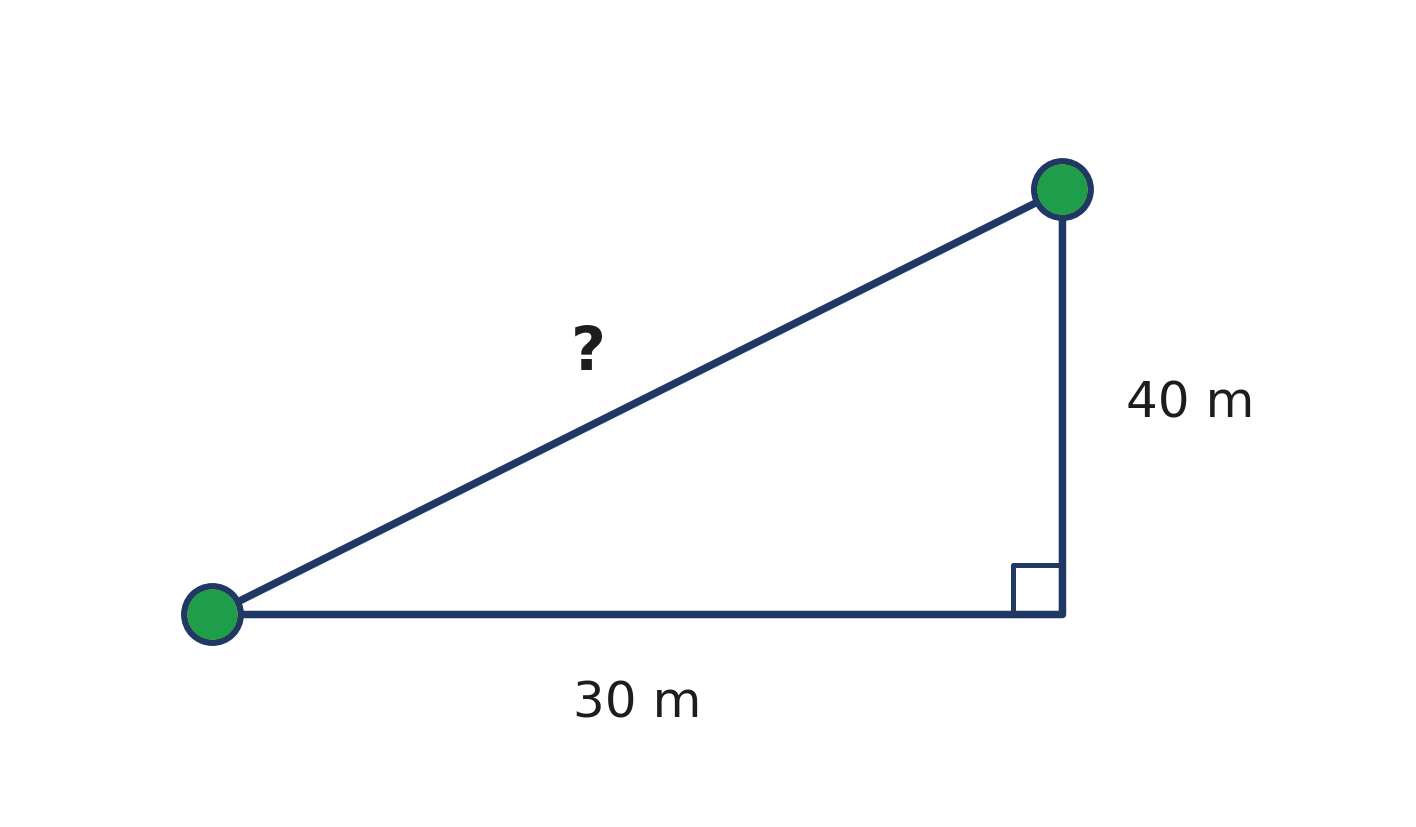
A walker goes
Solution
Draw the path at right angles: one side is 30 m and the other side is 40 m.
Use Pythagoras:
d² = 30² + 40².
Take 2500square root of 2500:
d = 2500square root of 2500 = 50 m
The result is displacement 50 m northeast (direction from the path).
A swimmer swims 50 m down the pool, then 50 m back. What are the distance and the displacement?
A cyclist rides 3 km east, then 4 km west. What are the distance and the displacement?
A hiker walks 9 m east, then 12 m north. What is the size of the displacement?
A hiker walks 8 m east, then 6 m north, then 8 m west. What is the size of the displacement?
Walk 5 m east: distance and displacement?
Round trip distance 400 m: displacement?
Is distance ever negative?
Can displacement be zero?
Distance is total what?
Which is a vector (a quantity with a size and a direction): distance or displacement?
Your score: 0 / 10
1. Distance 100 m, displacement 0 m
2. Distance 7 km, displacement 1 km west
3. 15m
4. 6 m
5. Distance 5 m, displacement 5 m east
6. 0 m
7. No
8. Yes
9. Total path length
10. Displacement