
1
Replicate the short strand G C A T. What is the new partner strand, and how many DNA molecules result?
SCIENCE FOUNDATIONS
This document was made by AI and there may be mistakes. If a question or answer looks wrong, use the Flag a mistake button to let Brett know so he can fix it.
This is how every new cell in your body gets its own complete copy of your instructions, so a cut heals with cells that match the ones around them. Without an accurate copy, a new cell would be missing instructions it needs to do its job. Mistakes in copying are one way that changes in DNA appear and get passed on. Knowing how replication works tells you why your body can grow and repair itself, and why copying errors matter.
What is the new partner strand for A T C G, and how many DNA molecules result?
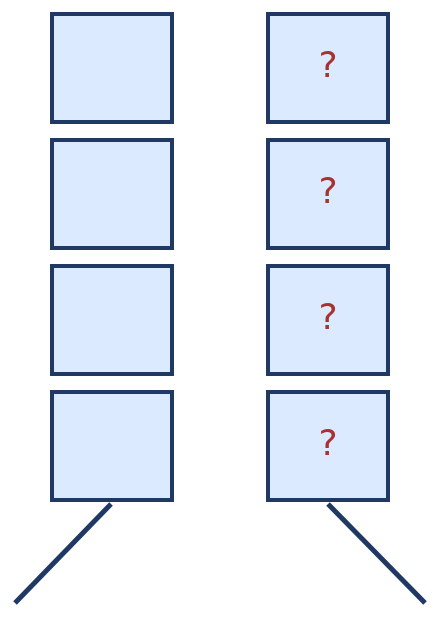
Solution
Unzip: the double strand separates into single strands.
Build on A T C G: partners are T A G C.
The result is two helices, each with one old and one new strand.
The result is two identical DNA molecules, each semi-conservative (half old, half new).
Why is replication called semi-conservative?
Solution
Each product helix has one old strand and one new strand.
Half of each product is conserved from the original.
That half-old, half-new pattern is the name.
The result is each new helix keeps one original strand.
Replicate the short strand G C A T. What is the new partner strand, and how many DNA molecules result?
Which base pairs with adenine (A) in DNA?
A new strand is built with the sequence T T A G. What was the old (template) strand it was built on?
How many old strands does each new DNA helix contain?
Replication is semi-conservative. If it were conservative instead, what would the two new DNA helices look like?
How many DNA molecules result from replication?
Are the two products identical?
What separates first in replication?
What does each old strand do?
When does replication happen?
Your score: 0 / 10
1. C G T A, two identical DNA molecules
2. Thymine (T)
3. A A T C
4. One
5. One helix entirely old, one entirely new
6. Two
7. Yes
8. The two strands
9. Templates a new strand
10. Before cell division