
1
Draw the free-body diagram of a book hanging from a string. Name each force arrow and its direction.
SCIENCE FOUNDATIONS
This document was made by AI and there may be mistakes. If a question or answer looks wrong, use the Flag a mistake button to let Brett know so he can fix it.
This is how an engineer works out whether a bridge or a bookshelf will hold, by drawing every push and pull on it as an arrow before doing any maths. A builder checking a shelf bracket sketches the weight of the books and the pull of the screws before deciding if it is strong enough. A mechanic figuring out why a tow rope snapped starts by drawing the forces on the rope. The pull of a string or rope is called tension. Knowing free-body diagrams tells you which forces are really acting, so you can see what will hold and what will give way.
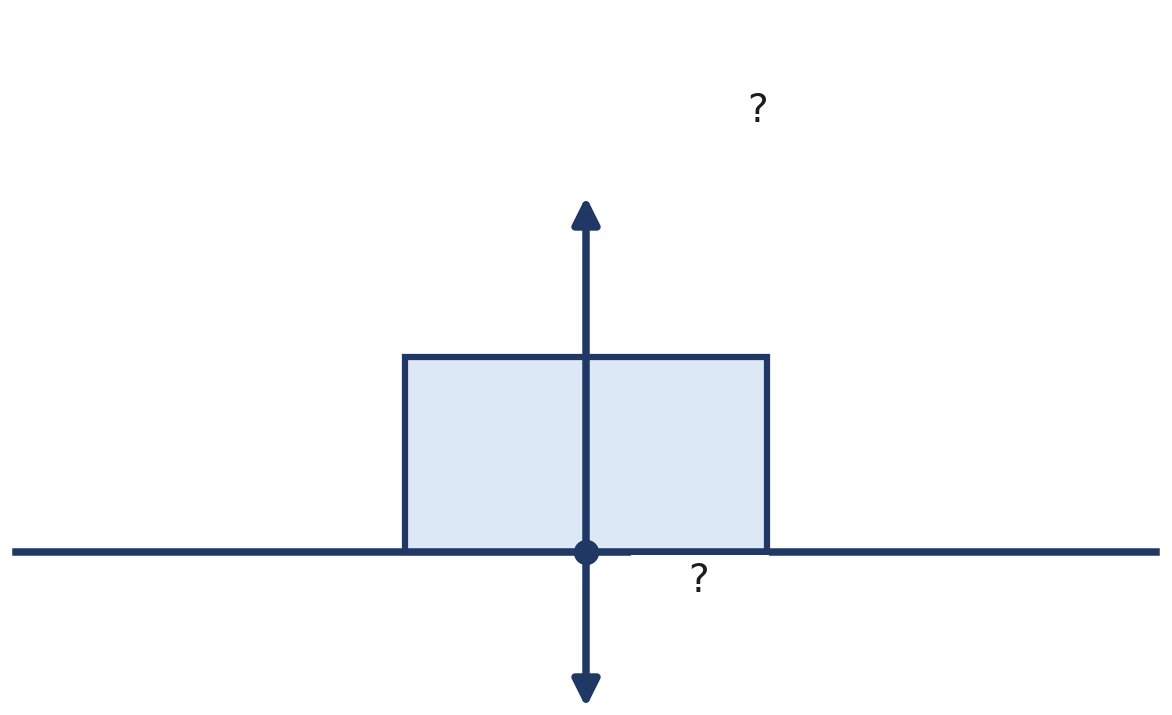
Draw the free-body diagram of a book resting on a table.
Solution
Draw the book as a dot.
Add gravity arrow down, labelled weight, and normal arrow up, labelled normal force.
Make the arrows equal length: the book is not accelerating.
The result is two equal arrows, weight down, normal up.
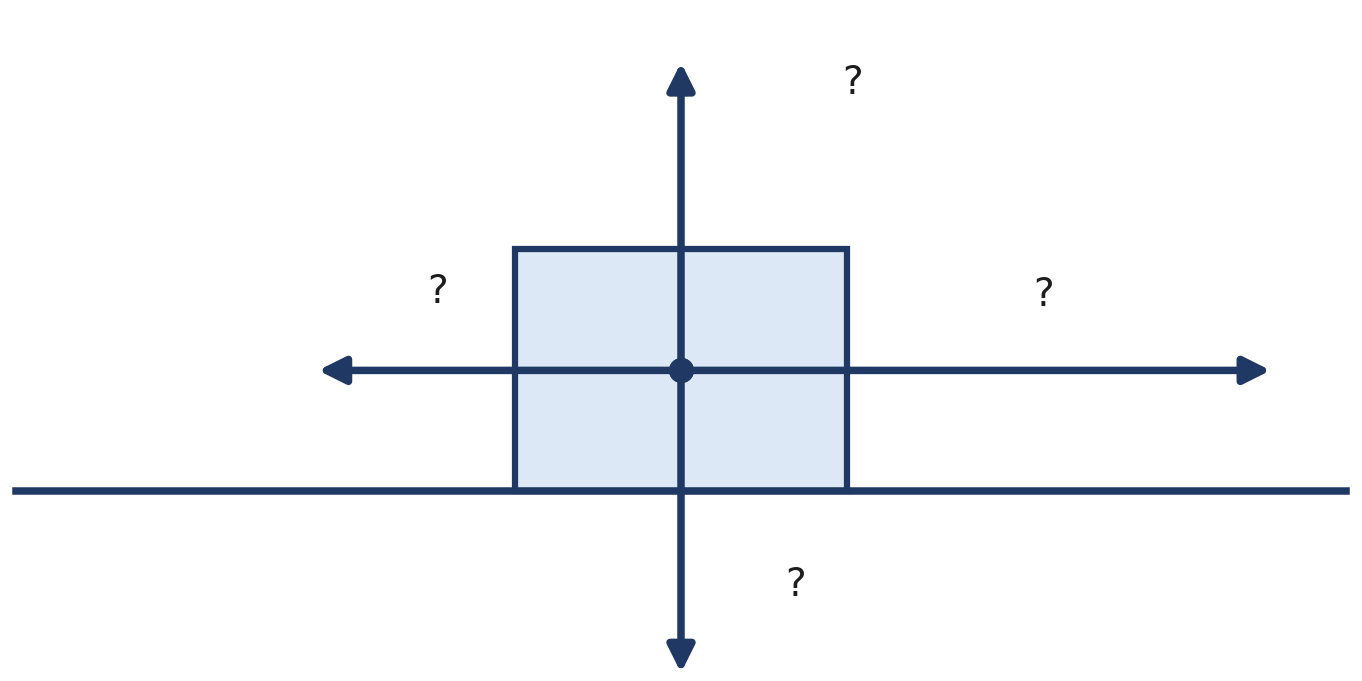
Draw the free-body diagram of a box sliding right with friction.
Solution
Draw the box as a dot.
Add weight down, normal up, applied push right, friction left.
Make the friction arrow shorter than the push if it speeds up.
The result is four arrows, friction opposing motion.
Draw the free-body diagram of a book hanging from a string. Name each force arrow and its direction.
Draw the free-body diagram of a mug resting on a desk. Name each force arrow and its direction.
Draw the free-body diagram of a crate being pushed to the left across a floor with friction. Name each force arrow and its direction.
A box is pushed to the right across a floor but does not move. What does the friction arrow look like?
First step of a free-body diagram?
Where do arrows start?
Longer arrow means what?
Equal up and down arrows mean what?
What force does a surface exert upward?
Push right, friction left, push longer: what happens?
Your score: 0 / 10
1. Weight arrow down and tension arrow up, equal in length
2. Weight arrow down and normal force arrow up, equal in length
3. Weight down, normal force up, applied push to the left, friction to the right
4. Friction arrow to the left, equal in length to the push
5. Draw the object as a dot
6. From the dot (the object)
7. Larger force
8. No vertical acceleration
9. Normal force
10. It speeds up to the right