1
Which element is most electronegative?
SCIENCE FOUNDATIONS
This document was made by AI and there may be mistakes. If a question or answer looks wrong, use the Flag a mistake button to let Brett know so he can fix it.
This is how you explain why oil and water refuse to mix while sugar dissolves easily in your tea, because uneven sharing of electrons makes some molecules attract water and others not. A cook knows that soap lifts grease off a pan because one end of the soap molecule likes water and the other likes oil. A pharmacist uses polarity to work out whether a drug will dissolve in blood or in fatty tissue. Knowing polarity tells you what will mix, what will dissolve, and what will stay stubbornly separate.
Electronegativity and polarity: when two atoms share electrons unequally because one pulls harder, the bond is polar.
A molecule is polar overall only if its polar bonds do not cancel out, which depends on its shape.
Is the O-H bond polar?
Solution
Compare electronegativity: oxygen pulls harder than hydrogen. Electronegativity is how strongly an atom pulls shared electrons.
Sharing is therefore unequal, with electrons nearer oxygen.
Label the bond polar, oxygen partly negative, hydrogen partly positive.
The result is polar O-H bond.
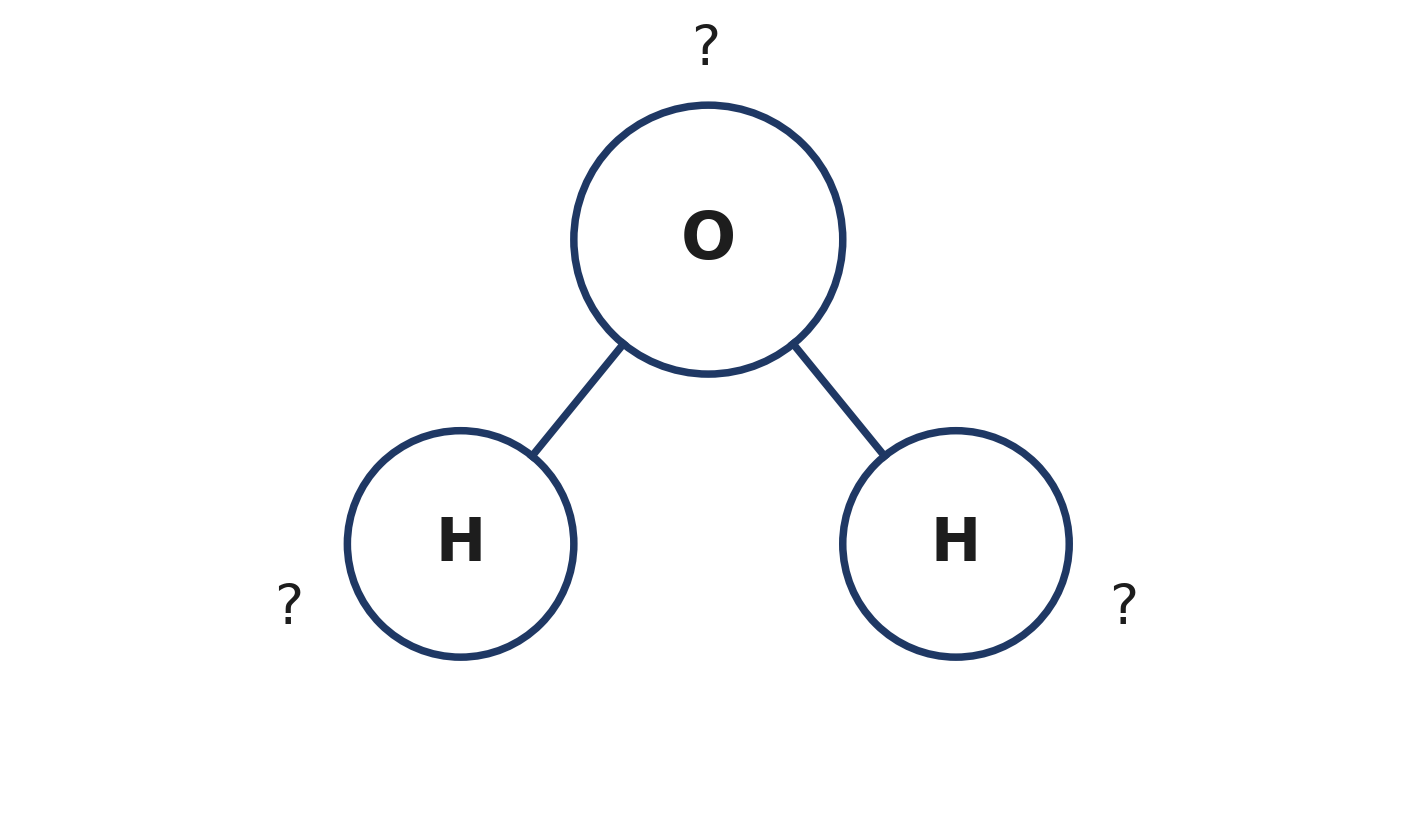
Is water a polar molecule?
Solution
Check the bonds: both O-H bonds are polar.
Check the shape: bent, so the partial charges do not cancel.
Label the molecule polar.
The result is water is polar.
Which element is most electronegative?
Does electronegativity rise across a period?
Is the N-H bond polar?
Is a C-H bond strongly polar?
What is a polar bond?
Is hydrogen fluoride polar?
Is carbon dioxide polar overall?
Why is carbon dioxide non-polar overall?
What does partly negative mean?
Do polar molecules dissolve well in water?
Your score: 0 / 10
1. Fluorine
2. Yes
3. Yes
4. No, only slightly
5. Unequal sharing of electrons
6. Yes
7. No
8. Its polar bonds cancel in a linear shape
9. A partial negative charge, not a full ion
10. Usually yes