
1
Design a test of whether a new plant food helps tomato plants grow taller. State the question and hypothesis, what you change, what you measure, and how you record results.
SCIENCE FOUNDATIONS
This document was made by AI and there may be mistakes. If a question or answer looks wrong, use the Flag a mistake button to let Brett know so he can fix it.
This is how you run a fair test, like checking whether a new plant food really helps tomatoes grow, by changing only one thing and repeating the test enough times to trust the result. A company testing a new shampoo gives it to one group and the old one to another, with neither group knowing which they got. A cook testing two baking times tries each one several times before deciding which is better. Knowing experimental design tells you whether a result is real or just luck, and how to set up a test that actually answers your question.
How would you design a fair test of whether bigger paper airplane wings fly farther, with each plane flown three times?
Solution
Write the question and hypothesis: bigger wings will fly farther.
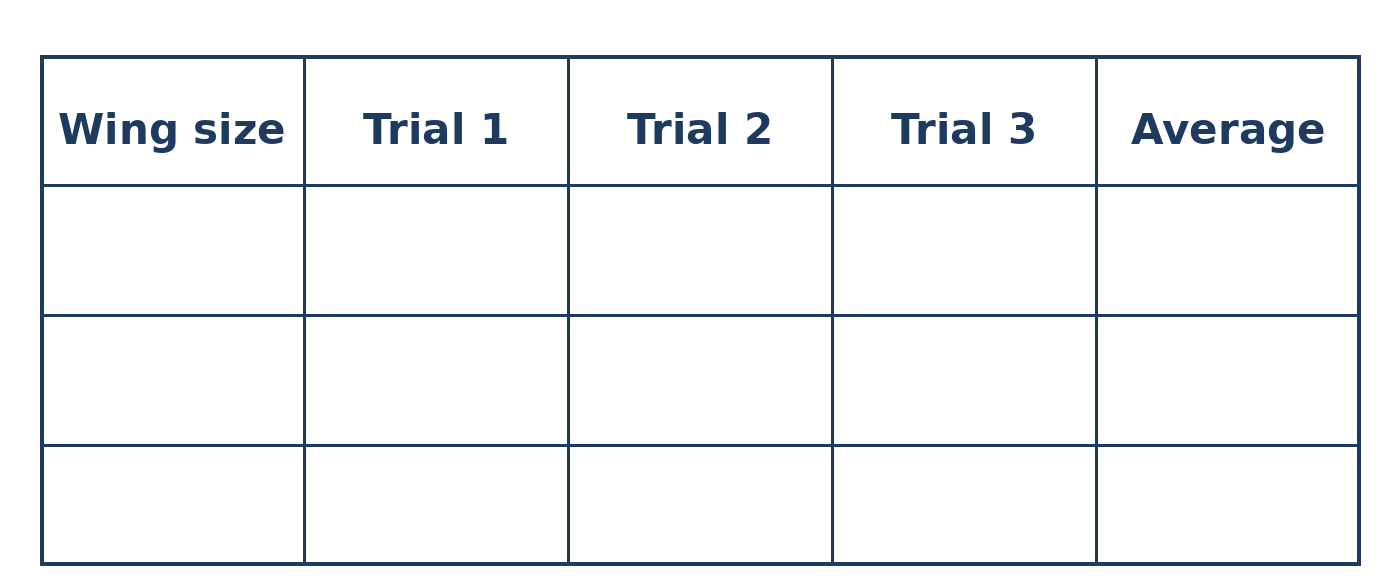
Plan: build planes that differ only in wing size, fly each one three times.
The wing size is the one thing you change. That one thing is called the independent variable.
Record each distance in a table, then average each wing size.
The result is a fair design with repeats and a table of distances.
How would you design a fair test of whether soil type affects how many seeds sprout?
Solution
Write the question and hypothesis: richer soil will sprout more seeds.
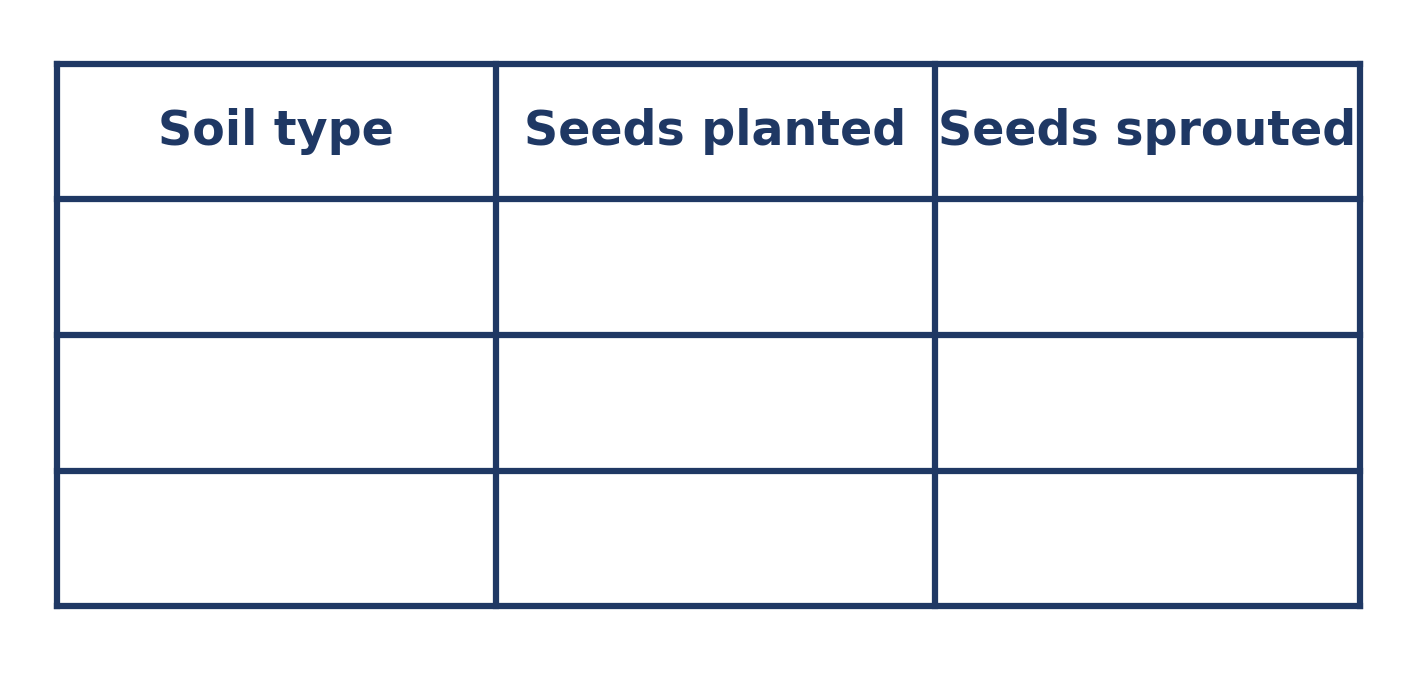
Plan: plant the same number of seeds in each soil, same water and light.
Count sprouted seeds each day and record in a table.
The result is a fair design comparing soils with equal seed numbers.
Design a test of whether a new plant food helps tomato plants grow taller. State the question and hypothesis, what you change, what you measure, and how you record results.
A student tests whether the amount of sunlight affects plant growth. She gives one group 2 hours of sun and another group 6 hours, keeping water and soil the same. What is the independent variable?
A student tests whether fertilizer helps tomatoes grow. She gives fertilizer to plants in a sunny window and gives no fertilizer to plants in a dark cupboard. What is wrong with this test?
A student tests whether the amount of water affects how tall bean plants grow. She gives one group 100 mL of water a day and another group 200 mL a day, and she records the height of each plant every week. Which of these is the thing she measures to judge the result?
What comes first in a design?
Why repeat each trial?
Why use a table?
How many factors should change at once?
What is a fair test?
Why write the hypothesis before testing?
Your score: 0 / 10
1. Plant food makes tomatoes taller: change only the plant food, measure height each week, record in a table and average each group
2. Amount of sunlight
3. Two things changed at once: fertilizer and light
4. Height of the plants
5. A question and a hypothesis
6. To check the result is reliable
7. To organise results clearly
8. One
9. Only the independent variable changes
10. So the test is planned to check that prediction