1
Gravity attracts or repels?
SCIENCE FOUNDATIONS
This document was made by AI and there may be mistakes. If a question or answer looks wrong, use the Flag a mistake button to let Brett know so he can fix it.
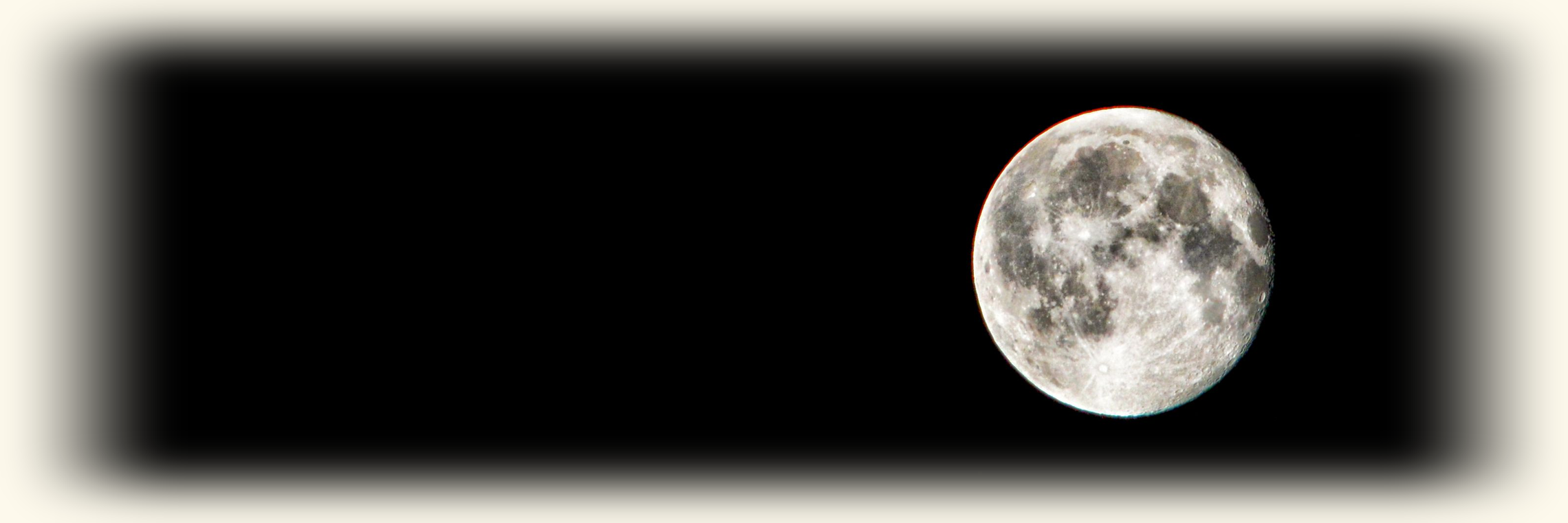
This is how you explain why the Moon stays in orbit, why dropped things fall down, and why you would weigh less on the Moon than on Earth. An engineer planning a satellite launch works out how strong gravity will be at each height to know how fast the satellite must go. A hiker feels the same force as the extra weight of a loaded pack pulling them downhill. Knowing gravity tells you why planets hold their moons, why tides rise and fall, and why your weight depends on where you stand.
Gravitational force: every mass attracts every other mass.
The force grows with the masses and shrinks with the square of the distance between them, so doubling the distance cuts the force to 14. Near Earth, weight is mass times g, W = m × g.
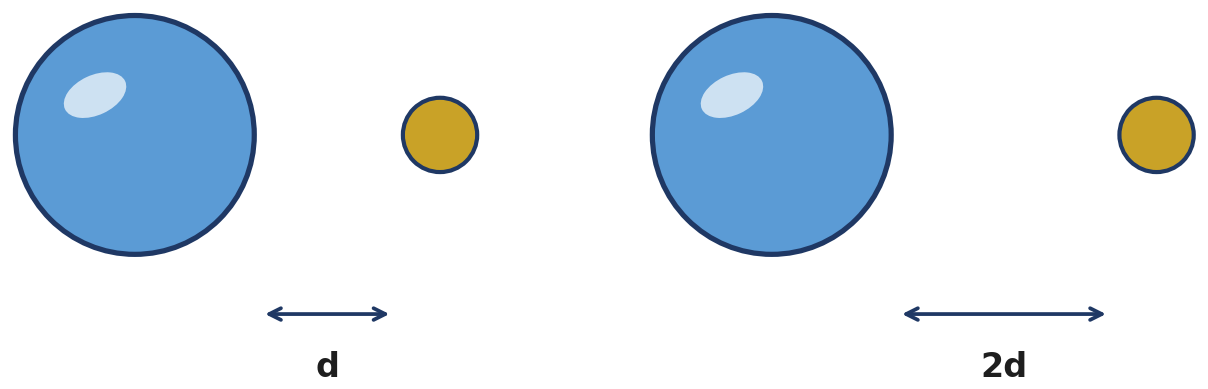
Compare gravity at twice the distance from a planet.
Solution
Recall the rule: force shrinks with distance squared.
Double the distance: distance squared becomes four times.
Force becomes one quarter.
The result is one quarter of the original force.
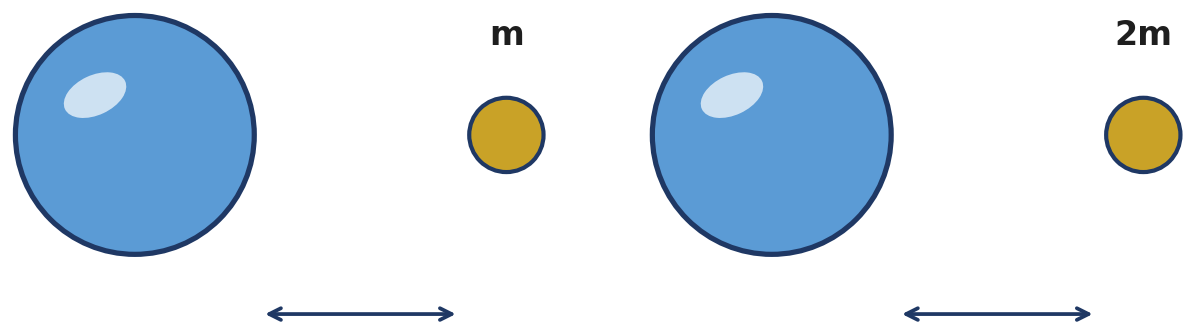
Compare gravity if one mass doubles.
Solution
Recall the rule: force grows with mass.
Double one mass: force doubles.
State the result.
The result is double the original force.
Gravity attracts or repels?
Halve the distance: force becomes?
Halve one mass: force becomes?
Double one mass and halve the distance. What happens to the force?
Weight on Earth formula?
What provides centripetal force for a planet?
Does the Moon pull on Earth?
What is the weight of a 10 kg object on Earth? Use g = 9.8 N/kg.
An astronaut on the Moon weighs less than on Earth. Why?
Which falls faster in a vacuum: heavy or light?
Your score: 0 / 10
1. Attracts
2. Four times
3. One half
4. Eight times as strong
5. Mass times 9.8
6. Gravity
7. Yes
8. 98 N
9. The Moon has less mass, so its surface gravity is weaker
10. Same rate