
1
A student exercises hard and sweats a lot, losing water from the body. How does negative feedback restore the water balance?
SCIENCE FOUNDATIONS
This document was made by AI and there may be mistakes. If a question or answer looks wrong, use the Flag a mistake button to let Brett know so he can fix it.
This is how your body keeps your temperature near 37 degrees even on a freezing day or a hot run, by sweating, shivering, and adjusting blood flow to correct the change. A nurse checks blood sugar because the body normally holds it in a narrow range, and a reading outside that range is a warning sign. A thermostat in your house does the same job, sensing a change and switching the heat on or off to bring it back. Knowing homeostasis tells you why your body works so hard to stay steady inside, even when everything outside is changing.
Homeostasis: the body keeps its internal conditions steady by negative feedback.
When a condition moves away from its set point, the body senses the change and responds in the opposite direction to bring it back.
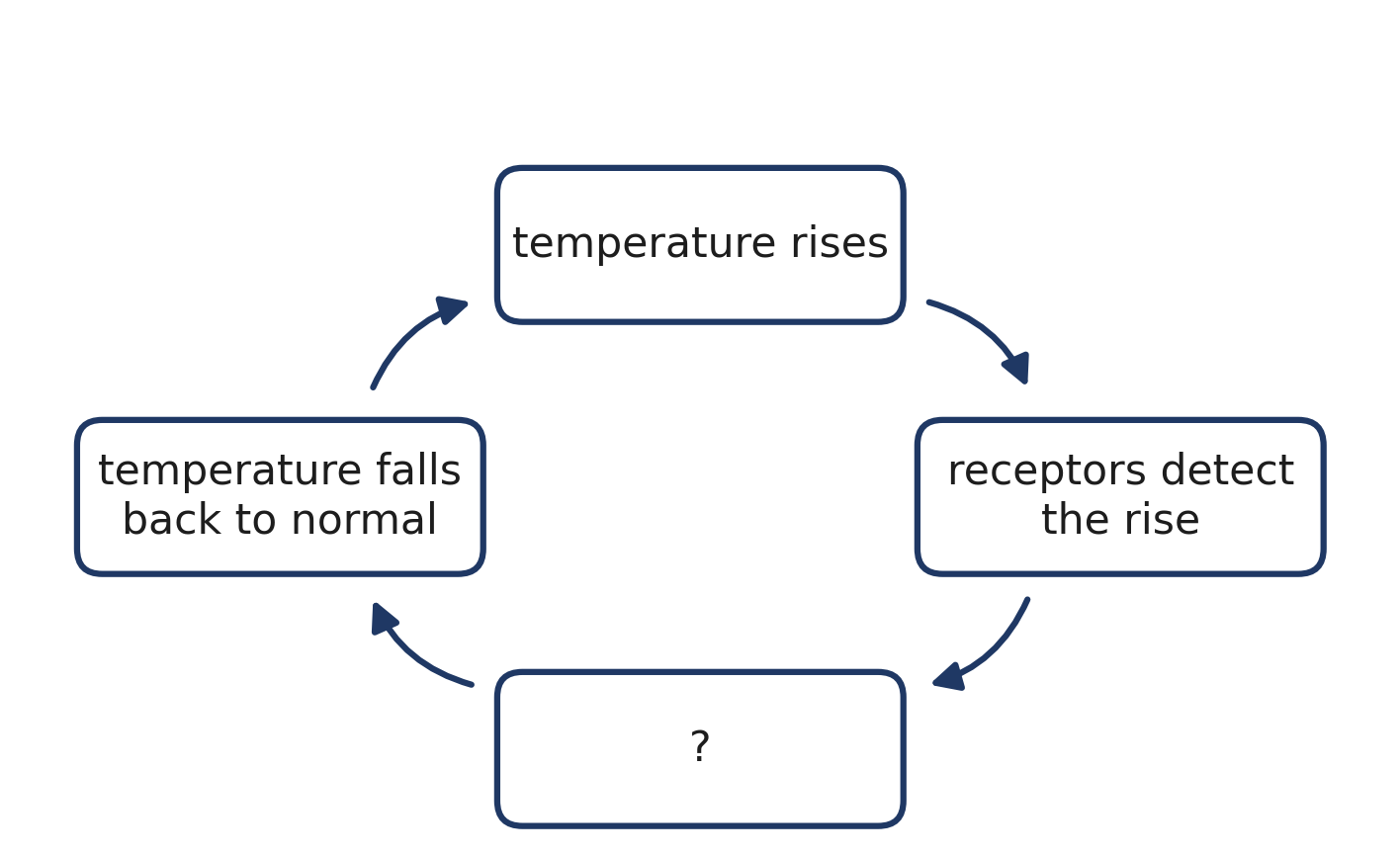
Body temperature rises. How does negative feedback correct it?
Solution
Sense the change: temperature receptors detect the rise.
Respond: sweating and widened skin blood vessels cool the body.
The result is temperature falls back toward normal, stopping the response.
The result is sweating and vessel widening restore normal temperature.
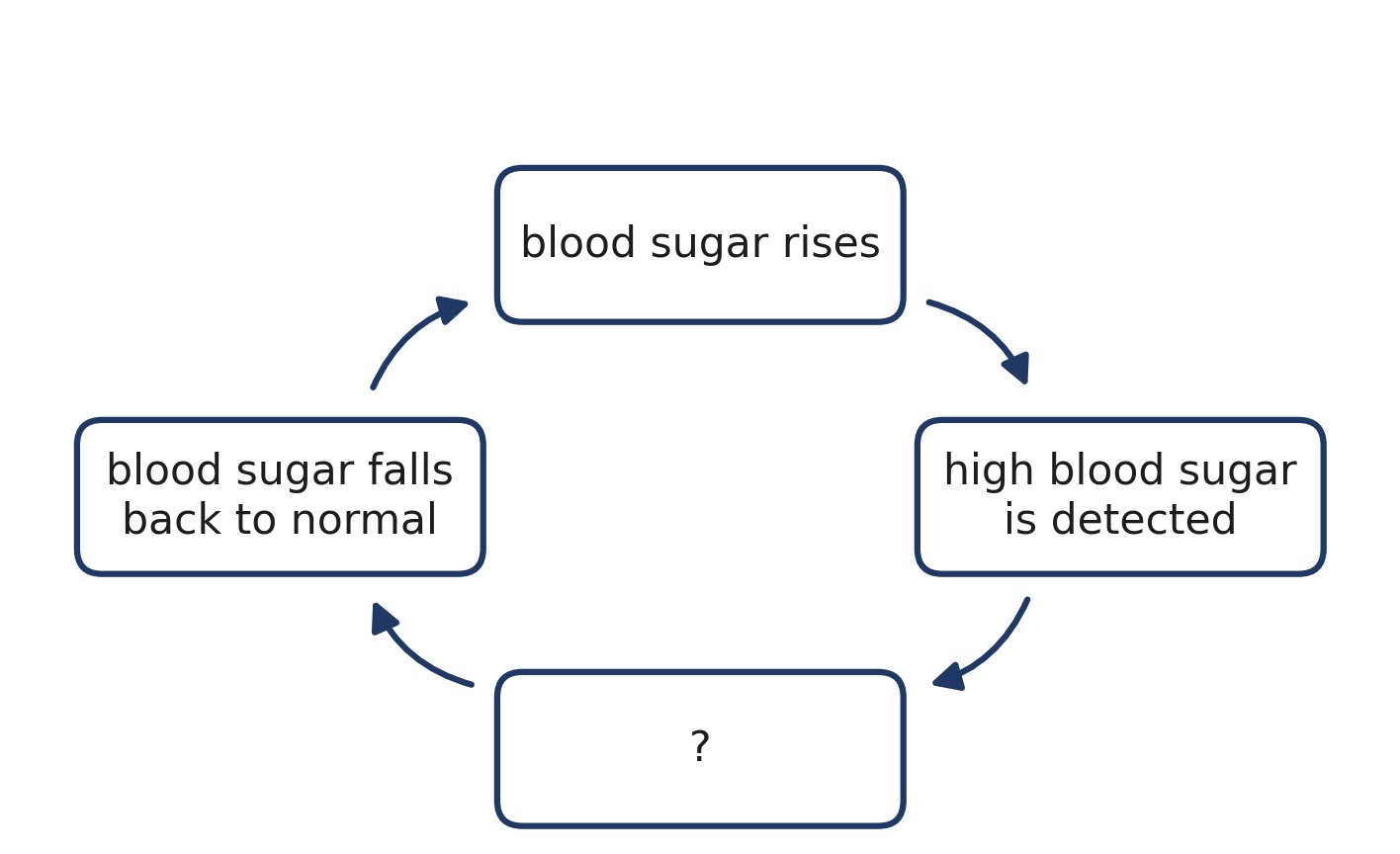
Blood sugar rises after eating. What corrects it?
Solution
Sense the change: high blood sugar is detected.
Respond: insulin is released, moving sugar into cells.
The result is blood sugar falls back toward normal.
The result is insulin lowers blood sugar toward normal.
A student exercises hard and sweats a lot, losing water from the body. How does negative feedback restore the water balance?
Blood pressure rises above normal after a stressful moment. How does negative feedback bring it back down?
Blood sugar falls below normal between meals. How does negative feedback bring it back up?
A person drinks a lot of water and the water level in the blood rises above normal. What corrects it?
Homeostasis definition?
Negative feedback definition?
Body temperature falls on a cold day. What is the response?
Blood pressure falls below normal. How does negative feedback bring it back up?
Positive or negative feedback: which keeps things stable?
Too far outside the normal range: what is the result?
Your score: 0 / 10
1. Thirst rises and urine output falls, so water is kept and replaced
2. Receptors detect the rise and blood vessels widen, so pressure falls
3. Glucagon is released and stored sugar is freed into the blood
4. More urine is made, so excess water leaves the body
5. Stable internal conditions
6. A change triggers a correction
7. Shivering, narrowed vessels
8. Heart beats faster, vessels narrow
9. Negative
10. Harm or death