1
A scale always reads 5 g high. What kind of error?
SCIENCE FOUNDATIONS
This document was made by AI and there may be mistakes. If a question or answer looks wrong, use the Flag a mistake button to let Brett know so he can fix it.
This is how you figure out why your measurements came out wrong in a lab, like a scale that was never zeroed or a stopwatch started late, so you can fix it next time. A cook whose cake keeps sinking checks whether the oven runs hot before blaming the recipe. A student whose titration keeps overshooting looks for the step where the extra drop creeps in. Knowing sources of error tells you whether your result is wrong because of your tools, your method, or just the normal wobble of measuring, and what to change.
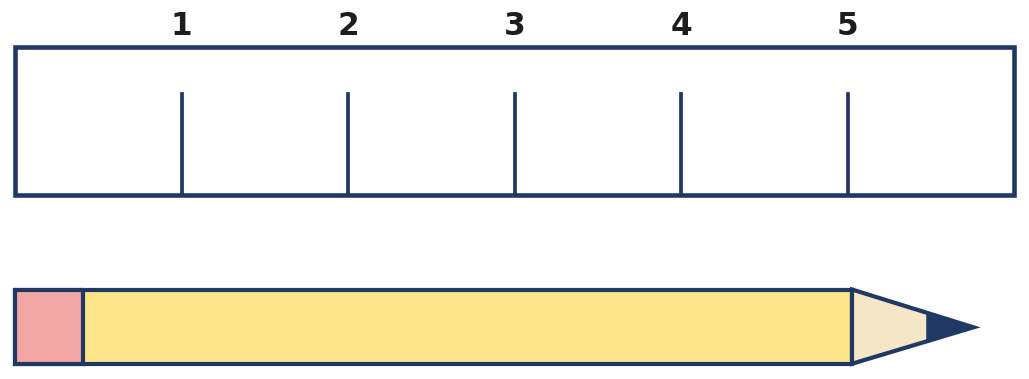
Sources of error: a systematic error shifts every reading the same way, such as a ruler that starts at 1 cm instead of 0 cm, so every length reads 1 cm too long.
A random error varies by chance, sometimes early and sometimes late, such as reaction times on a stopwatch. Fix a systematic error by correcting the instrument. Fix a random error with repeats and an average.
You measure with a ruler that starts at 1 cm, not 0 cm. What type of error is this, and how can it be fixed?
Solution
Check the instrument: the zero mark is missing from the start.
Ask how it affects readings: every length reads 1 cm too long.
Classify it: the same shift every time means systematic error.
The result is systematic error; fix by starting at the true zero or subtracting 1 cm.
When you time with a stopwatch, your reaction times vary from one trial to the next. What type of error is this?

Solution
Check the readings: they scatter around the true time.
Ask how it affects readings: sometimes early, sometimes late.
Classify it: varying by chance means random error.
The result is random error; fix with repeats and an average.
A scale always reads 5 g high. What kind of error?
Repeated measurements of a pencil length give 15.1 cm, 15.4 cm, 14.9 cm and 15.2 cm. What kind of error is this?
A student misreads a ruler once. What kind?
How do you reduce random error?
How do you reduce systematic error?
What is a systematic error?
What is a random error?
A thermometer is broken and reads low always. Fix?
Why repeat measurements?
Name one human error in timing.
Your score: 0 / 10
1. Systematic
2. Random
3. Human error
4. Repeat and average
5. Find the fault and calibrate the instrument
6. The same shift in every reading
7. Readings varying by chance
8. Replace it or calibrate it
9. To average out random variation
10. Starting the stopwatch late