1
An electron moves from a sodium atom to a chlorine atom. Is this ionic or covalent?
SCIENCE FOUNDATIONS
This document was made by AI and there may be mistakes. If a question or answer looks wrong, use the Flag a mistake button to let Brett know so he can fix it.
This is how you explain why table salt dissolves in water and conducts electricity when melted, while sugar melts into a sticky liquid and does neither. Salt is held together by the pull between charged particles, and water pulls those charges apart. Sugar is held together by shared electrons, so it stays as whole molecules that water cannot split into charges. Knowing ionic and covalent bonding tells you why some substances dissolve, conduct, and melt easily while others behave completely differently.
Ionic and covalent bonding: a metal plus a non-metal usually bonds by transferring electrons, which is ionic bonding.
Two non-metals usually bond by sharing electrons, which is covalent bonding. Ionic compounds usually have high melting points and conduct when dissolved.
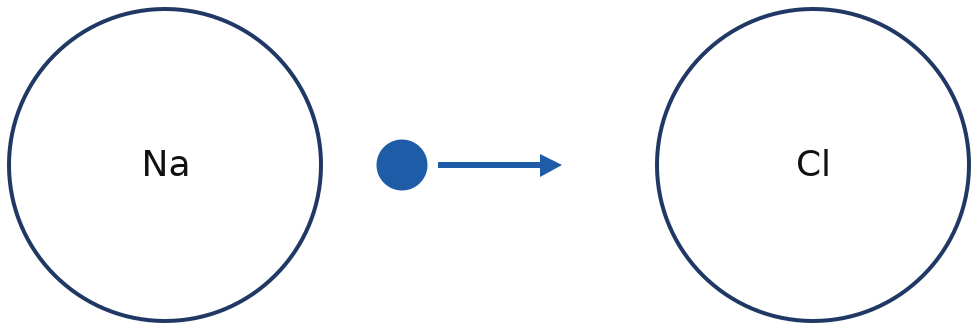
Classify sodium chloride, NaCl.
Solution
Na is a metal, Cl is a non-metal.
A metal plus a non-metal is ionic.
The result is ionic bonding.
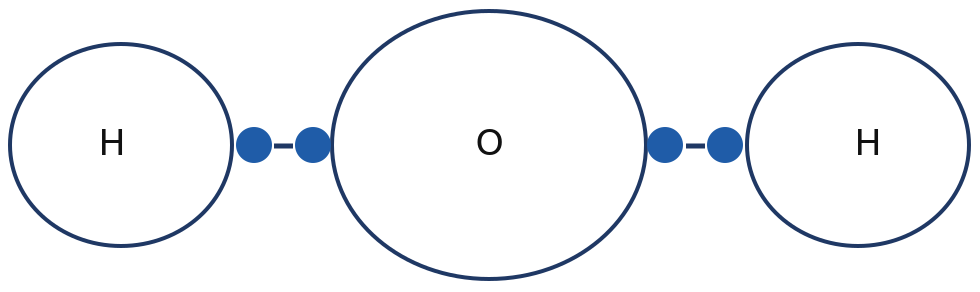
Classify water, H2O.
Solution
Hydrogen and oxygen are both non-metals.
Two non-metals together is covalent.
The result is covalent bonding.
An electron moves from a sodium atom to a chlorine atom. Is this ionic or covalent?
A carbon atom is joined to four hydrogen atoms, sharing electron pairs. Is this ionic or covalent?
What happens to electrons in ionic bonding?
What happens in covalent bonding?
Which type usually has a high melting point?
Which type conducts when dissolved?
Metal plus non-metal usually gives what?
Two non-metals usually give what?
Is magnesium oxide ionic?
Is methane covalent?
Your score: 0 / 10
1. Ionic
2. Covalent
3. Transferred
4. Shared
5. Ionic
6. Ionic
7. Ionic
8. Covalent
9. Yes
10. Yes