
1
Carbon-12 and carbon-13 have the same number of protons but different numbers of neutrons. Are they isotopes of each other?
SCIENCE FOUNDATIONS
This document was made by AI and there may be mistakes. If a question or answer looks wrong, use the Flag a mistake button to let Brett know so he can fix it.
This is how doctors use one version of an atom to scan your body and another to treat disease, and how the charged atoms in sports drinks replace what you lose in sweat. A scan tracer is an isotope that gives off a signal doctors can follow, while the salt in a sports drink is full of ions your nerves and muscles need. A smoke detector relies on a tiny amount of an isotope to sense smoke in the air. Knowing isotopes and ions tells you why atoms of the same element can behave differently, and why a charged atom is not the same as a neutral one.
Isotopes and ions: the number of protons identifies the element and never changes for that element.
Atoms with the same protons but different neutrons are isotopes, and atoms with unequal protons and electrons are ions, positive when electrons are lost and negative when electrons are gained.
Classify
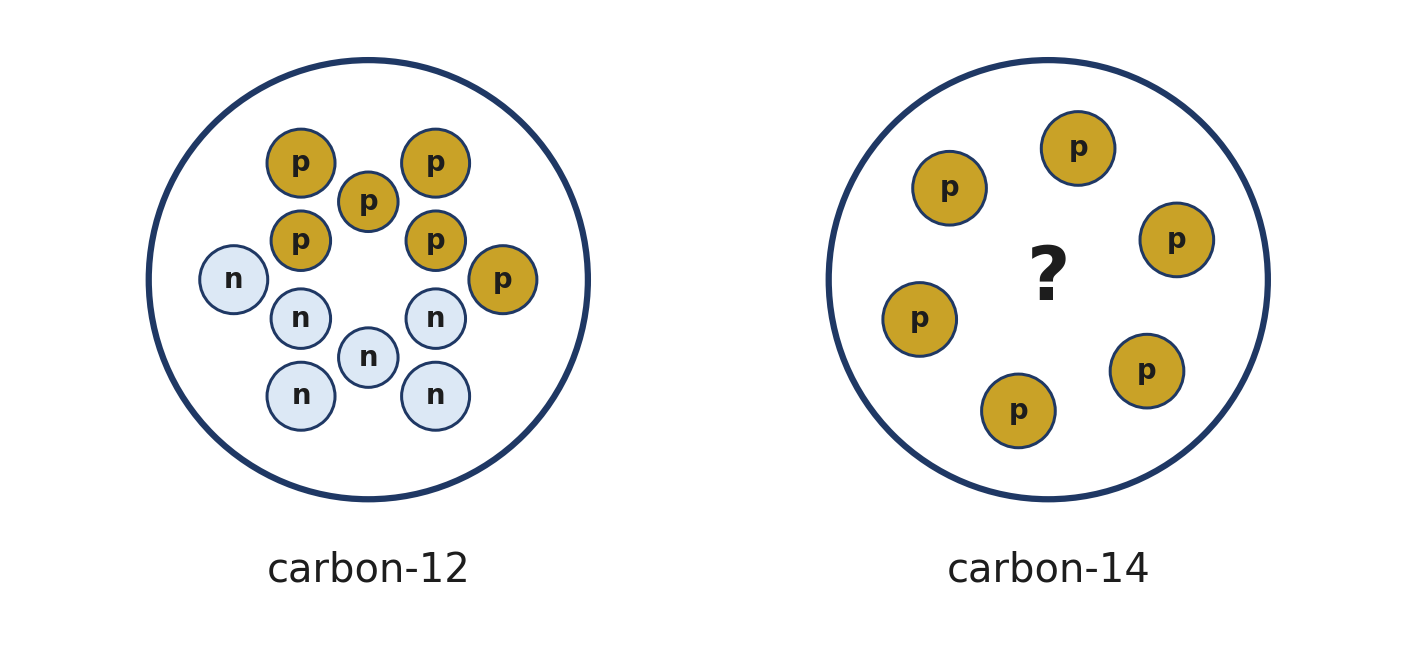
Solution
Compare protons: both have 6, so both are carbon.
Compare neutrons:
14 - 6 = 8, against 6 in carbon-12.
Same protons, different neutrons means isotope.
The result is carbon-14 is an isotope of carbon-12.
Classify sodium with 11 protons
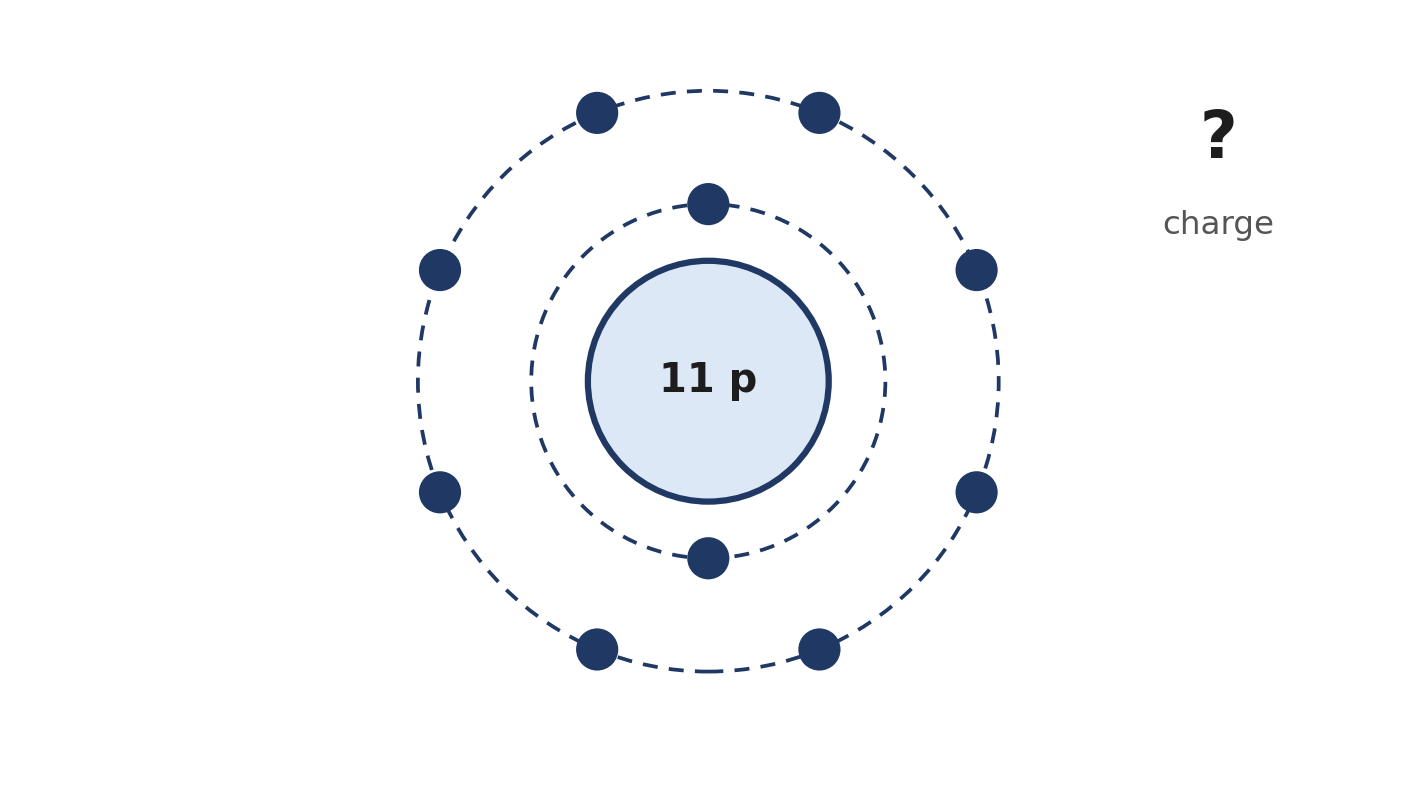
Solution
Compare protons and electrons: 11 positive against 10 negative.
Net charge:
11 - 10 = +1
Lost electrons means a positive ion, a cation.
The result is Na+ cation.
Carbon-12 and carbon-13 have the same number of protons but different numbers of neutrons. Are they isotopes of each other?
Carbon-14 has 6 protons. How many neutrons does it have?
Magnesium has 12 protons and 10 electrons. What is its charge, and is it a cation or an anion?
Chloride has 17 protons and 18 electrons. What is its charge, and is it a cation or an anion?
Same protons, different neutrons: what is it?
Same protons, different electrons: what is it?
Lost electrons give what charge?
Gained electrons give what charge?
What is a cation?
What is an anion?
Your score: 0 / 10
1. Yes
2. 8
3. +2, a cation
4. -1, an anion
5. Isotopes
6. Ions
7. Positive
8. Negative
9. A positive ion
10. A negative ion