
1
You need to measure 75 mL of water accurately. Which piece of equipment do you choose, and how do you read it?
SCIENCE FOUNDATIONS
This document was made by AI and there may be mistakes. If a question or answer looks wrong, use the Flag a mistake button to let Brett know so he can fix it.
This is how you stay safe in a lab, by knowing which glassware measures precisely, when to wear goggles, and what to do when something spills or breaks. A student who grabs a beaker instead of a pipette for a precise volume will get a wrong result before anything dangerous even happens. A worker who knows where the eyewash station is does not waste time looking for it when something splashes. Knowing lab safety and equipment tells you how to handle chemicals and tools so a small mistake stays small.
Choose equipment to measure
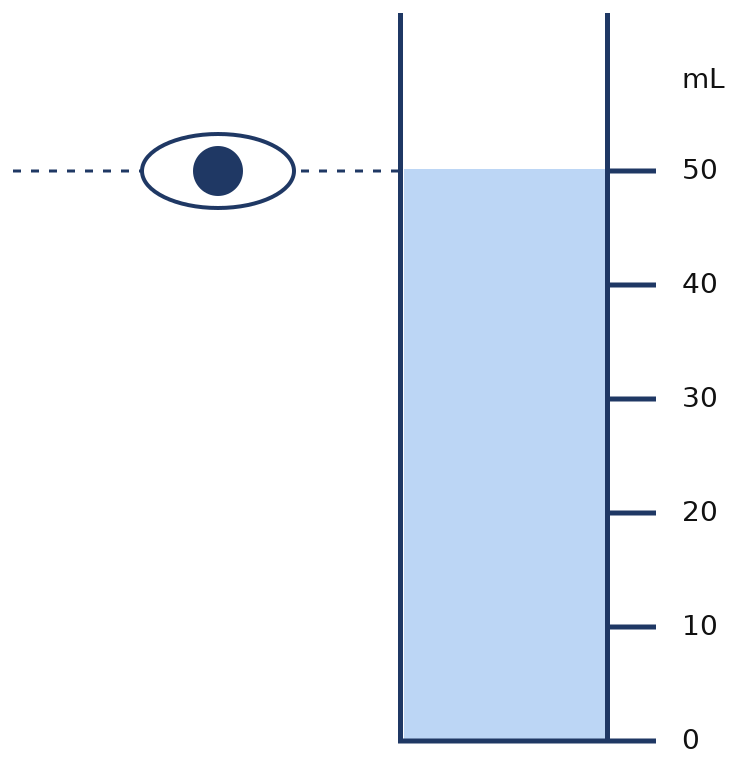
Solution
Ask what matters: accuracy, not just holding the liquid.
Compare tools: a beaker is rough, a graduated cylinder is accurate.
Choose the graduated cylinder and read at eye level.
The result is graduated cylinder, read at eye level.
Choose protection for heating a test tube.
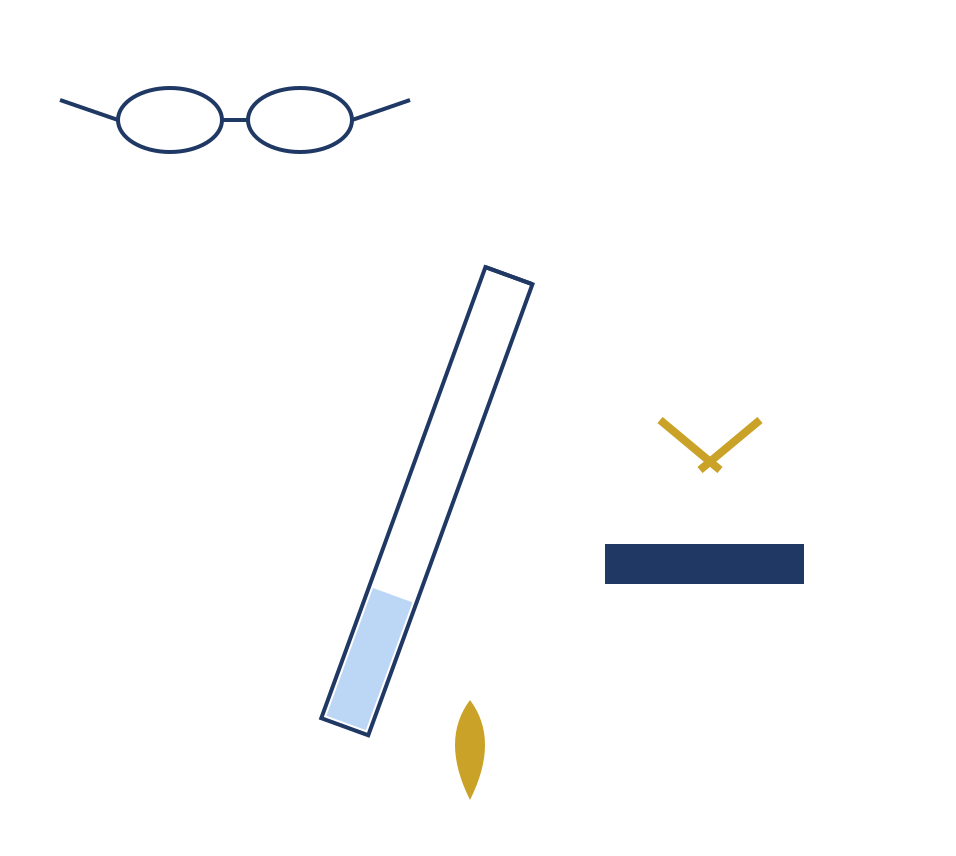
Solution
Ask what the hazard is: heat and possible splashes.
Choose goggles for eyes and tongs to hold the tube.
Point the open end away from people while heating.
The result is goggles and tongs, tube pointed away.
You need to measure 75 mL of water accurately. Which piece of equipment do you choose, and how do you read it?
You need to measure 25 mL of acid accurately. Which piece of equipment do you choose, and why not a beaker?
You are evaporating salt water in an evaporating dish over a Bunsen burner. What protection do you wear, and what do you use to hold the hot dish?
A beaker breaks on the bench and glass is scattered. What do you do?
What protects eyes from splashes?
What is used to hold a hot test tube?
What do you do if you are unsure in the lab?
What is a balance used for?
What is a Bunsen burner used for?
What do you do with a spill?
Your score: 0 / 10
1. Graduated cylinder, read at eye level
2. Graduated cylinder, because a beaker only gives rough volumes
3. Safety goggles and tongs
4. Sweep it up and put it in the broken-glass bin
5. Safety goggles
6. Tongs
7. Stop and ask the teacher
8. Measuring mass
9. Heating
10. Tell the teacher at once