1
In 2H2 + O2 -> 2H2O, 8.0 mol H2 and 3.0 mol O2 are mixed. Which reactant is limiting, and how many moles of water form?
SCIENCE FOUNDATIONS
This document was made by AI and there may be mistakes. If a question or answer looks wrong, use the Flag a mistake button to let Brett know so he can fix it.
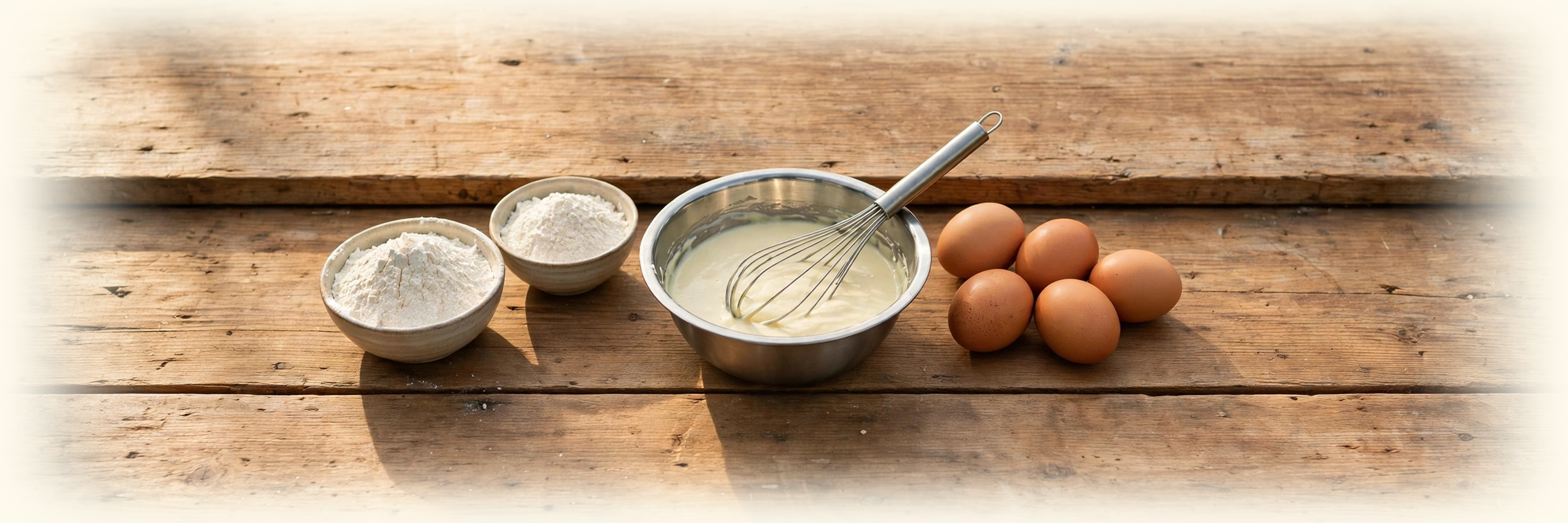
This is how a baker knows the cake batter runs out of eggs before flour, so the number of cakes depends on the eggs and the leftover flour just sits there. A factory ordering chemicals works out which ingredient runs out first, because that is what sets how much product it can make. A cook doubling a recipe finds out fast which ingredient they are short on. Knowing limiting and excess reagents tells you what really caps the amount you can make, and what will be left over when you stop.
Limiting and excess reagents: the limiting reagent is the reactant that runs out first, and it sets how much product can form.
Find it by working out how much product each reactant could make and taking the smaller amount. The other reactant is in excess and some of it is left over.
Find the limiting reagent: 4.0 moles H2 and 3.0 moles O2 in 2H2 + O2 -> 2H2O.
Solution
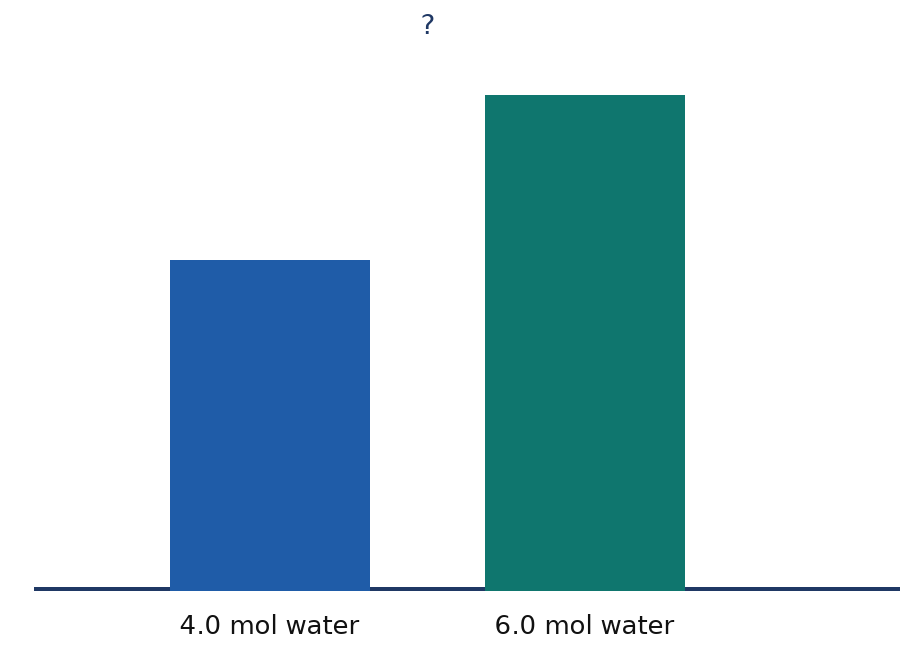
From H2: 4.0 moles H2 make 4.0 moles H2O (1 to 1).
From O2: 3.0 × 2 = 6.0 moles H2O (1 to 2)
Compare: less product comes from H2, so H2 limits.
The result is hydrogen is limiting; 4.0 moles of water form.
Find the limiting reagent: 2.0 moles N2 and 3.0 moles H2 in N2 + 3H2 -> 2NH3.
Solution
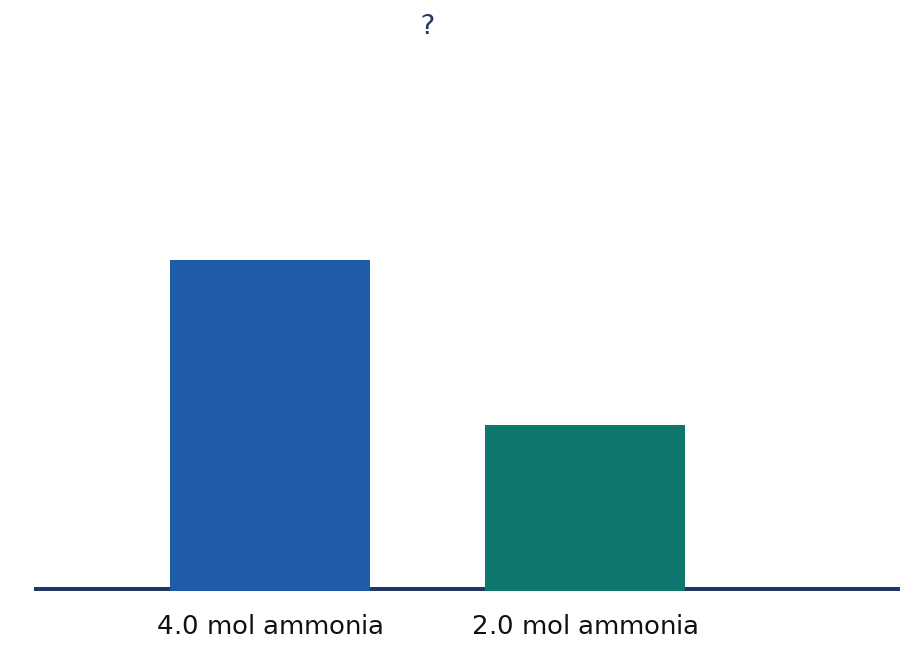
From N2: 2.0 × 2 = 4.0 moles NH3 (1 to 2)
From H2: 3.0 × 2 ÷ 3 = 2.0 moles NH3 (3 to 2)
Compare: less product comes from H2, so H2 limits.
The result is hydrogen is limiting; 2.0 moles of ammonia form.
In 2H2 + O2 -> 2H2O, 8.0 mol H2 and 3.0 mol O2 are mixed. Which reactant is limiting, and how many moles of water form?
In 2H2 + O2 -> 2H2O, 6.0 mol H2 and 2.0 mol O2 are mixed. How much H2 is left over when the reaction stops?
In N2 + 3H2 -> 2NH3, 5.0 mol N2 and 9.0 mol H2 are mixed. Which reactant is limiting, and how many moles of ammonia form?
In N2 + 3H2 -> 2NH3, 1.0 mol N2 and 6.0 mol H2 are mixed. Which reactant is in excess?
What is a limiting reagent?
What is an excess reagent?
In 2H2 + O2 -> 2H2O, how many moles of H2 are needed to react completely with 4.0 mol O2?
If only one reactant amount is given, is there a limiting reagent to find? Explain.
In N2 + 3H2 -> 2NH3, 2.0 mol N2 and 6.0 mol H2 are mixed. Which reactant is limiting?
What happens to the excess reagent when the reaction stops?
Your score: 0 / 10
1. Oxygen limits, 6.0 mol of water form
2. 2.0 mol of H2 left over
3. Hydrogen limits, 6.0 mol of ammonia form
4. Hydrogen
5. The reactant that runs out first
6. The reactant left over after the reaction stops
7. 8.0 mol of H2
8. No, the given reactant limits by default
9. Neither, both run out together
10. Some of it remains unreacted