
1
A pea plant is heterozygous Tt for height, with T dominant. What gametes can it make, and in what proportions?
SCIENCE FOUNDATIONS
This document was made by AI and there may be mistakes. If a question or answer looks wrong, use the Flag a mistake button to let Brett know so he can fix it.
This is how gardeners predict the colours of pea flowers or breeders predict a puppy's coat, from the simple rules of how gene versions separate and recombine. Mendel's pea plants showed that traits pass down in predictable patterns, not at random. A farmer breeding wheat for disease resistance still uses the same rules to choose which plants to cross. Knowing Mendelian genetics tells you how to work out the odds of a trait showing up in the next generation, before a single seed is planted.
Mendelian genetics: allele pairs separate into gametes, so each offspring gets one allele for each gene from each parent. Different genes sort independently. A dominant allele shows with one copy; a recessive allele shows only with two copies.
A pea plant is heterozygous Bb for flower colour, B dominant. What gametes can it make?
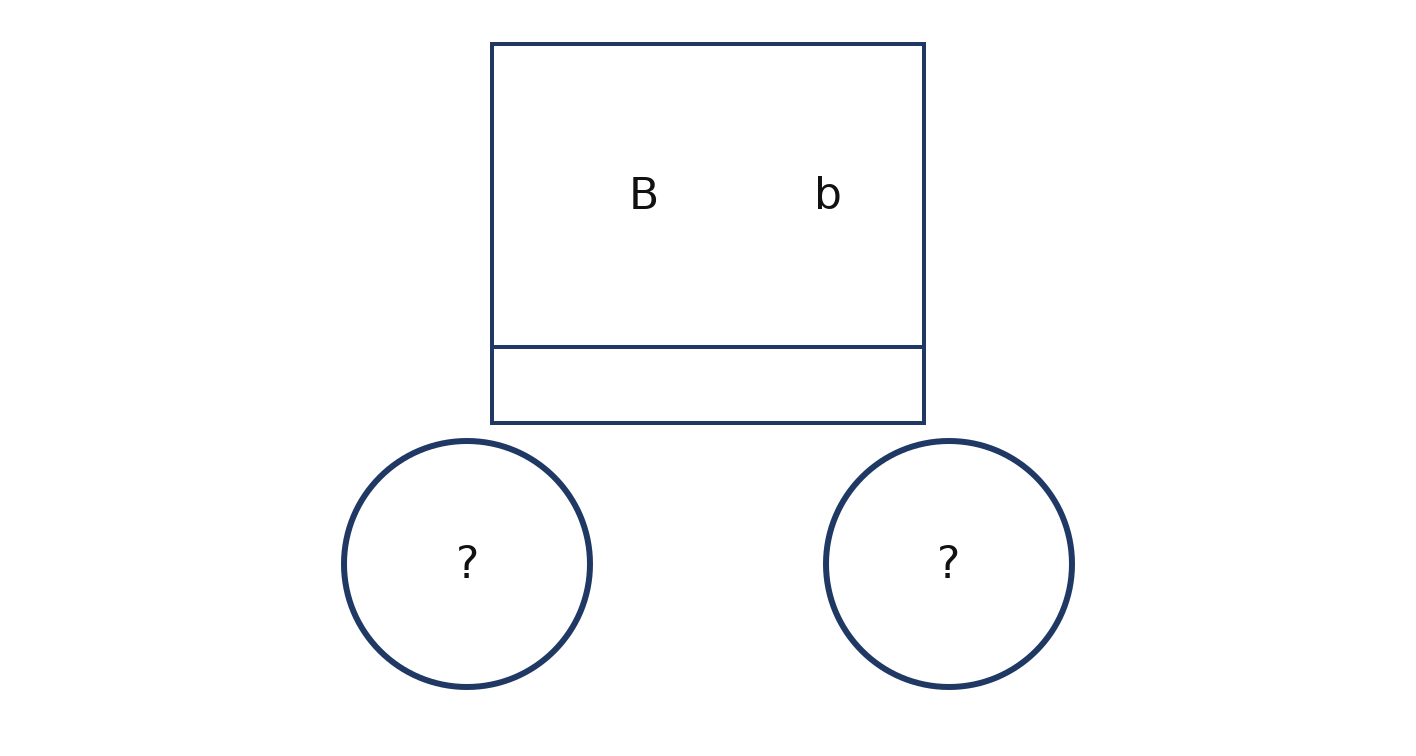
Solution
Segregation: the B and b alleles separate into different gametes.
Each gamete gets one allele for this gene.
List them: B gametes and b gametes, equally.
The result is gametes B and b.
Why do two heterozygous parents sometimes have a recessive child?
Solution
Each parent can pass the recessive allele: both make b gametes.
A child getting b from both parents is bb.
Recessive shows only with two copies, so bb shows the trait.
The result is bb child shows the recessive trait.
A pea plant is heterozygous Tt for height, with T dominant. What gametes can it make, and in what proportions?
A pea plant is heterozygous Rr for seed shape, with R dominant. What gametes can it make?
Two heterozygous Rr pea plants are crossed, with R dominant for round seeds. Explain how a wrinkled rr child can result, and what trait the child shows (its phenotype).
Two heterozygous Tt plants are crossed. What fraction of their children would you expect to be short (tt)?
State the law of segregation in one line.
State the law of independent assortment in one line.
How many alleles for each gene does an offspring get from each parent?
A Bb parent is crossed with a bb parent. What genotypes can the children have?
What is an allele?
A heterozygous Aa plant is crossed with a heterozygous Aa plant. What gametes does each parent make, and can they have an aa child? Explain.
Your score: 0 / 10
1. T gametes and t gametes, in equal proportions
2. R gametes and r gametes
3. Each parent can pass r, so a child getting r from both is rr and is wrinkled
4. 1 in 4
5. Allele pairs separate into gametes
6. Different genes sort independently
7. One
8. Bb and bb
9. A version of a gene
10. Each makes A and a gametes; yes, an aa child is possible