1
Potassium has electron configuration 2, 8, 8, 1. Which period and group is it in, and why?
SCIENCE FOUNDATIONS
This document was made by AI and there may be mistakes. If a question or answer looks wrong, use the Flag a mistake button to let Brett know so he can fix it.
This is how you find a safer substitute for a chemical, by looking at the neighbours of an element on the table that share its outer electrons and behave the same way. A manufacturer replacing a toxic solvent looks to the same column of the table for a cousin that acts alike but is less harmful. A student who knows where an element sits can guess how it will react before looking anything up. Knowing how the table is organised tells you that an element's address is a summary of how it behaves.
Periodic table organization: the period tells you how many electron shells an element has, and the group tells you how many electrons are in its outer shell.
Elements in the same group behave in similar ways because they have the same number of outer electrons.
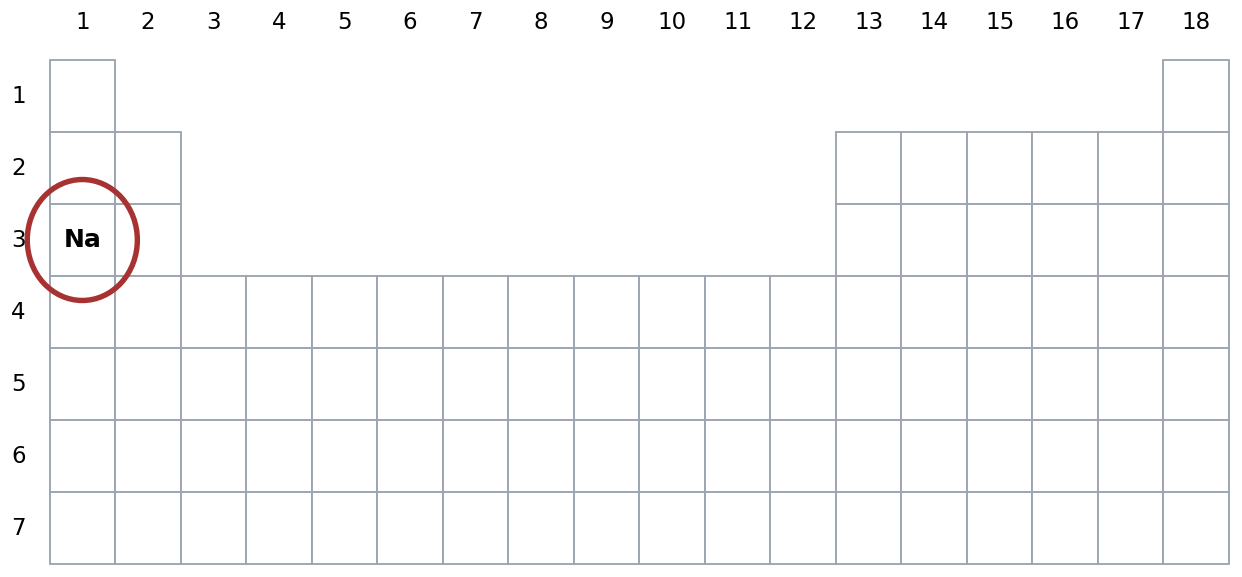
Sodium has atomic number 11 and electron configuration 2, 8, 1. Where does sodium sit in the periodic table?
Solution
Count shells: three shells means period 3.
Count outer electrons: 1 outer electron means group 1.
Read the table position: period 3, group 1
The result is sodium sits in period 3, group 1.
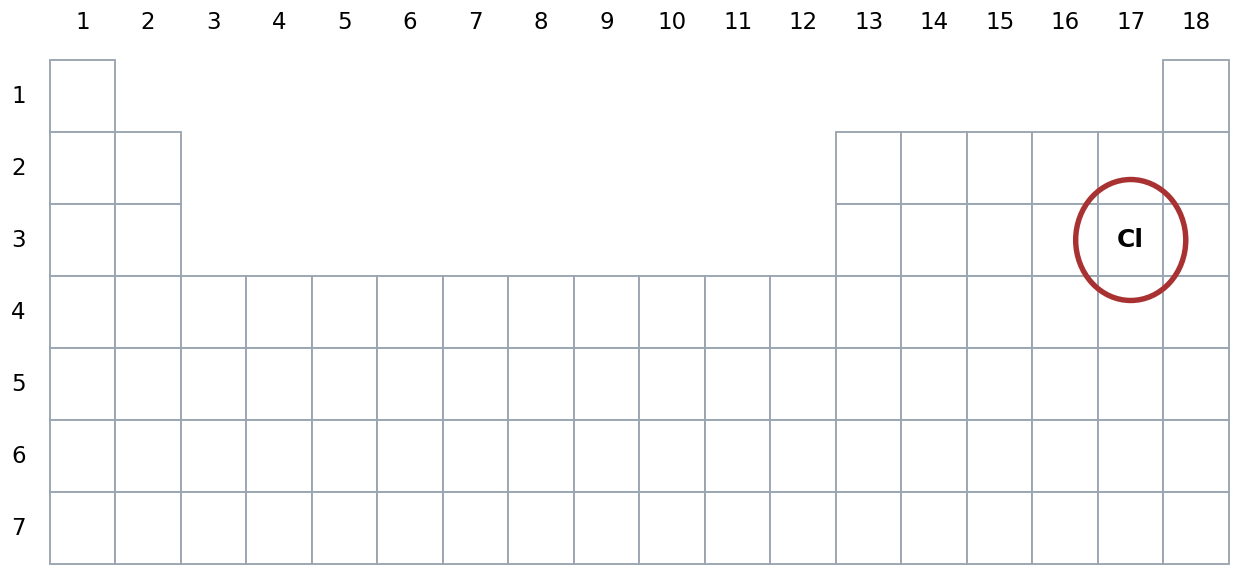
Chlorine has atomic number 17 and electron configuration 2, 8, 7. Where does chlorine sit in the periodic table?
Solution
Count shells: three shells means period 3.
Count outer electrons: 7 outer electrons means group 17.
Read the table position: period 3, group 17
The result is chlorine sits in period 3, group 17.
Potassium has electron configuration 2, 8, 8, 1. Which period and group is it in, and why?
Lithium is in period 2. How many electron shells does lithium have?
Bromine is in group 17. How many electrons are in its outer shell?
Fluorine and chlorine are both in group 17. What does that tell you about how they behave?
What does a period tell you about an element?
What does a group tell you about an element?
Which group holds the noble gases?
Which group holds the halogens?
Where are metals on the periodic table?
Magnesium is in period 3, group 2. What is its electron configuration?
Your score: 0 / 10
1. Period 4, group 1
2. 2
3. 7
4. They behave in similar ways
5. Its number of electron shells
6. It has similar outer electrons and similar chemistry to the others in the group.
7. Group 18
8. Group 17
9. On the left
10. 2, 8, 2