
1
A light ray hits a mirror at 60 degrees to the normal. What is the reflected angle?
SCIENCE FOUNDATIONS
This document was made by AI and there may be mistakes. If a question or answer looks wrong, use the Flag a mistake button to let Brett know so he can fix it.
This is how you explain the mirror image in a lake, the bent look of a straw in a glass of water, and the rainbow after rain. A fisherman aiming at a fish has to allow for the bend, because the fish is not quite where it looks. A lifeguard judging the depth of a pool faces the same trick of the light. Knowing reflection and refraction tells you why light bounces off some surfaces and bends through others, and why what you see is not always where the thing really is.
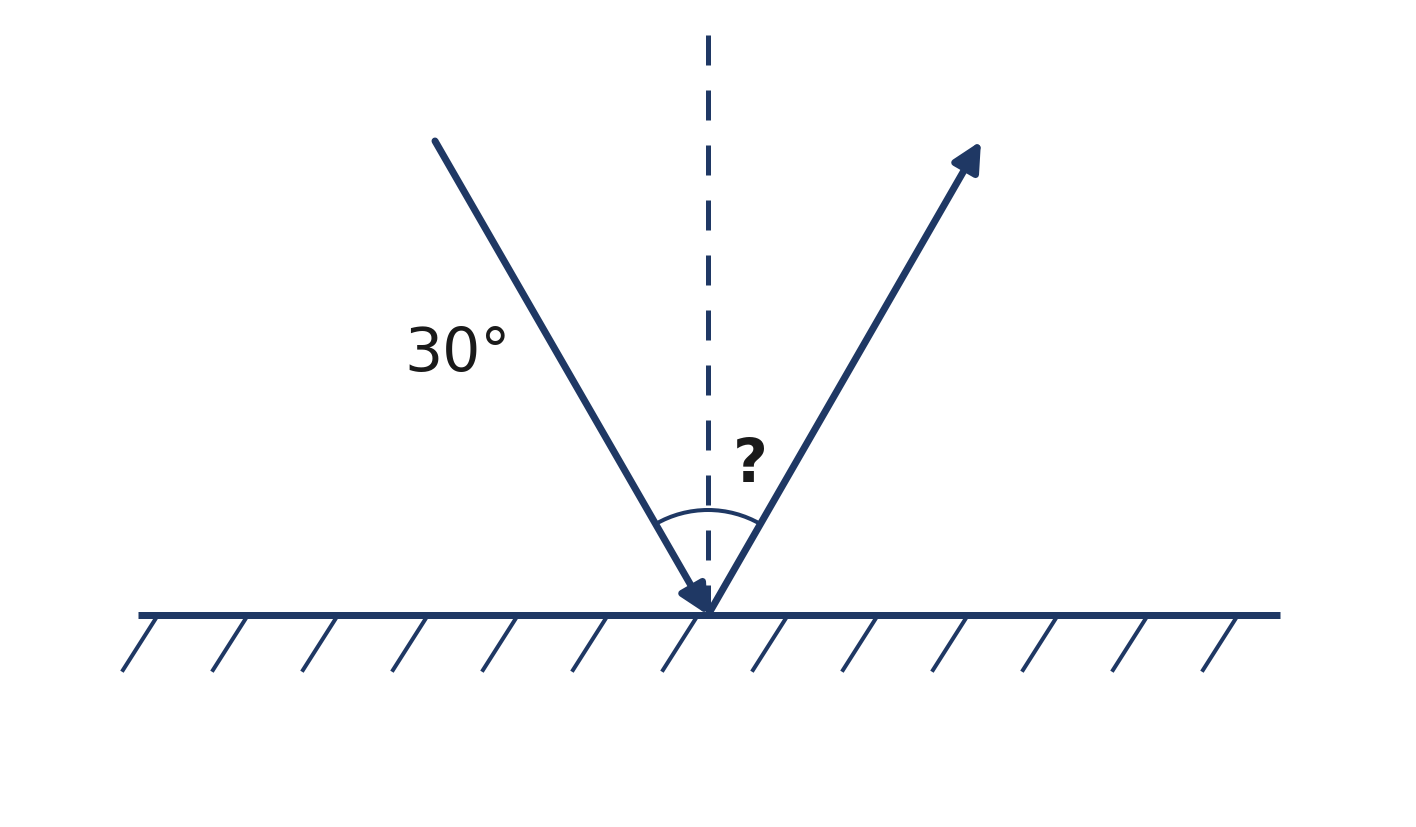
Reflection and refraction: reflection is light bouncing off a surface. The angle in equals the angle out, both measured from the normal (the line at right angles to the surface).
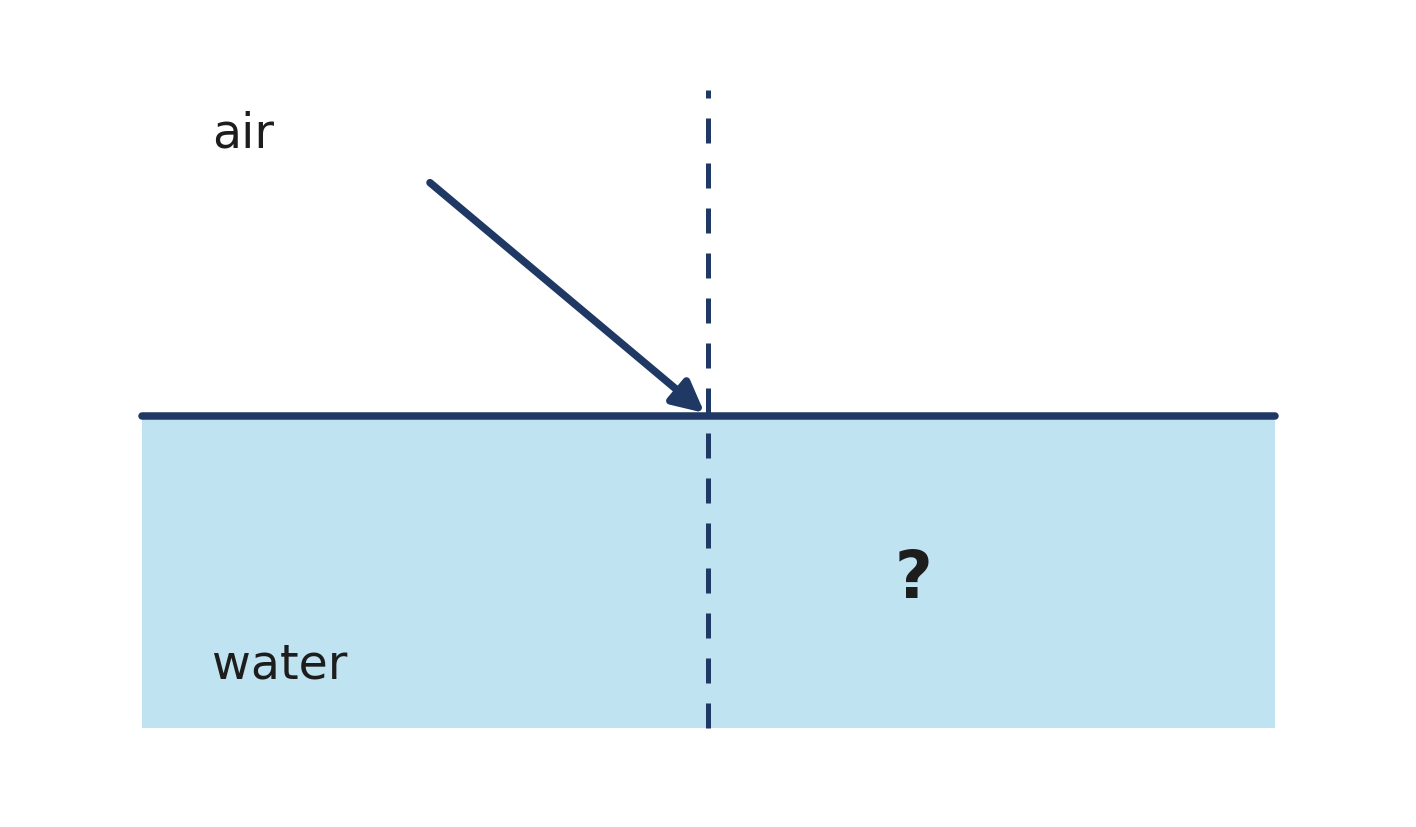
Refraction is light bending when it enters a different medium. Into a denser medium, light slows down and bends toward the normal. Into a less dense medium, light speeds up and bends away from the normal.
A light ray hits a mirror at 30 degrees
Solution
Recall the reflection rule: angle in equals angle out.
Angle in is 30 degrees from the normal.
State the reflected angle.
The result is 30 degrees from the normal.
Light enters water from air. Which way does it bend?
Solution
Ask the speed change: light slows in water, a denser medium.
As light moves into a denser medium, it angles in toward the normal.
State the direction.
The result is toward the normal.
A light ray hits a mirror at 60 degrees to the normal. What is the reflected angle?
A light ray hits a mirror at 30 degrees to the mirror surface. What is the reflected angle from the normal?
Light travels from glass into water. Which way does it bend, and why?
Light enters glass from air. Which way does it bend, and why?
A light ray enters water from air straight along the normal, at 0 degrees to the normal. Which way does it bend?
From what line are angles of incidence and reflection measured?
What is refraction?
What is reflection?
A straw in water looks bent. Why?
Does reflection change the speed of light?
Your score: 0 / 10
1. 60 degrees from the normal
2. 60 degrees from the normal
3. Away from the normal, because light speeds up in water
4. Toward the normal, because light slows in glass, a denser medium
5. It does not bend; it goes straight through
6. The normal
7. Bending of light when its speed changes in a new medium
8. Light bouncing back from a surface
9. Refraction bends the light as it leaves the water
10. No