
1
Lead nitrate and sodium chloride solutions are mixed. Will lead chloride form a solid?
SCIENCE FOUNDATIONS
This document was made by AI and there may be mistakes. If a question or answer looks wrong, use the Flag a mistake button to let Brett know so he can fix it.
This is how a chemist predicts whether mixing two clear solutions will suddenly make a cloudy solid, like the scale that forms inside a kettle or the precipitate in a water test. A plumber sees solubility rules at work when hard water leaves chalky scale on a tap. A water treatment worker uses the rules to choose a chemical that will pull a dissolved metal out of the water as a solid. Knowing solubility rules tells you which combinations stay dissolved and which ones drop out as a solid you can see.
Solubility rules: nitrates are always soluble. Group 1 compounds, compounds of the metals in the first column of the periodic table (lithium, sodium, potassium, and the rest), and ammonium compounds are always soluble. Most chlorides are soluble, except silver, lead, and mercury(I) chlorides.
Most carbonates are insoluble: calcium carbonate does not dissolve. When two solutions mix and make an insoluble compound, that solid is a precipitate.
Will silver chloride form a solid when solutions mix?

Solution
Check the chloride rule: most chlorides are soluble.
Check the exception: silver chloride is one of the exceptions.
Conclude: it forms a solid precipitate.
The result is silver chloride is insoluble; a precipitate forms.
Will sodium chloride dissolve?
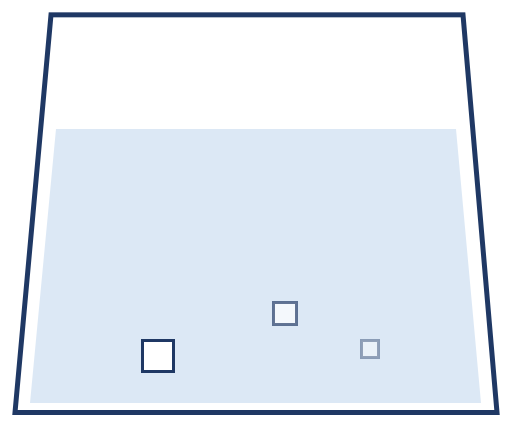
Solution
Check the group 1 rule: sodium compounds are soluble.
Check the chloride rule: it also says soluble.
Conclude: it dissolves.
The result is sodium chloride is soluble.
Lead nitrate and sodium chloride solutions are mixed. Will lead chloride form a solid?
Calcium chloride and sodium carbonate solutions are mixed. Will calcium carbonate form a solid?
Will potassium chloride dissolve in water?
Will potassium nitrate dissolve in water?
Are nitrates soluble?
Are group 1 compounds soluble?
Is calcium carbonate soluble?
Is ammonium nitrate soluble?
Which chlorides are exceptions to the soluble rule?
What is a precipitate?
Your score: 0 / 10
1. Yes, a precipitate forms
2. Yes, a precipitate forms
3. Yes, it dissolves
4. Yes, it dissolves
5. Yes
6. Yes
7. No
8. Yes
9. Silver, lead, and mercury(I) chlorides
10. An insoluble solid formed in a reaction