1
Use A = l × w with l = 7 and w = 3. What is the area?
MATHEMATICS · GRADES 7-9
This document was made by AI and there may be mistakes. If a question or answer looks wrong, use the Flag a mistake button to let Brett know so he can fix it.
This is how you turn a formula into an answer, like working out the cost of a taxi ride from the distance, or the area of a room from its length and width, by putting the numbers you know into the formula. A formula is a general rule, and it only becomes a number when your own values go in place of the letters. Putting the right number in the right spot is the whole skill, and the arithmetic after that is straightforward. That is how you use any formula in real life, from a taxi fare to the paint needed for a wall.
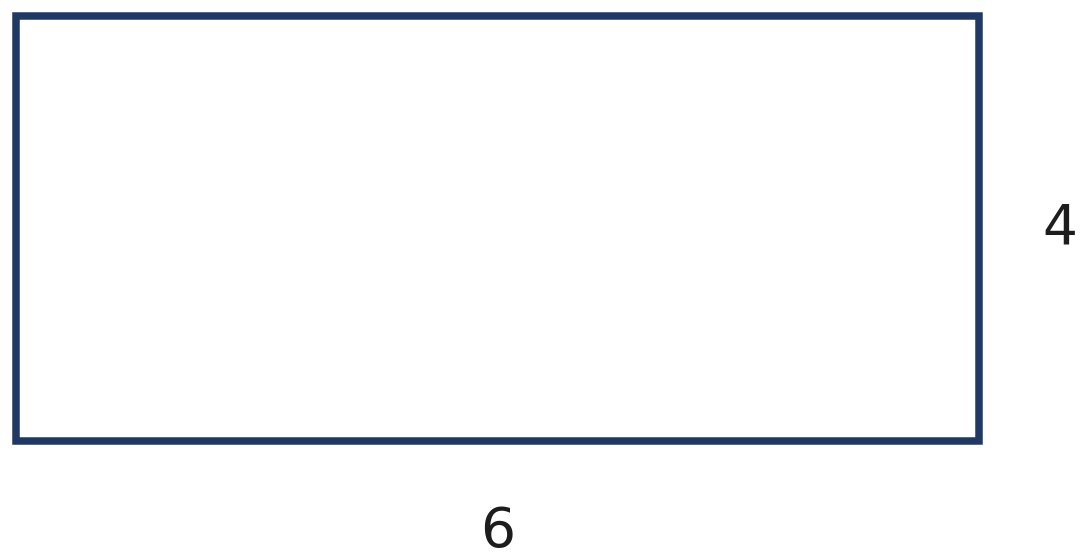
Use A = l × w to find the area of a rectangle when l = 6 and w = 4.
Solution
This is a substituting question, so start with the one rule to remember: replace every letter with its number, then work it out in the right order.
The formula is A = l × w. Put 6 in place of l and 4 in place of w, and it becomes A = 6 × 4.
So the area is 24 square units.
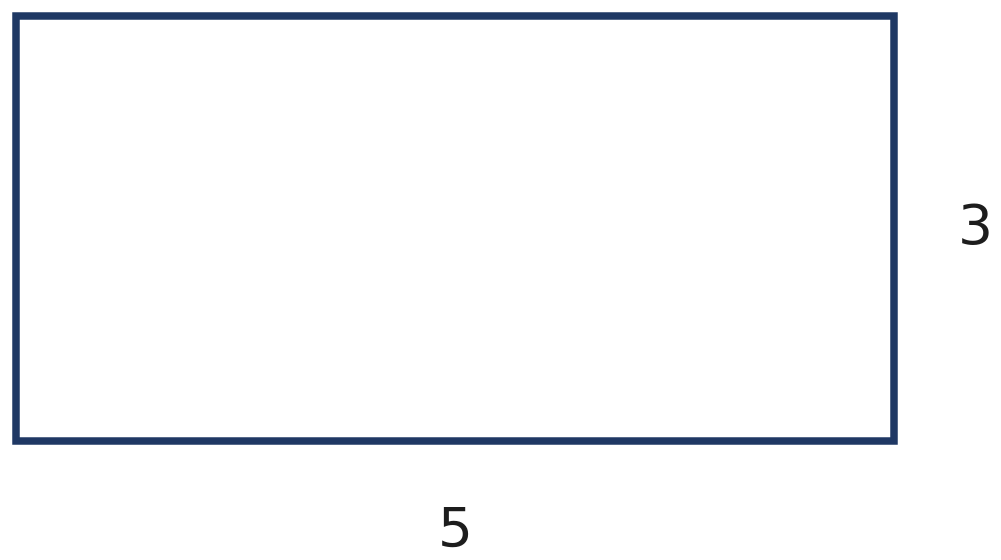
Use P = 2l + 2w to find the perimeter of a rectangle when l = 5 and w = 3.
Solution
This is a substituting question, so replace every letter with its number. The formula is P = 2l + 2w, so it becomes P = 2 × 5 + 2 × 3.
Do the multiplications first: 2 × 5 is 10, and 2 × 3 is 6. Then 10 + 6 is 16.
So the perimeter is 16 units.
Use A = l × w with l = 7 and w = 3. What is the area?
Use P = 2l + 2w with l = 10 and w = 3. What is the perimeter?
Use v = u + at with u = 6, a = 2 and t = 5. What is v?
Use F = ma with m = 10 and a = 3. What is the force?
Use C = π × d with d = 4 and π = 3.14. What is the circumference?
A plumber charges T = 40 + 18h, where h is the number of hours. How much does he charge for 2 hours?
Use F = 9C5 + 32 to convert 20 degrees Celsius to Fahrenheit.
Use A = s² with s = 5. What is the area?
Use P = 4s with s = 17. What is the perimeter?
A plumber charges T = 40 + 18h, where h is the number of hours. He charges $130. How many hours did he work?
Your score: 0 / 10
1. 21
2. 26
3. 16
4. 30
5. 12.56
6. 76
7. 68
8. 25
9. 68
10. 5