1
The main idea of Reading I is that stories, salmon, and cedar in this family carry teachings about respect and

British Columbia Explorations in Social Studies 11 (MEPSS-11) · Unit D · 25 questions
This practice test was made by AI and there may be mistakes. If a question or answer looks wrong, use the Flag a mistake button to let Brett know so he can fix it.
Reading I - Salmon, Cedar, and Stories
Use this reading for questions 1 to 3.
Every summer, my family joins relatives at the river for the salmon run. Elders tell stories about the river, about respect for the fish, and about taking only what the family needs. The stories are not just entertainment: they teach how to live well with the land and with each other.
My uncle works with cedar, and he says the tree gives wood for canoes, houses, and tools, but you must thank the tree and use it well. When I asked why we do things this way, my grandmother said: this is who we are, and the stories carry who we are forward.
The main idea of Reading I is that stories, salmon, and cedar in this family carry teachings about respect and
According to Reading I, the stories told at the river teach how to live well with the land and with
According to Reading I, cedar is valued in the family for canoes, houses, and tools, and for the teaching to use it

BC is home to many distinct First Nations, each with its own territory, language, and
Oral histories in many First Nations cultures pass knowledge through spoken stories, teachings, and memories kept by

The Indian Act of 1876 is important in Canadian history because it gave the federal government wide control over many aspects of First Nations life, including reserves and
Residential schools in Canada, run from the 1800s until the last school closed in 1996, aimed to assimilate Indigenous children by separating them from their families, languages, and
The Truth and Reconciliation Commission of Canada, which reported in 2015, called for action to address the legacy of residential schools and to build a relationship based on

The Truth and Reconciliation Commission issued 94 Calls to Action covering areas such as education, health, language, and
Reconciliation in Canada is best understood as an ongoing process of acknowledging past harms, repairing relationships, and
The schematic map of Canada uses a divided North. The territory created in 1999 in the eastern Arctic, shown on the east side of the divided North, is
Nunavut was created in 1999 as a territory where Inuit form the majority of the population and Inuit culture and language have a central place in
The Metis are a distinct Indigenous people with roots in the fur trade era and in communities such as the Red River Settlement, with traditions including the sash and the
Inuit in Canada live mainly in Inuit Nunangat, the Inuit homeland in the North, where hunting, language, and community life remain central to

The graph shows the approximate Indigenous population of Canada in millions. In 2021 the population was about
Language revitalization among First Nations in BC matters because language carries culture, knowledge, and
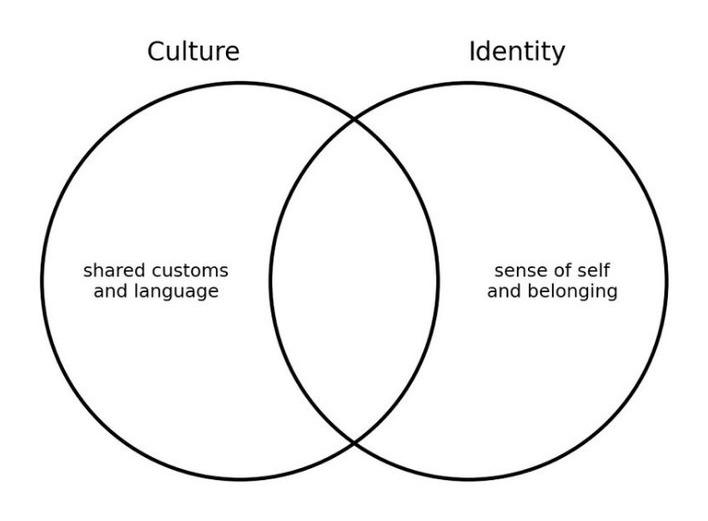
Identity is best defined as how a person or group understands who they are, shaped by family, community, history, and
The diagram compares culture and identity. Both culture and identity are shaped by
A land acknowledgement in Canada is a statement that recognizes the Indigenous peoples whose traditional territory an event or institution is on, and it is most meaningful when paired with
How does cultural appreciation differ from cultural appropriation?
Comparative cultures study helps students see that different cultures may solve similar human needs, such as food, shelter, and belonging, in

Many First Nations in BC did not sign historic treaties, so much of BC is described as unceded territory, meaning title was not
A modern treaty in northern BC concluded in 2000 gave a First Nation self government over its lands and resources, showing that treaty making in BC
The United Nations Declaration on the Rights of Indigenous Peoples affirms Indigenous rights including self determination, culture, and
BC passed legislation in 2019 to implement the United Nations Declaration on the Rights of Indigenous Peoples, a step toward aligning BC laws with its
Your score: 0 / 25