1
A heat wave is a prolonged period of unusually hot weather that poses a health risk especially to older people, young children and people working
British Columbia Physical Geography 12 (MPGEO12) · Unit D · 10 questions
This practice test was made by AI and there may be mistakes. If a question or answer looks wrong, use the Flag a mistake button to let Brett know so he can fix it.
A heat wave is a prolonged period of unusually hot weather that poses a health risk especially to older people, young children and people working
An avalanche is a rapid flow of snow down a mountain slope, often triggered by new snowfall, warming or disturbance of an unstable
Land use zoning is a mitigation tool because it can restrict building in high risk areas such as floodplains and unstable
An emergency kit helps household preparedness because it provides food, water, first aid supplies and other essentials if normal services are disrupted after a
Insurance after a natural disaster helps recovery by spreading the financial cost of damage so that one household does not bear the full
Sustainable forestry includes harvesting at a rate the forest can regrow, replanting harvested areas and protecting soil and
Fisheries management uses catch limits and closed seasons to prevent overfishing and to keep fish populations large enough to
Water conservation reduces demand on water supplies by using water efficiently in homes, farms and industry, which helps protect rivers, lakes and
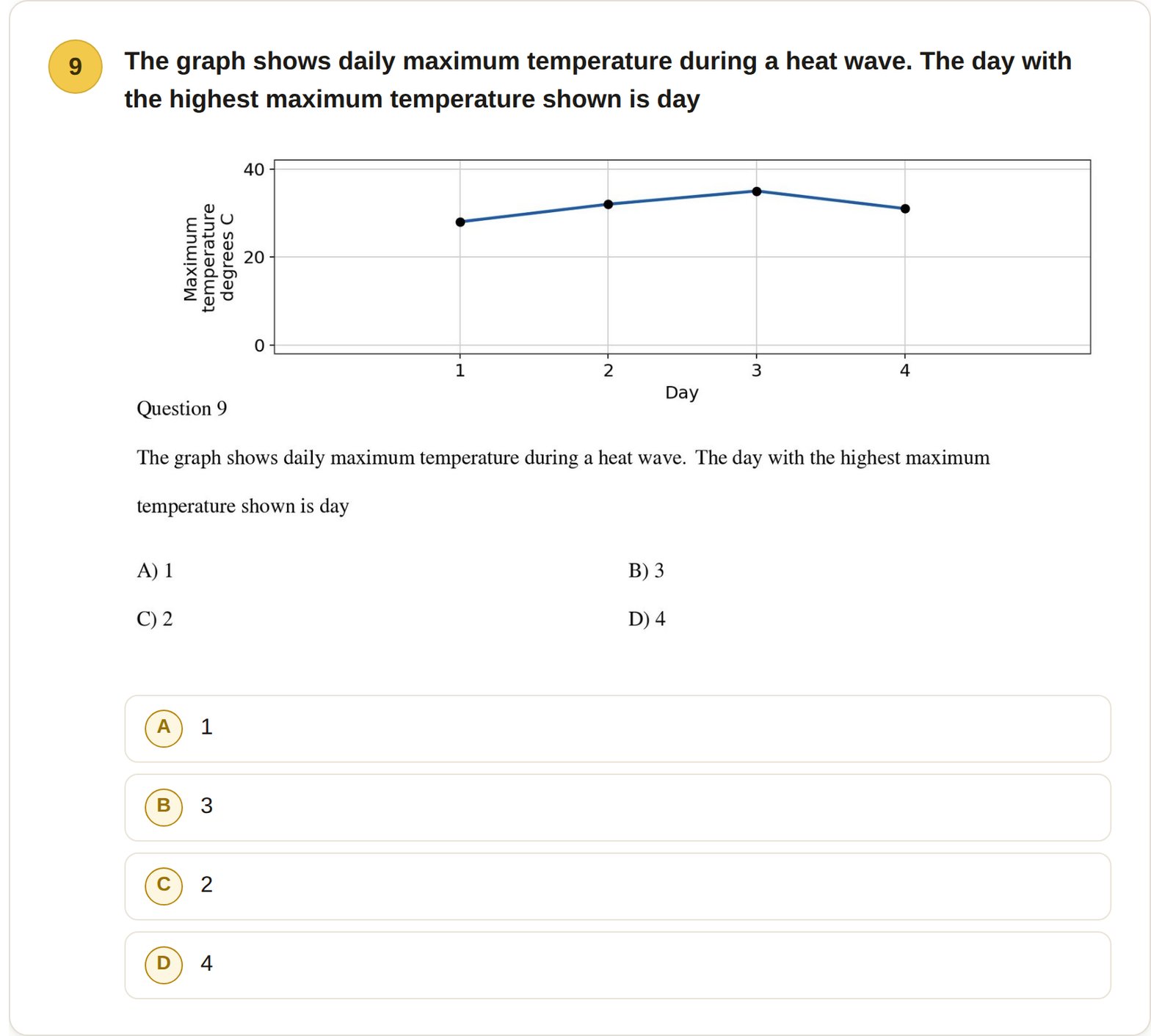
The graph shows daily maximum temperature during a heat wave. The day with the highest maximum temperature shown is day
The schematic map of Canada shows coastal storm hazard levels by region in the data shown. The region at level 3 , the highest level, is
Your score: 0 / 10