1
Potatoes left in salty water go soft. Why?
2
Glass marbles are used to model atoms. What is a limitation of the model?
3
A sunflower grows taller over the summer. Where does most of the extra mass come from?
4
A thermometer measures temperature in degrees Celsius. What is the freezing point of water on this scale?
5
A forest absorbs carbon dioxide from the air. Which process is responsible?
6
Eggs can carry Salmonella bacteria. What should you do before eating eggs?
7
What does a plant make from glucose for energy storage in seeds?
8
In the microscopy required practical, why is iodine stain added to onion cells?
9
Which type of cell has no nucleus?
10
What is glucose converted into for storage in plants?
11
Which type of respiration releases the most energy per glucose molecule?
12
A cell of real length 0.025 mm is viewed at a magnification of 500 times. How long is the image of the cell?
13
One glucose molecule releases 30 molecules of ATP in respiration. How many ATP molecules are released from 3 glucose molecules?
14
What gas is released by photosynthesis?
15
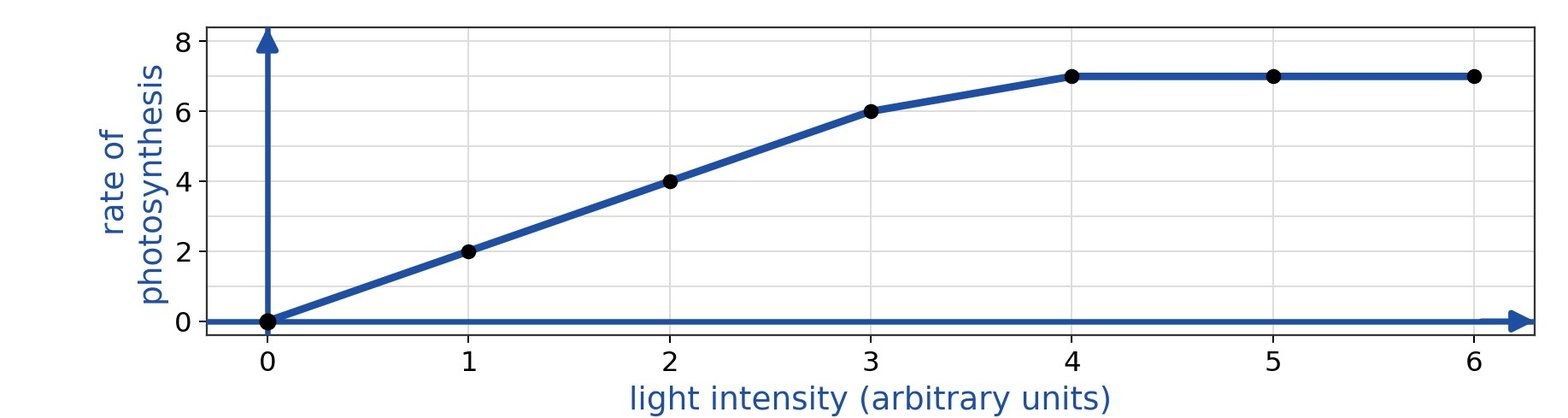
The graph shows the rate of photosynthesis at different light intensities. At which light intensity does the rate first reach its maximum?
16
Why does oxygen diffuse from the lungs into the blood?
17
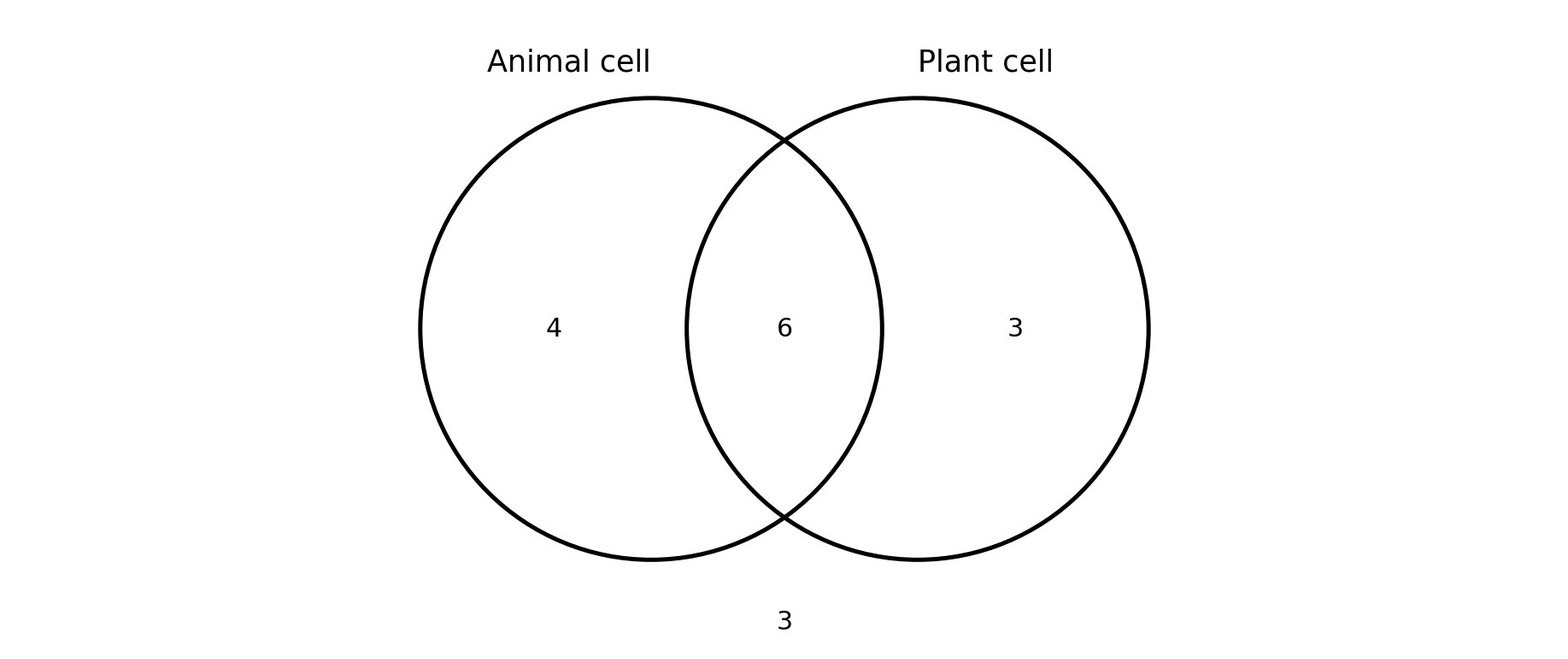
The Venn diagram shows features of animal cells and plant cells. How many features are found in both types of cell?
18
During mitosis, how many daughter cells are produced from one cell?
19
What happens to light intensity when the distance from a lamp doubles?
20
A person breathes 20 times per minute. How many breaths is that in one hour?
21
Why can plant cells keep differentiating throughout life, but most animal cells cannot?
22
Why does breathing rate increase during exercise?
23
A cell is 18 mm long in a photograph. Its real length is 0.1 mm. What is the magnification?
24
A pondweed plant releases 36 bubbles of oxygen in 6 minutes. How many bubbles does it release per minute?
25
Why is the lid of a Petri dish taped on, but not sealed all the way round?