View as PDF

England GCSE Chemistry AQA Foundation · Unit 5 · 25 questions

Energy Changes — Practice Test

This practice test was made by AI and there may be mistakes. If a question or answer looks wrong, use the Flag a mistake button so it can be fixed.

1

A chocolate cake rises in the oven. What makes it rise?

Understand It with Pulse
2

An ice cream cone melts in the Sun. What is happening to the particles in the ice cream?

Understand It with Pulse
3

A cheese pizza contains cheese made from milk. What is milk rich in?

Understand It with Pulse
4

A thermometer shows a patient's temperature is 39 degrees Celsius. Is this above or below normal body temperature?

Understand It with Pulse
5

A sandwich provides energy. Which process releases energy from food in cells?

Understand It with Pulse
6

A cup of coffee is left for an hour. What happens to its temperature?

Understand It with Pulse
7

What does the peak of a reaction profile show?

Understand It with Pulse
8

What is the overall equation for a hydrogen fuel cell?

Understand It with Pulse
9

In the combustion of methane, the energy needed to break the bonds is 1000 kJ and the energy released when new bonds form is 1400 kJ. What is the overall energy change?

Understand It with Pulse
10

What decides the voltage of a chemical cell?

Understand It with Pulse
11

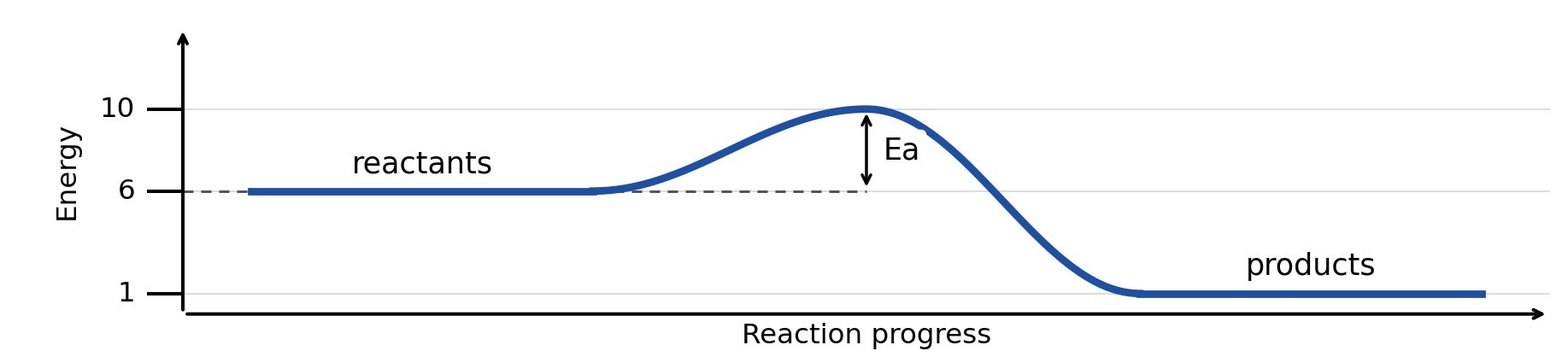
The diagram shows the energy profile for a reaction. The reactants are at energy 6 and the products are at 1. Is the reaction exothermic or endothermic?

Question 11 diagram and text as printed in the PDF
Understand It with Pulse
12

Which of these is endothermic?

Understand It with Pulse
13

A student heats 100 g of water. Its temperature rises by 20 degrees Celsius. The specific heat capacity of water is 4.2 joules per gram per degree Celsius. How much energy is transferred to the water in kilojoules?

Understand It with Pulse
14

Why does a hand warmer feel hot?

Understand It with Pulse
15

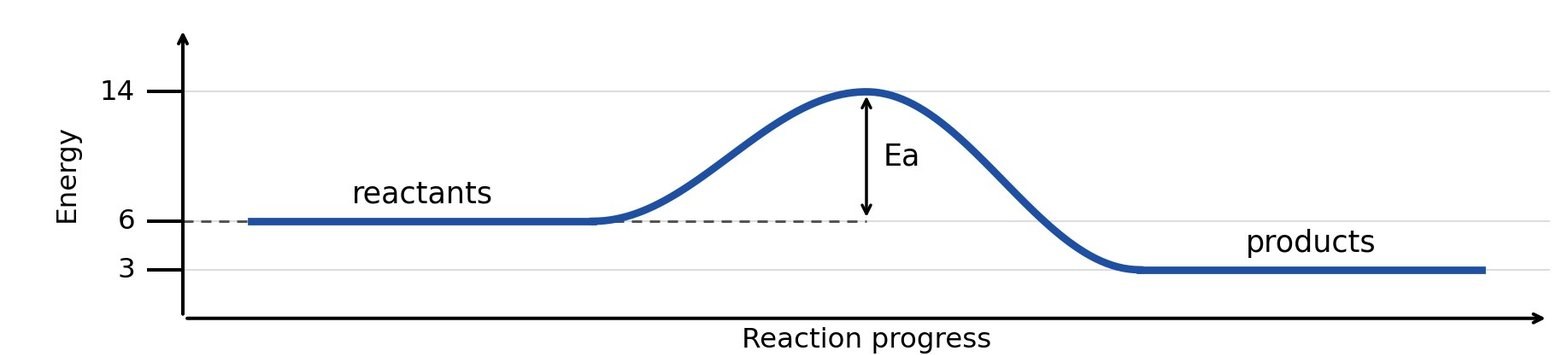
The diagram shows the energy profile for a reaction. The reactants are at energy 6, the peak is at 14 and the products are at 3. What is the activation energy?

Question 15 diagram and text as printed in the PDF
Understand It with Pulse
16

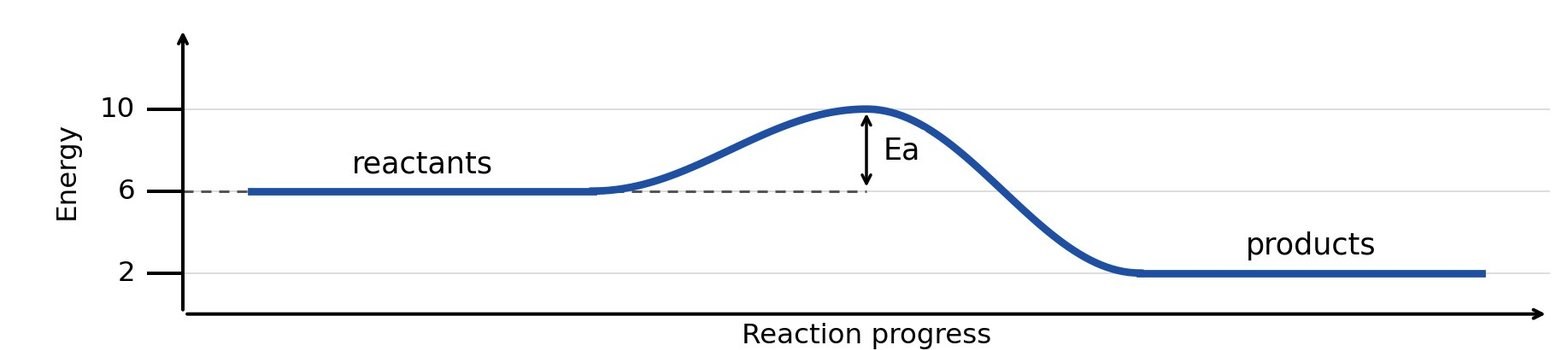
The diagram shows the energy profile for a reaction. The reactants are at energy 6 and the products are at 2. Is the reaction exothermic or endothermic?

Question 16 diagram and text as printed in the PDF
Understand It with Pulse
17

What is an endothermic reaction?

Understand It with Pulse
18

A student heats 100 g of water. Its temperature rises by 10 degrees Celsius. The specific heat capacity of water is 4.2 joules per gram per degree Celsius. How much energy is transferred to the water in kilojoules?

Understand It with Pulse
19

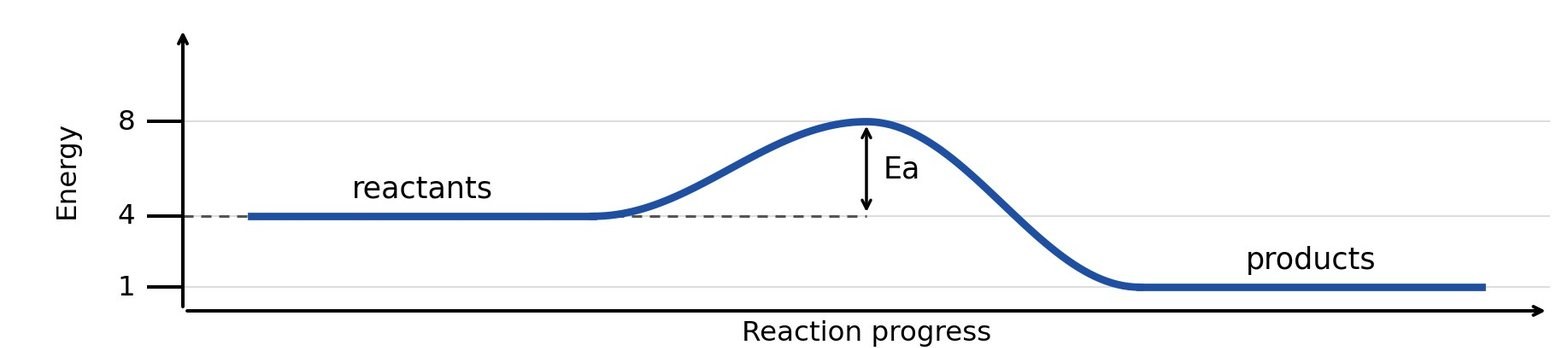
The diagram shows the energy profile for a reaction. The reactants are at energy 4, the peak is at 8 and the products are at 1. What is the activation energy?

Question 19 diagram and text as printed in the PDF
Understand It with Pulse
20

In the combustion of methane, the energy needed to break the bonds is 1000 kJ and the energy released when new bonds form is 1200 kJ. What is the overall energy change?

Understand It with Pulse
21

Why are hydrogen fuel cells not yet used in most cars?

Understand It with Pulse
22

A student heats 200 g of water. Its temperature rises by 5 degrees Celsius. The specific heat capacity of water is 4.2 joules per gram per degree Celsius. How much energy is transferred to the water in kilojoules?

Understand It with Pulse
23

What type of reaction is in a hand warmer?

Understand It with Pulse
24

On a reaction profile, what is the difference between the reactants and the products?

Understand It with Pulse
25

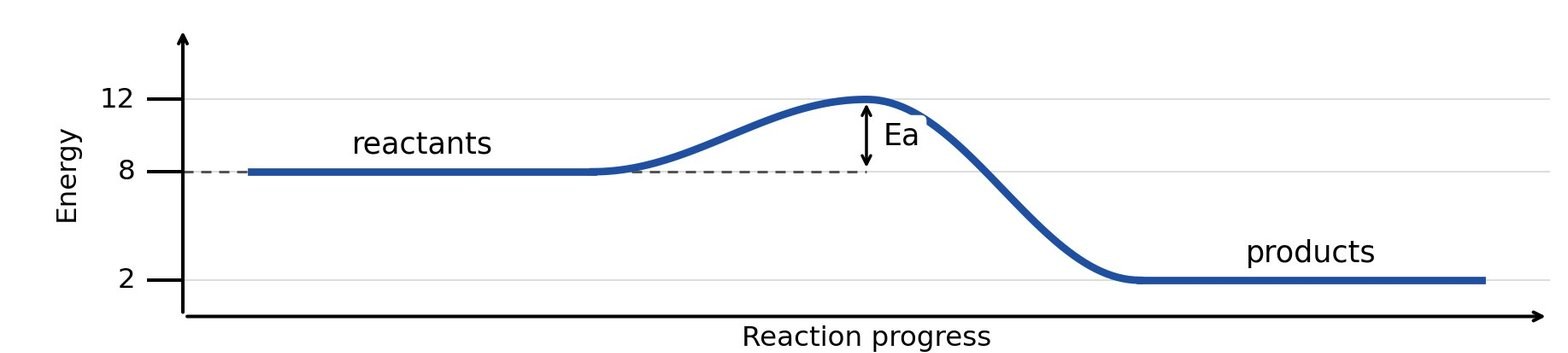
The diagram shows the energy profile for a reaction. The reactants are at energy 8, the peak is at 12 and the products are at 2. What is the activation energy?
Question 25 diagram and text as printed in the PDF
Understand It with Pulse