1
A wristwatch is used to time a race. What is speed calculated from?
England GCSE Chemistry Edexcel Higher · Unit 7 · 10 questions
This practice test was made by AI and there may be mistakes. If a question or answer looks wrong, use the Flag a mistake button so it can be fixed.
A wristwatch is used to time a race. What is speed calculated from?
A passenger train brakes. What force slows it down?
What does a steep graph of gas volume against time show?
What must particles have to react when they collide?
In a reaction, the energy needed to break bonds is 1200 kJ and the energy released making bonds is 1400 kJ. What is the overall energy change?
A solution has a concentration of 1 mol per cubic decimetre. How many moles are in 2 cubic decimetres of the solution?
In a second experiment, 30 cm cubed of gas are made in 15 seconds. What is the rate of the reaction?
A reaction should make 100 g of product but only makes 90 g. What is the percentage yield?
The diagram shows the energy profile for a reaction. The reactants are at energy 6, the peak is at 10 and the products are at 3. What is the activation energy?
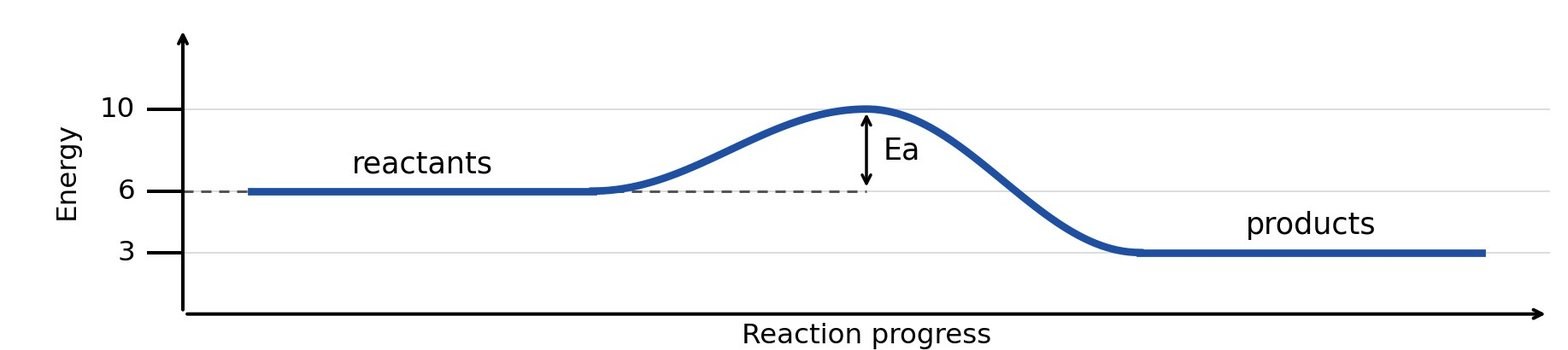
In an exothermic reaction, are the products higher or lower in energy than the reactants?
Your score: 0 / 10