1
A swimming pool holds water. Why does a person float in the pool?
A their density is close to water B they are made of air C they are heavier than water and sink D the water pushes them down
What looks wrong with Question 1?
Send anonymously
Cancel
2
A river flows to the sea. What is this part of?
A the nitrogen cycle B the carbon cycle C the rock cycle D the water cycle
What looks wrong with Question 2?
Send anonymously
Cancel
3
A sunflower turns its head to follow the Sun. What is this a response to?
A gravity B touch C water D light
What looks wrong with Question 3?
Send anonymously
Cancel
4
A cup of coffee cools down. Energy is transferred to the surroundings. What type of change is this?
A an energy transfer B a neutralisation C a chemical change D a reversible reaction
What looks wrong with Question 4?
Send anonymously
Cancel
5
An ice cream cone melts. What is the melting point of the ice cream?
A around minus 20 degrees Celsius B around 37 degrees Celsius C around 100 degrees Celsius D around 0 degrees Celsius
What looks wrong with Question 5?
Send anonymously
Cancel
6
A forest is cut down. What happens to the carbon stored in the trees?
A it is released B it turns to oxygen C it disappears D it is stored forever
What looks wrong with Question 6?
Send anonymously
Cancel
7
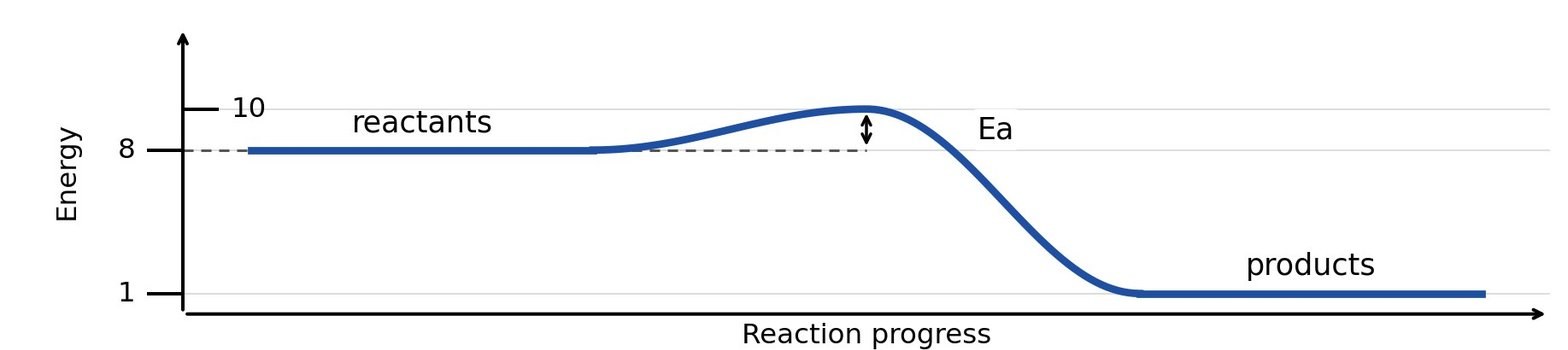
The diagram shows the energy profile for a reaction. The reactants are at energy 8 and the products are at 1. Is the reaction exothermic or endothermic?
A endothermic, energy is given out B endothermic, energy is taken in C exothermic, energy is taken in D exothermic, energy is given out
What looks wrong with Question 7?
Send anonymously
Cancel
8
Why are nitrogen oxides a problem?
A they cause acid rain and smog B they poison drinking water fast C they warm the Earth directly D they damage the ozone layer
What looks wrong with Question 8?
Send anonymously
Cancel
9
About what percentage of the air is nitrogen?
A 0.04% B 1% C 21% D 78%
What looks wrong with Question 9?
Send anonymously
Cancel
10
Which human activity releases methane?
A planting trees B farming cattle C burning coal D driving electric cars
What looks wrong with Question 10?
Send anonymously
Cancel
11
Nitrogen is 78 percent of the air. How much nitrogen is there in 1000 litres of air?
A 780 L B 790 L C 770 L D 1560 L
What looks wrong with Question 11?
Send anonymously
Cancel
12
How do scientists know carbon dioxide levels are rising?
A they count the trees B they weigh the oceans C they measure the air D they measure the sunlight
What looks wrong with Question 12?
Send anonymously
Cancel
13
Why is chlorine added to drinking water?
A to kill bacteria B to remove solids C to add fluoride D to make it taste better
What looks wrong with Question 13?
Send anonymously
Cancel
14
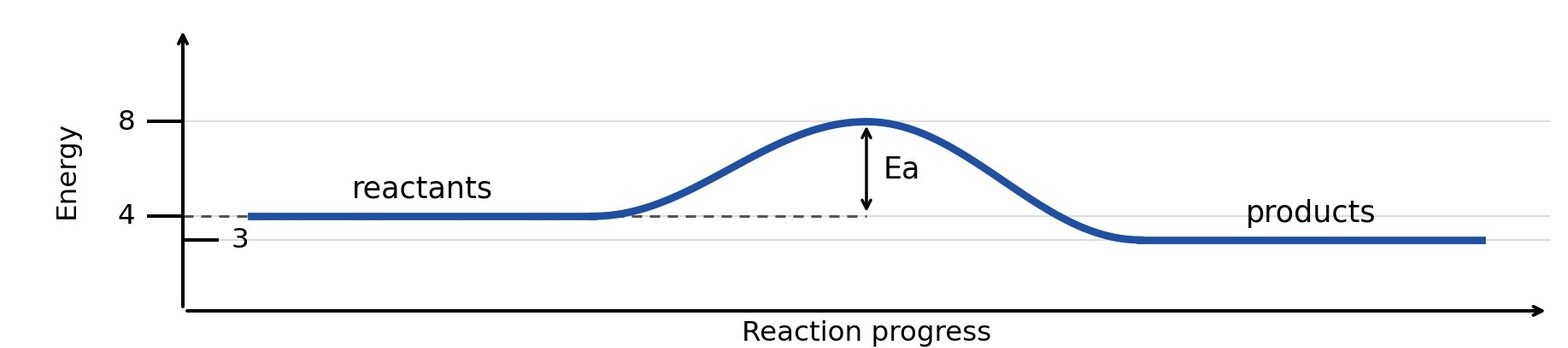
The diagram shows the energy profile for a reaction. The reactants are at energy 4, the peak is at 8 and the products are at 3. What is the activation energy?
A 5 B 1 C 12 D 4
What looks wrong with Question 14?
Send anonymously
Cancel
15
What damages the ozone layer?
A nitrogen B CFCs C oxygen D carbon dioxide
What looks wrong with Question 15?
Send anonymously
Cancel
16
A factory emits 10 tonnes of carbon dioxide per day. How much does it emit in one week?
A 70 tonnes B 60 tonnes C 80 tonnes D 140 tonnes
What looks wrong with Question 16?
Send anonymously
Cancel
17
What is sedimentation in water treatment?
A solids settling to the bottom B chemicals dissolving in the water C water boiling to make steam D solids floating to the top
What looks wrong with Question 17?
Send anonymously
Cancel
18
Oxygen is 21 percent of the air. How much oxygen is there in 500 litres of air?
A 105 L B 115 L C 210 L D 95 L
What looks wrong with Question 18?
Send anonymously
Cancel
19
How do humans increase carbon dioxide?
A by planting trees B by using solar power to make electricity C by recycling waste D by burning fossil fuels
What looks wrong with Question 19?
Send anonymously
Cancel
20
Where did the water in the oceans come from?
A rain from the clouds in the sky B ice melting at the poles C rivers flowing from the land D water vapour from volcanoes
What looks wrong with Question 20?
Send anonymously
Cancel
21
What happens to the temperature during an exothermic reaction?
A it rises B it falls C it stays the same D it falls then rises
What looks wrong with Question 21?
Send anonymously
Cancel
22
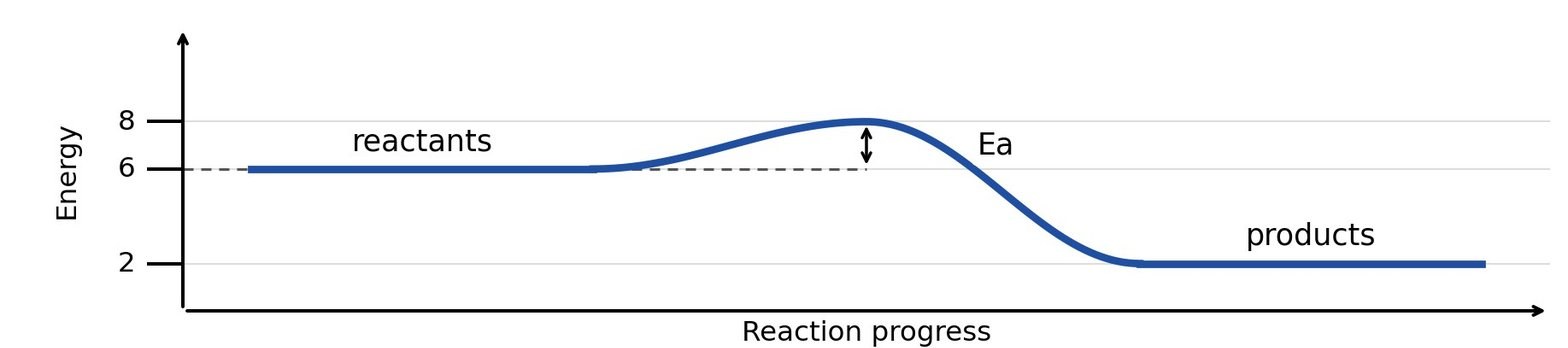
The diagram shows the energy profile for a reaction. The reactants are at energy 6 and the products are at 2. Is the reaction exothermic or endothermic?
A exothermic, energy is given out B endothermic, energy is taken in C endothermic, energy is given out D exothermic, energy is taken in
What looks wrong with Question 22?
Send anonymously
Cancel
23
Where do particulates in the air come from?
A burning fuels and dust B evaporation from the sea C rain falling from clouds D photosynthesis in plants
What looks wrong with Question 23?
Send anonymously
Cancel
24
How do greenhouse gases warm the Earth?
A they trap oxygen in the air B they absorb infrared radiation C they reflect sunlight back down D they stop the Sun from shining
What looks wrong with Question 24?
Send anonymously
Cancel
25
What is one effect of climate change on weather?
A colder summers everywhere B weather stays the same C more extreme weather D less rain everywhere
What looks wrong with Question 25?
Send anonymously
Cancel