1
An ice cream cone melts. What is the melting point of the ice cream?
A around 100 degrees Celsius B around minus 20 degrees Celsius C around 37 degrees Celsius D around 0 degrees Celsius
What looks wrong with Question 1?
Send anonymously
Cancel
2
A forest provides a habitat. What does habitat mean?
A when an organism sleeps B what an organism eats C where an organism lives D how an organism breeds
What looks wrong with Question 2?
Send anonymously
Cancel
3
A cup of coffee cools down. Energy is transferred to the surroundings. What type of change is this?
A a reversible reaction B a neutralisation C an energy transfer D a chemical change
What looks wrong with Question 3?
Send anonymously
Cancel
4
A swimming pool holds water. Why does a person float in the pool?
A their density is close to water B the water pushes them down C they are heavier than water and sink D they are made of air
What looks wrong with Question 4?
Send anonymously
Cancel
5
A sunflower turns its head to follow the Sun. What is this a response to?
A gravity B water C touch D light
What looks wrong with Question 5?
Send anonymously
Cancel
6
A river flows to the sea. What is this part of?
A the carbon cycle B the rock cycle C the nitrogen cycle D the water cycle
What looks wrong with Question 6?
Send anonymously
Cancel
7
What is the main gas in the air today?
A argon B carbon dioxide C oxygen D nitrogen
What looks wrong with Question 7?
Send anonymously
Cancel
8
What does chlorination do to drinking water?
A it kills bacteria B it adds fluoride to it C it makes it taste better D it removes solid bits
What looks wrong with Question 8?
Send anonymously
Cancel
9
In the combustion of methane, the energy needed to break the bonds is 800 kJ and the energy released when new bonds form is 1200 kJ. What is the overall energy change?
A 1200 kJ B -400 kJ C 400 kJ D -800 kJ
What looks wrong with Question 9?
Send anonymously
Cancel
10
On a reaction profile, what is the difference between the reactants and the products?
A the rate of the reaction over time B the overall energy change C the activation energy D the temperature change
What looks wrong with Question 10?
Send anonymously
Cancel
11
What damages the ozone layer?
A CFCs B oxygen C carbon dioxide D nitrogen
What looks wrong with Question 11?
Send anonymously
Cancel
12
Oxygen is 21 percent of the air. How much oxygen is there in 100 litres of air?
A 11 L B 21 L C 31 L D 42 L
What looks wrong with Question 12?
Send anonymously
Cancel
13
What is happening to sea levels?
A they stay the same B they are falling C they rise and fall equally D they are rising
What looks wrong with Question 13?
Send anonymously
Cancel
14
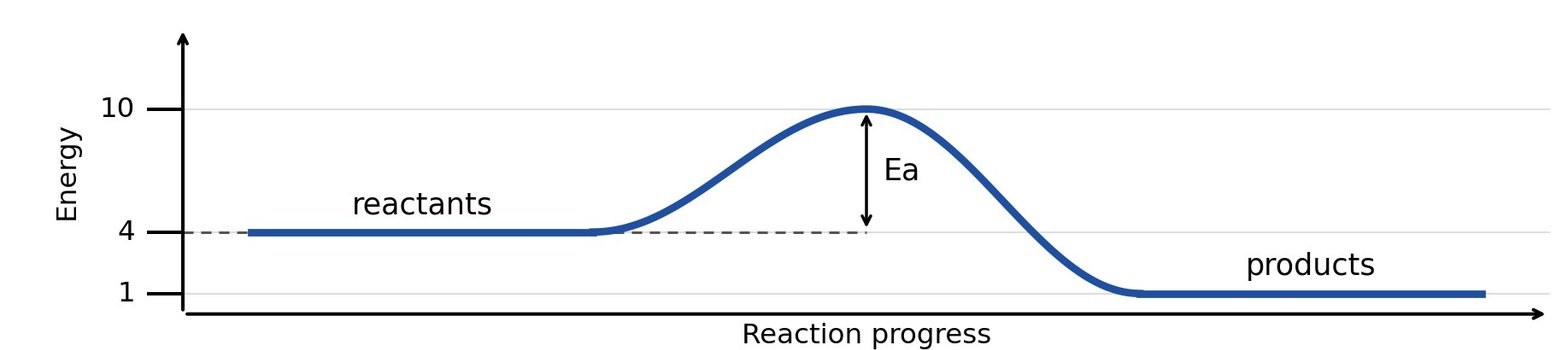
The diagram shows the energy profile for a reaction. The reactants are at energy 4, the peak is at 10 and the products are at 1. What is the activation energy?
A 14 B 9 C 6 D 3
What looks wrong with Question 14?
Send anonymously
Cancel
15
What do catalytic converters change nitrogen oxides into?
A ammonia and water B sulfur dioxide C carbon dioxide and water D nitrogen and oxygen
What looks wrong with Question 15?
Send anonymously
Cancel
16
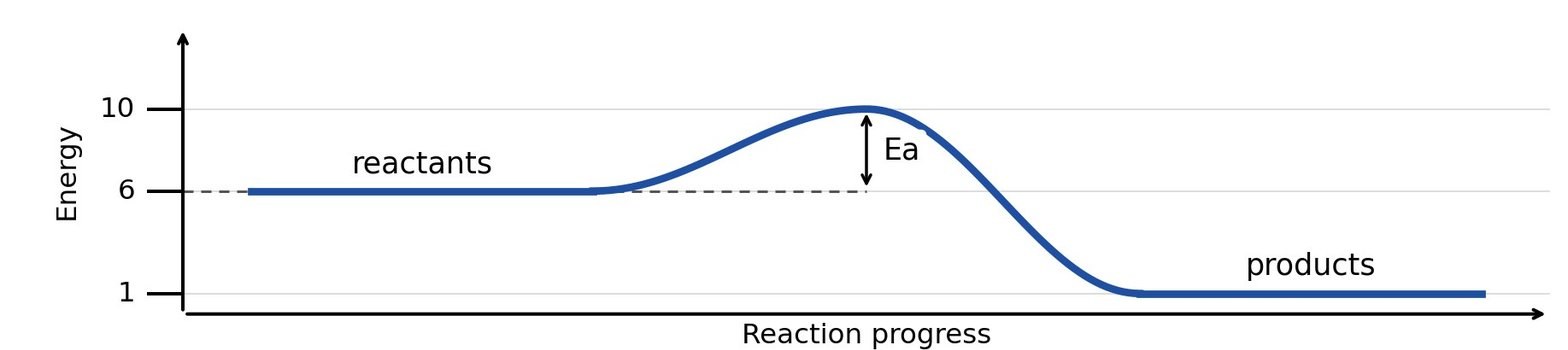
The diagram shows the energy profile for a reaction. The reactants are at energy 6 and the products are at 1. Is the reaction exothermic or endothermic?
A exothermic, energy is taken in B endothermic, energy is given out C exothermic, energy is given out D endothermic, energy is taken in
What looks wrong with Question 16?
Send anonymously
Cancel
17
In a reaction, the energy needed to break bonds is 1200 kJ and the energy released making bonds is 1600 kJ. What is the overall energy change?
A -1200 kJ B 400 kJ C 1600 kJ D -400 kJ
What looks wrong with Question 17?
Send anonymously
Cancel
18
What is the carbon cycle?
A the movement of nitrogen between the soil and the air B the movement of water between the sea, the air, the land and living things C the movement of carbon between living things and the air D the movement of oxygen between plants and animals
What looks wrong with Question 18?
Send anonymously
Cancel
19
How did the oceans form?
A the Earth cooled and cracked open B ice melted at the poles long ago over time C water vapour condensed and fell as rain D rivers filled the low land
What looks wrong with Question 19?
Send anonymously
Cancel
20
Which gases are greenhouse gases?
A nitrogen and argon B oxygen and nitrogen in the air C carbon dioxide and methane D oxygen and water vapour only
What looks wrong with Question 20?
Send anonymously
Cancel
21
A factory emits 10 tonnes of carbon dioxide per day. How much does it emit in one week?
A 70 tonnes B 60 tonnes C 80 tonnes D 140 tonnes
What looks wrong with Question 21?
Send anonymously
Cancel
22
What happens to the temperature during an endothermic reaction?
A it falls B it stays the same C it rises then falls D it rises
What looks wrong with Question 22?
Send anonymously
Cancel
23
Nitrogen is 78 percent of the air. How much nitrogen is there in 1000 litres of air?
A 770 L B 1560 L C 780 L D 790 L
What looks wrong with Question 23?
Send anonymously
Cancel
24
In a reaction, the energy needed to break bonds is 1000 kJ and the energy released making bonds is 800 kJ. Is the reaction exothermic or endothermic?
A exothermic, more energy is given out B endothermic, more energy is given out C exothermic, more energy is taken in D endothermic, more energy is taken in
What looks wrong with Question 24?
Send anonymously
Cancel
25
In the combustion of methane, the energy needed to break the bonds is 1000 kJ and the energy released when new bonds form is 1400 kJ. What is the overall energy change?
A -400 kJ B -1000 kJ C 400 kJ D 1400 kJ
What looks wrong with Question 25?
Send anonymously
Cancel