1
A cup of coffee cools down. Energy is transferred to the surroundings. What type of change is this?
A a neutralisation B a reversible reaction that can go both ways C an energy transfer, not a chemical change D a chemical change
What looks wrong with Question 1?
Send anonymously
Cancel
2
A forest absorbs carbon dioxide from the air. Which process is responsible?
A decomposition in the soil B combustion C respiration D photosynthesis
What looks wrong with Question 2?
Send anonymously
Cancel
3
Horses eat grass. What trophic level are horses?
A producers B primary consumers C decomposers D secondary consumers
What looks wrong with Question 3?
Send anonymously
Cancel
4
A sunflower is left in bright light. Its leaves photosynthesise faster than in dim light. What else would increase the rate?
A more carbon dioxide in the air B a lower temperature C less chlorophyll in the leaves of the plant D less water in the soil
What looks wrong with Question 4?
Send anonymously
Cancel
5
A castle is built of limestone. What is limestone made of?
A calcium carbonate B sodium chloride, common salt C calcium sulfate, found in plaster D magnesium oxide, a white powder
What looks wrong with Question 5?
Send anonymously
Cancel
6
Rabbits breed quickly. What does this mean for the population?
A it always stays small B it never changes C it can grow fast D it always falls
What looks wrong with Question 6?
Send anonymously
Cancel
7
A mother has blood group O and a father has blood group AB. Which blood group can their children NOT have?
A A B AB C O D B
What looks wrong with Question 7?
Send anonymously
Cancel
8
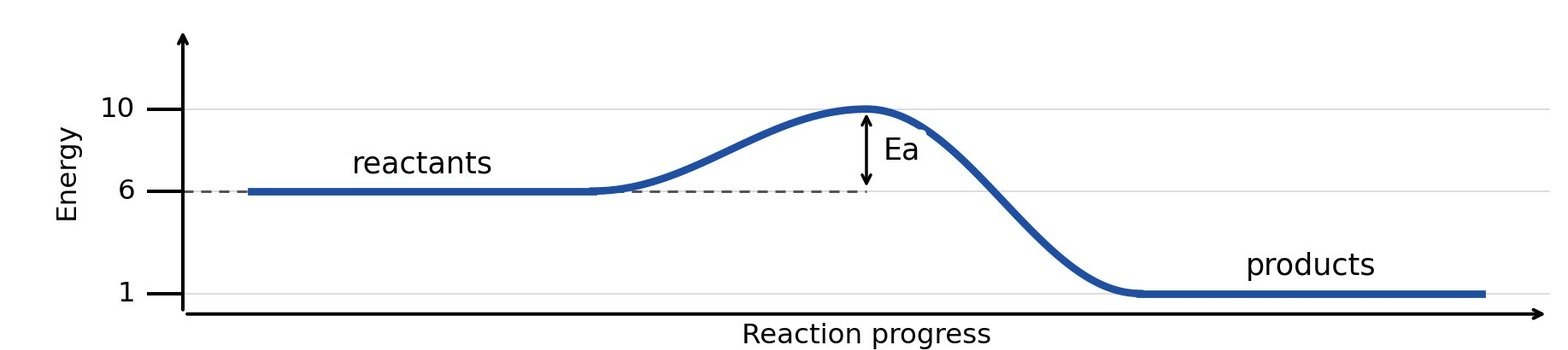
The diagram shows the energy profile for a reaction. The reactants are at energy 6, the peak is at 10 and the products are at 1. What is the activation energy?
A 9 B 16 C 4 D 5
What looks wrong with Question 8?
Send anonymously
Cancel
9
Which bacterium is resistant to many antibiotics?
A E. coli B TB bacteria C Salmonella D MRSA
What looks wrong with Question 9?
Send anonymously
Cancel
A a change in the DNA B a new species C a change in the environment D a disease
What looks wrong with Question 10?
Send anonymously
Cancel
11
In a reaction, the energy needed to break bonds is 1000 kJ and the energy released making bonds is 1400 kJ. What is the overall energy change?
A -1000 kJ B -400 kJ C 400 kJ D 1400 kJ
What looks wrong with Question 11?
Send anonymously
Cancel
12
What is a reversible reaction?
A a reaction that makes two products B a reaction that never finishes C a reaction that needs a catalyst D a reaction that can go both ways
What looks wrong with Question 12?
Send anonymously
Cancel
A breeding by humans B the creation of new species only C change in organisms over time D the extinction of species
What looks wrong with Question 13?
Send anonymously
Cancel
14
In an experiment, 20 cubic centimetres of gas are made in 30 seconds. What is the rate of the reaction?
A 600 cm³/s B 0.3333 cm³/s C 0.6667 cm³/s D 1.3333 cm³/s
What looks wrong with Question 14?
Send anonymously
Cancel
15
A couple have three children, all girls. What is the chance their next child is a girl?
A 1/8 B 1/2 C 3/4 D 1/4
What looks wrong with Question 15?
Send anonymously
Cancel
16
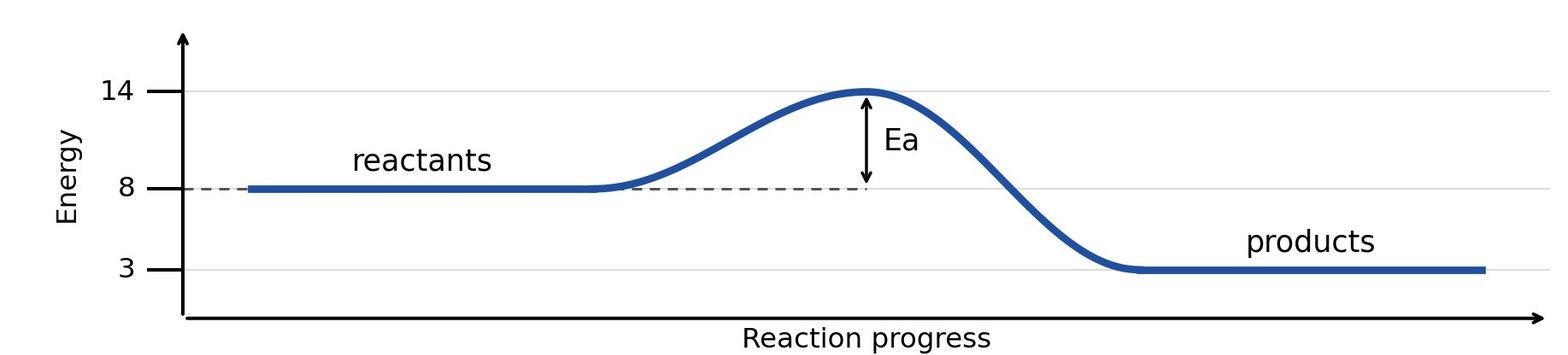
The diagram shows the energy profile for a reaction. The reactants are at energy 8, the peak is at 14 and the products are at 3. What is the activation energy?
A 5 B 6 C 22 D 11
What looks wrong with Question 16?
Send anonymously
Cancel
17
How can the spread of resistant bacteria be reduced?
A stop washing hands B only use antibiotics when needed C use antibiotics for every illness D share antibiotics
What looks wrong with Question 17?
Send anonymously
Cancel
18
In a reaction, the energy needed to break bonds is 1200 kJ and the energy released making bonds is 1400 kJ. What is the overall energy change?
A -1200 kJ B -200 kJ C 1400 kJ D 200 kJ
What looks wrong with Question 18?
Send anonymously
Cancel
19
What is an endothermic reaction?
A a reaction that takes in heat B a reaction that stops C a reaction that makes light D a reaction that gives out heat
What looks wrong with Question 19?
Send anonymously
Cancel
20
In an experiment, 60 cubic centimetres of gas are made in 10 seconds. What is the rate of the reaction?
A 3 cm³/s B 6 cm³/s C 12 cm³/s D 600 cm³/s
What looks wrong with Question 20?
Send anonymously
Cancel
21
What is the Haber process used to make?
A nitric acid B ammonia C hydrogen D sulfuric acid
What looks wrong with Question 21?
Send anonymously
Cancel
22
What does dominant mean in genetics?
A the allele never shows B the allele shows even with one copy C the allele shows only with two copies D the allele is on the X chromosome
What looks wrong with Question 22?
Send anonymously
Cancel
23
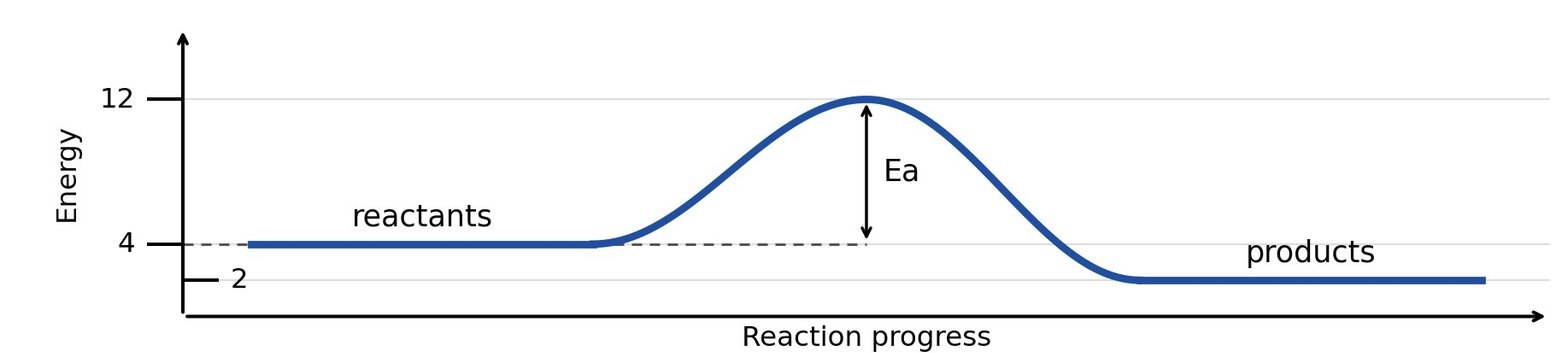
The diagram shows the energy profile for a reaction. The reactants are at energy 4, the peak is at 12 and the products are at 2. What is the activation energy?
A 2 B 10 C 16 D 8
What looks wrong with Question 23?
Send anonymously
Cancel
24
Which of these is exothermic?
A photosynthesis B melting ice C dissolving ammonium nitrate D burning a fuel
What looks wrong with Question 24?
Send anonymously
Cancel
25
In an experiment, 40 cubic centimetres of gas are made in 10 seconds. What is the rate of the reaction?
A 8 cm³/s B 2 cm³/s C 400 cm³/s D 4 cm³/s
What looks wrong with Question 25?
Send anonymously
Cancel