1
A piece of potato weighs 10 g. After soaking in pure water it weighs 10.6 g. What is the percentage increase in mass?
A 12% B 11% C 3% D 6%
What looks wrong with Question 1?
Send anonymously
Cancel
2
Which component of blood helps blood to clot?
A white blood cells B platelets C red blood cells D plasma
What looks wrong with Question 2?
Send anonymously
Cancel
3
What do antibiotics kill?
A protists B bacteria C fungi D viruses
What looks wrong with Question 3?
Send anonymously
Cancel
4
One glucose molecule releases 30 molecules of ATP in respiration. How many ATP molecules are released from 3 glucose molecules?
A 60 B 180 C 120 D 90
What looks wrong with Question 4?
Send anonymously
Cancel
5
Which plant hormone ripens fruit?
A ethene B gibberellin C auxin D adrenaline
What looks wrong with Question 5?
Send anonymously
Cancel
6
Why do identical twins look the same?
A they eat the same food B they live in the same house C they were born together D they have the same genes
What looks wrong with Question 6?
Send anonymously
Cancel
7
What is the water cycle driven by?
A energy from the Sun B gravity only C energy from the soil D wind only
What looks wrong with Question 7?
Send anonymously
Cancel
8
What is the electronic structure of oxygen (atomic number 8)?
A 2,7 B 2,4 C 2,8 D 2,6
What looks wrong with Question 8?
Send anonymously
Cancel
9
What type of bonding is in water?
A metallic B intermolecular forces C covalent D ionic
What looks wrong with Question 9?
Send anonymously
Cancel
10
What is the relative formula mass of magnesium oxide, MgO?
A 36 B 48 C 40 D 80
What looks wrong with Question 10?
Send anonymously
Cancel
11
What is the positive electrode called?
A the cathode B the cell C the anode D the electrolyte
What looks wrong with Question 11?
Send anonymously
Cancel
12
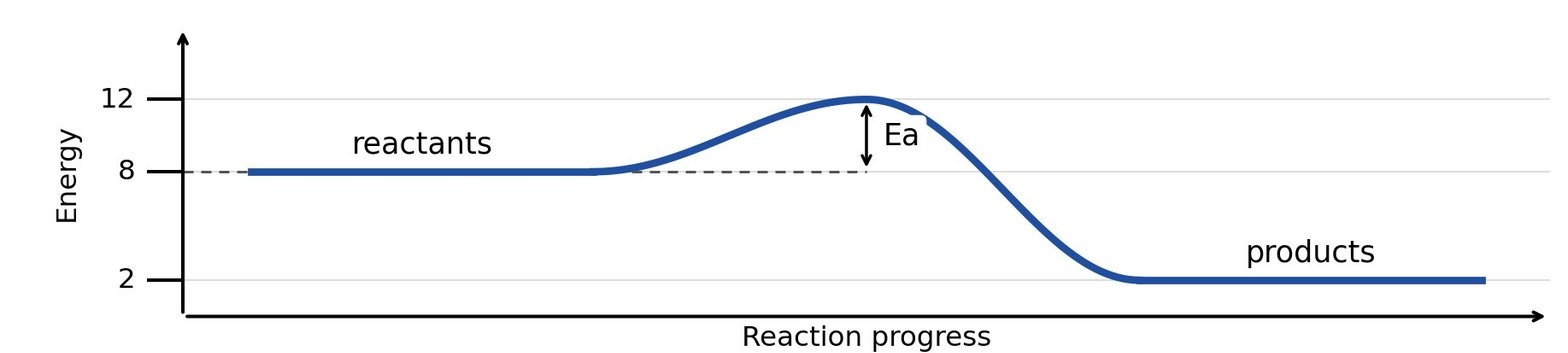
The diagram shows the energy profile for a reaction. The reactants are at energy 8 and the products are at 2. Is the reaction exothermic or endothermic?
A exothermic, energy is given out B endothermic, energy is given out C endothermic, energy is taken in D exothermic, energy is taken in
What looks wrong with Question 12?
Send anonymously
Cancel
13
In an experiment, 60 cubic centimetres of gas are made in 20 seconds. What is the rate of the reaction?
A 1200 cm³/s B 3 cm³/s C 1.5 cm³/s D 6 cm³/s
What looks wrong with Question 13?
Send anonymously
Cancel
14
An alkane has 3 carbon atoms. How many hydrogen atoms does one molecule have?
A 4 B 10 C 6 D 8
What looks wrong with Question 14?
Send anonymously
Cancel
15
What is the test for oxygen?
A a lighted splint pops B bromine water turns colourless C a glowing splint relights D limewater turns cloudy
What looks wrong with Question 15?
Send anonymously
Cancel
16
A factory emits 50 tonnes of carbon dioxide per day. How much does it emit in one week?
A 350 tonnes B 340 tonnes C 360 tonnes D 700 tonnes
What looks wrong with Question 16?
Send anonymously
Cancel
17
A town sends 200 tonnes of waste to landfill per week. How much waste is that in one year?
A 10400 tonnes B 10300 tonnes C 20800 tonnes D 10500 tonnes
What looks wrong with Question 17?
Send anonymously
Cancel
18
What is the unit of energy?
A the joule B the newton C the watt D the volt
What looks wrong with Question 18?
Send anonymously
Cancel
19
A resistor has a potential difference of 6 V across it and a resistance of 4 ohms. What is the current?
A 24 A B 0.75 A C 1.5 A D 3 A
What looks wrong with Question 19?
Send anonymously
Cancel
20
An object has a mass of 200 g and a volume of 10 cubic centimetres. What is its density?
A 10 g/cm³ B 210 g/cm³ C 20 g/cm³ D 40 g/cm³
What looks wrong with Question 20?
Send anonymously
Cancel
21
An atom has a mass number of 23 and an atomic number of 11. How many neutrons does it have?
A 13 B 14 C 12 D 11
What looks wrong with Question 21?
Send anonymously
Cancel
22
A kite flies in the wind. Which force holds the kite up?
A thrust B drag C weight D lift
What looks wrong with Question 22?
Send anonymously
Cancel
23
A wave travels at 20 m/s with a wavelength of 4 m. What is its frequency?
A 10 Hz B 2.5 Hz C 80 Hz D 5 Hz
What looks wrong with Question 23?
Send anonymously
Cancel
24
The force on a wire in a magnetic field is 2 N. If the current doubles, what is the new force?
A 2 N B 4 N C 1 N D 6 N
What looks wrong with Question 24?
Send anonymously
Cancel
25
A peach tree flowers in spring. What do bees carry between flowers?
A leaves B pollen C seeds D water
What looks wrong with Question 25?
Send anonymously
Cancel
26
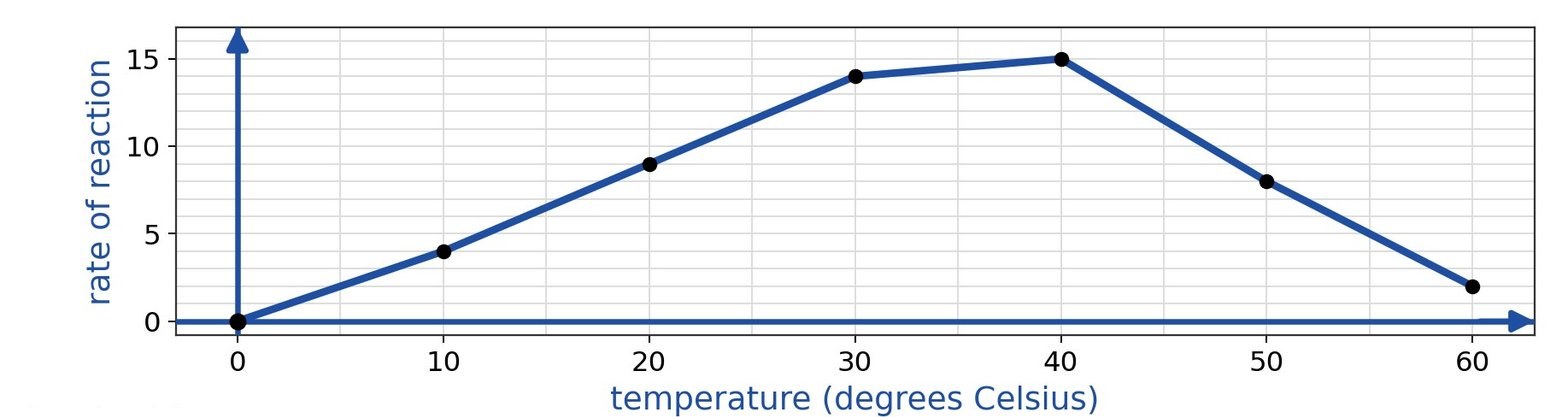
The graph shows the rate of an enzyme reaction at different temperatures. At which temperature is the rate highest?
A 30 B 40 C 20 D 60
What looks wrong with Question 26?
Send anonymously
Cancel
27
A thermometer shows a child has a temperature of 39 degrees Celsius. What does a high temperature suggest?
A the child is dehydrated B the body is fighting an infection C the body is too cold D the child needs more sleep and rest tonight
What looks wrong with Question 27?
Send anonymously
Cancel
28
Red apples are cut and left in air. Why do they turn brown?
A they freeze in the cold B they ferment into alcohol C they dry out in the air D enzymes react with oxygen
What looks wrong with Question 28?
Send anonymously
Cancel
29
Red apples provide energy. Which nutrient in apples provides most energy?
A carbohydrates B protein, for growth C fat, for insulation D fibre, for digestion
What looks wrong with Question 29?
Send anonymously
Cancel
30
A honeybee visits a flower to collect nectar. What does it carry between flowers?
A seeds B leaves C pollen D water
What looks wrong with Question 30?
Send anonymously
Cancel
31
A honeybee is an insect. How many legs does it have?
A 6 B 4 C 8 D 10
What looks wrong with Question 31?
Send anonymously
Cancel
32
An ice cream cone melts in the Sun. What is happening to the particles in the ice cream?
A they lose energy and slow down a lot B they get smaller C they stop moving D they gain energy and move more
What looks wrong with Question 32?
Send anonymously
Cancel
33
A chocolate cake is baked. Is baking a chemical change?
A never B no C yes D sometimes
What looks wrong with Question 33?
Send anonymously
Cancel
34
Hardcover books are stacked on a table. What force pulls them down?
A air resistance B gravity C tension D friction
What looks wrong with Question 34?
Send anonymously
Cancel
35
An ice cream cone is put in a freezer. What happens to the liquid?
A it freezes B it evaporates C it boils D it condenses
What looks wrong with Question 35?
Send anonymously
Cancel
36
An ice cream cone melts. What is the melting point of the ice cream?
A around 37 degrees Celsius B around 0 degrees Celsius C around minus 20 degrees Celsius D around 100 degrees Celsius
What looks wrong with Question 36?
Send anonymously
Cancel
37
A cup of coffee is left for an hour. What happens to its temperature?
A it falls to zero degrees B it stays the same all day C it rises above room temperature D it falls to room temperature
What looks wrong with Question 37?
Send anonymously
Cancel
38
A cup of coffee is hot. How is energy transferred to the air?
A by radiation only, from the surface B by conduction and convection C by condensation on the cold cup D by evaporation only, from the top
What looks wrong with Question 38?
Send anonymously
Cancel
39
Lemons taste sour. What does sour taste show?
A a metal is present B a salt is present C an acid is present D an alkali is present
What looks wrong with Question 39?
Send anonymously
Cancel
40
A river flows to the sea. What is this part of?
A the nitrogen cycle B the carbon cycle C the water cycle D the rock cycle
What looks wrong with Question 40?
Send anonymously
Cancel
41
A cheese pizza provides energy. Which nutrient provides most energy?
A fat B protein C fibre D vitamins
What looks wrong with Question 41?
Send anonymously
Cancel
42
A red race car brakes hard. What happens to its kinetic energy?
A it increases B it becomes sound only, nothing else C it is transferred to heat D it disappears
What looks wrong with Question 42?
Send anonymously
Cancel
43
A guitar string vibrates to make a sound. What type of wave is the sound wave?
A standing B longitudinal C transverse D electromagnetic
What looks wrong with Question 43?
Send anonymously
Cancel
44
A thermometer measures temperature in degrees Celsius. What is the freezing point of water on this scale?
A 0 B 100 C 32 D 10
What looks wrong with Question 44?
Send anonymously
Cancel
45
A thermometer is placed in hot water. What happens to the liquid inside the thermometer?
A it evaporates B it freezes C it expands D it contracts
What looks wrong with Question 45?
Send anonymously
Cancel
46
A passenger train carries people around the country. Which part of the blood is like the train, carrying oxygen around the body?
A red blood cells B platelets C white blood cells D plasma
What looks wrong with Question 46?
Send anonymously
Cancel
47
A passenger aeroplane takes off. Which force lifts it up?
A weight B thrust C drag D lift
What looks wrong with Question 47?
Send anonymously
Cancel
48
A yellow school bus carries children to school. Which blood vessel carries blood away from the heart, like a bus leaving the station?
A an artery B a capillary C a ventricle D a vein
What looks wrong with Question 48?
Send anonymously
Cancel
49
A piece of potato weighs 8 g. After soaking in pure water it weighs 8.8 g. What is the percentage increase in mass?
A 15% B 20% C 5% D 10%
What looks wrong with Question 49?
Send anonymously
Cancel
50
An enzyme reaction is fastest at 20 degrees Celsius. At 40 degrees Celsius the rate is much lower. Why?
A the substrate runs out B the enzyme is denatured C the enzyme works faster D the enzyme is digested
What looks wrong with Question 50?
Send anonymously
Cancel