1
Hens' eggs have a large yolk. The yolk is one very large cell. Which part of the cell is the yolk?
2
A sandwich contains bread, cheese and lettuce. Which enzyme starts breaking down the bread in the mouth?
3
Potatoes are placed in pure water. What happens to the potato cells?
4
A thermometer shows a patient's temperature is 39 degrees Celsius. Is this above or below normal body temperature?
5
Red apples contain vitamin C. What is vitamin C needed for?
6
Glass marbles in a tray are used as a model for particles in a solid. What do the marbles show?
7
One glucose molecule releases 30 molecules of ATP in respiration. How many ATP molecules are released from 3 glucose molecules?
8
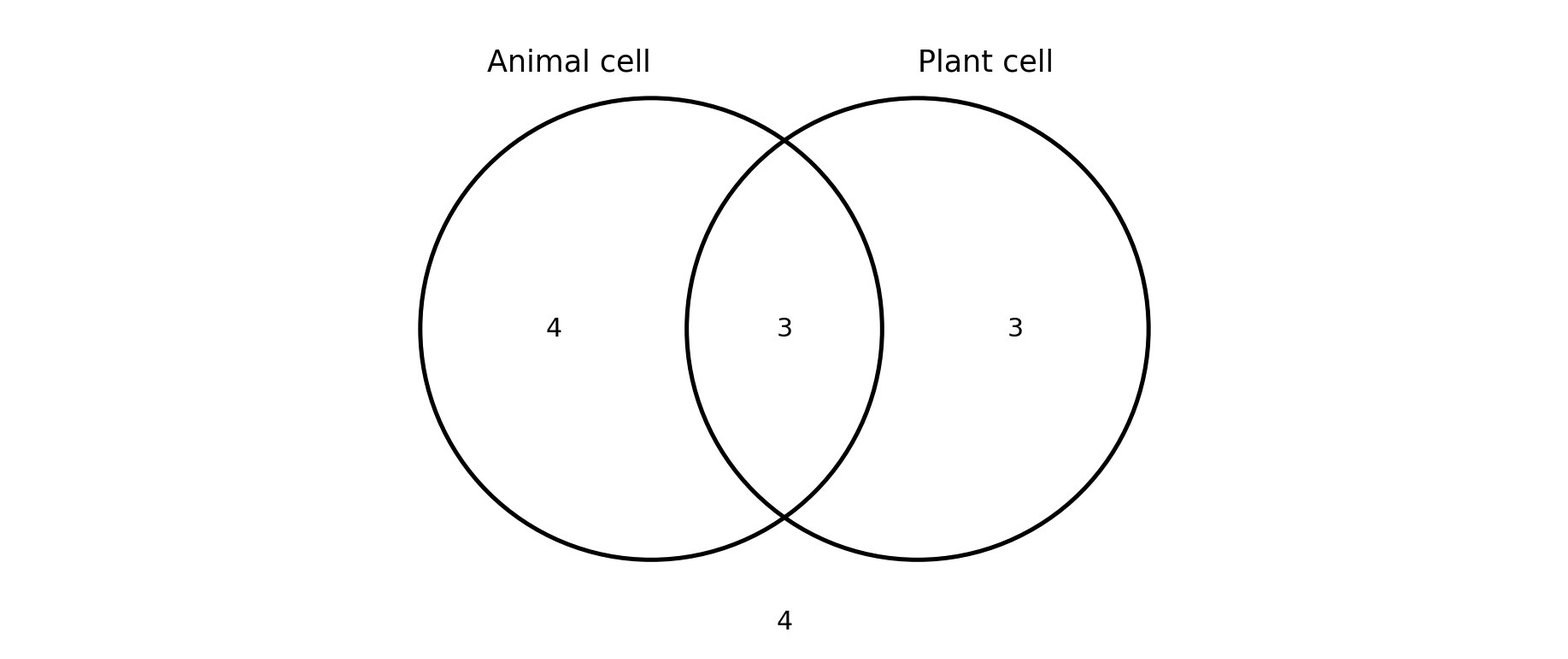
The Venn diagram shows features of animal cells and plant cells. How many features are found in both types of cell?
9
A peach tree flowers in spring. What do bees carry between flowers?
10
What does anaerobic respiration in muscles produce?
11
Photosynthesis produces oxygen at a rate of 5 cm cubed per minute. How much oxygen is produced in 20 minutes?
12
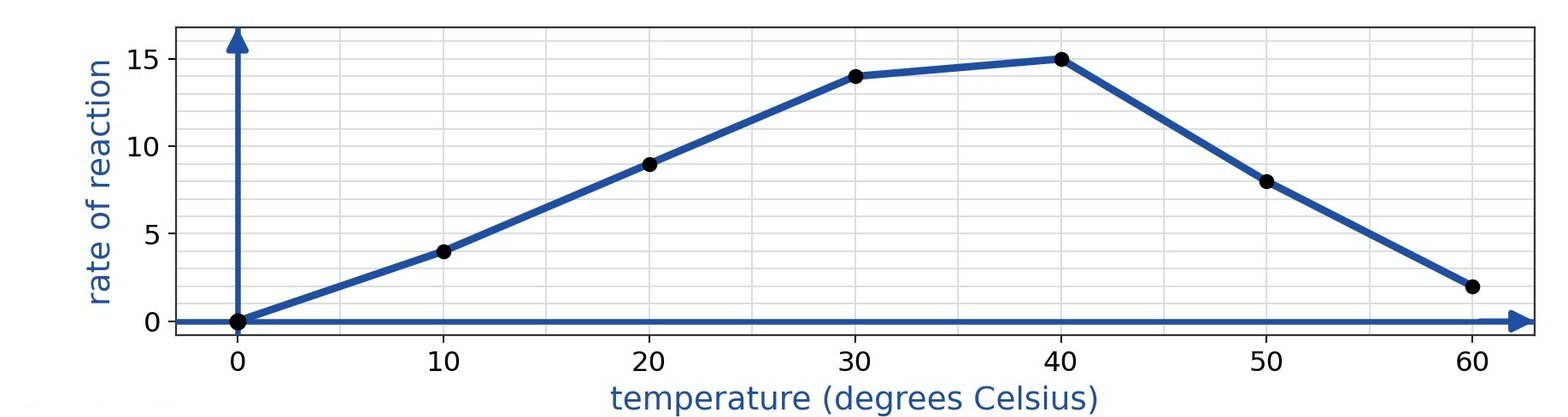
The graph shows the rate of an enzyme reaction at different temperatures. At which temperature is the rate highest?
13
A school lunch tray holds a meal with milk. Which nutrient is milk rich in?
14
A cell is 24 mm long in a photograph. Its real length is 60 micrometres. What is the magnification?
15
Why does a plant cell not burst in pure water?
16
Which test shows that a food contains protein?
17
Which part of a cell is where most of the chemical reactions happen?
18
What is glucose used to make in cell walls?
19
What is the basal metabolic rate?
20
An enzyme reaction is fastest at 30 degrees Celsius. At 50 degrees Celsius the rate is much lower. Why?
21
What happens to heart rate during exercise?
22
Which structure is found in a bacterial cell but not in an animal cell?
23
What is the lock and key model?
24
A red blood cell in pure water will do what?
25
A cheek cell has no cell wall and no chloroplasts. What does this show?