1
A chocolate cake rises in the oven. What makes it rise?
England GCSE Combined Science Edexcel Higher · Unit 15 · 25 questions
This practice test was made by AI and there may be mistakes. If a question or answer looks wrong, use the Flag a mistake button so it can be fixed.
A chocolate cake rises in the oven. What makes it rise?
A passenger train brakes. What force slows it down?
A cup of coffee is hot. How is energy transferred to the air?
A thermometer shows a patient's temperature is 39 degrees Celsius. Is this above or below normal body temperature?
A sandwich provides energy. Which process releases energy from food in cells?
A kite is held by a string. What force does the string exert?
A cheese pizza contains cheese made from milk. What is milk rich in?
A student heats 100 g of water. Its temperature rises by 20 degrees Celsius. The specific heat capacity of water is 4.2 joules per gram per degree Celsius. How much energy is transferred to the water in kilojoules?
A solution has a concentration of 1 mol per cubic decimetre. How many moles are in 3 cubic decimetres of the solution?
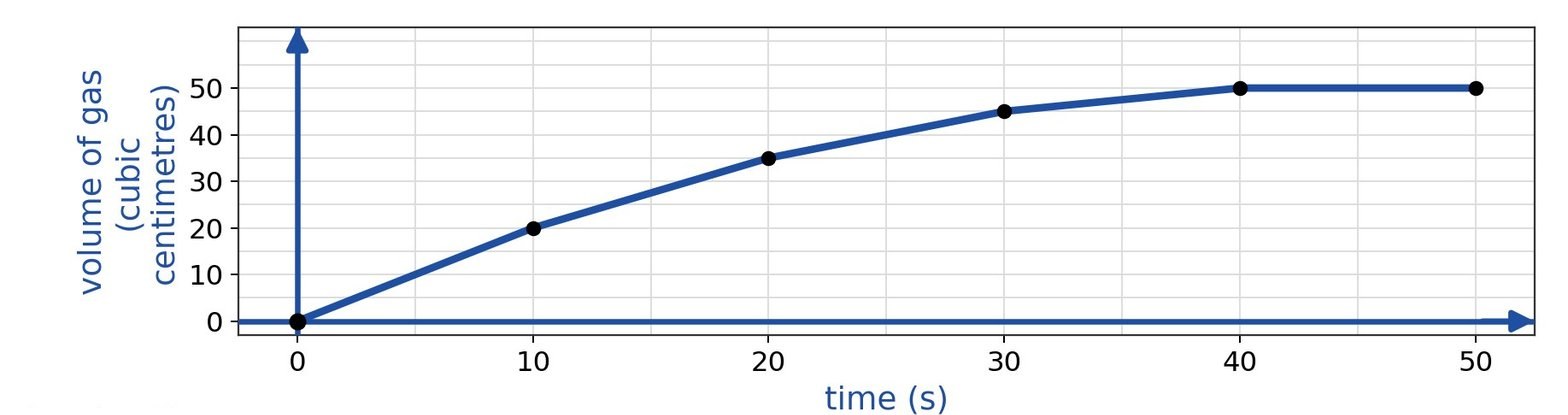
The graph shows the volume of gas made in a reaction. After how many seconds does the reaction finish?
Which of these is an exothermic reaction?
A reaction should make 200 g of product but only makes 100 g. What is the percentage yield?
In an exothermic reaction, are the products higher or lower in energy than the reactants?
A reaction produces 20 cm cubed of gas in 10 seconds. What is the mean rate of reaction?
In a reaction, the energy needed to break bonds is 1500 kJ and the energy released making bonds is 1300 kJ. Is the reaction exothermic or endothermic?
In the combustion of methane, the energy needed to break the bonds is 1000 kJ and the energy released when new bonds form is 1200 kJ. What is the overall energy change?
Which factor increases the rate of a reaction?
In a second experiment, 90 cm cubed of gas are made in 15 seconds. What is the rate of the reaction?
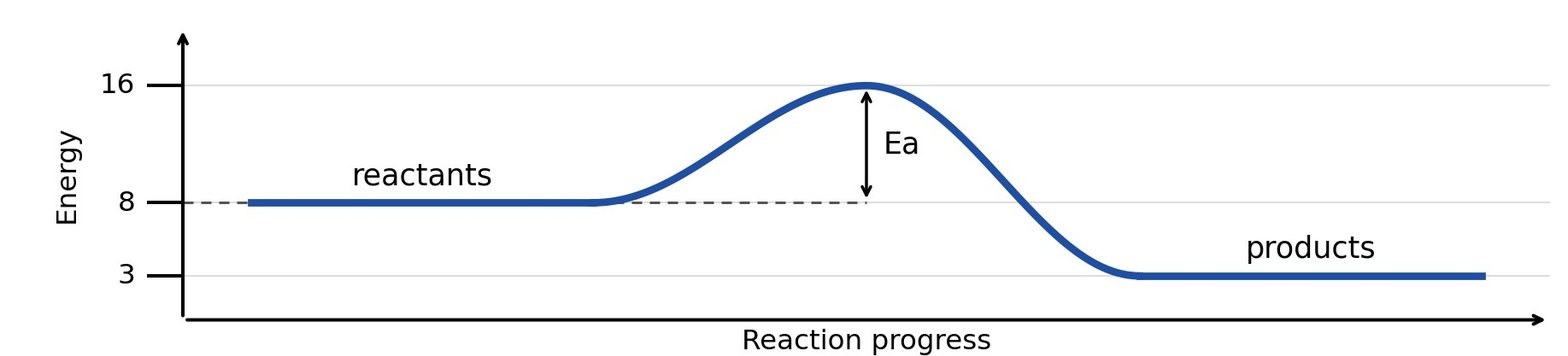
The diagram shows the energy profile for a reaction. The reactants are at energy 8, the peak is at 16 and the products are at 3. What is the activation energy?
Why does a higher concentration increase the rate?
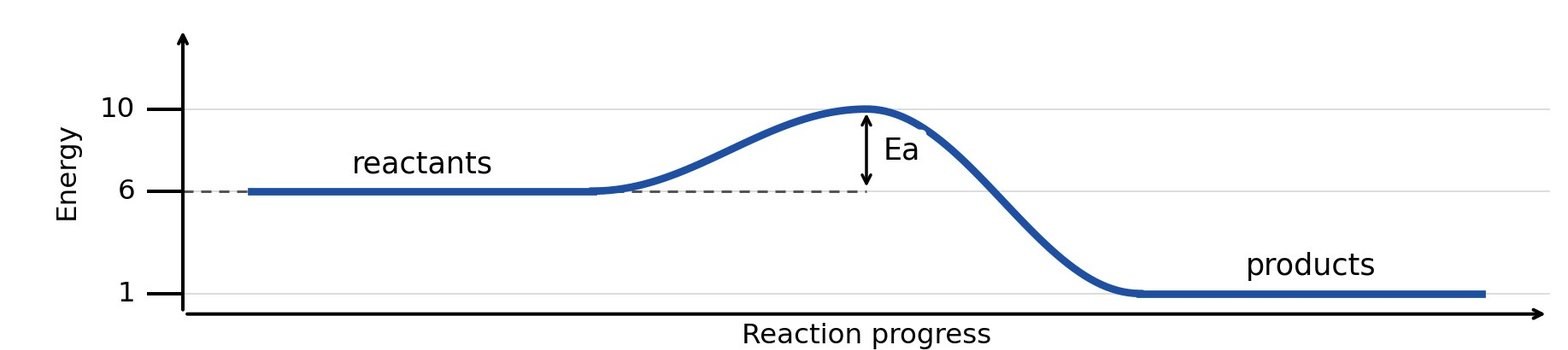
The diagram shows the energy profile for a reaction. The reactants are at energy 6 and the products are at 1. Is the reaction exothermic or endothermic?
In an experiment, 20 cubic centimetres of gas are made in 20 seconds. What is the rate of the reaction?
A yellow school bus stops at a station. What happens to its speed?
A reaction makes 1 moles of gas. What volume does the gas occupy at room temperature and pressure?
In a reaction, the energy needed to break bonds is 800 kJ and the energy released making bonds is 1000 kJ. What is the overall energy change?
Your score: 0 / 25