1
A cheese pizza provides energy. Which nutrient provides most energy?
England GCSE Combined Science OCR Gateway Higher · Unit 11 · 25 questions
This practice test was made by AI and there may be mistakes. If a question or answer looks wrong, use the Flag a mistake button so it can be fixed.
A cheese pizza provides energy. Which nutrient provides most energy?
A sandwich contains bread and cheese. Where does digestion begin?
A thermometer shows a patient's temperature is 39 degrees Celsius. Is this above or below normal body temperature?
A chocolate cake is baked. Is baking a chemical change?
A cup of coffee cools down. Energy is transferred to the surroundings. What type of change is this?
A wristwatch measures time. What is the unit of time?
In the combustion of methane, the energy needed to break the bonds is 1000 kJ and the energy released when new bonds form is 1400 kJ. What is the overall energy change?
In an experiment, 40 cubic centimetres of gas are made in 10 seconds. What is the rate of the reaction?
What happens to the ammonia made in the Haber process?
What happens to the temperature during an exothermic reaction?
A reaction makes 1 moles of gas. What volume does the gas occupy at room temperature and pressure?
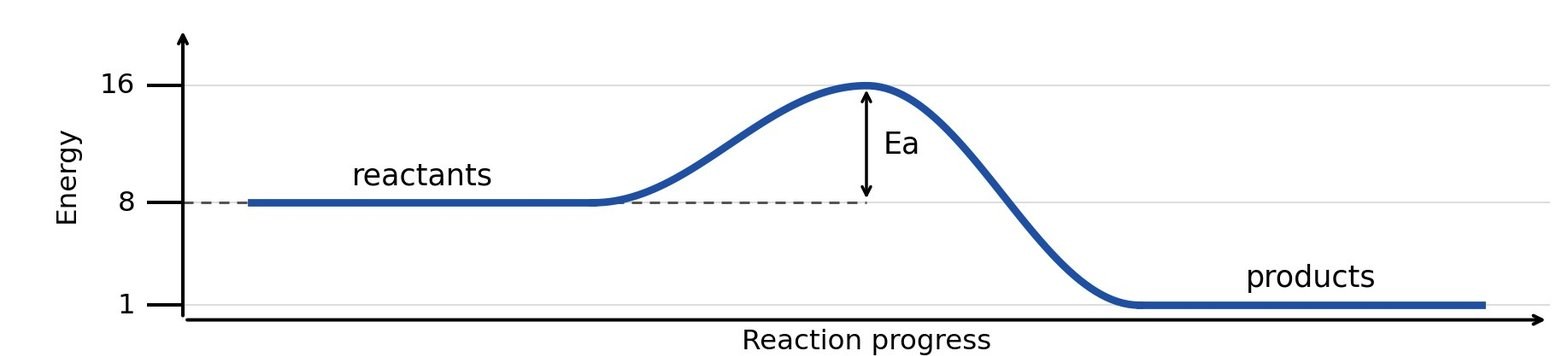
The diagram shows the energy profile for a reaction. The reactants are at energy 8, the peak is at 16 and the products are at 1. What is the activation energy?
A student heats 200 g of water. Its temperature rises by 10 degrees Celsius. The specific heat capacity of water is 4.2 joules per gram per degree Celsius. How much energy is transferred to the water in kilojoules?
A reaction produces 40 cm cubed of gas in 20 seconds. What is the mean rate of reaction?
In a second experiment, 90 cm cubed of gas are made in 30 seconds. What is the rate of the reaction?
A solution has a concentration of 1 mol per cubic decimetre. How many moles are in 3 cubic decimetres of the solution?
In a reaction, the energy needed to break bonds is 1200 kJ and the energy released making bonds is 1600 kJ. What is the overall energy change?
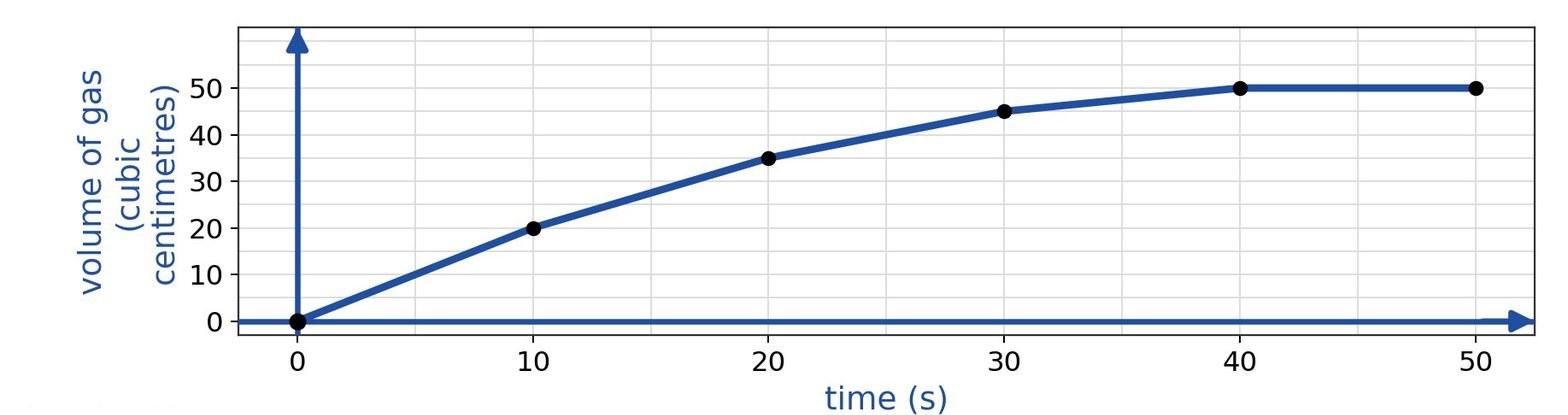
The graph shows the volume of gas made in a reaction. After how many seconds does the reaction finish?
What is collision theory?
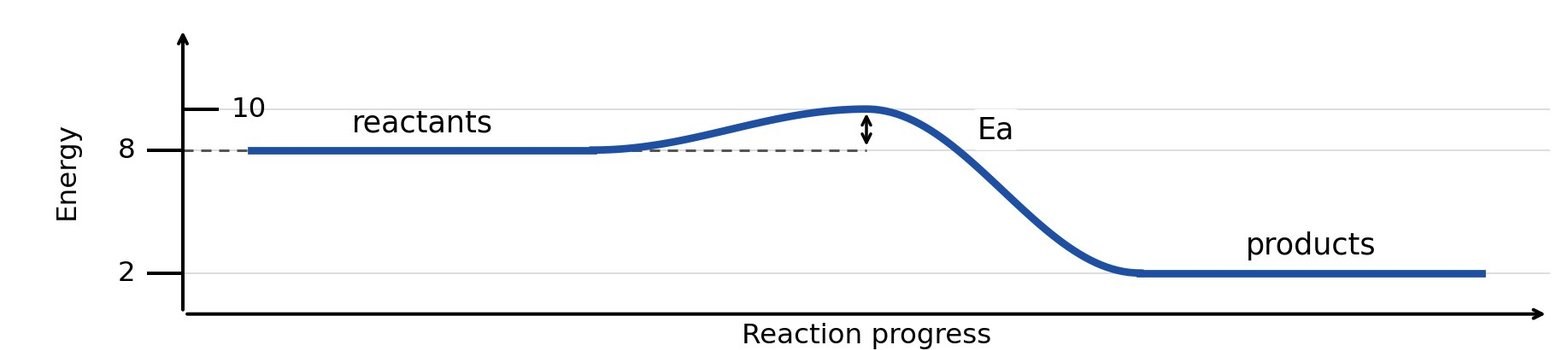
The diagram shows the energy profile for a reaction. The reactants are at energy 8 and the products are at 2. Is the reaction exothermic or endothermic?
In an exothermic reaction, are the products higher or lower in energy than the reactants?
For an exothermic forward reaction, what happens to the yield if the temperature rises?
Why are rates measured at the start of a reaction?
A reaction should make 100 g of product but only makes 50 g. What is the percentage yield?
In a reaction, the energy needed to break bonds is 1500 kJ and the energy released making bonds is 1300 kJ. Is the reaction exothermic or endothermic?
Your score: 0 / 25