1
A cup of coffee cools down. Energy is transferred to the surroundings. What type of change is this?
A a neutralisation B a chemical change C an energy transfer D a reversible reaction
What looks wrong with Question 1?
Send anonymously
Cancel
2
A swimming pool is filled with water. What is the density of water?
A about 10 kilograms per cubic metre B about 1 kilogram per cubic metre C about 1000 kilograms per cubic metre D about 100 kilograms per cubic metre, roughly
What looks wrong with Question 2?
Send anonymously
Cancel
3
An ice cream cone melts in the Sun. What is happening to the particles in the ice cream?
A they gain energy and move more B they get smaller C they lose energy and slow down a lot D they stop moving
What looks wrong with Question 3?
Send anonymously
Cancel
4
A forest absorbs carbon dioxide. Which process does this?
A decomposition in the soil B respiration in the trees C combustion of the wood D photosynthesis
What looks wrong with Question 4?
Send anonymously
Cancel
5
A river is polluted by fertiliser. What grows too fast in the water?
A algae B trees C reeds D fish
What looks wrong with Question 5?
Send anonymously
Cancel
6
A sunflower makes glucose in its leaves. Which gas does it take in for photosynthesis?
A nitrogen gas from the air B hydrogen gas from the air C carbon dioxide D oxygen gas from the air
What looks wrong with Question 6?
Send anonymously
Cancel
7
In the combustion of methane, the energy needed to break the bonds is 800 kJ and the energy released when new bonds form is 1000 kJ. What is the overall energy change?
A 200 kJ B -800 kJ C 1000 kJ D -200 kJ
What looks wrong with Question 7?
Send anonymously
Cancel
8
Nitrogen is 78 percent of the air. How much nitrogen is there in 1000 litres of air?
A 770 L B 1560 L C 790 L D 780 L
What looks wrong with Question 8?
Send anonymously
Cancel
9
Where did the water in the oceans come from?
A rain from the clouds in the sky B water vapour from volcanoes C ice melting at the poles D rivers flowing from the land
What looks wrong with Question 9?
Send anonymously
Cancel
10
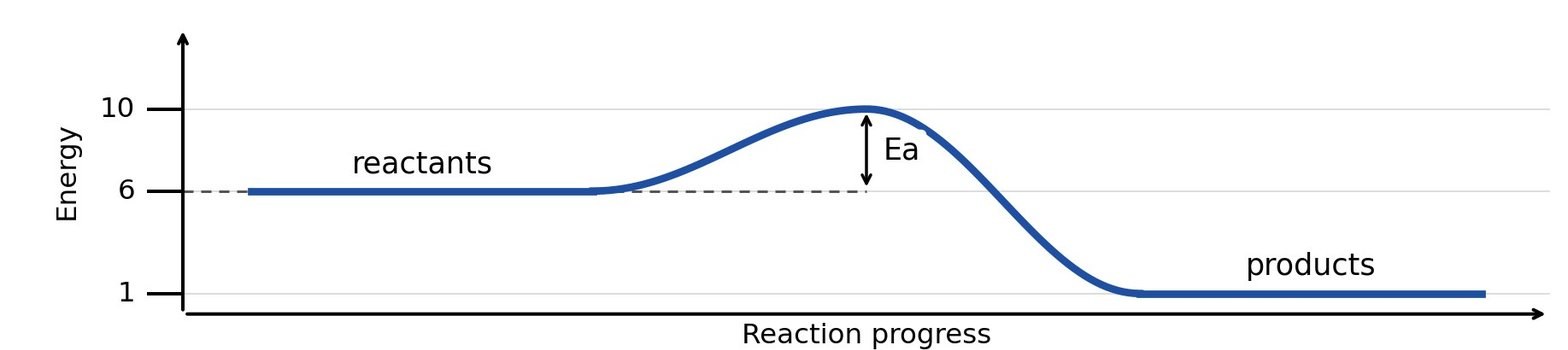
The diagram shows the energy profile for a reaction. The reactants are at energy 6 and the products are at 1. Is the reaction exothermic or endothermic?
A exothermic, energy is given out B endothermic, energy is given out C endothermic, energy is taken in D exothermic, energy is taken in
What looks wrong with Question 10?
Send anonymously
Cancel
11
What does a temperature change experiment measure?
A the pH of the solution at the end B the energy change of a reaction C the mass of product made in total D the rate of a reaction over time
What looks wrong with Question 11?
Send anonymously
Cancel
12
How is pure water made from sea water?
A by chlorination B by distillation C by filtration D by sedimentation
What looks wrong with Question 12?
Send anonymously
Cancel
13
In a reaction, the energy needed to break bonds is 1000 kJ and the energy released making bonds is 600 kJ. Is the reaction exothermic or endothermic?
A exothermic, more energy is given out B endothermic, more energy is taken in C endothermic, more energy is given out D exothermic, more energy is taken in
What looks wrong with Question 13?
Send anonymously
Cancel
14
What happens to sea levels as the Earth warms?
A they disappear B they fall C they stay the same D they rise
What looks wrong with Question 14?
Send anonymously
Cancel
15
What is the enhanced greenhouse effect?
A cooling from extra cloud cover B warming from volcanoes erupting C warming from the Sun getting hotter over time D extra warming from human activities
What looks wrong with Question 15?
Send anonymously
Cancel
16
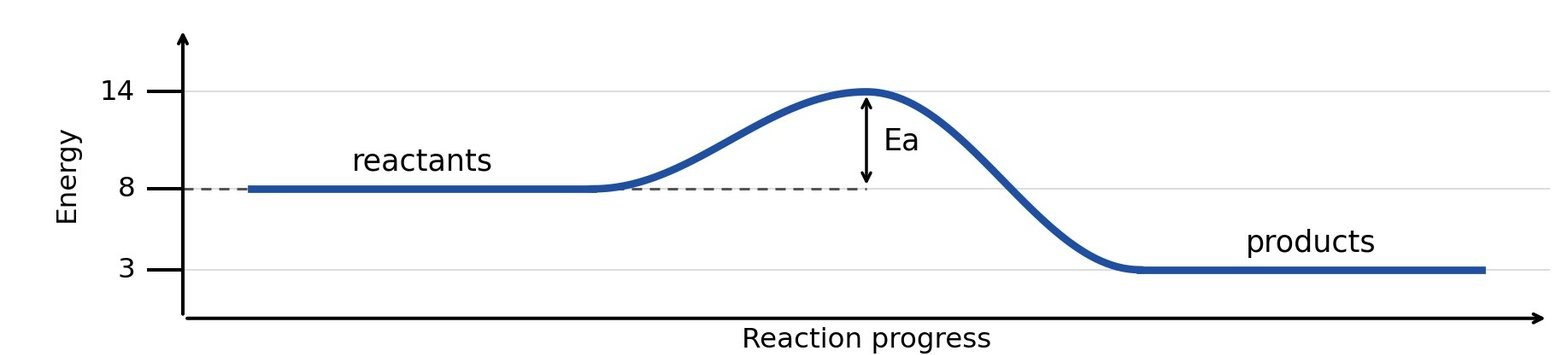
The diagram shows the energy profile for a reaction. The reactants are at energy 8, the peak is at 14 and the products are at 3. What is the activation energy?
A 22 B 11 C 5 D 6
What looks wrong with Question 16?
Send anonymously
Cancel
17
Where do particulates in the air come from?
A photosynthesis in plants B rain falling from clouds C evaporation from the sea D burning fuels and dust
What looks wrong with Question 17?
Send anonymously
Cancel
18
What is happening to the polar ice caps?
A they are growing B they are moving south C they stay the same size D they are melting
What looks wrong with Question 18?
Send anonymously
Cancel
19
What happens in sewage treatment?
A the water is heated up B the water is made drinkable at once C nutrients are added to it D harmful substances are removed
What looks wrong with Question 19?
Send anonymously
Cancel
20
A factory emits 10 tonnes of carbon dioxide per day. How much does it emit in one week?
A 140 tonnes B 60 tonnes C 80 tonnes D 70 tonnes
What looks wrong with Question 20?
Send anonymously
Cancel
21
What is the main gas in the air today?
A argon B carbon dioxide C oxygen D nitrogen
What looks wrong with Question 21?
Send anonymously
Cancel
22
Oxygen is 21 percent of the air. How much oxygen is there in 1000 litres of air?
A 220 L B 210 L C 200 L D 420 L
What looks wrong with Question 22?
Send anonymously
Cancel
23
In a reaction, the energy needed to break bonds is 1000 kJ and the energy released making bonds is 1200 kJ. What is the overall energy change?
A -200 kJ B 1200 kJ C -1000 kJ D 200 kJ
What looks wrong with Question 23?
Send anonymously
Cancel
24
What is the main greenhouse gas?
A oxygen gas from the air B argon gas from the air C nitrogen gas from the air D carbon dioxide
What looks wrong with Question 24?
Send anonymously
Cancel
25
What happens to the temperature during an exothermic reaction?
A it falls B it falls then rises C it rises D it stays the same
What looks wrong with Question 25?
Send anonymously
Cancel