1
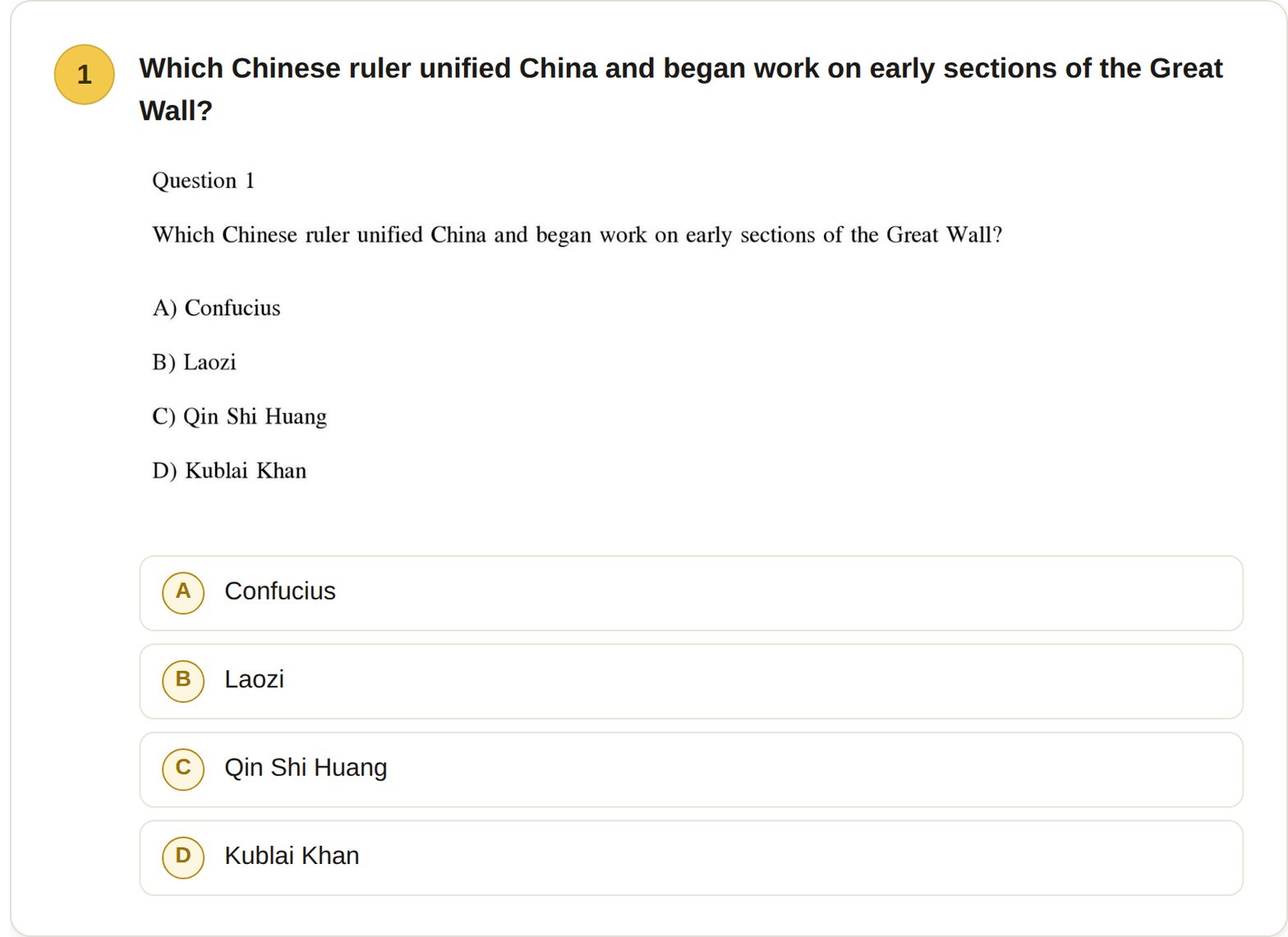
Which Chinese ruler unified China and began work on early sections of the Great Wall?
Early Civilizations and Classical Empires - Practice Test | Missouri World History · Unit 1 · 10 questions
This practice test was made by AI and there may be mistakes. If a question or answer looks wrong, use the Flag a mistake button to let Brett know so he can fix it.
Which Chinese ruler unified China and began work on early sections of the Great Wall?
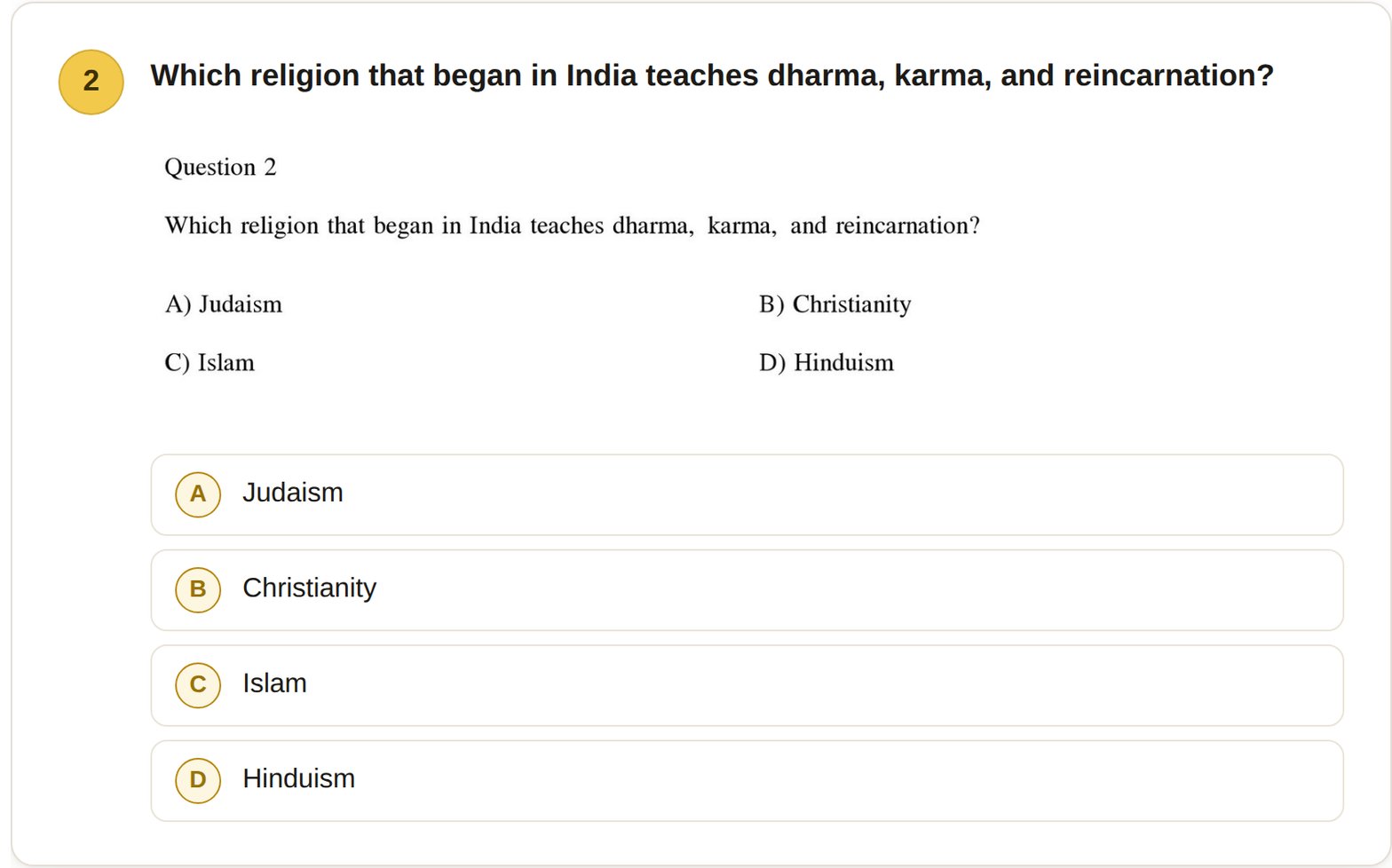
Which religion that began in India teaches dharma, karma, and reincarnation?
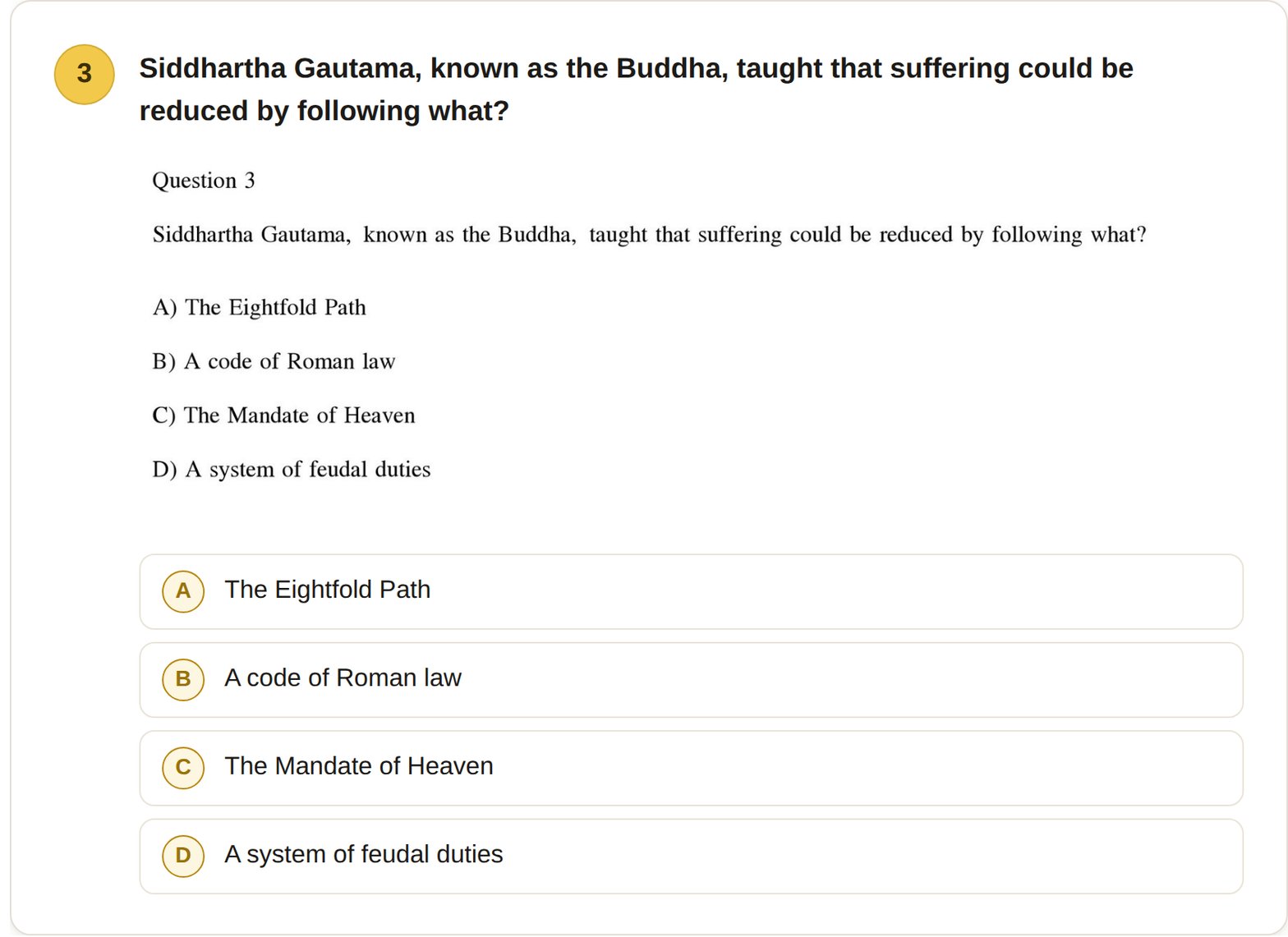
Siddhartha Gautama, known as the Buddha, taught that suffering could be reduced by following what?
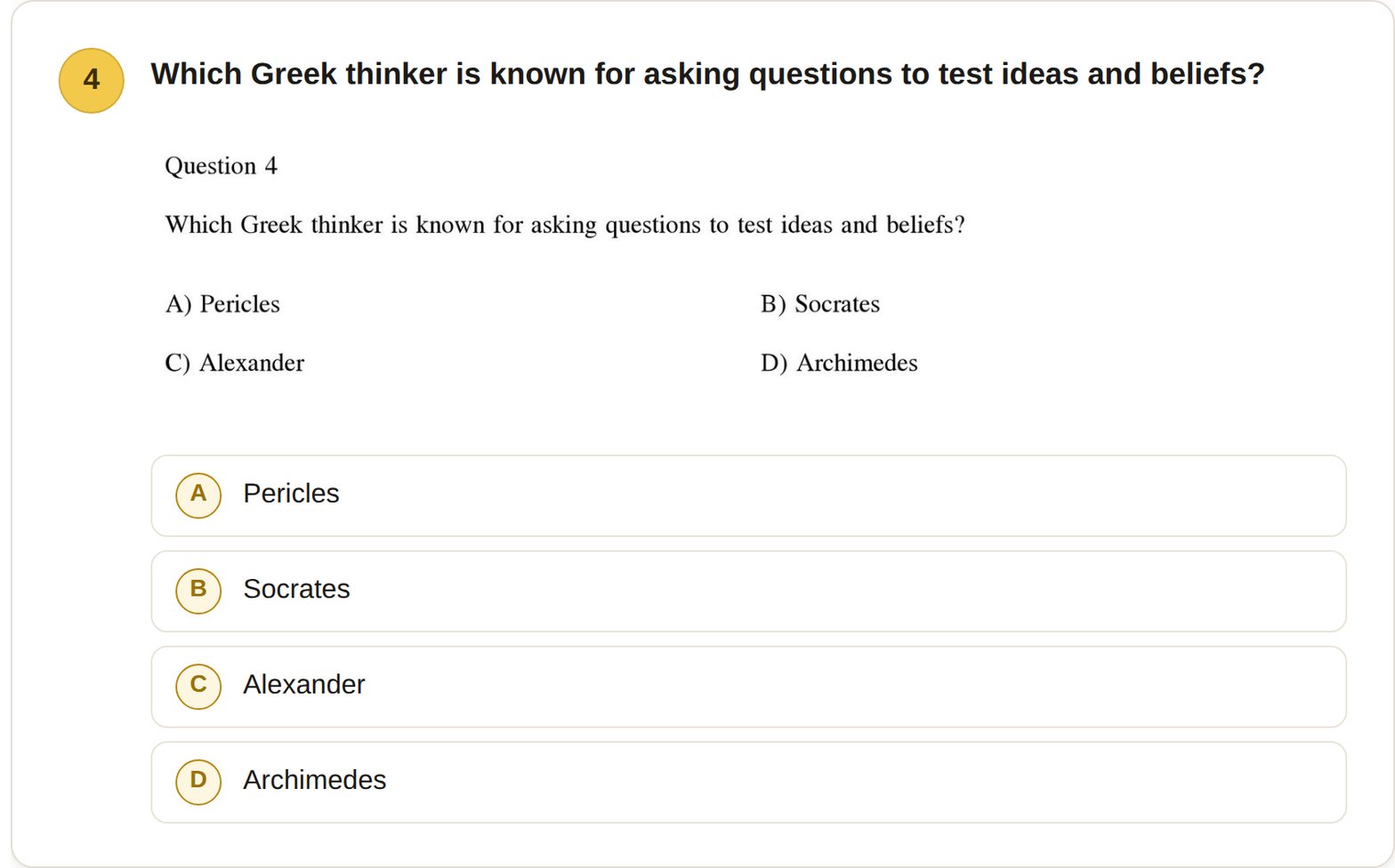
Which Greek thinker is known for asking questions to test ideas and beliefs?
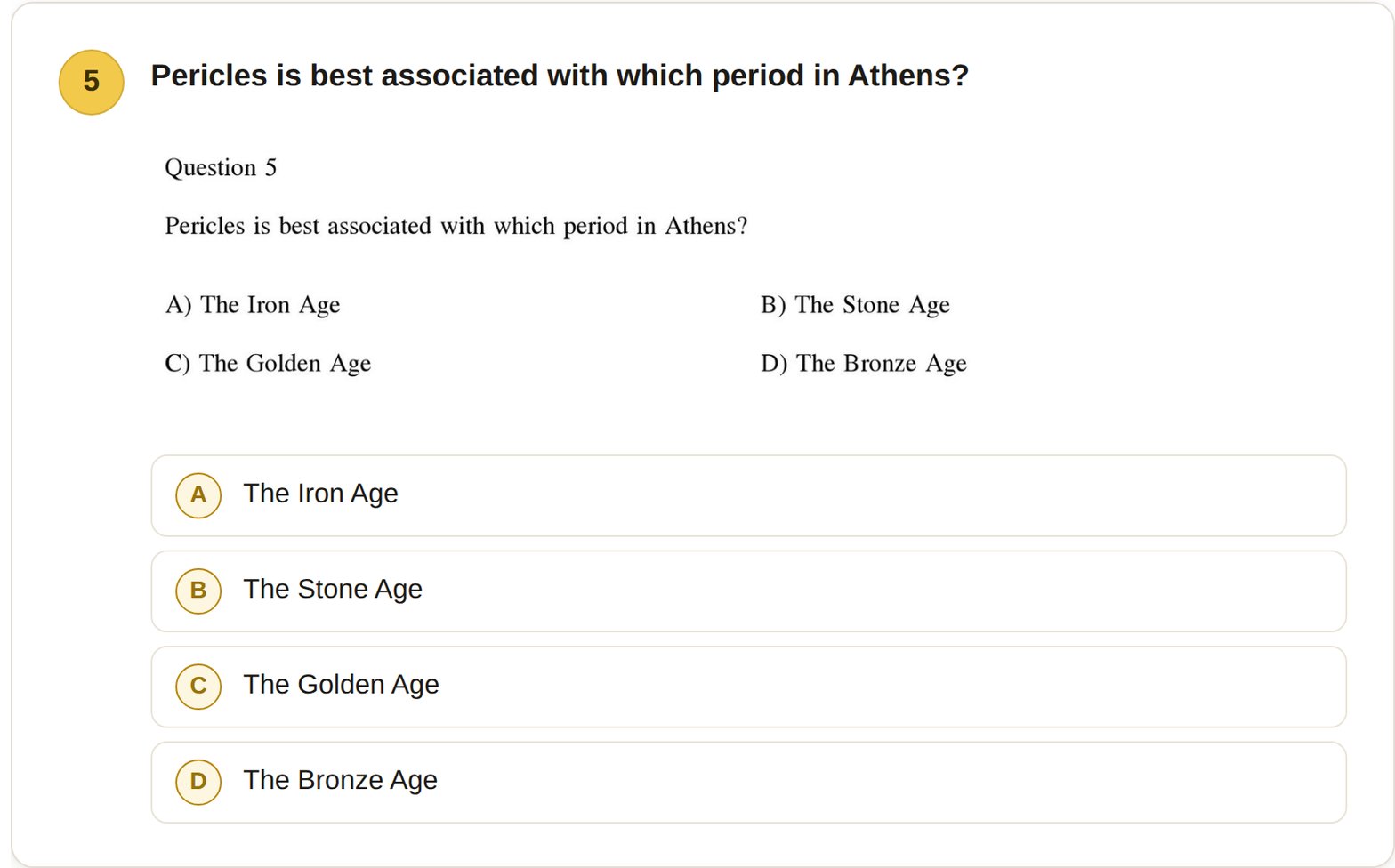
Pericles is best associated with which period in Athens?
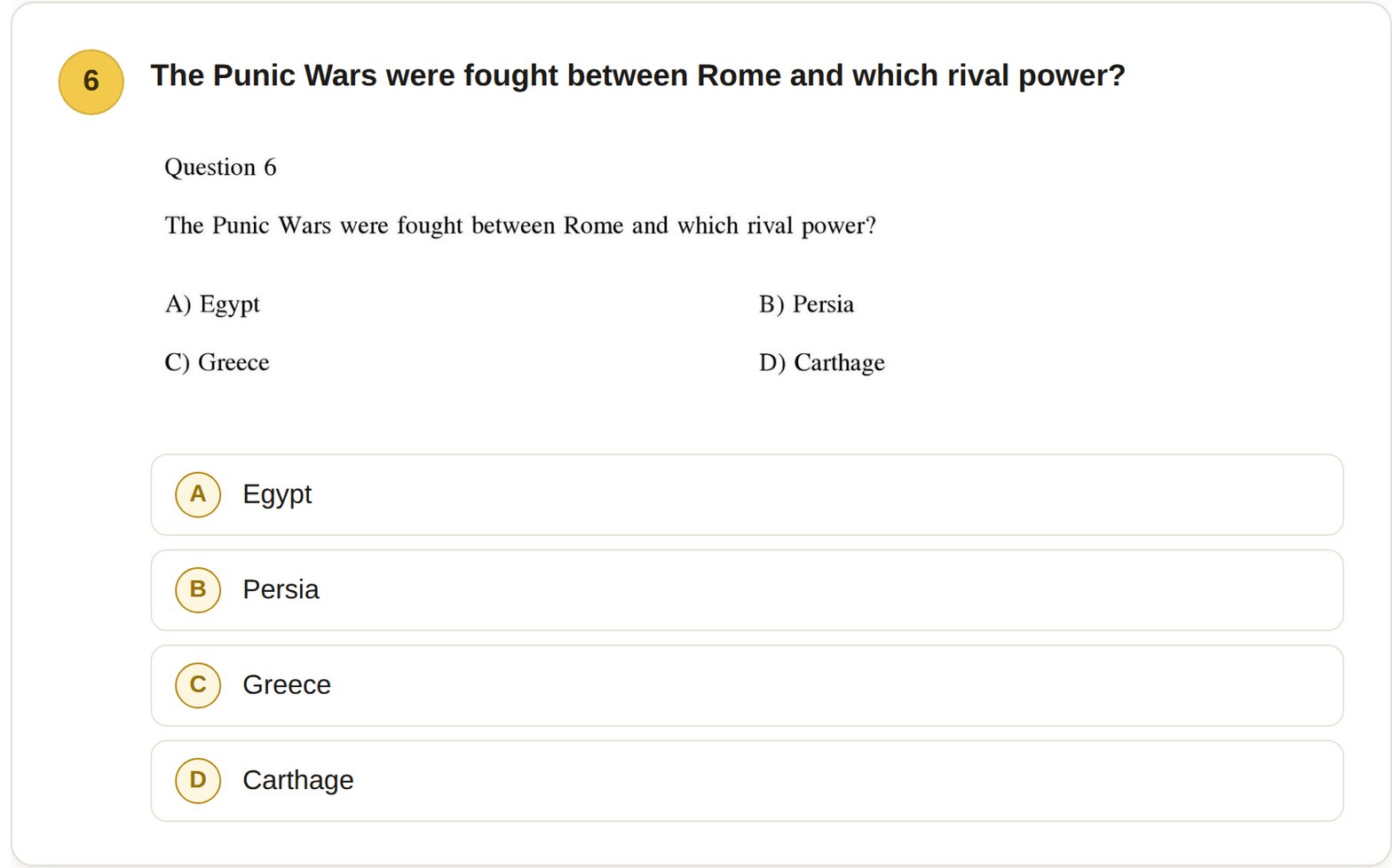
The Punic Wars were fought between Rome and which rival power?
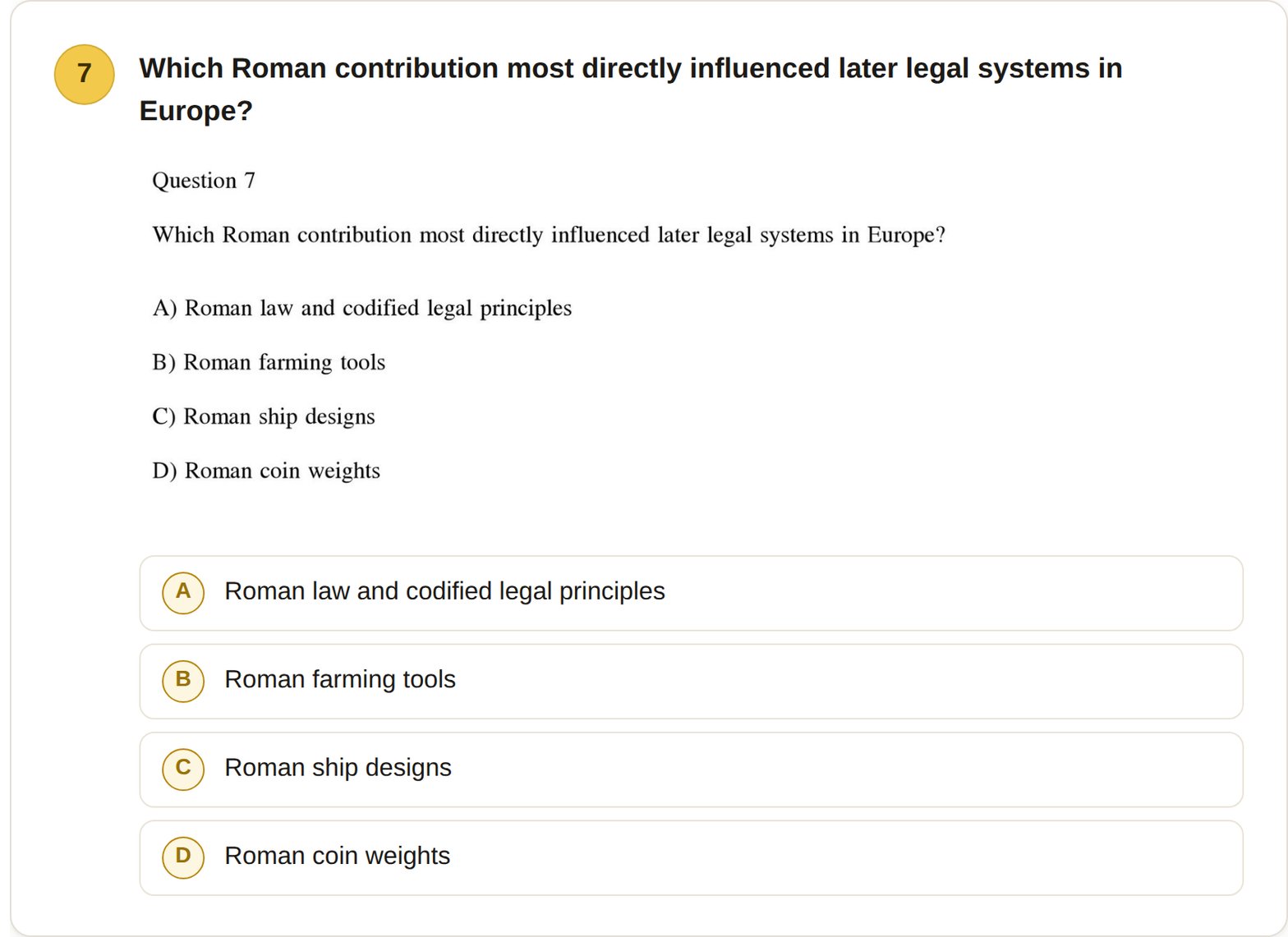
Which Roman contribution most directly influenced later legal systems in Europe?
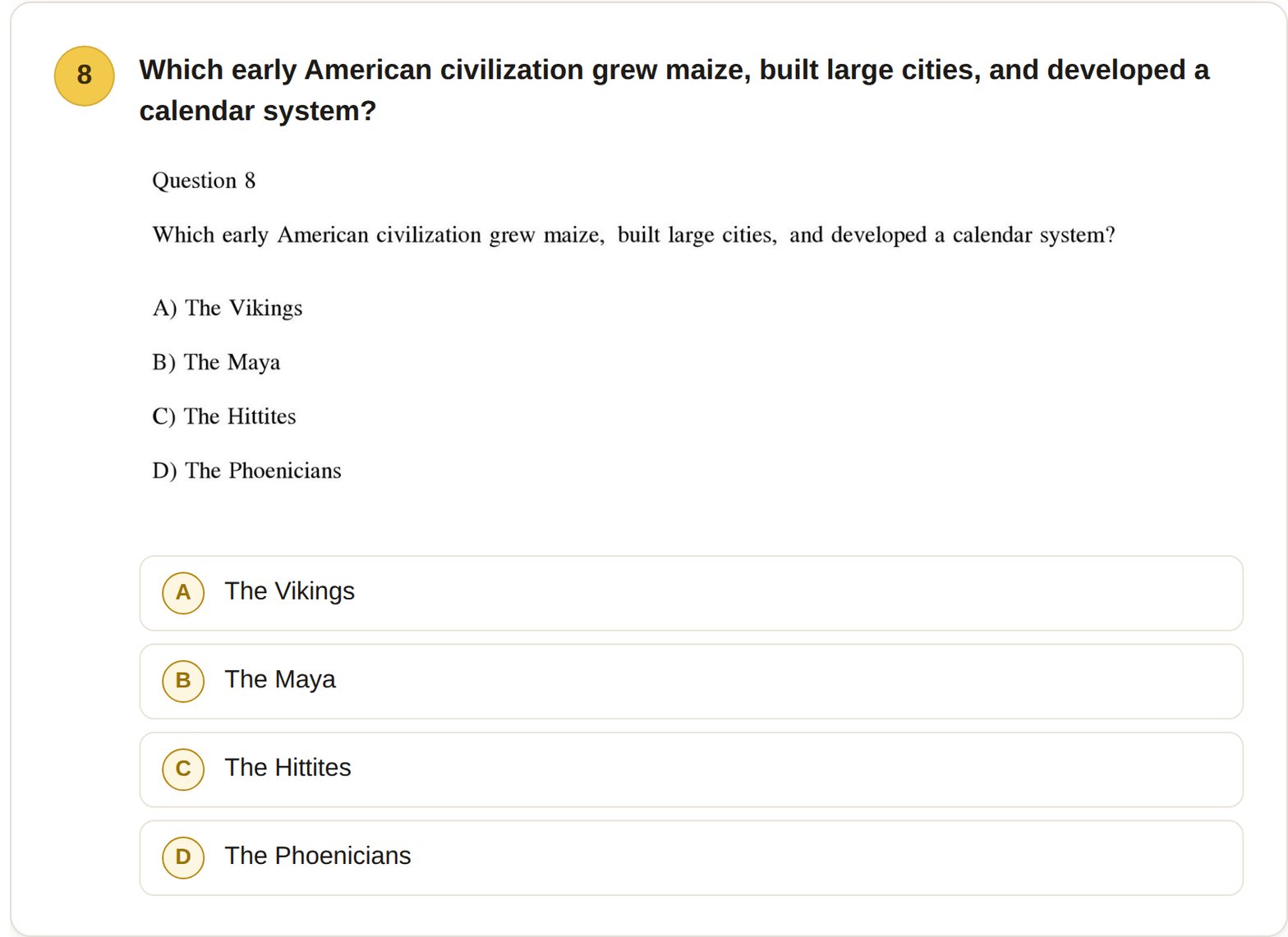
Which early American civilization grew maize, built large cities, and developed a calendar system?
In what year was Julius Caesar assassinated in Rome?
Based on Source I, how did Roman roads help the empire?
The road is straight and paved with fitted stones. Milestones mark the distance to the next town, and soldiers patrol the route. Merchants carry olive oil and grain in wagons, and a message sent from Rome can reach a distant province in days rather than weeks.
Your score: 0 / 10