1
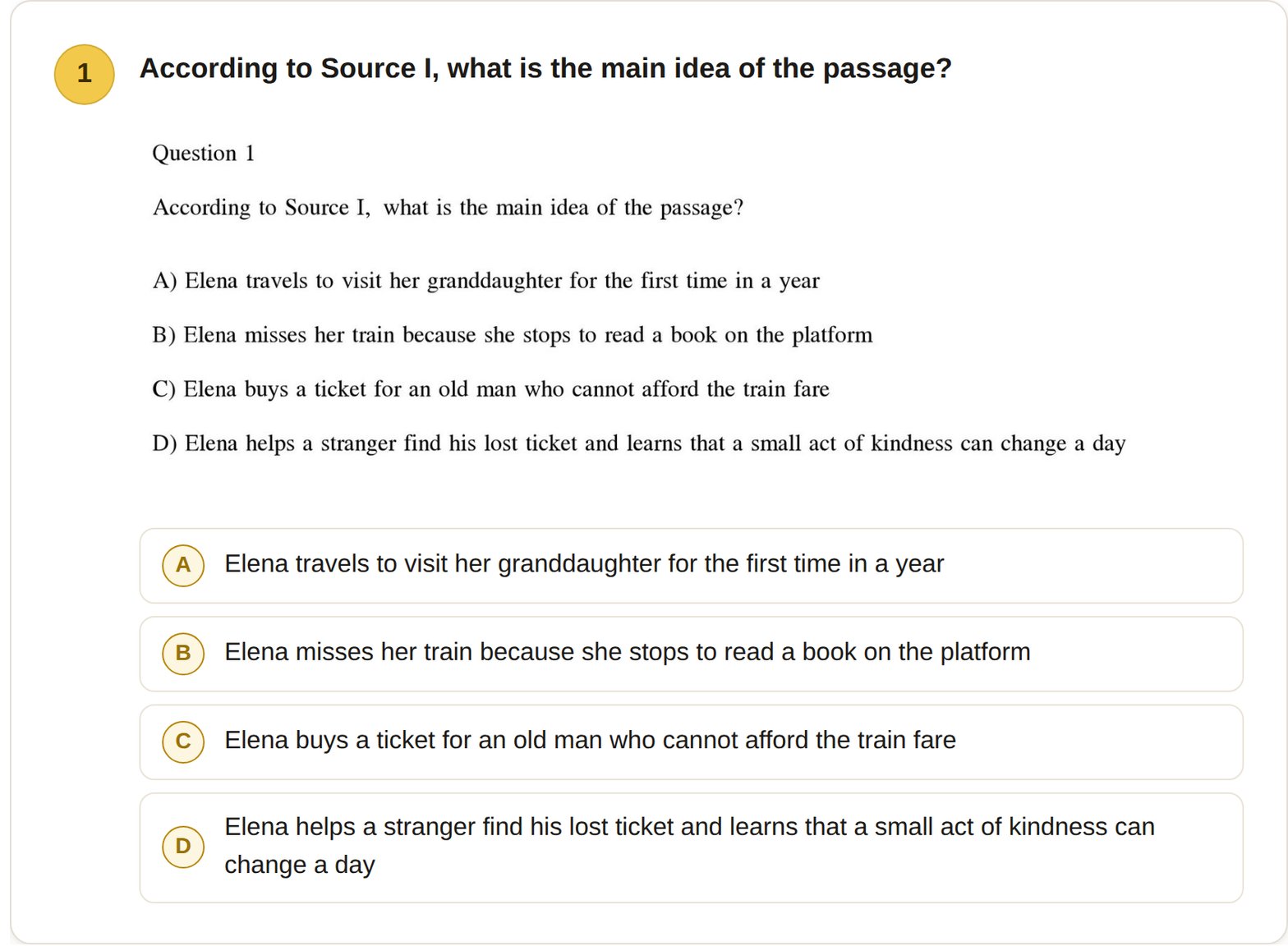
According to Source I, what is the main idea of the passage?
Reading Literature - Practice Test | Montana English 10 · Unit 1 · 25 questions
This practice test was made by AI and there may be mistakes. If a question or answer looks wrong, use the Flag a mistake button to let Brett know so he can fix it.
According to Source I, what is the main idea of the passage?
Elena stood on the cold platform and watched the last train pull in twenty minutes late. The wind pushed at her coat, and the station lights buzzed overhead. She had planned to read on the ride home, but the delay gave her time to notice the people around her.
An old man in a gray coat searched his pockets again and again, his face growing worried. Elena saw a small paper ticket lying under the bench where he had been sitting. She picked it up, walked over, and held it out to him. His face relaxed at once, and he thanked her three times.
On the train, the man told Elena he was traveling to see his granddaughter for the first time in a year. He said the ticket had been a gift from his daughter. Elena listened, and by the time the train reached her stop, the cold wait no longer felt like wasted time.
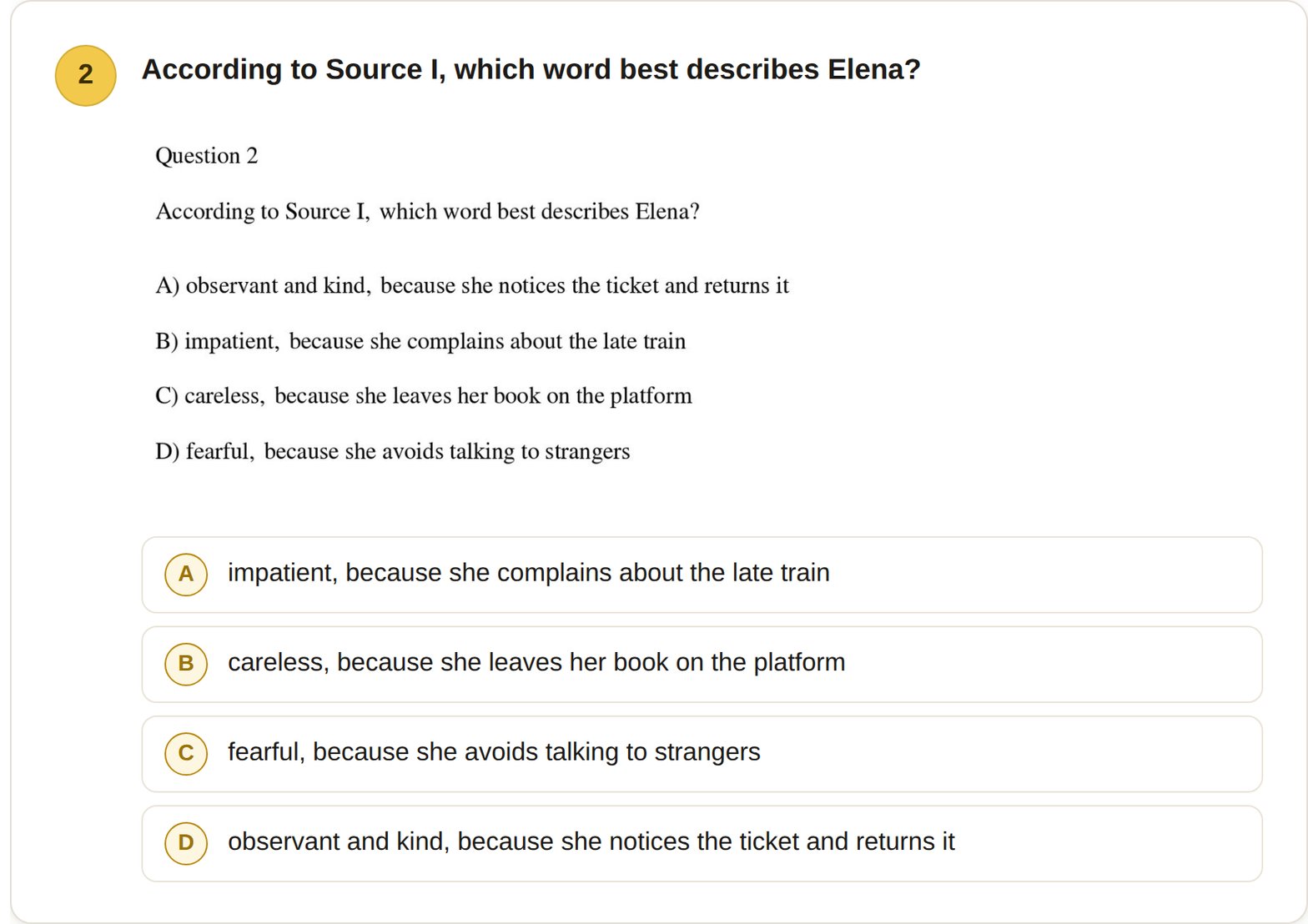
According to Source I, which word best describes Elena?
Elena stood on the cold platform and watched the last train pull in twenty minutes late. The wind pushed at her coat, and the station lights buzzed overhead. She had planned to read on the ride home, but the delay gave her time to notice the people around her.
An old man in a gray coat searched his pockets again and again, his face growing worried. Elena saw a small paper ticket lying under the bench where he had been sitting. She picked it up, walked over, and held it out to him. His face relaxed at once, and he thanked her three times.
On the train, the man told Elena he was traveling to see his granddaughter for the first time in a year. He said the ticket had been a gift from his daughter. Elena listened, and by the time the train reached her stop, the cold wait no longer felt like wasted time.
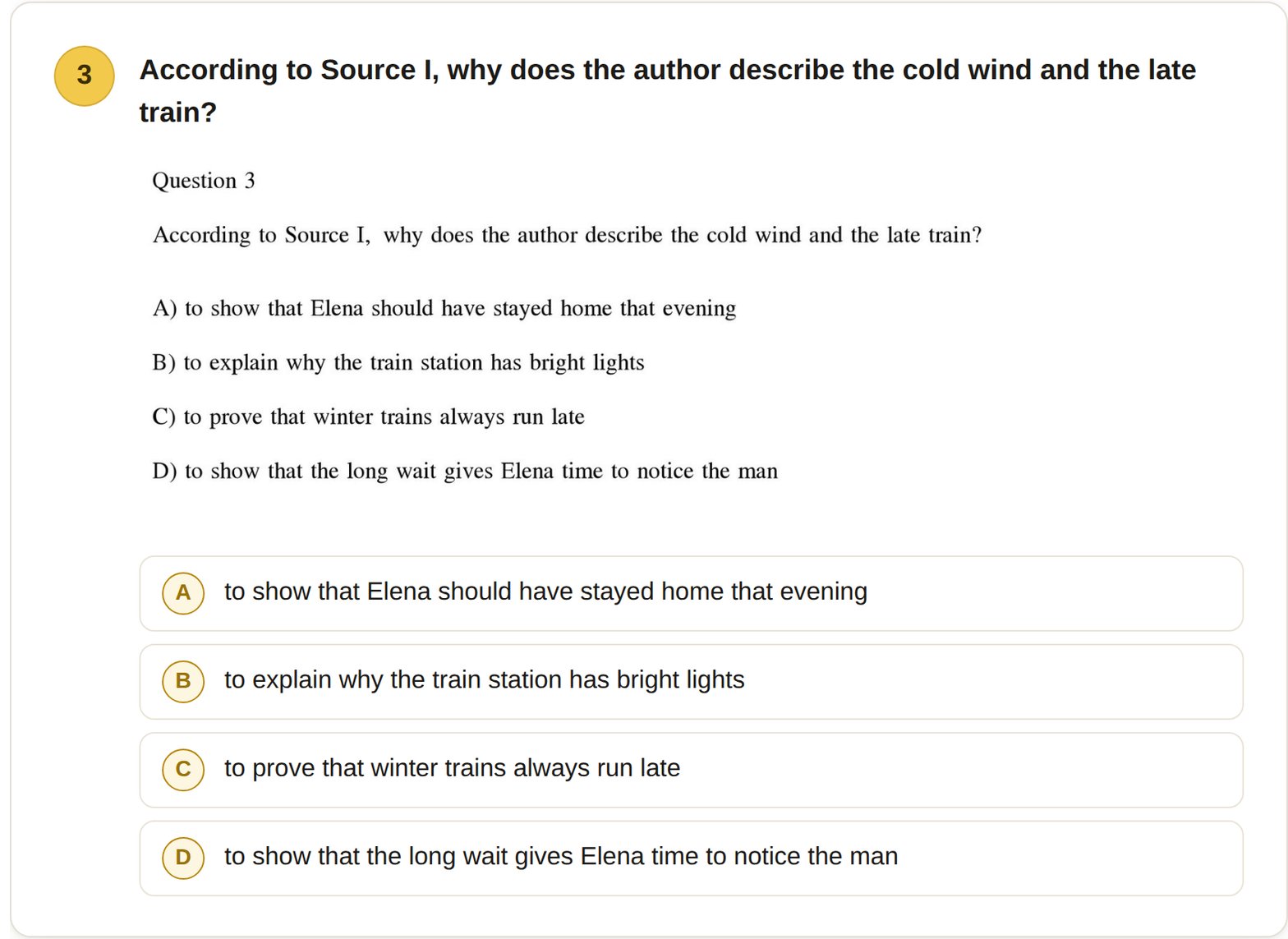
According to Source I, why does the author describe the cold wind and the late train?
Elena stood on the cold platform and watched the last train pull in twenty minutes late. The wind pushed at her coat, and the station lights buzzed overhead. She had planned to read on the ride home, but the delay gave her time to notice the people around her.
An old man in a gray coat searched his pockets again and again, his face growing worried. Elena saw a small paper ticket lying under the bench where he had been sitting. She picked it up, walked over, and held it out to him. His face relaxed at once, and he thanked her three times.
On the train, the man told Elena he was traveling to see his granddaughter for the first time in a year. He said the ticket had been a gift from his daughter. Elena listened, and by the time the train reached her stop, the cold wait no longer felt like wasted time.
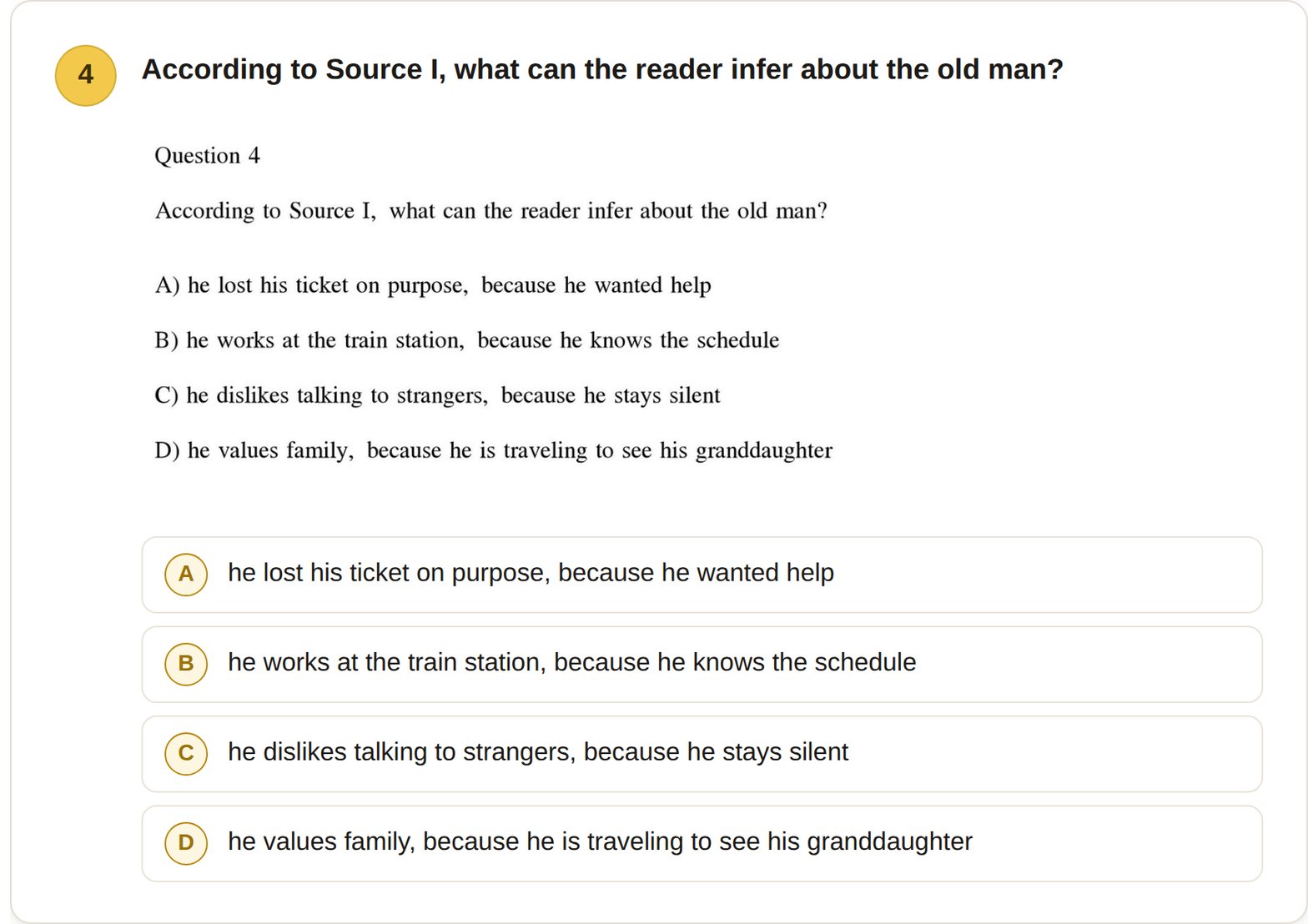
According to Source I, what can the reader infer about the old man?
Elena stood on the cold platform and watched the last train pull in twenty minutes late. The wind pushed at her coat, and the station lights buzzed overhead. She had planned to read on the ride home, but the delay gave her time to notice the people around her.
An old man in a gray coat searched his pockets again and again, his face growing worried. Elena saw a small paper ticket lying under the bench where he had been sitting. She picked it up, walked over, and held it out to him. His face relaxed at once, and he thanked her three times.
On the train, the man told Elena he was traveling to see his granddaughter for the first time in a year. He said the ticket had been a gift from his daughter. Elena listened, and by the time the train reached her stop, the cold wait no longer felt like wasted time.
According to Source I, what theme does the story suggest?
Elena stood on the cold platform and watched the last train pull in twenty minutes late. The wind pushed at her coat, and the station lights buzzed overhead. She had planned to read on the ride home, but the delay gave her time to notice the people around her.
An old man in a gray coat searched his pockets again and again, his face growing worried. Elena saw a small paper ticket lying under the bench where he had been sitting. She picked it up, walked over, and held it out to him. His face relaxed at once, and he thanked her three times.
On the train, the man told Elena he was traveling to see his granddaughter for the first time in a year. He said the ticket had been a gift from his daughter. Elena listened, and by the time the train reached her stop, the cold wait no longer felt like wasted time.
According to Source I, from which point of view is the story told?
Elena stood on the cold platform and watched the last train pull in twenty minutes late. The wind pushed at her coat, and the station lights buzzed overhead. She had planned to read on the ride home, but the delay gave her time to notice the people around her.
An old man in a gray coat searched his pockets again and again, his face growing worried. Elena saw a small paper ticket lying under the bench where he had been sitting. She picked it up, walked over, and held it out to him. His face relaxed at once, and he thanked her three times.
On the train, the man told Elena he was traveling to see his granddaughter for the first time in a year. He said the ticket had been a gift from his daughter. Elena listened, and by the time the train reached her stop, the cold wait no longer felt like wasted time.
According to Source II, the line about rain tapping like fingers on a drum is an example of
Rain taps the roof like fingers on a drum.
Gray clouds gather over the quiet street.
A lone oak bends but does not break.
Puddles hold the sky in trembling glass.
I watch from the window, warm and dry.
The storm passes, and the wet leaves shine.
According to Source II, which word best describes the mood of the poem?
Rain taps the roof like fingers on a drum.
Gray clouds gather over the quiet street.
A lone oak bends but does not break.
Puddles hold the sky in trembling glass.
I watch from the window, warm and dry.
The storm passes, and the wet leaves shine.
According to Source II, the line about puddles holding the sky is mainly an example of
Rain taps the roof like fingers on a drum.
Gray clouds gather over the quiet street.
A lone oak bends but does not break.
Puddles hold the sky in trembling glass.
I watch from the window, warm and dry.
The storm passes, and the wet leaves shine.
According to Source II, from which point of view does the speaker describe the storm?
Rain taps the roof like fingers on a drum.
Gray clouds gather over the quiet street.
A lone oak bends but does not break.
Puddles hold the sky in trembling glass.
I watch from the window, warm and dry.
The storm passes, and the wet leaves shine.
According to Source II, what happens at the end of the poem?
Rain taps the roof like fingers on a drum.
Gray clouds gather over the quiet street.
A lone oak bends but does not break.
Puddles hold the sky in trembling glass.
I watch from the window, warm and dry.
The storm passes, and the wet leaves shine.
According to Source III, what is the main idea of the passage?
On his first day at a new school, Marcus carried his lunch tray through a crowded cafeteria and looked for a place to sit. Every table seemed full, and every seat seemed already claimed by a group of friends.
Near the window, one seat was empty beside a quiet boy who was sketching in a notebook. Marcus took a breath, walked over, and asked if the seat was free. The boy looked up, smiled, and slid his notebook aside.
The boy, Sam, showed Marcus a drawing of a hero with a cape made of lightning. Marcus laughed and asked how Sam thought of such ideas. By the end of lunch, they were planning a comic together, and Marcus no longer felt like a stranger.
According to Source III, what is the main conflict Marcus faces?
On his first day at a new school, Marcus carried his lunch tray through a crowded cafeteria and looked for a place to sit. Every table seemed full, and every seat seemed already claimed by a group of friends.
Near the window, one seat was empty beside a quiet boy who was sketching in a notebook. Marcus took a breath, walked over, and asked if the seat was free. The boy looked up, smiled, and slid his notebook aside.
The boy, Sam, showed Marcus a drawing of a hero with a cape made of lightning. Marcus laughed and asked how Sam thought of such ideas. By the end of lunch, they were planning a comic together, and Marcus no longer felt like a stranger.
According to Source III, what can the reader infer about Sam?
On his first day at a new school, Marcus carried his lunch tray through a crowded cafeteria and looked for a place to sit. Every table seemed full, and every seat seemed already claimed by a group of friends.
Near the window, one seat was empty beside a quiet boy who was sketching in a notebook. Marcus took a breath, walked over, and asked if the seat was free. The boy looked up, smiled, and slid his notebook aside.
The boy, Sam, showed Marcus a drawing of a hero with a cape made of lightning. Marcus laughed and asked how Sam thought of such ideas. By the end of lunch, they were planning a comic together, and Marcus no longer felt like a stranger.
According to Source III, what does the empty seat most likely symbolize?
On his first day at a new school, Marcus carried his lunch tray through a crowded cafeteria and looked for a place to sit. Every table seemed full, and every seat seemed already claimed by a group of friends.
Near the window, one seat was empty beside a quiet boy who was sketching in a notebook. Marcus took a breath, walked over, and asked if the seat was free. The boy looked up, smiled, and slid his notebook aside.
The boy, Sam, showed Marcus a drawing of a hero with a cape made of lightning. Marcus laughed and asked how Sam thought of such ideas. By the end of lunch, they were planning a comic together, and Marcus no longer felt like a stranger.
According to Source III, why does the author include the detail about the sketchbook?
On his first day at a new school, Marcus carried his lunch tray through a crowded cafeteria and looked for a place to sit. Every table seemed full, and every seat seemed already claimed by a group of friends.
Near the window, one seat was empty beside a quiet boy who was sketching in a notebook. Marcus took a breath, walked over, and asked if the seat was free. The boy looked up, smiled, and slid his notebook aside.
The boy, Sam, showed Marcus a drawing of a hero with a cape made of lightning. Marcus laughed and asked how Sam thought of such ideas. By the end of lunch, they were planning a comic together, and Marcus no longer felt like a stranger.
According to Source III, what theme does the story suggest?
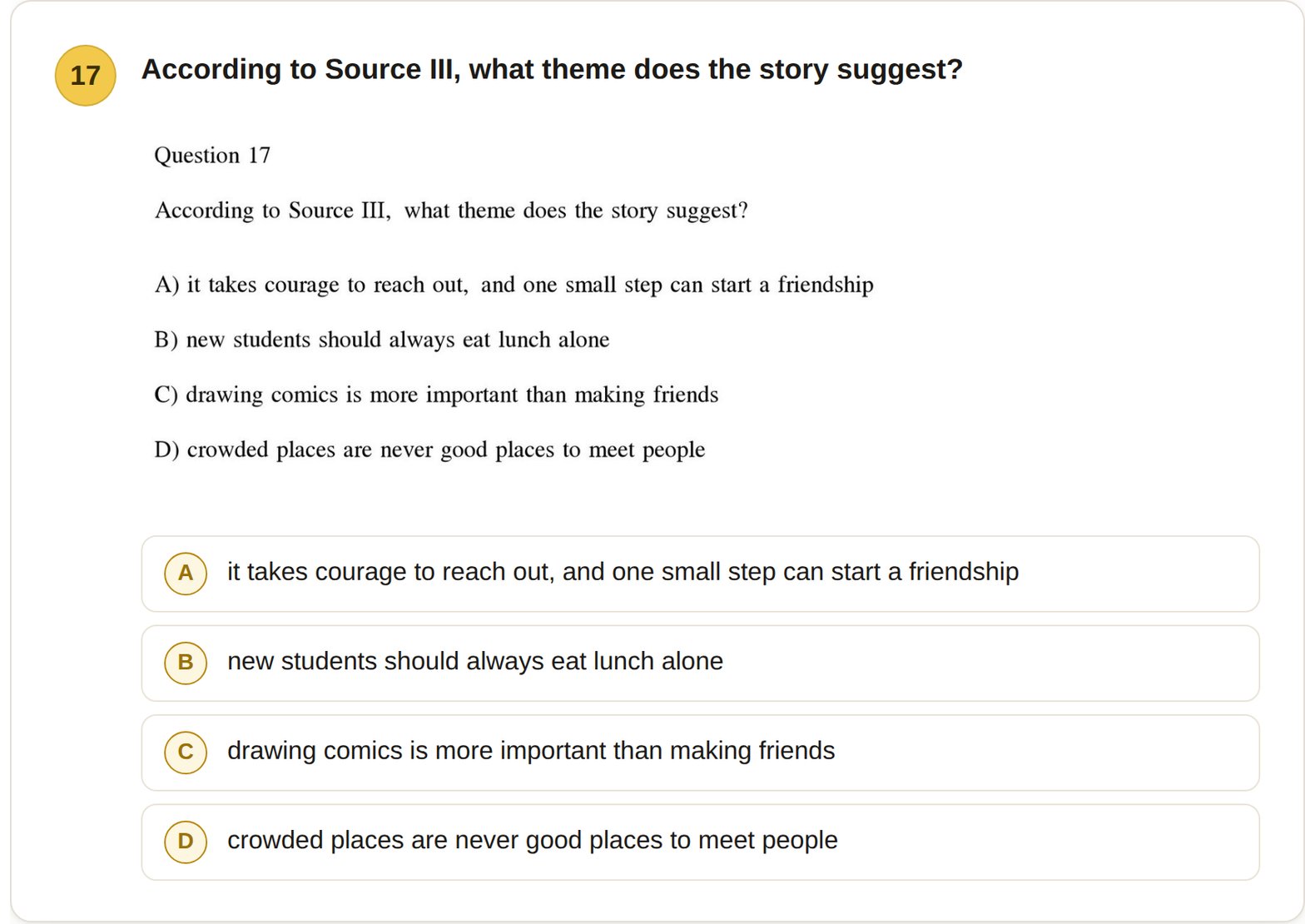
On his first day at a new school, Marcus carried his lunch tray through a crowded cafeteria and looked for a place to sit. Every table seemed full, and every seat seemed already claimed by a group of friends.
Near the window, one seat was empty beside a quiet boy who was sketching in a notebook. Marcus took a breath, walked over, and asked if the seat was free. The boy looked up, smiled, and slid his notebook aside.
The boy, Sam, showed Marcus a drawing of a hero with a cape made of lightning. Marcus laughed and asked how Sam thought of such ideas. By the end of lunch, they were planning a comic together, and Marcus no longer felt like a stranger.
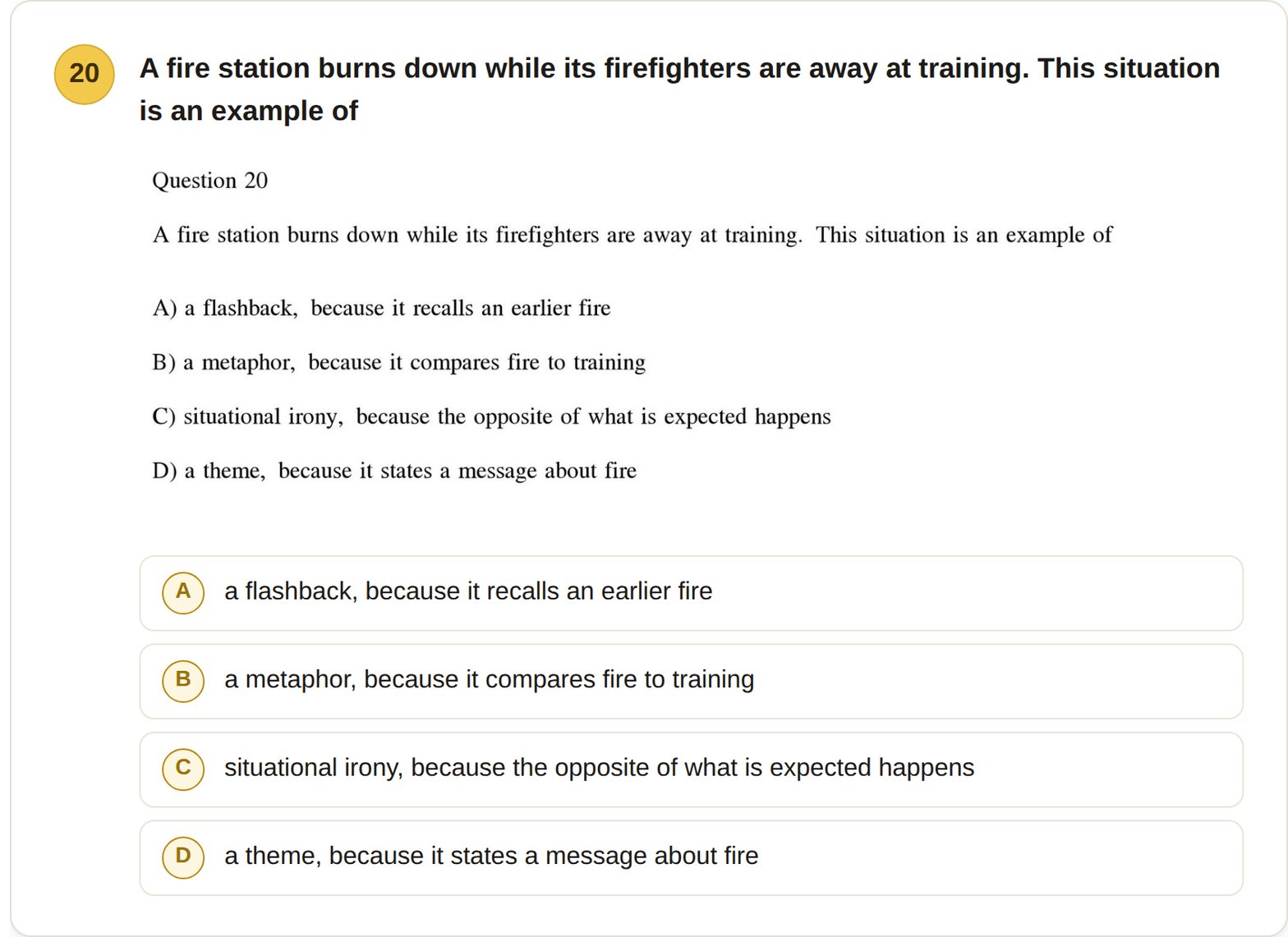
Which statement best explains the difference between a topic and a theme?
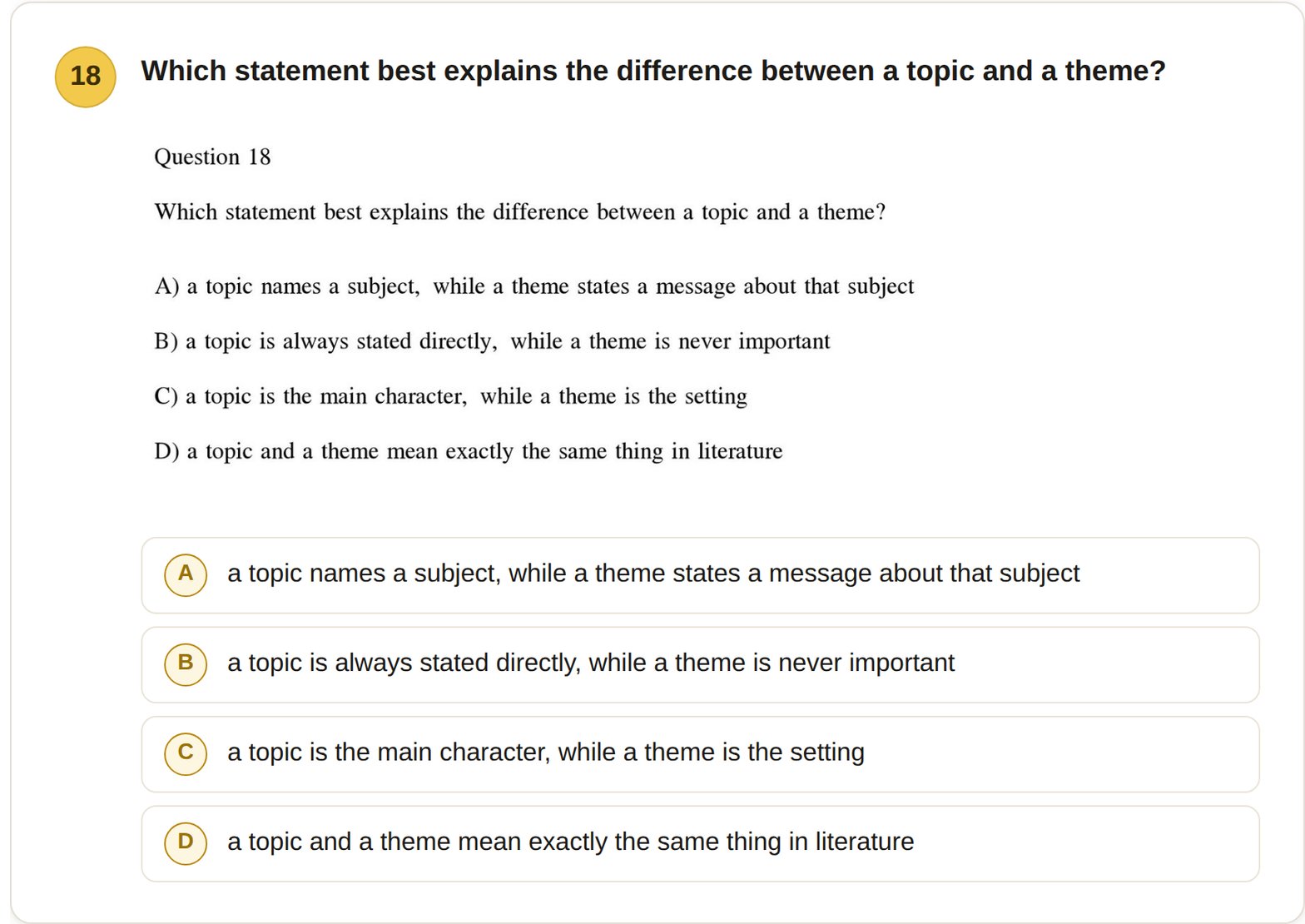
A story mentions dark clouds and a cold wind in the morning, and later a storm ruins a picnic. The early mention of clouds is an example of
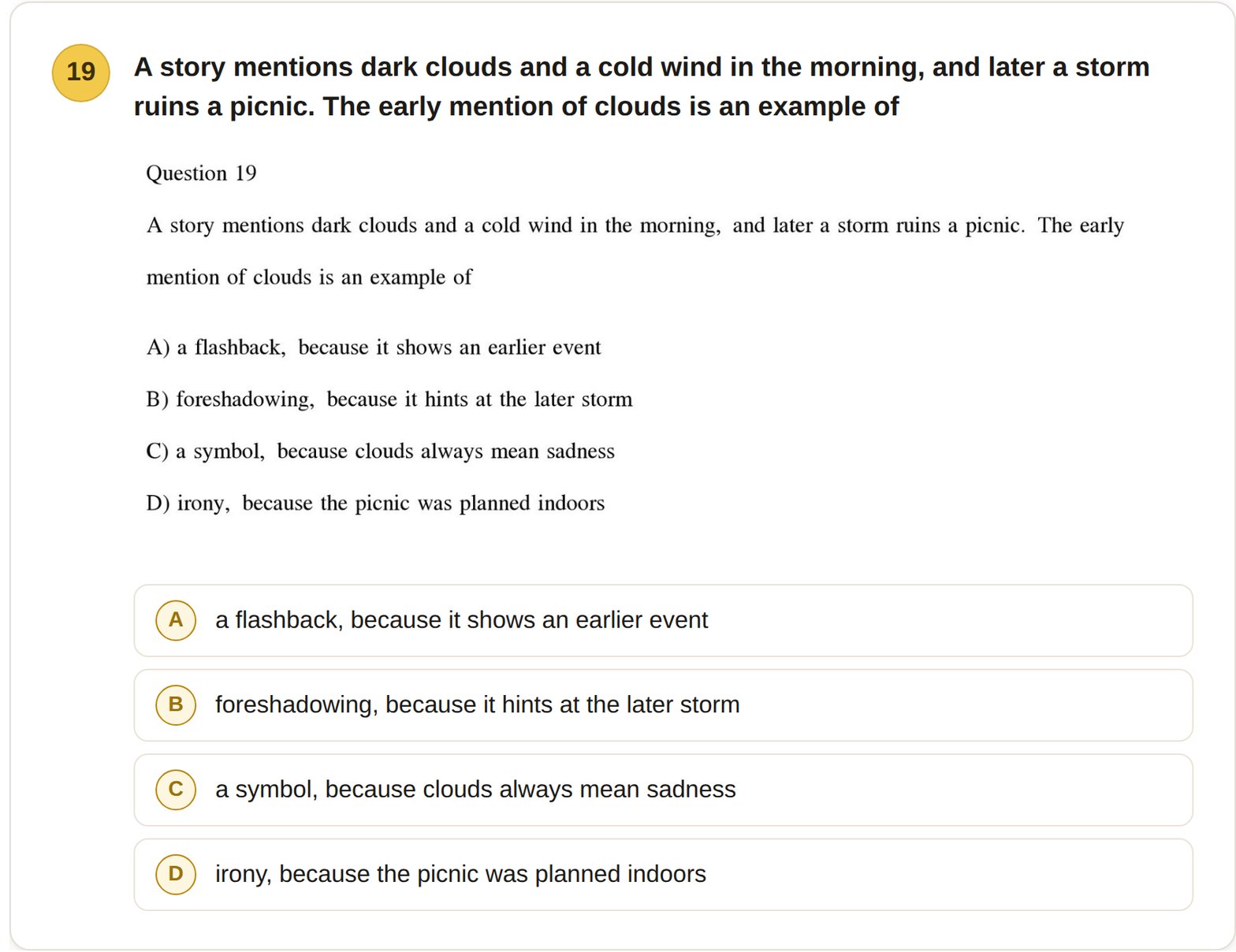
A fire station burns down while its firefighters are away at training. This situation is an example of
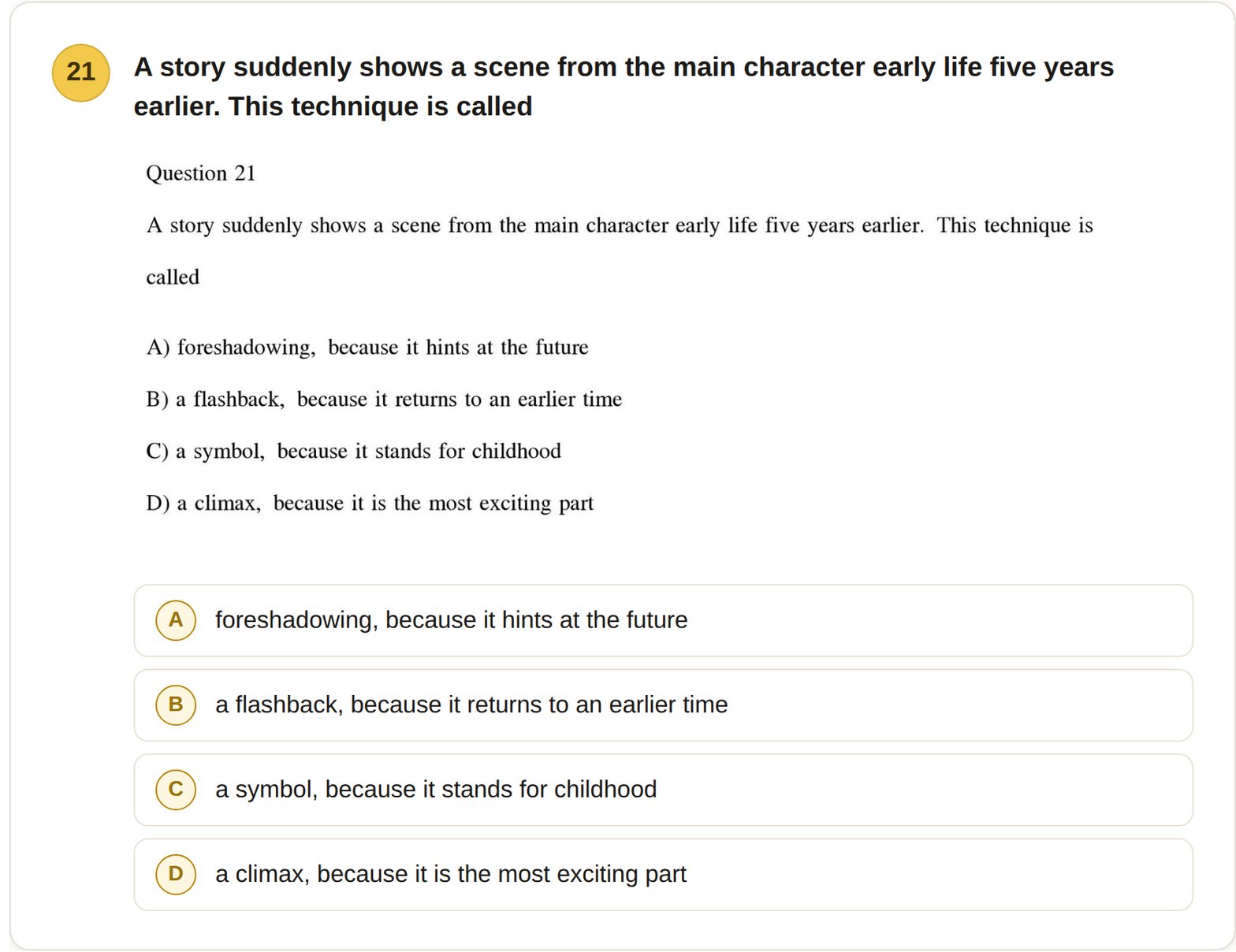
A story suddenly shows a scene from the main character early life five years earlier. This technique is called
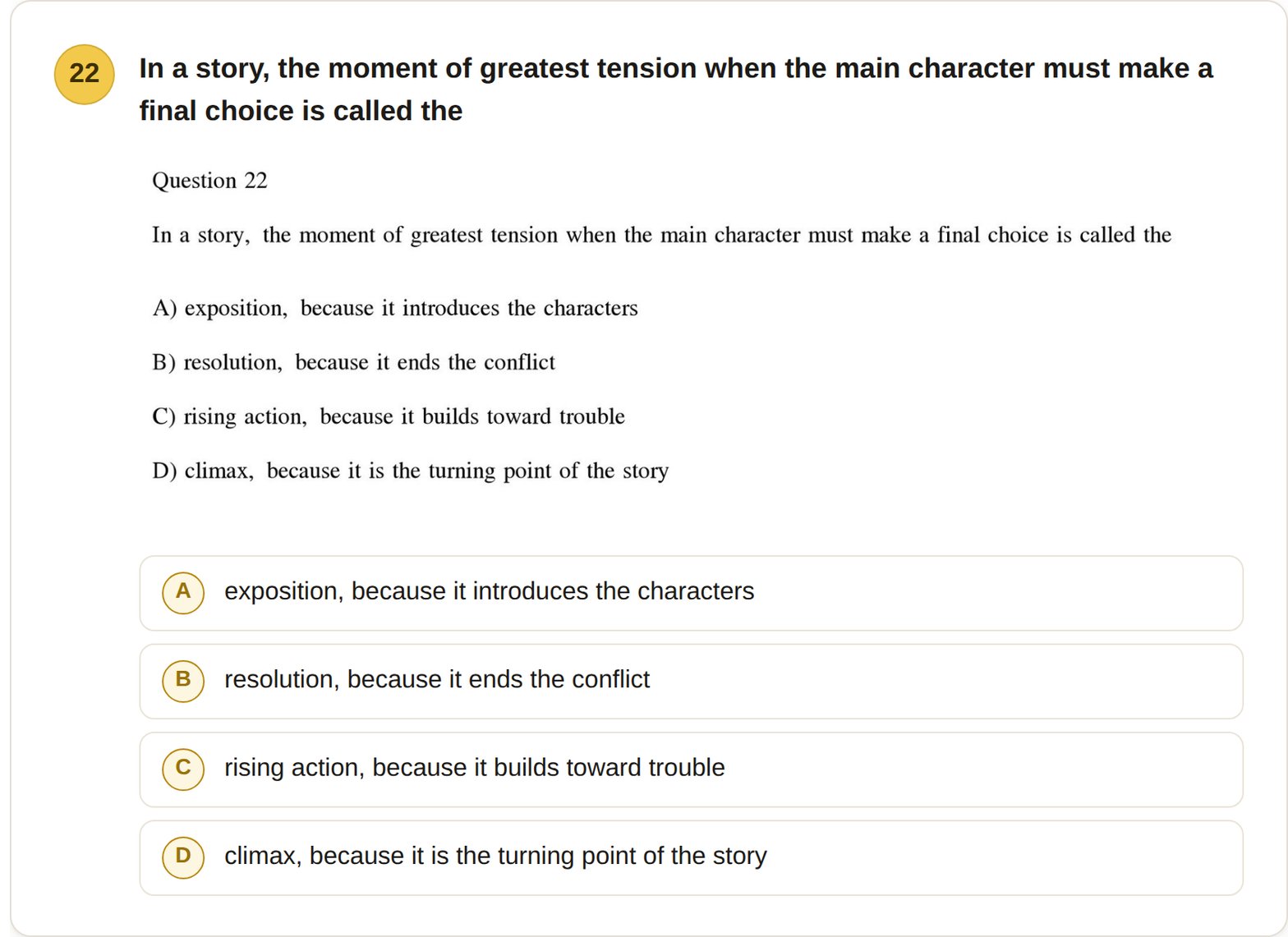
In a story, the moment of greatest tension when the main character must make a final choice is called the
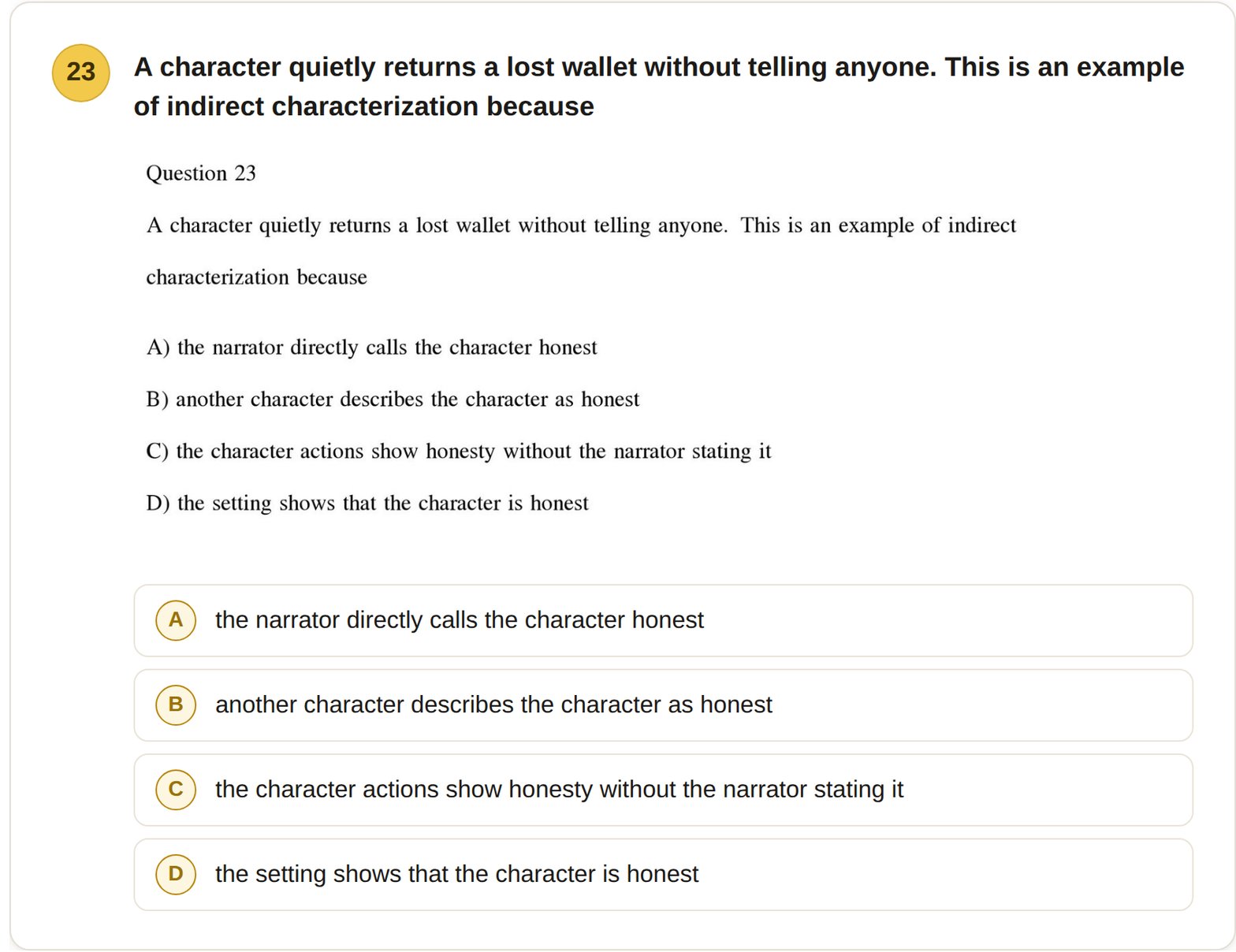
A character quietly returns a lost wallet without telling anyone. This is an example of indirect characterization because
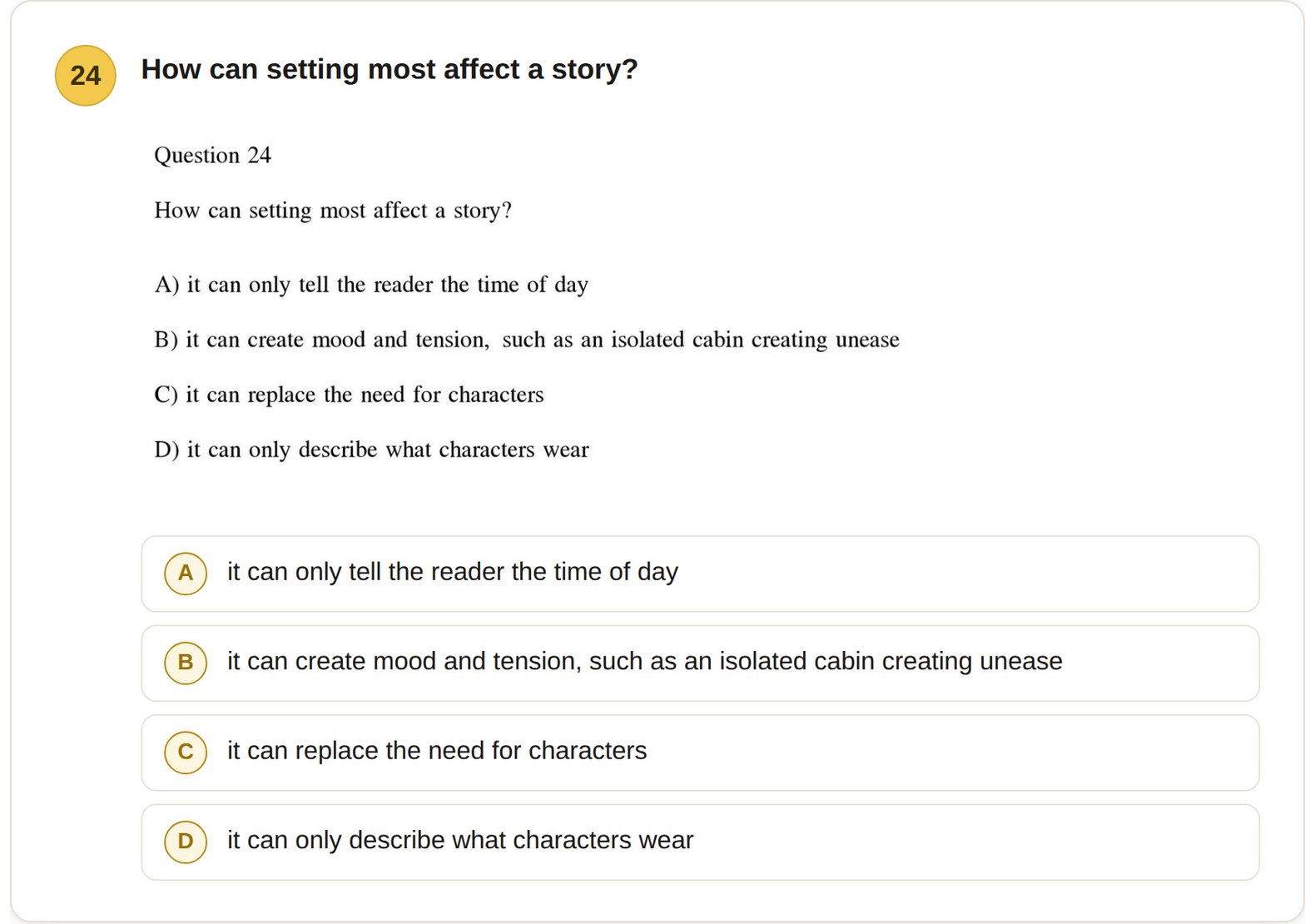
How can setting most affect a story?
What is the main purpose of dialogue in a story?
Your score: 0 / 25