1
A human body cell has 46 chromosomes. After mitosis each daughter cell has how many chromosomes
Mitosis, Meiosis, DNA Structure and Replication - Practice Test | New Brunswick Biology 121-122 · Unit A · 25 questions
This practice test was made by AI and there may be mistakes. If a question or answer looks wrong, use the Flag a mistake button so it can be fixed.
A human body cell has 46 chromosomes. After mitosis each daughter cell has how many chromosomes
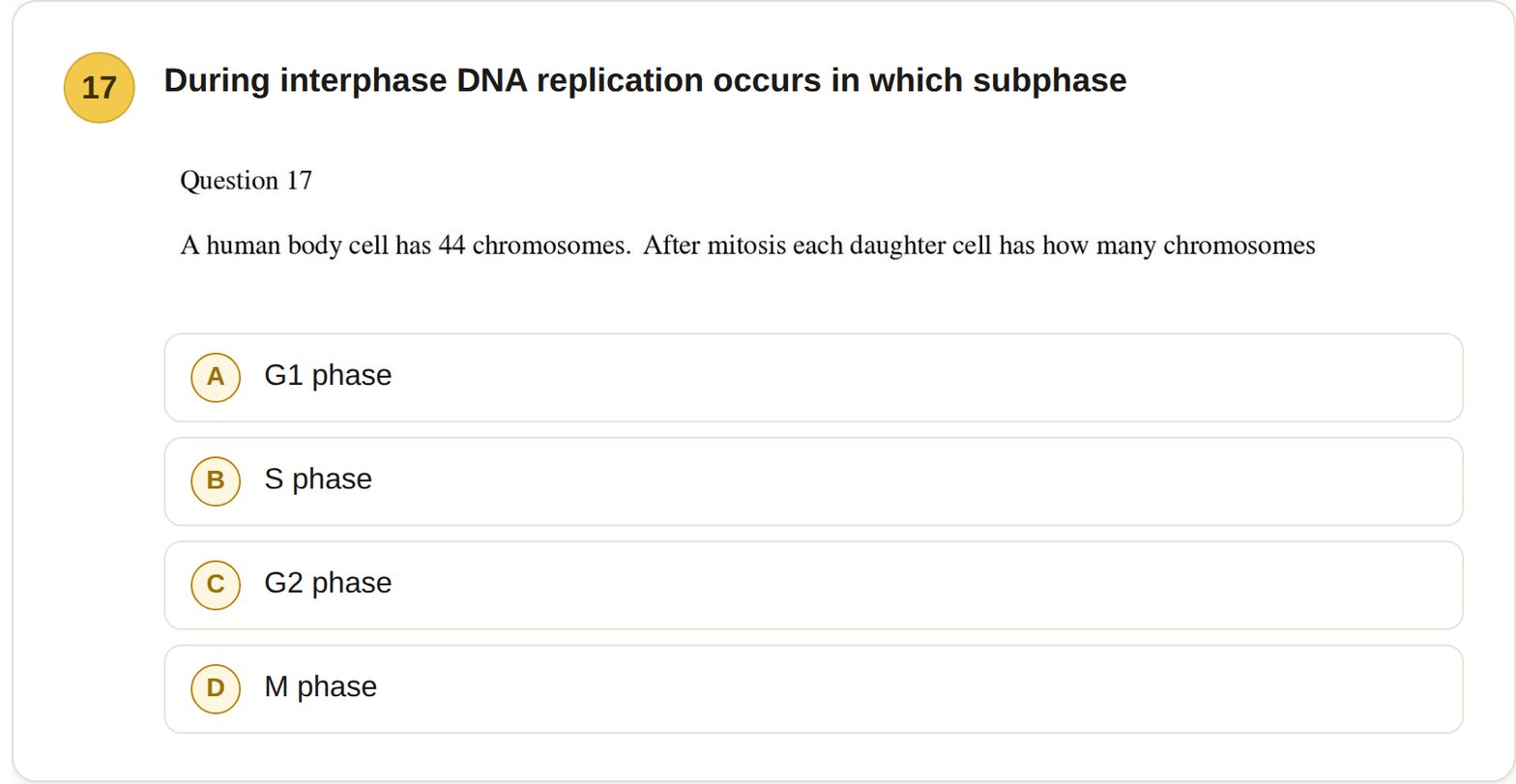
A human body cell has 44 chromosomes. After mitosis each daughter cell has how many chromosomes
A human body cell has 20 chromosomes. After mitosis each daughter cell has how many chromosomes
A human body cell has 38 chromosomes. After mitosis each daughter cell has how many chromosomes
A cell with 8 chromosomes replicates its DNA in interphase. The number of chromatids present after replication is
A cell with 10 chromosomes replicates its DNA in interphase. The number of chromatids present after replication is
A cell with 14 chromosomes replicates its DNA in interphase. The number of chromatids present after replication is
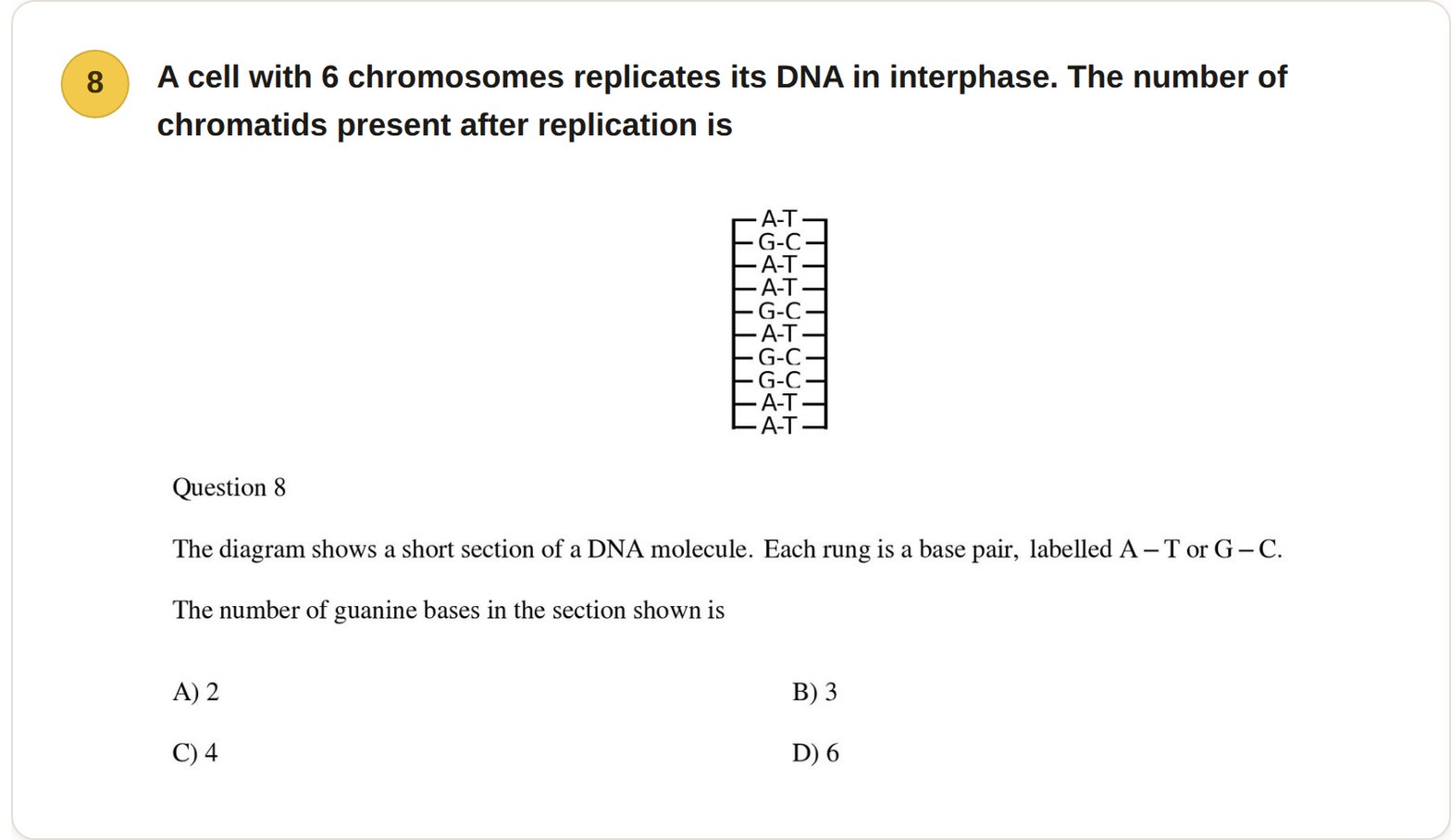
A cell with 6 chromosomes replicates its DNA in interphase. The number of chromatids present after replication is
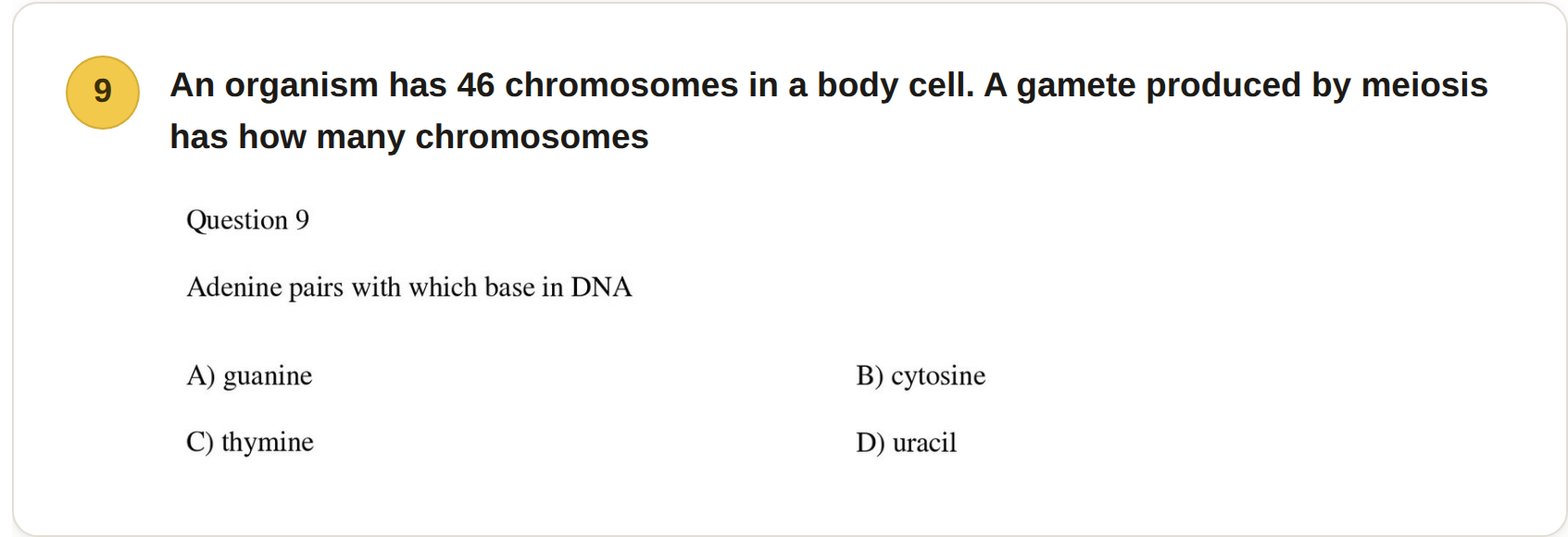
An organism has 46 chromosomes in a body cell. A gamete produced by meiosis has how many chromosomes
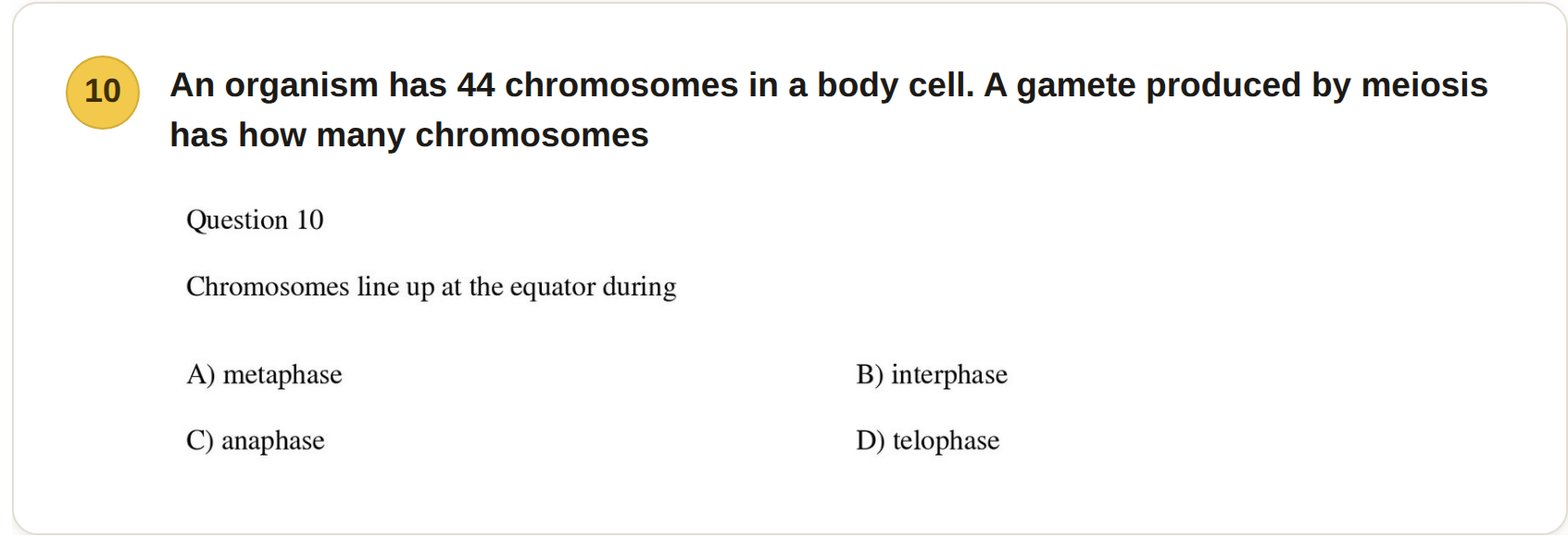
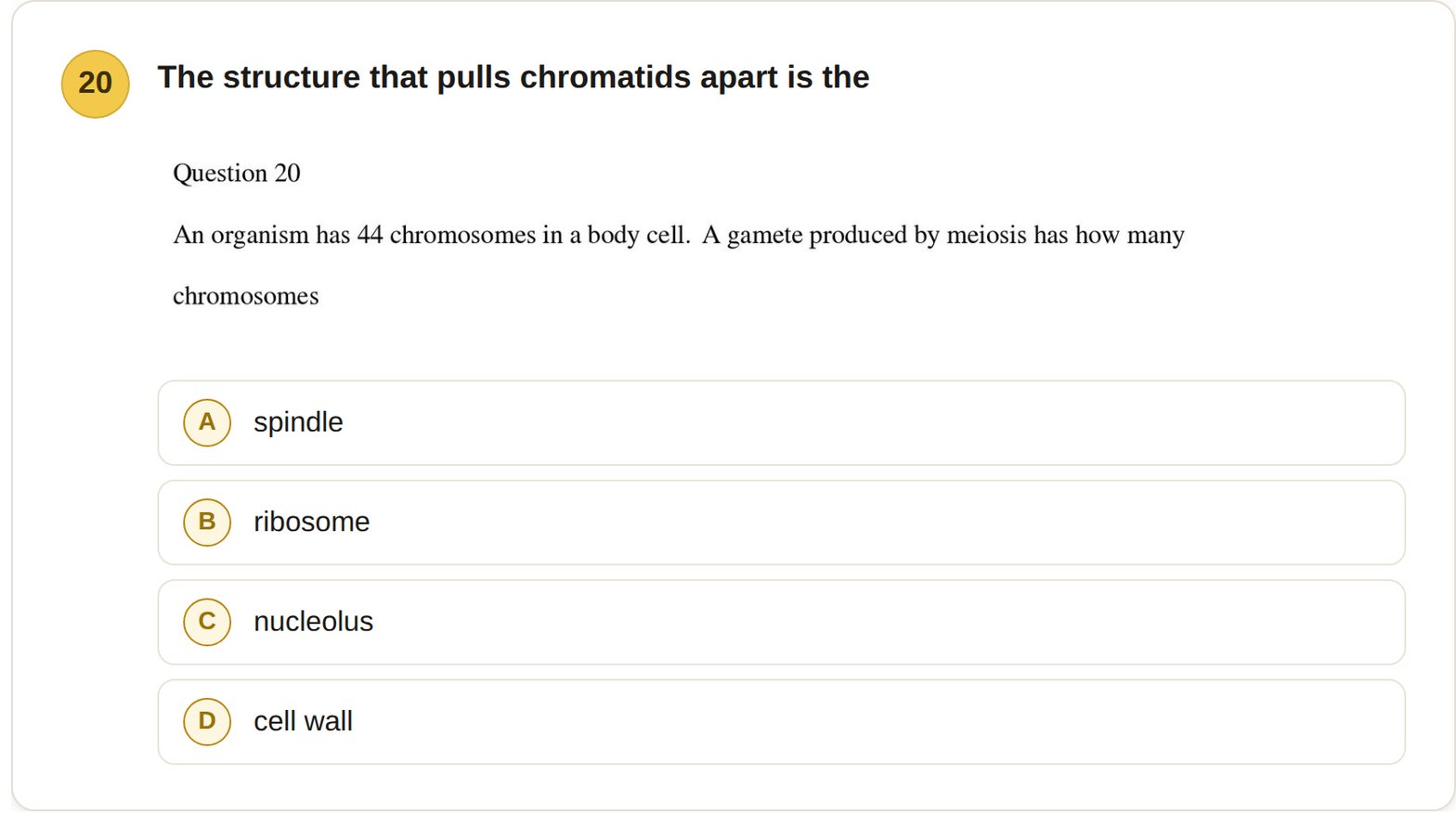
An organism has 44 chromosomes in a body cell. A gamete produced by meiosis has how many chromosomes
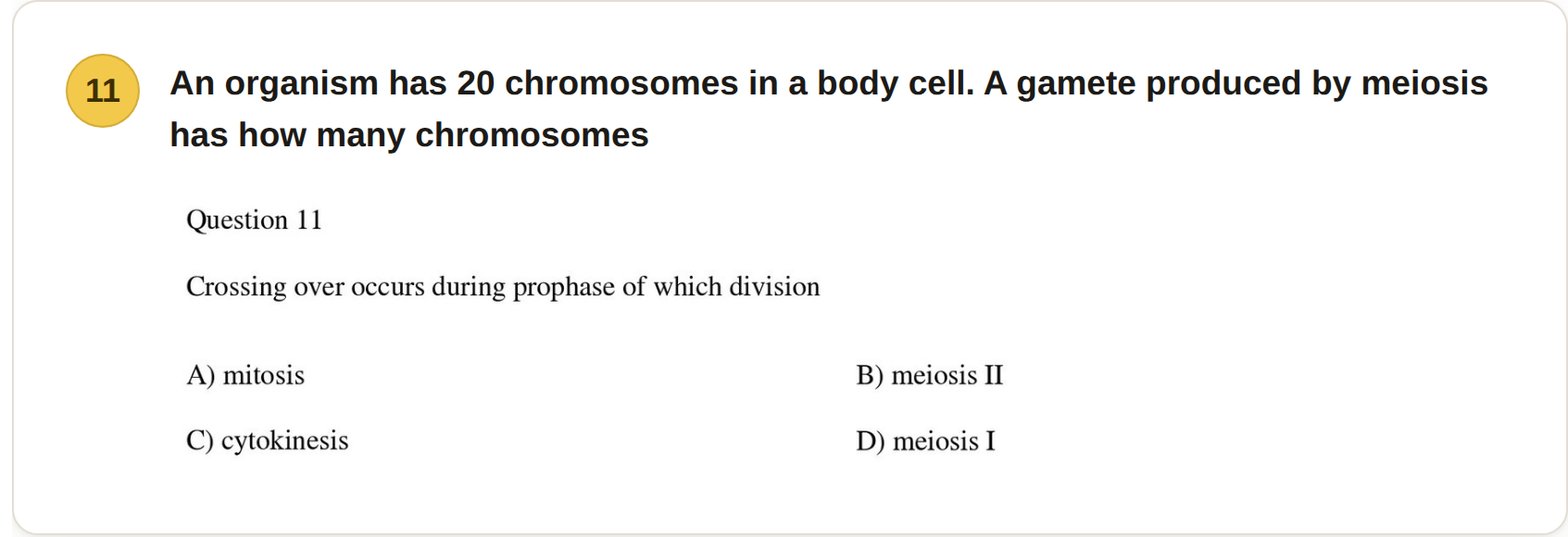
An organism has 20 chromosomes in a body cell. A gamete produced by meiosis has how many chromosomes
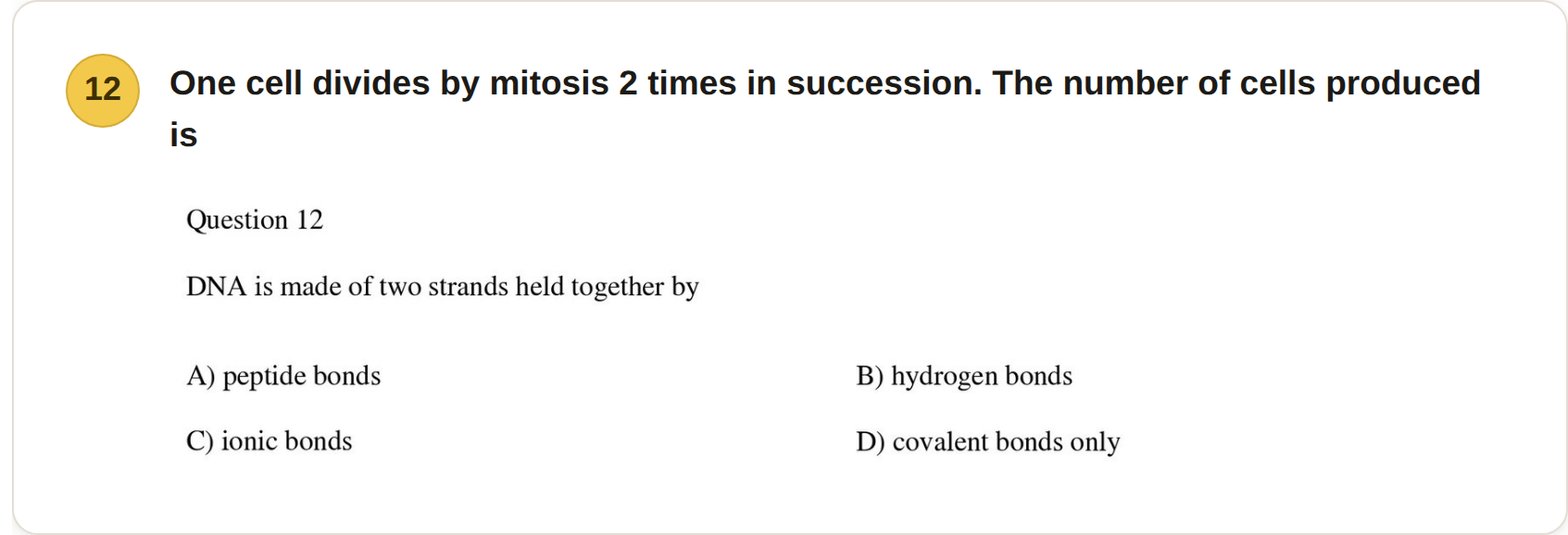
One cell divides by mitosis 2 times in succession. The number of cells produced is
One cell divides by mitosis 3 times in succession. The number of cells produced is
A DNA sample has 200 adenine bases. By base pairing the number of thymine bases is
A DNA sample of 1000 bases has 300 adenine bases. The number of guanine bases is
The phase of mitosis when sister chromatids separate is
During interphase DNA replication occurs in which subphase
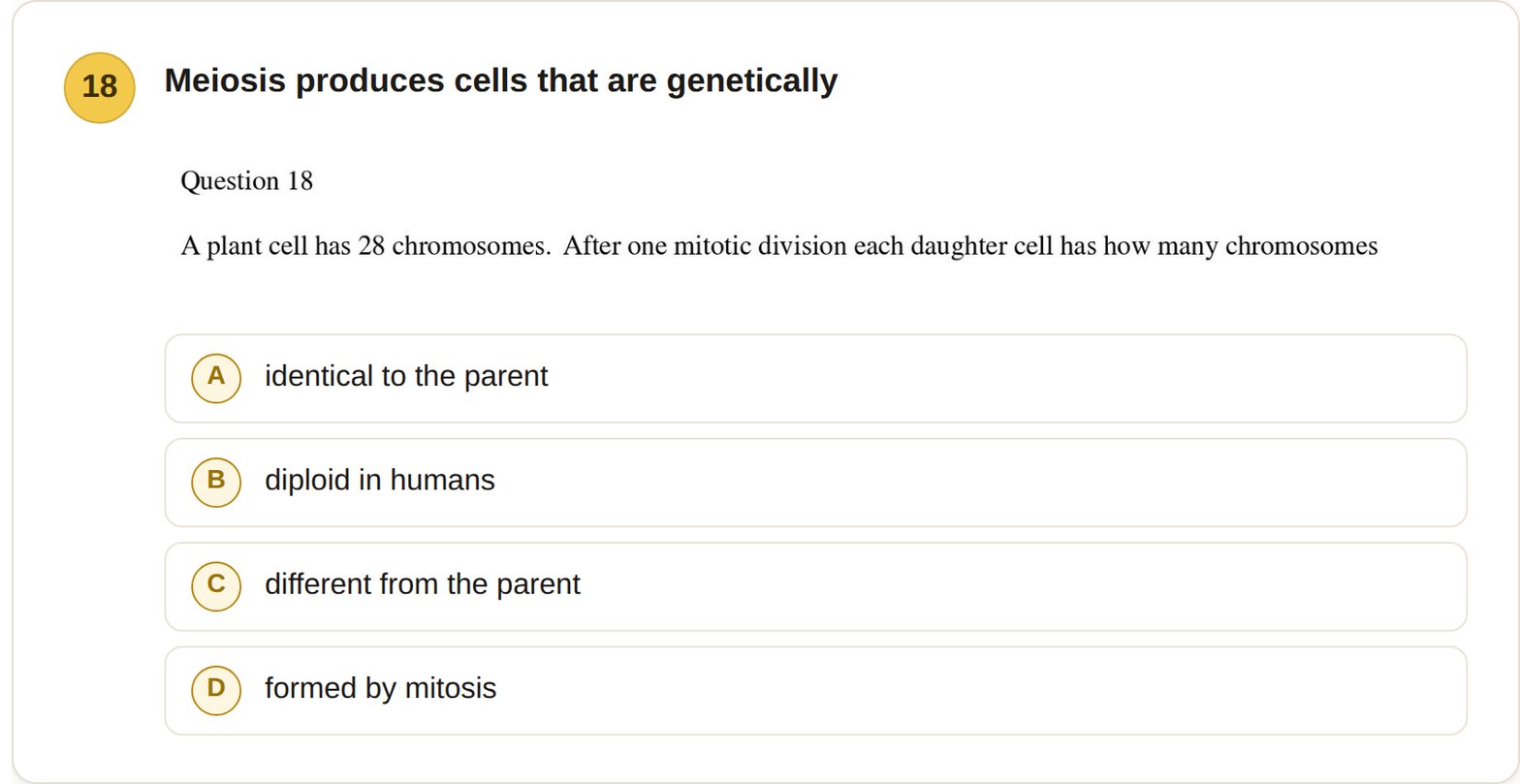
Meiosis produces cells that are genetically
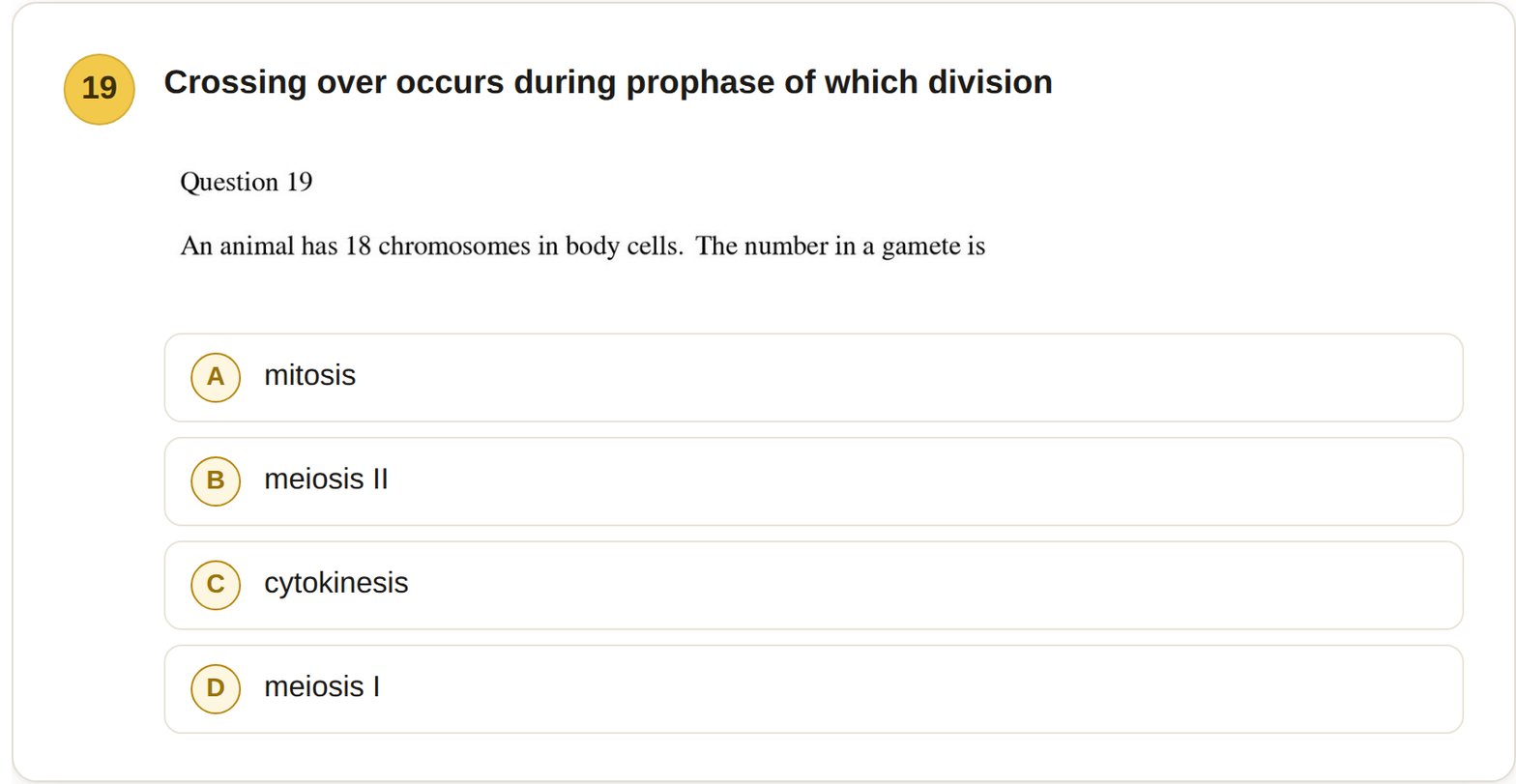
Crossing over occurs during prophase of which division
The structure that pulls chromatids apart is the
DNA is made of two strands held together by
Adenine pairs with which base in DNA
DNA replication is semiconservative because each new molecule has
The enzyme that unwinds DNA during replication is
In meiosis homologous chromosomes separate during
Your score: 0 / 25