1
A resting neuron has a membrane potential of negative 70 millivolts. The magnitude in millivolts is
Nervous and Endocrine Systems - Practice Test | New Brunswick Biology 121-122 · Unit D · 25 questions
This practice test was made by AI and there may be mistakes. If a question or answer looks wrong, use the Flag a mistake button so it can be fixed.
A resting neuron has a membrane potential of negative 70 millivolts. The magnitude in millivolts is
A resting neuron has a membrane potential of negative 65 millivolts. The magnitude in millivolts is
An action potential rises from negative 70 to positive 30 millivolts. The total change in millivolts is
A nerve impulse travels 100 metres in 2 seconds. Its speed in metres per second is
A nerve impulse travels 60 metres in 3 seconds. Its speed in metres per second is
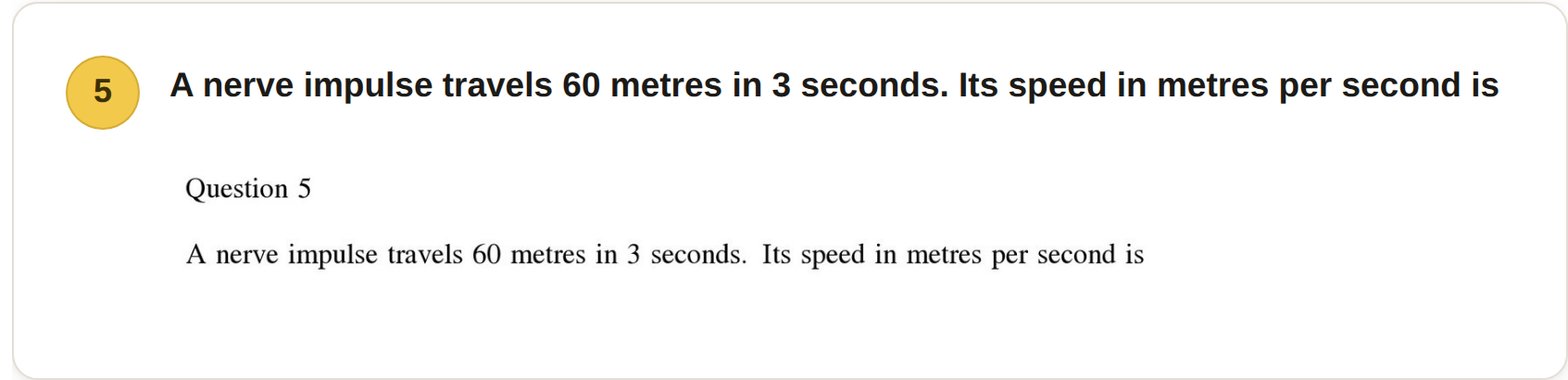
A synapse delay is 2 milliseconds and conduction takes 8 milliseconds. The total time in milliseconds is
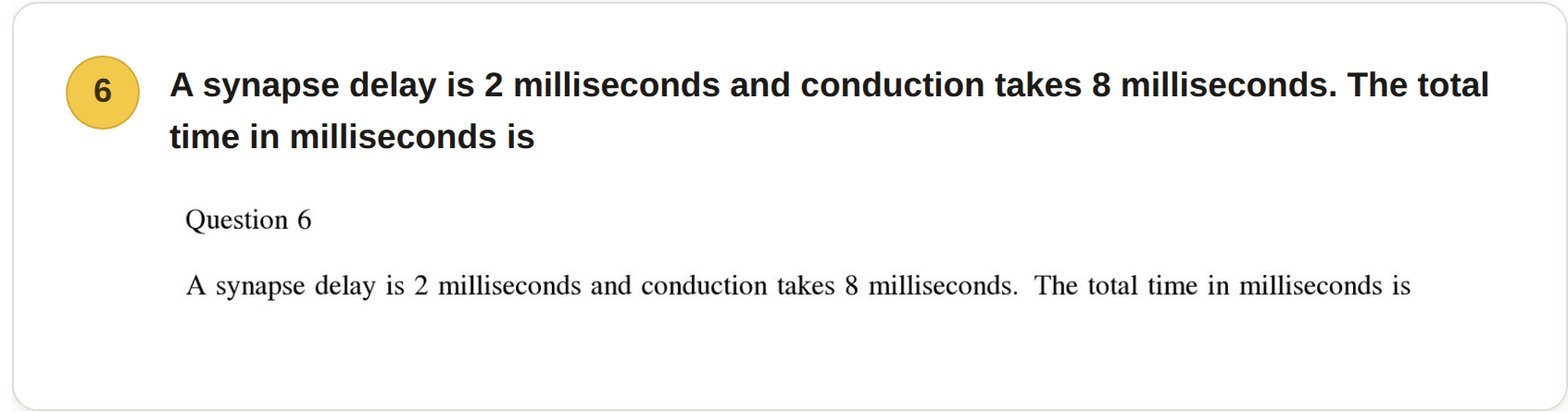
Insulin lowers blood glucose from 8 to 5 millimoles per litre. The decrease is
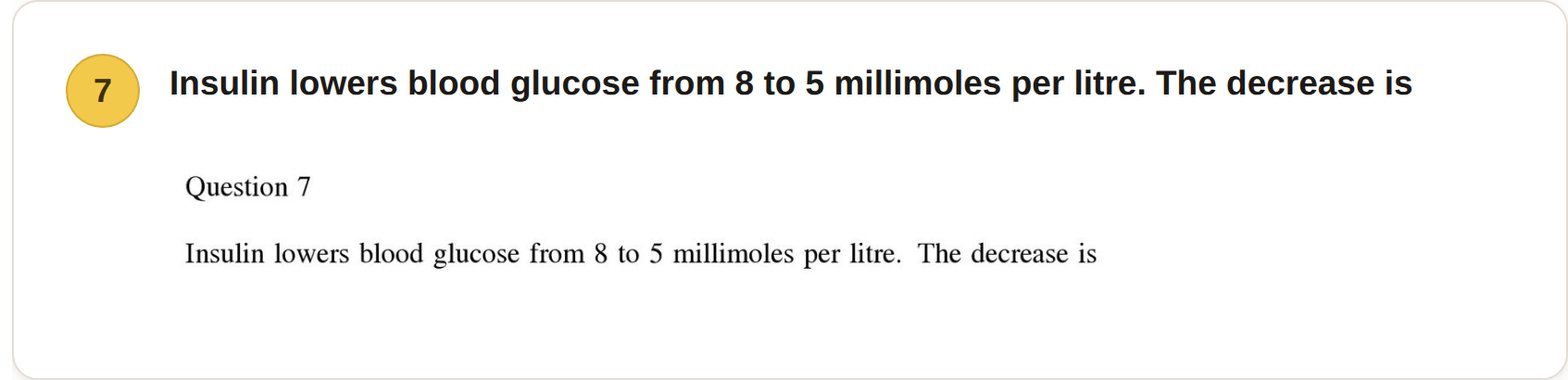
Blood glucose rises from 5 to 9 millimoles per litre. The increase is

A gland releases 20 units of hormone per hour for 3 hours. The total released is

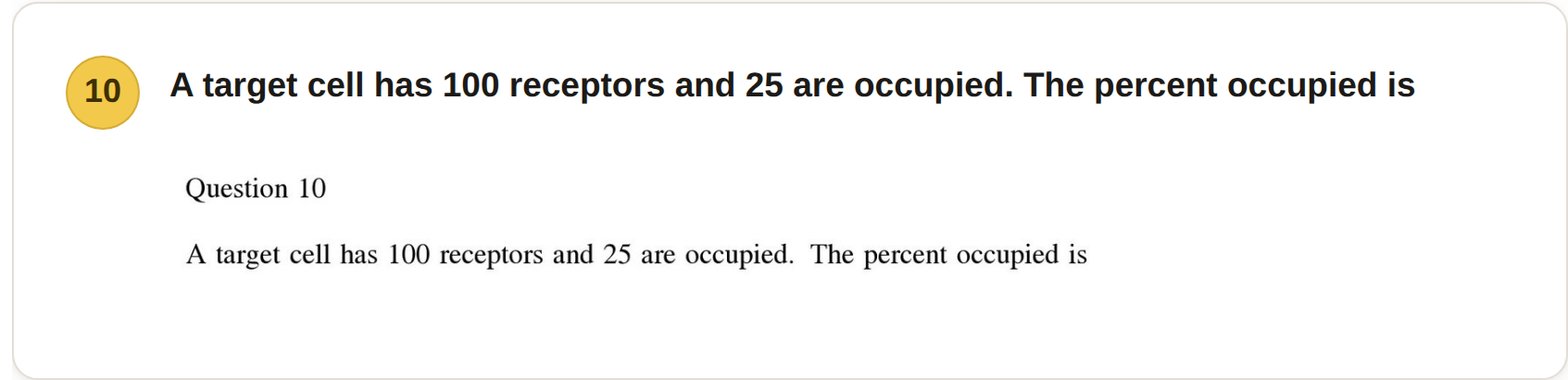
A target cell has 100 receptors and 25 are occupied. The percent occupied is
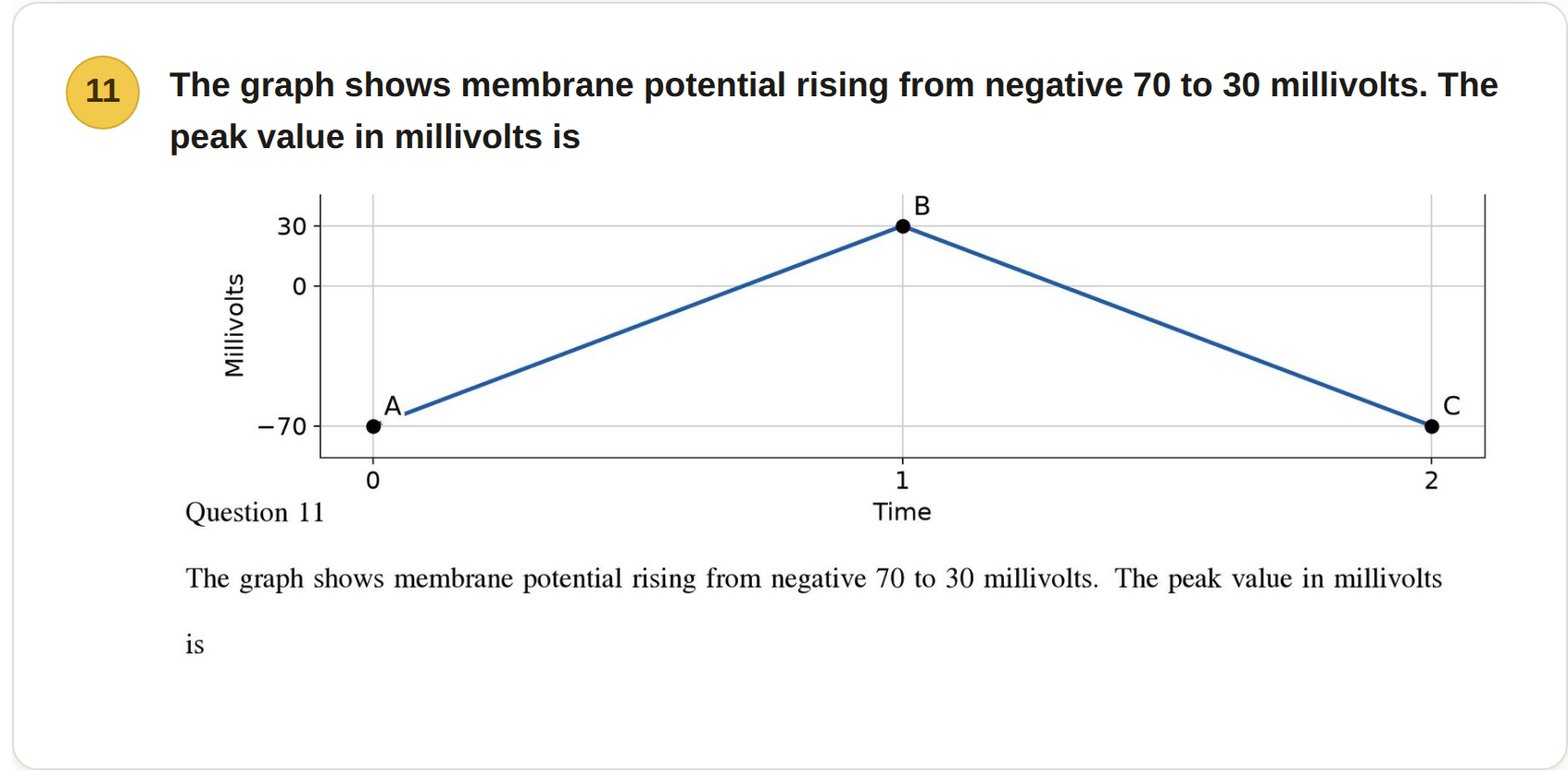
The graph shows membrane potential rising from negative 70 to 30 millivolts. The peak value in millivolts is
Two neurons are connected in series. Each takes 5 milliseconds. The total time in milliseconds is
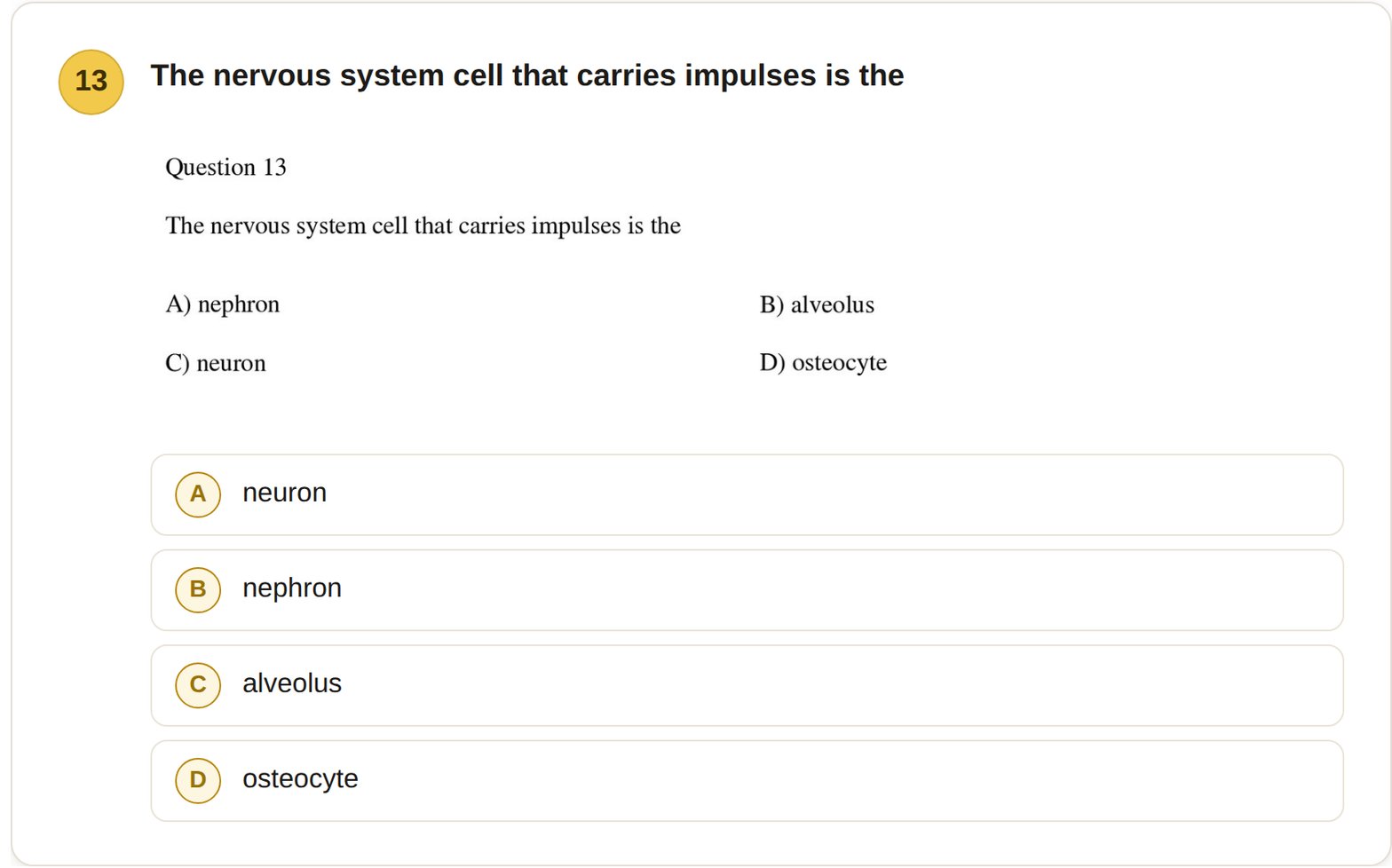
The nervous system cell that carries impulses is the
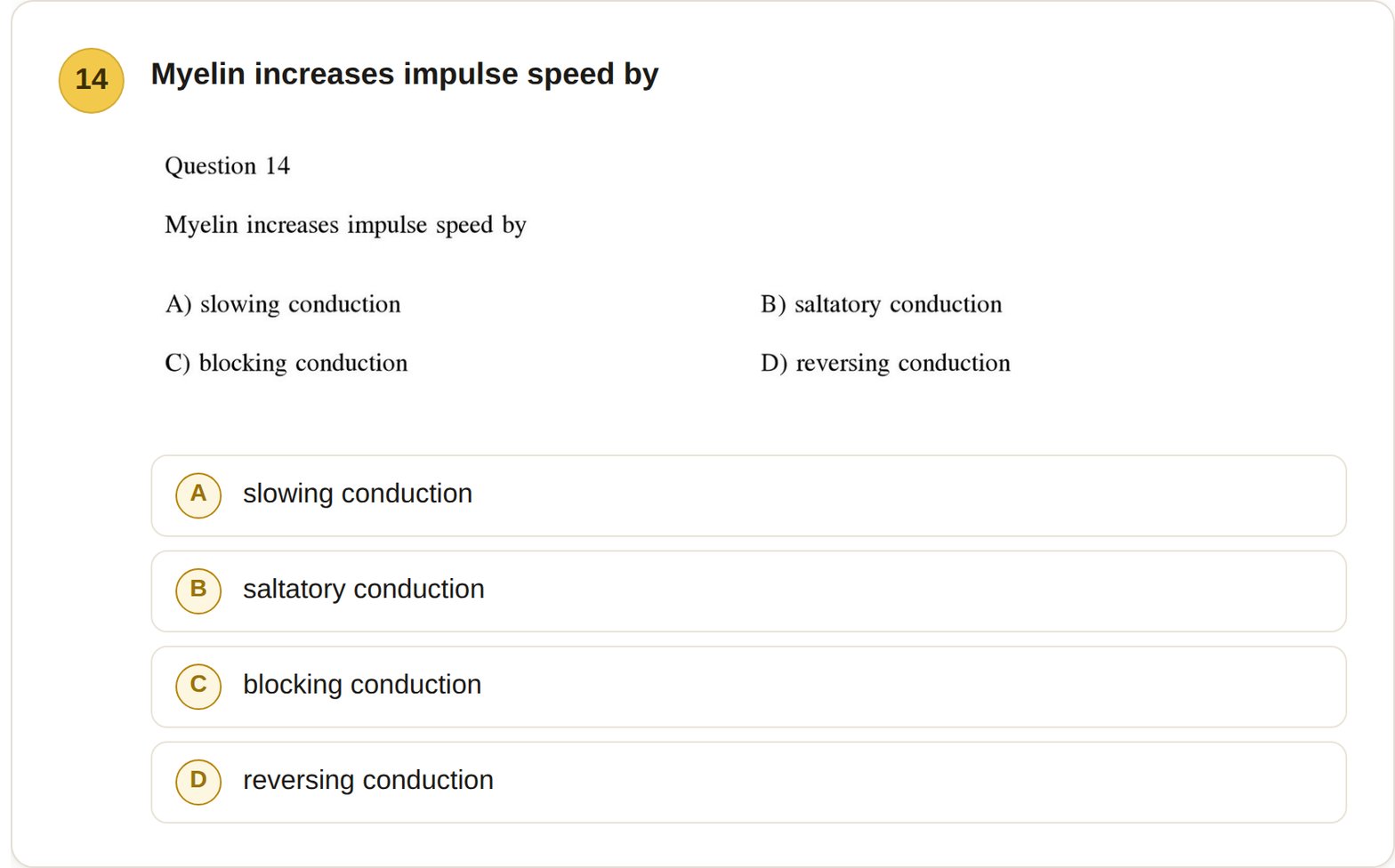
Myelin increases impulse speed by
At a synapse the signal crosses as a
The central nervous system consists of the brain and
The endocrine system sends messages by

Insulin is produced by the
Thyroxine regulates
Adrenaline prepares the body for

Negative feedback keeps a variable

The pituitary gland is often called the
A reflex arc bypasses conscious control in the
The hormone that raises blood glucose is
Homeostasis is the maintenance of a stable
Your score: 0 / 25