1
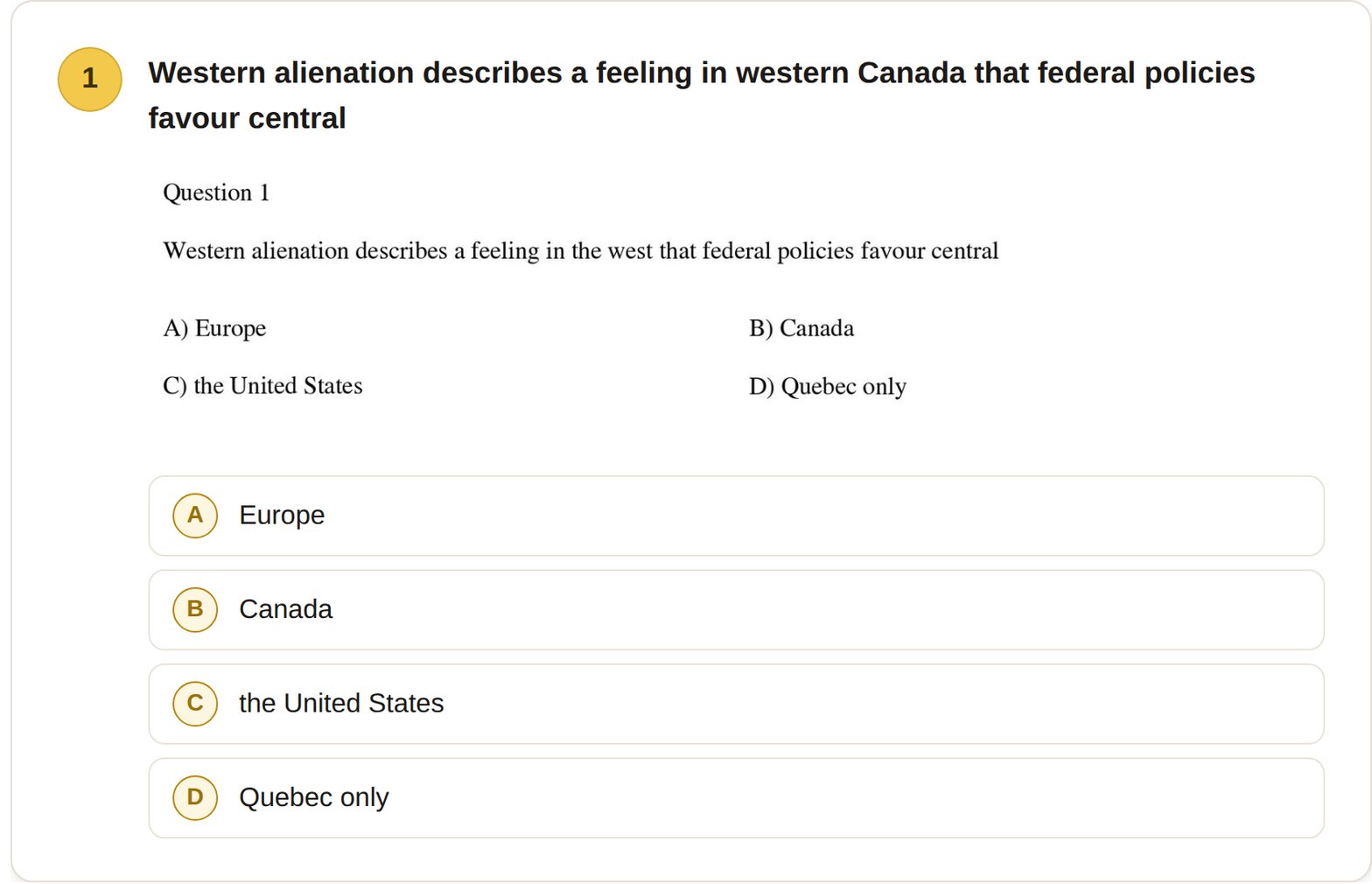
Western alienation describes a feeling in western Canada that federal policies favour central
Canadian Identities, National Unity, and Multiculturalism - Practice Test | New Brunswick Canadian History 122 · Unit D · 10 questions
This practice test was made by AI and there may be mistakes. If a question or answer looks wrong, use the Flag a mistake button so it can be fixed.
Western alienation describes a feeling in western Canada that federal policies favour central
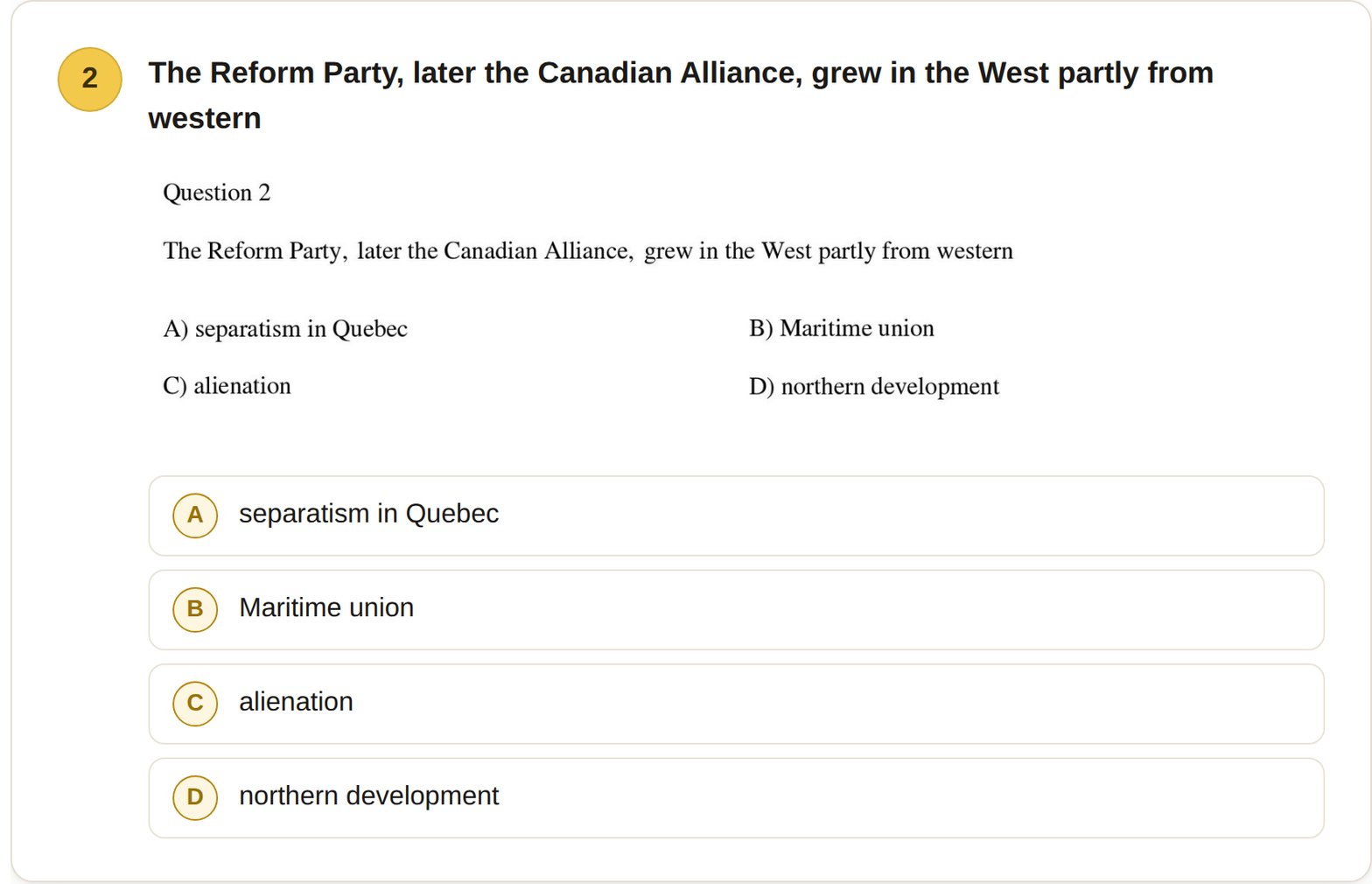
The Reform Party, later the Canadian Alliance, grew in the West partly from western
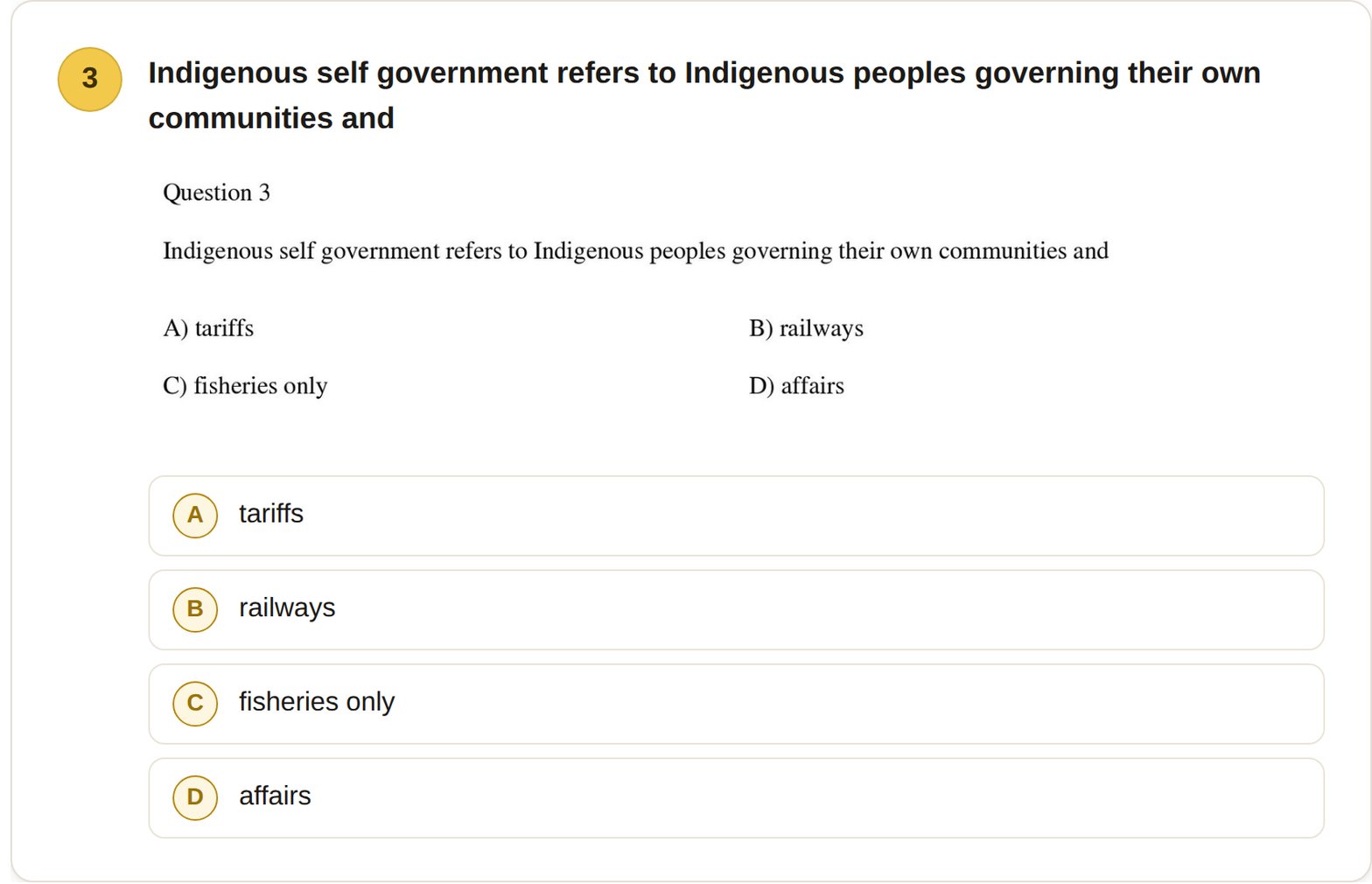
Indigenous self government refers to Indigenous peoples governing their own communities and
Land claims agreements in Canada settle Indigenous claims to land and provide rights, benefits and

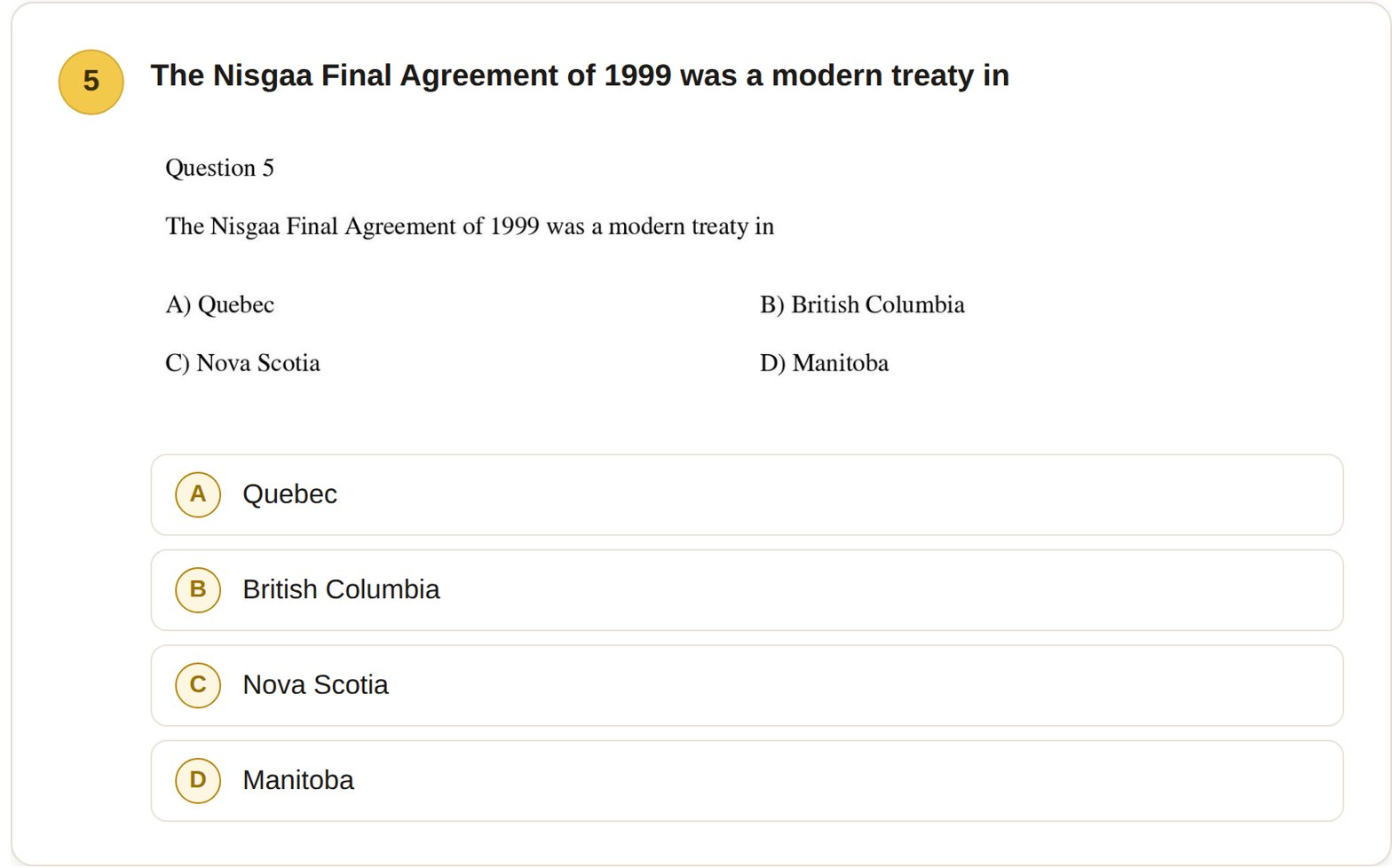
The Nisgaa Final Agreement of 1999 was a modern treaty in
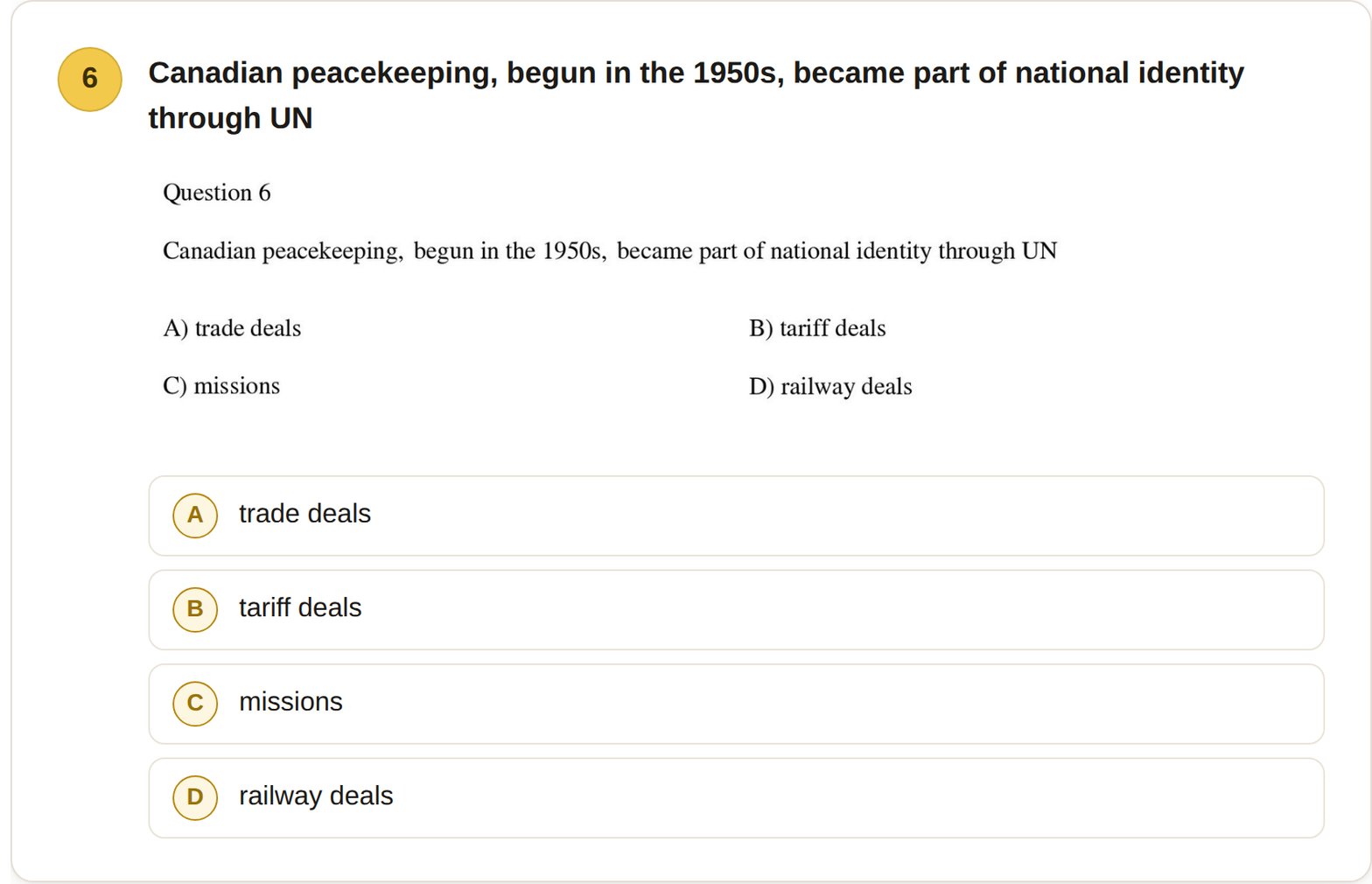
Canadian peacekeeping, begun in the 1950s, became part of national identity through UN
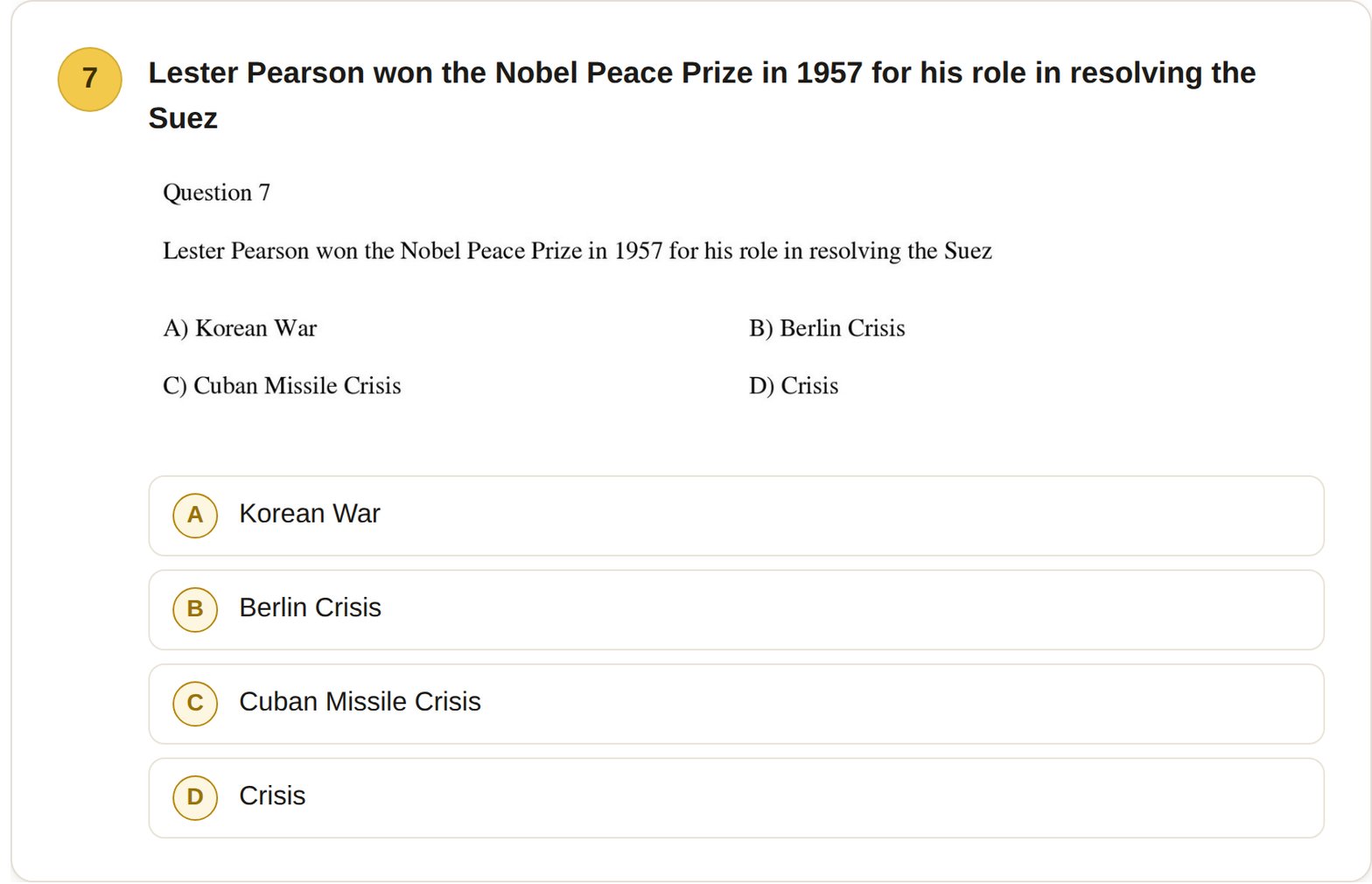
Lester Pearson won the Nobel Peace Prize in 1957 for his role in resolving the Suez
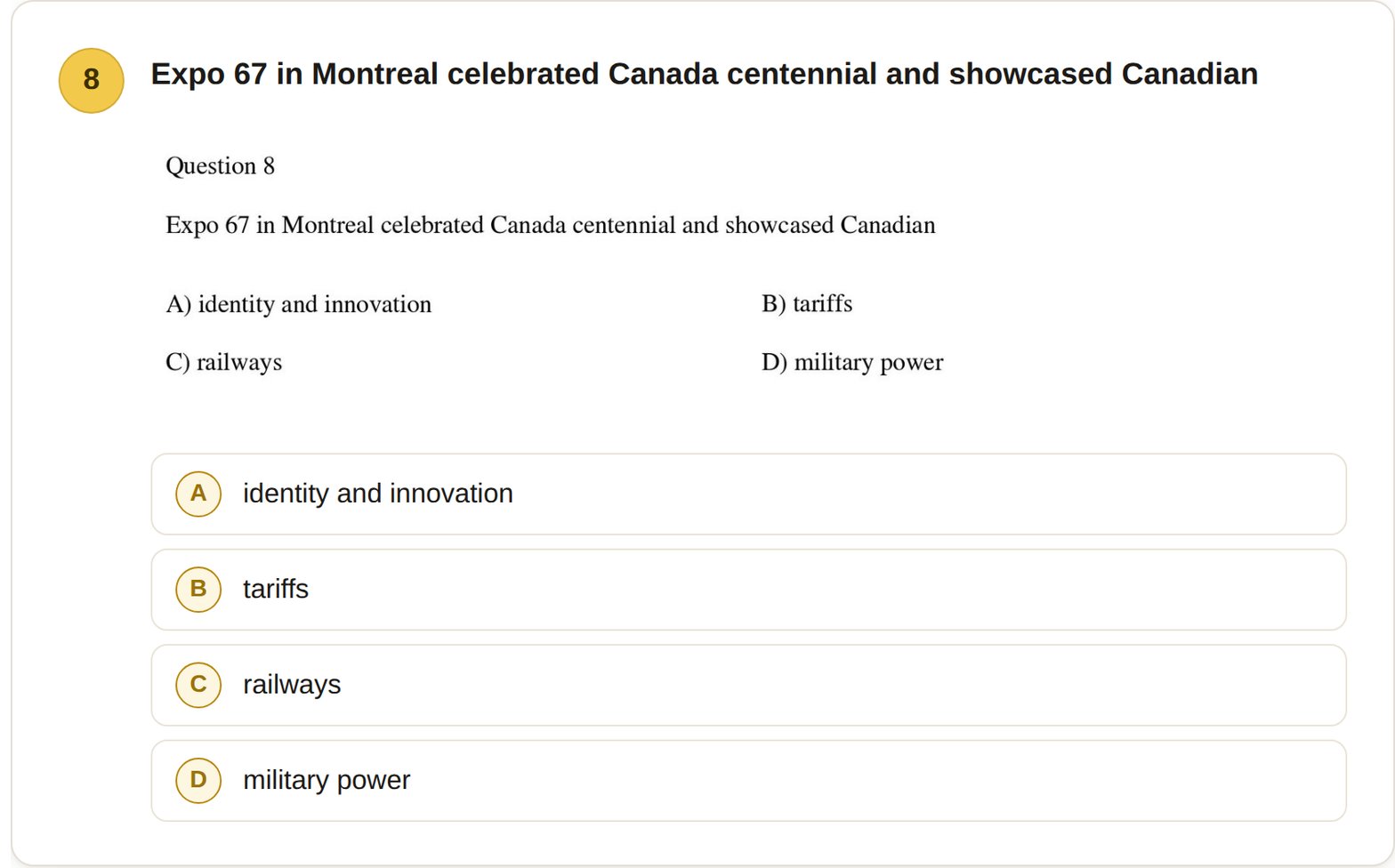
Expo 67 in Montreal celebrated Canada centennial and showcased Canadian
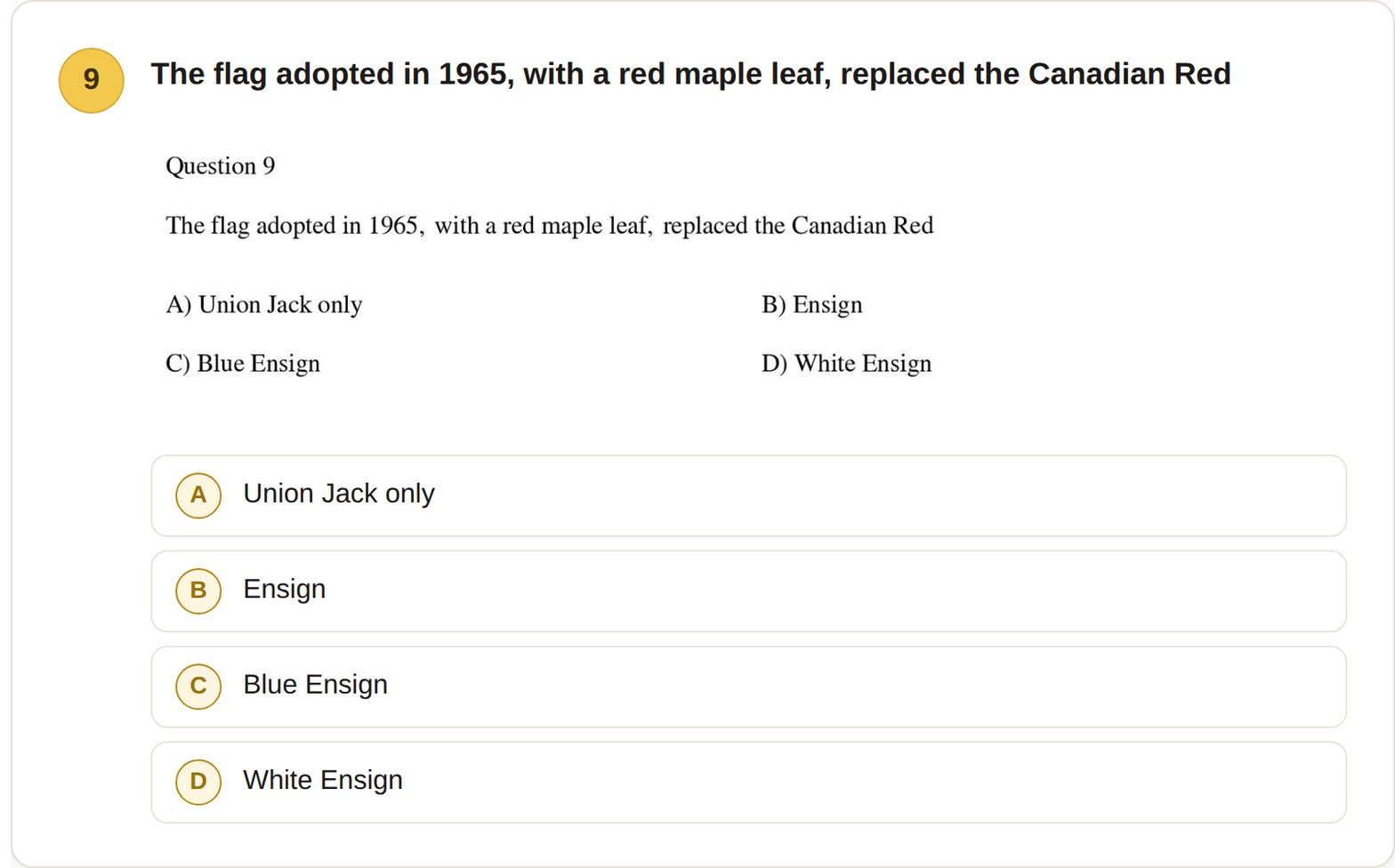
The flag adopted in 1965, with a red maple leaf, replaced the Canadian Red
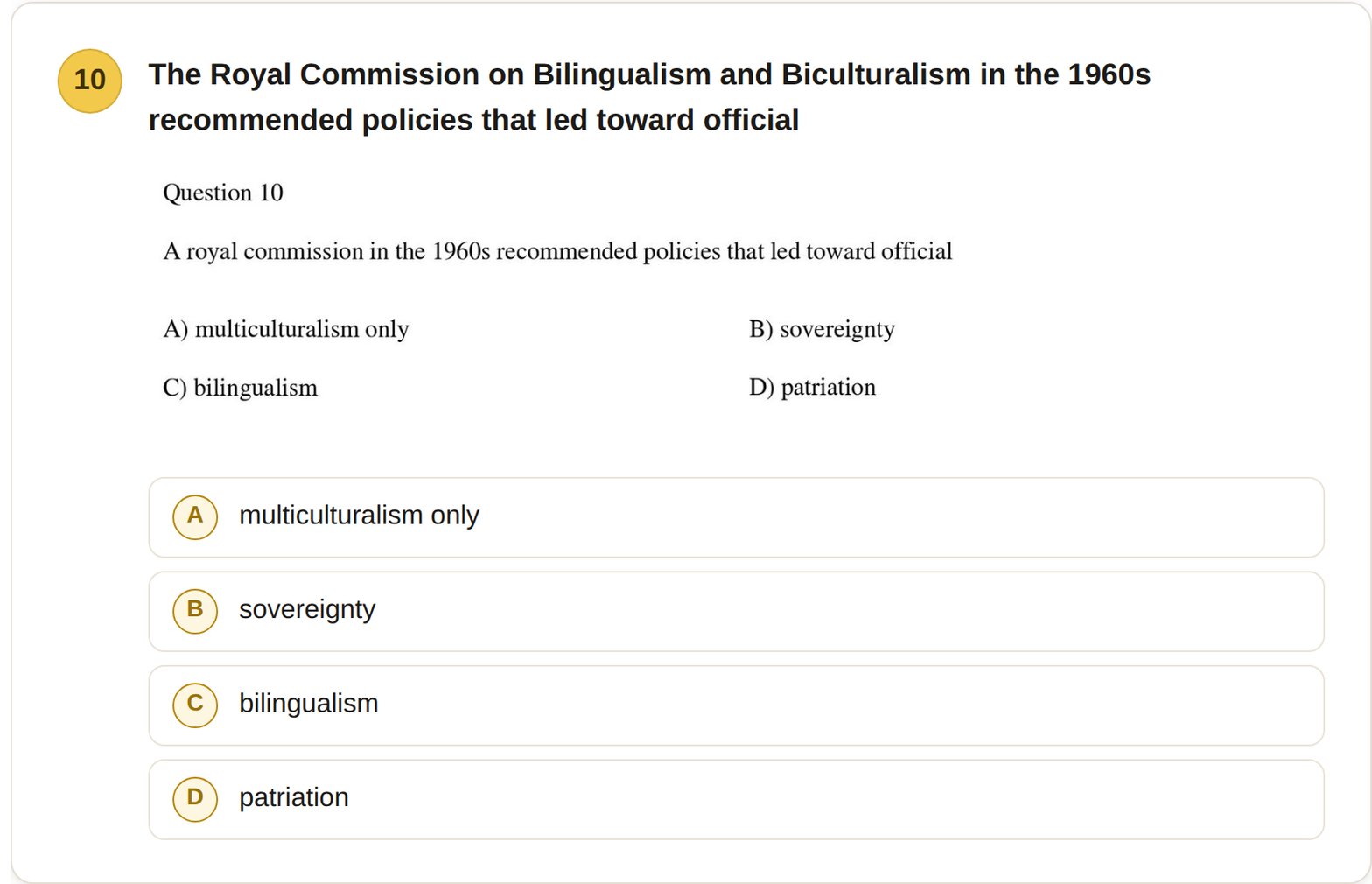
The Royal Commission on Bilingualism and Biculturalism in the 1960s recommended policies that led toward official
Your score: 0 / 10