1
A community uses 1000 kilowatt hours and saves 20 percent by efficiency. The saving is
Sustainable Ecosystems and Communities - Practice Test | New Brunswick Environmental Science 120 · Unit D · 25 questions
This practice test was made by AI and there may be mistakes. If a question or answer looks wrong, use the Flag a mistake button to let Brett know so he can fix it.
A community uses 1000 kilowatt hours and saves 20 percent by efficiency. The saving is
A solar panel produces 300 watts for 5 hours. The energy in watt hours is
A wind turbine produces 2000 watts for 10 hours. The energy in kilowatt hours is
A household reduces waste from 100 kilograms to 60 kilograms. The reduction in percent is
A town recycles 400 of 1000 tonnes of waste. The recycling rate in percent is
A green roof reduces cooling energy by 25 percent. From 800 units the saving is
A bus carries 40 passengers and a car carries 4. The bus carries how many times as many people
A community garden produces 500 kilograms of food on 100 square metres. The yield per m² in kilograms is
A rain barrel collects 200 litres from a storm. Four barrels collect litres of
A LED bulb uses 10 watts instead of 60 watts. The saving in watts is
A compost program diverts 300 kilograms per month. In 12 months the diversion in kilograms is
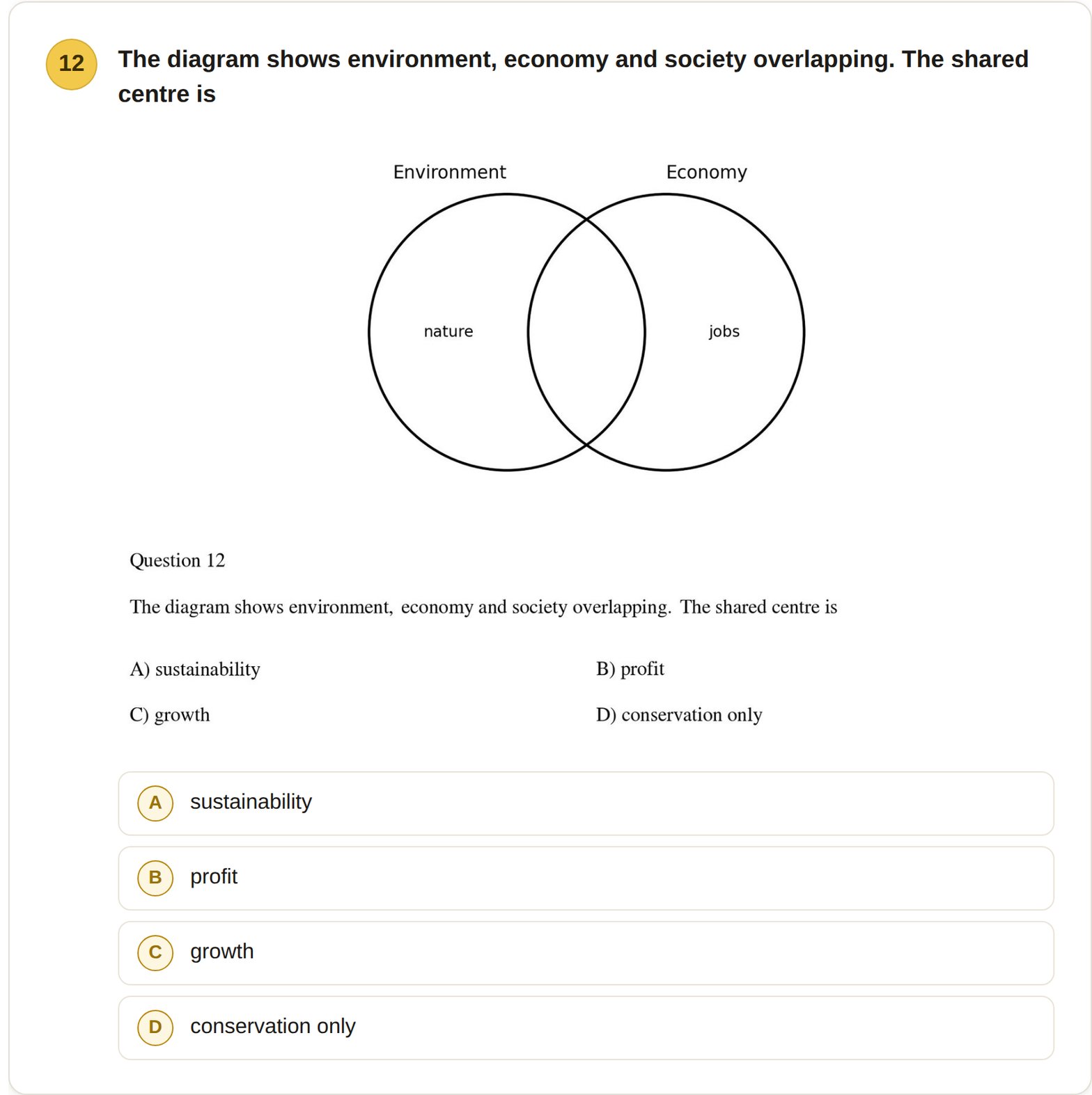
The diagram shows environment, economy and society overlapping. The shared centre is
Sustainable communities balance environment, economy and
Public transit reduces emissions per passenger compared with
Local food reduces transport emissions and supports local
Green building design uses insulation and natural light to reduce
Wetlands are protected because they filter water and control
Protected areas conserve biodiversity by limiting
Environmental stewardship means caring for resources for
Community action is effective when residents participate in
A sustainable fishery avoids overfishing by setting
Reforestation restores forests by planting
A circular economy keeps materials in use by reusing and
Energy conservation differs from energy efficiency because conservation means using
Indigenous knowledge contributes to sustainability through long term observation of
Your score: 0 / 25