1
Rights that all people have simply because they are
Final Exam - Practice Test | New Brunswick World Issues 120 · Final Exam · 50 questions
This practice test was made by AI and there may be mistakes. If a question or answer looks wrong, use the Flag a mistake button to let Brett know so he can fix it.
Rights that all people have simply because they are
The digital divide is the gap between people who have digital technology and those without
Globalization is the growing connection of economies, cultures and societies across
Sovereignty means a state has supreme authority within its territory and independence from outside
Political rights include the right to vote and take part in
Algorithms on social media decide what content users are most likely to
Disruption to a supply chain, such as a pandemic or conflict, can cause shortages and price
Article 5 of the North Atlantic Treaty says an attack on one member is an attack on
Cultural rights protect the right to take part in cultural life and use ones own
Personal data includes information such as location, browsing history and health
A tariff is a tax on imported
A superpower is a state with dominant military, economic and political influence
Relative poverty means being poor compared with the general standard of living in ones
Open data means data made freely available for anyone to use, reuse and
Multinational corporations operate in several countries and can move production, profits and jobs across
Diplomacy is negotiation between states to manage relations and resolve
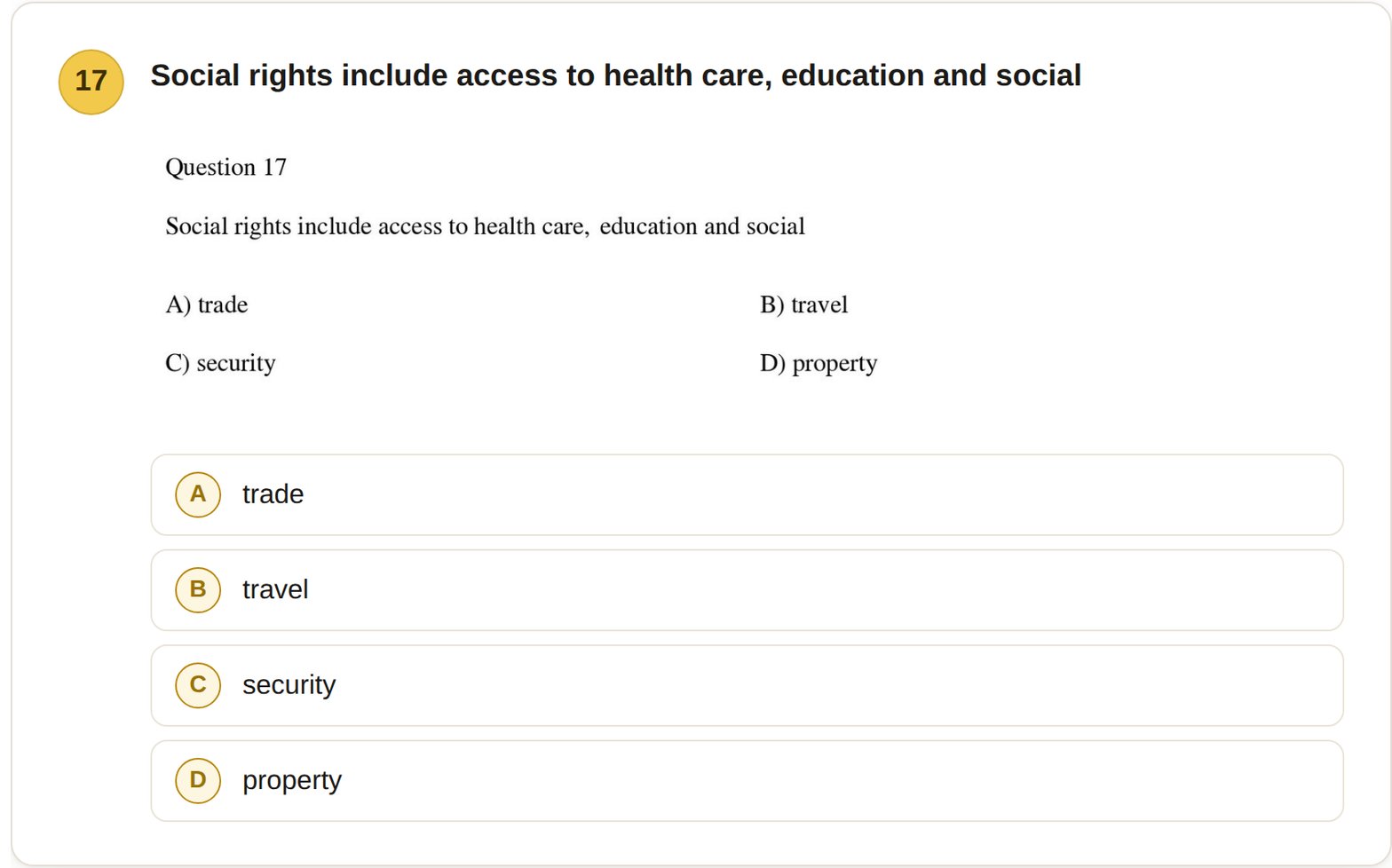
Social rights include access to health care, education and social
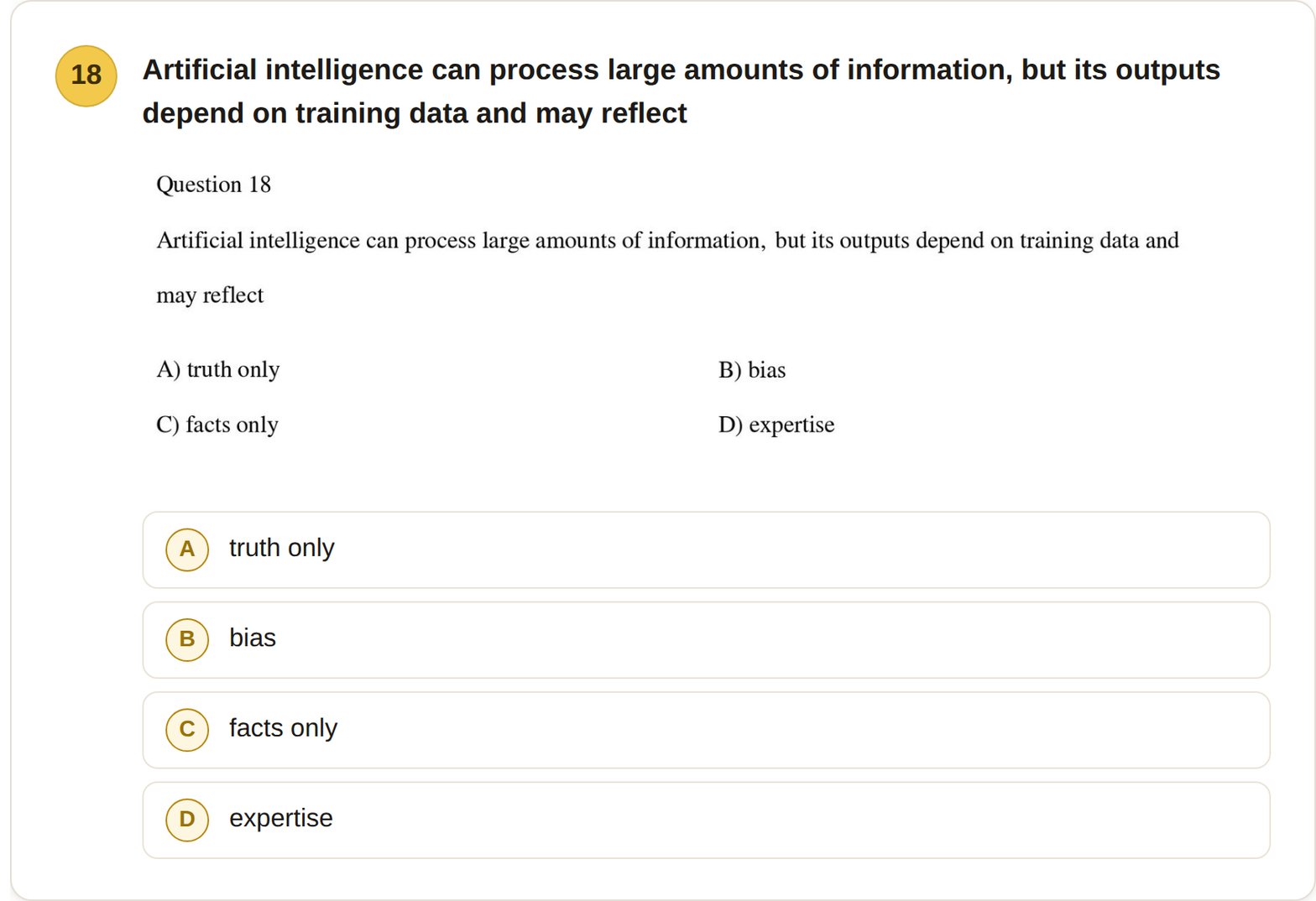
Artificial intelligence can process large amounts of information, but its outputs depend on training data and may reflect
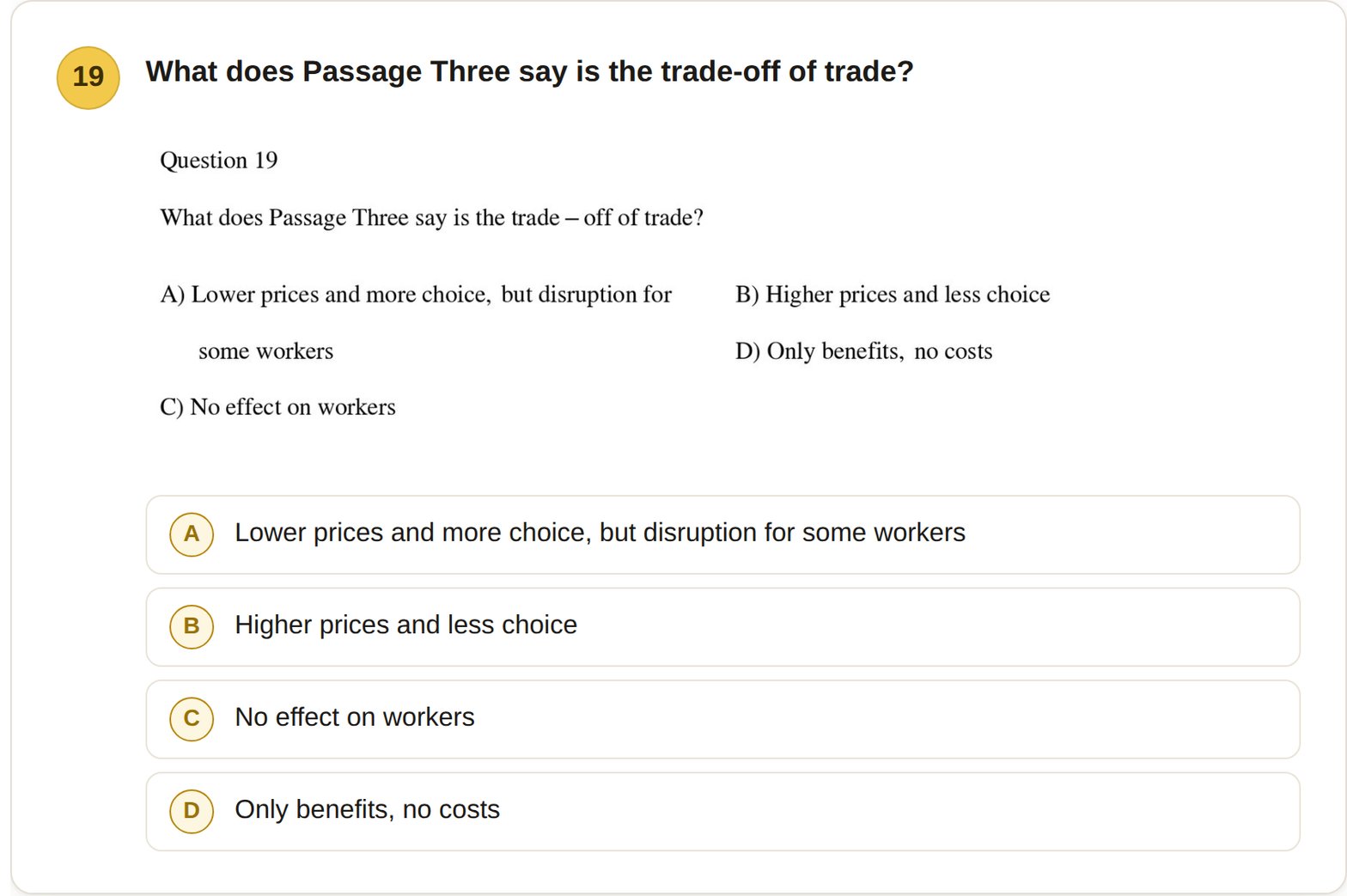
Passage Three: Trade
Use this reading for question 19.
International trade allows countries to specialize in goods they produce efficiently and exchange them for other goods. This principle, called comparative advantage, can lower prices and increase choice, but it can also disrupt workers in industries that lose out.
What does Passage Three say is the trade-off of trade?
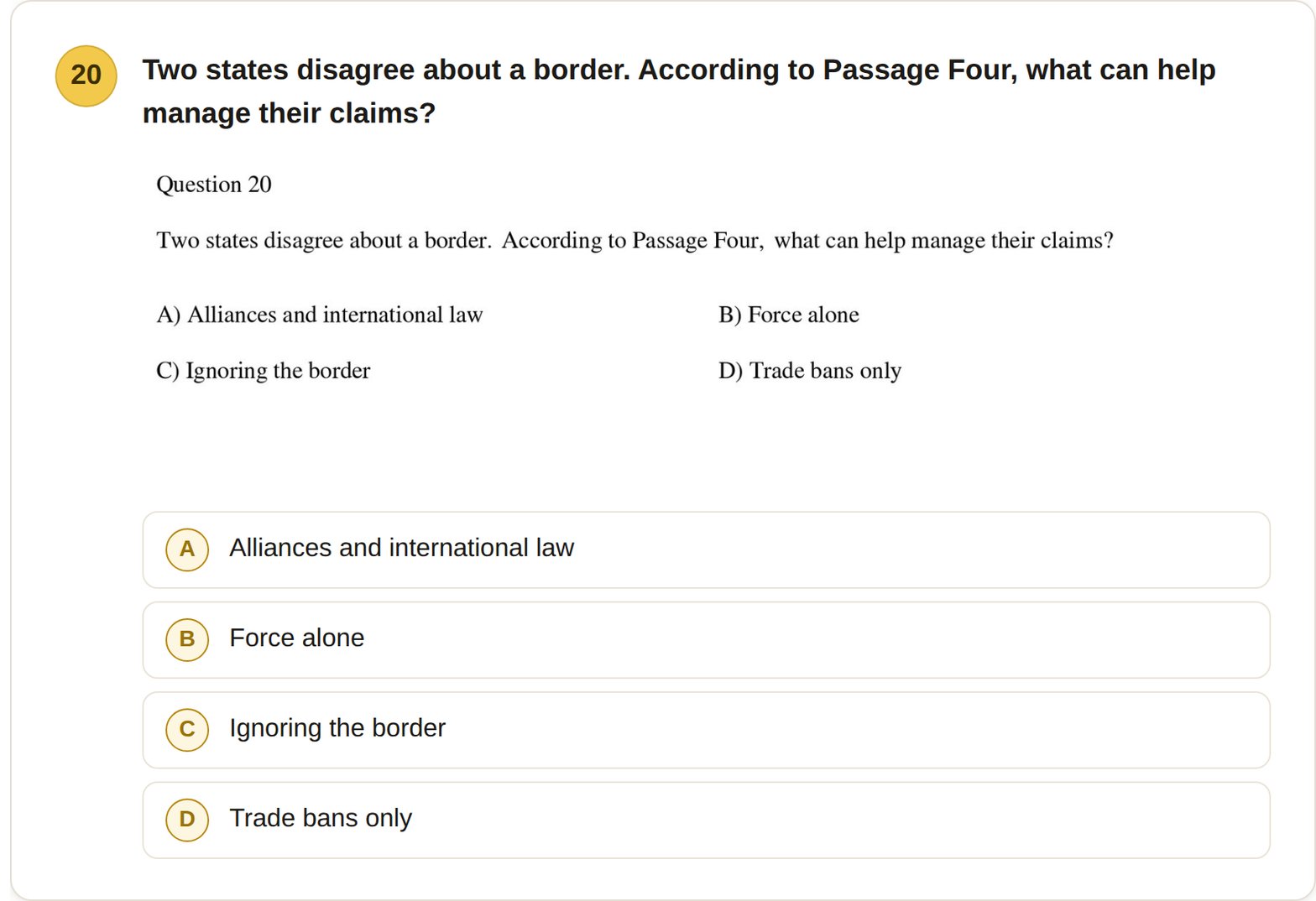
Passage Four: Sovereignty
Use this reading for question 20.
Geopolitics concerns power and place. Sovereignty means a state has supreme authority within its territory. Territorial integrity means other states should not violate its borders by force or threat. Alliances and international law help manage these claims.
Two states disagree about a border. According to Passage Four, what can help manage their claims?
Passage One: Human Rights
Use this reading for question 21.
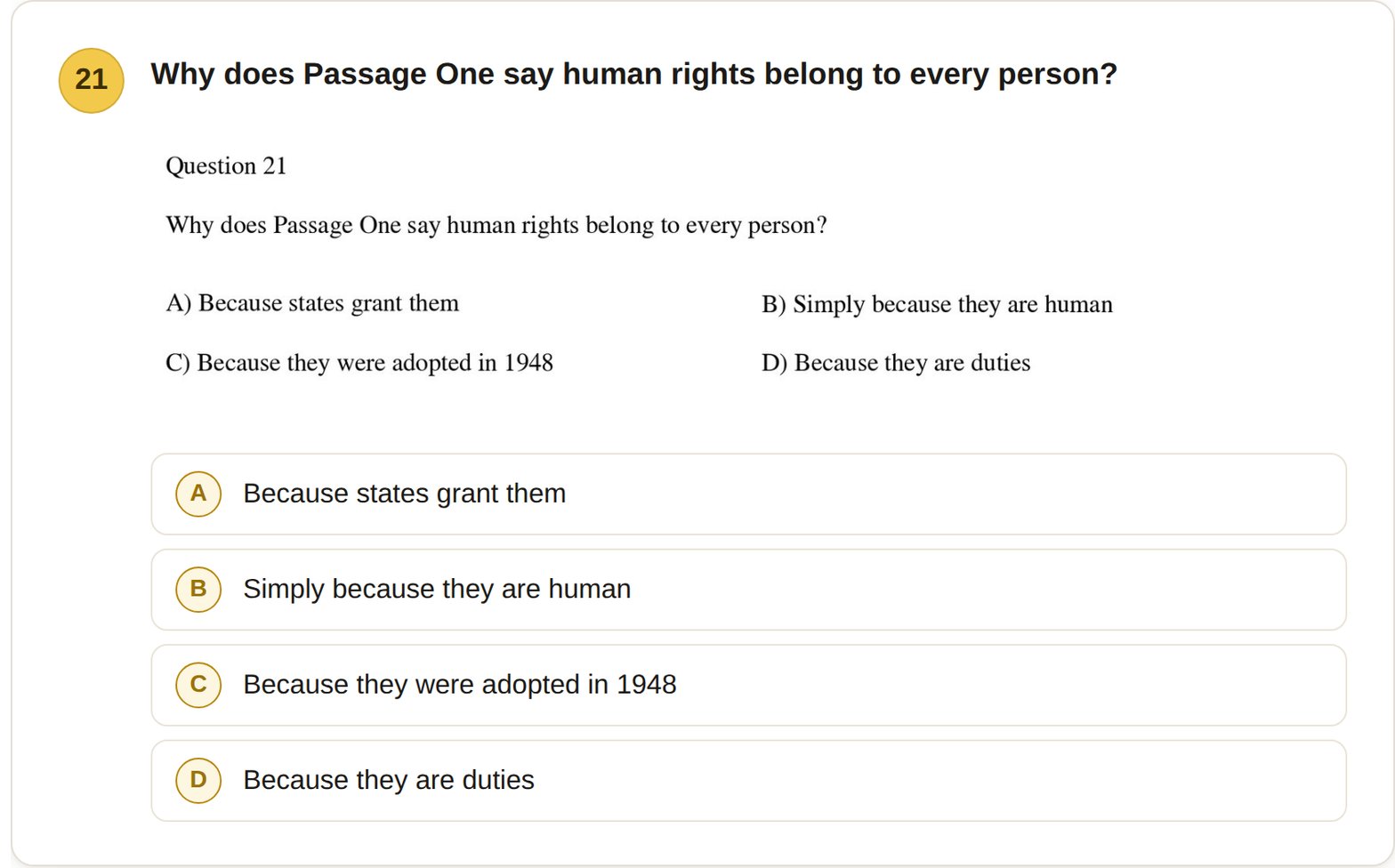
Human rights belong to every person simply because they are human. The Universal Declaration of Human Rights, adopted in 1948, sets out civil, political, economic, social and cultural rights that states should respect and protect.
Why does Passage One say human rights belong to every person?
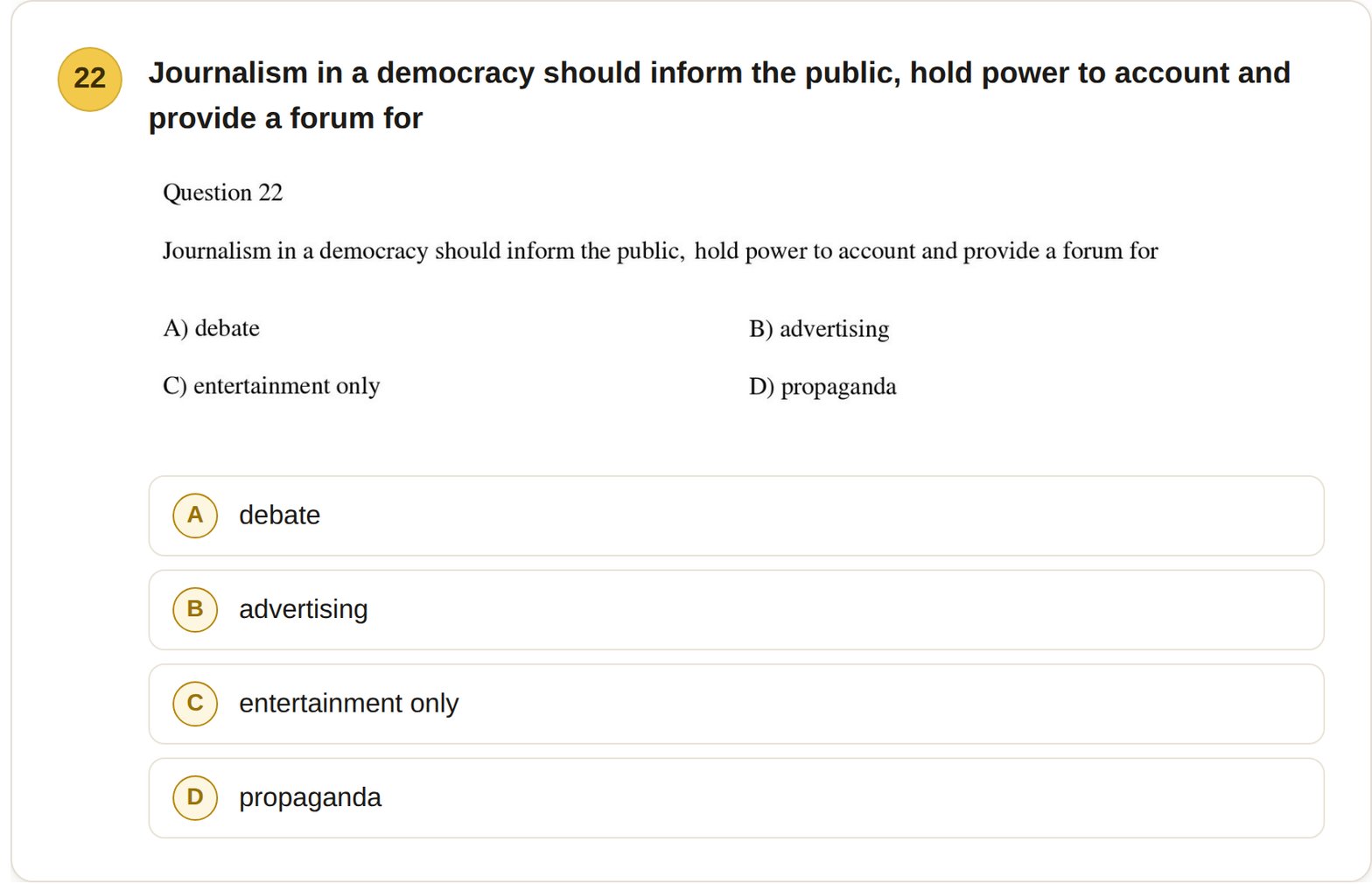
Journalism in a democracy should inform the public, hold power to account and provide a forum for
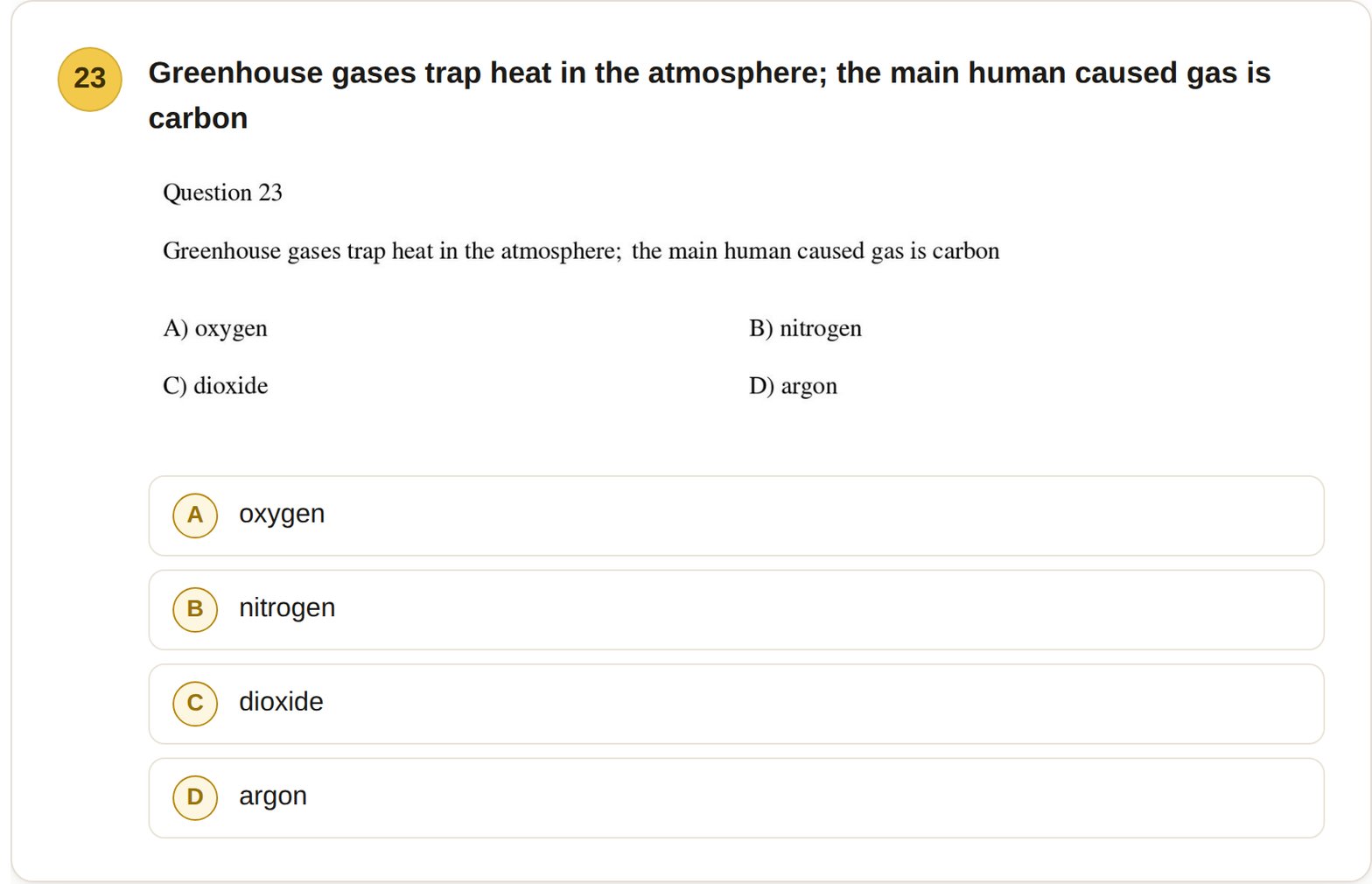
Greenhouse gases trap heat in the atmosphere; the main human caused gas is carbon
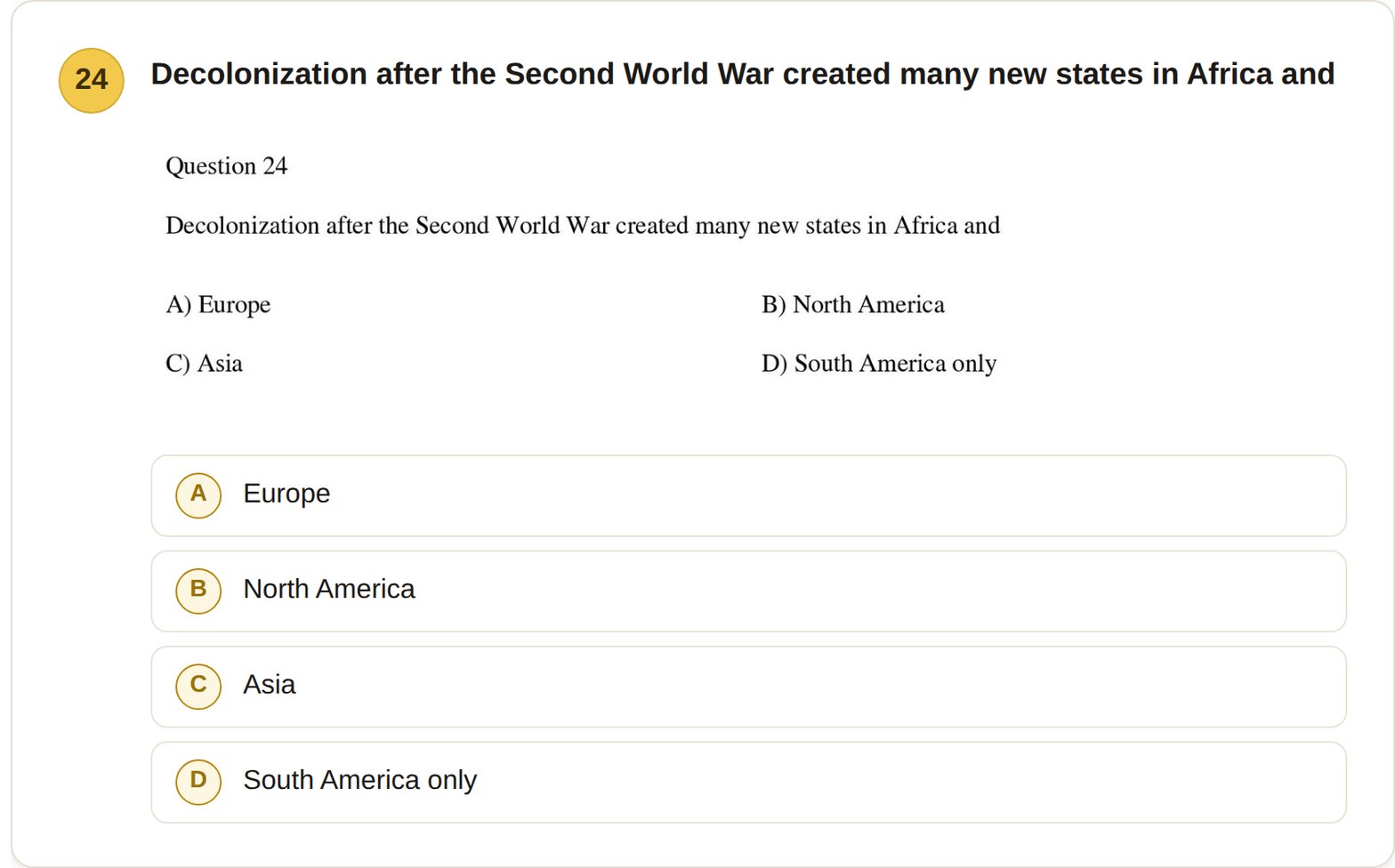
Decolonization after the Second World War created many new states in Africa and
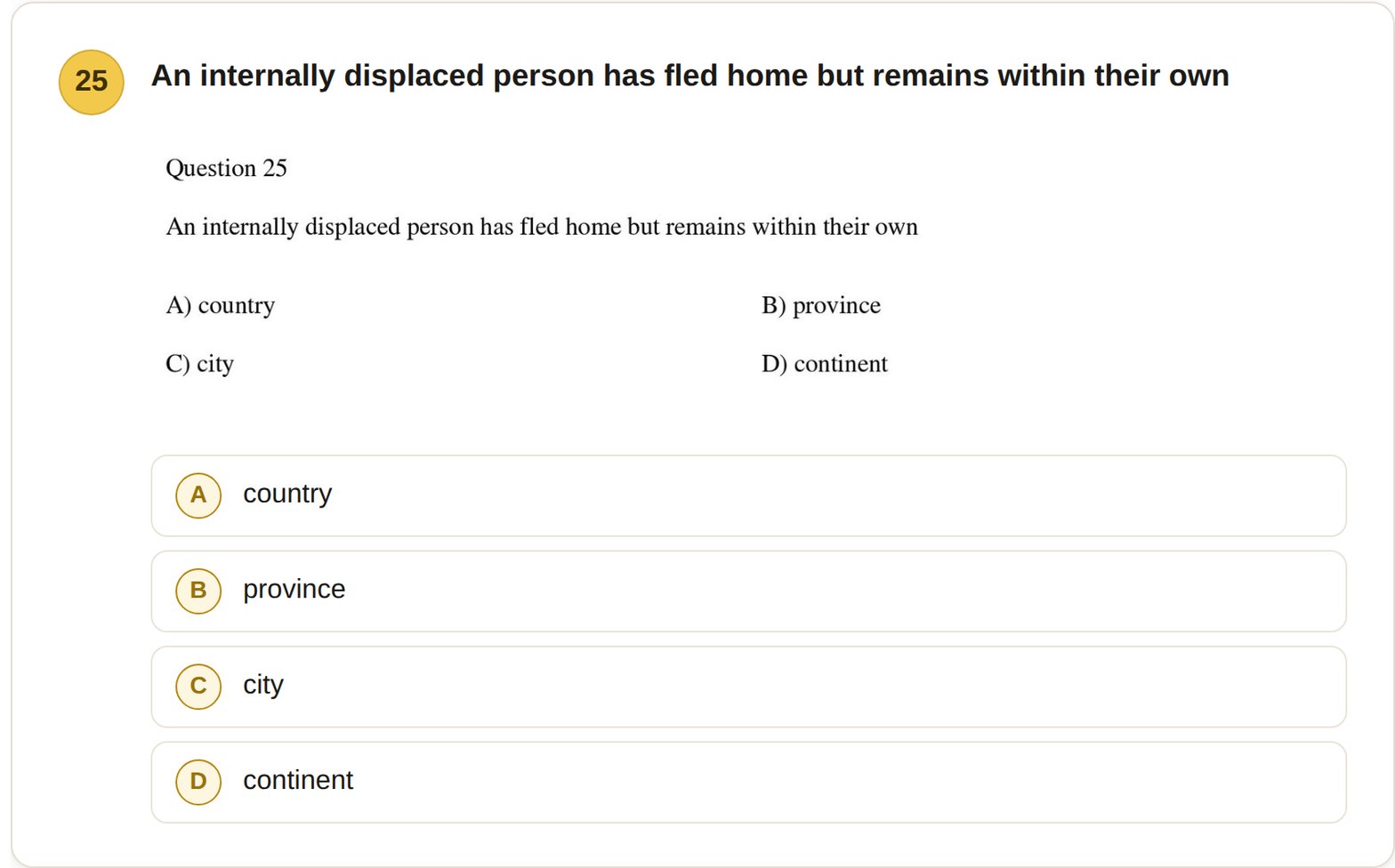
An internally displaced person has fled home but remains within their own
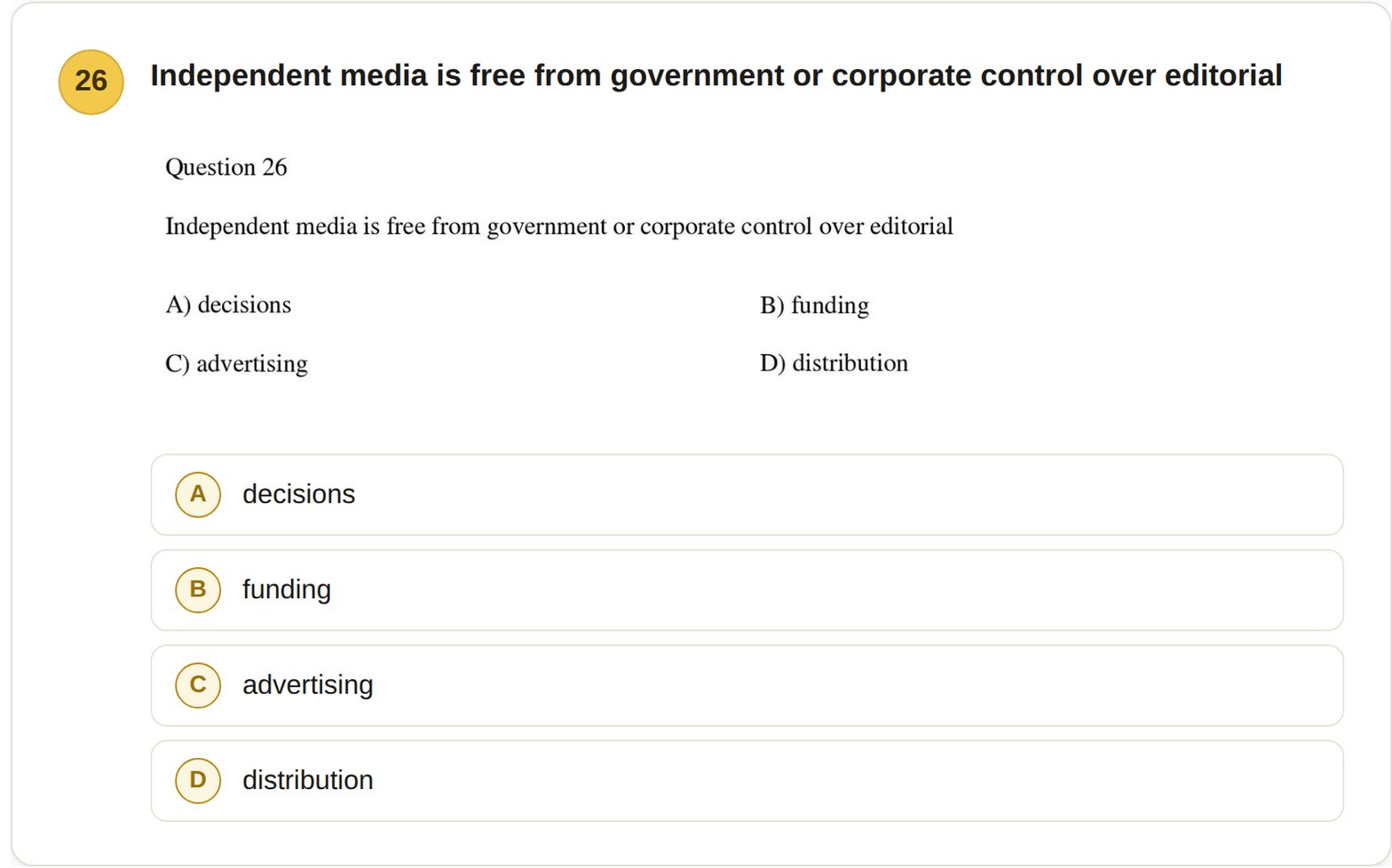
Independent media is free from government or corporate control over editorial
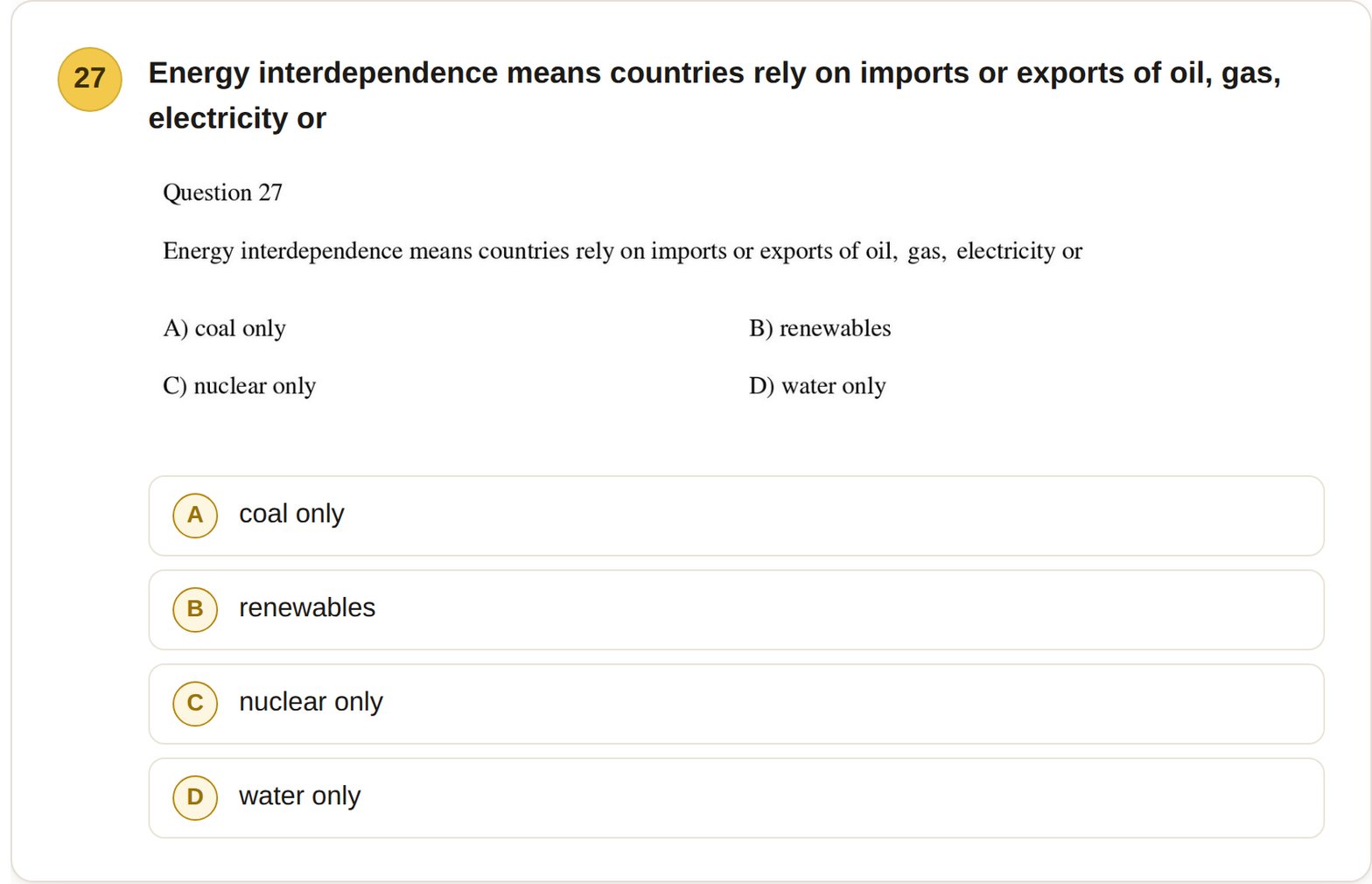
Energy interdependence means countries rely on imports or exports of oil, gas, electricity or
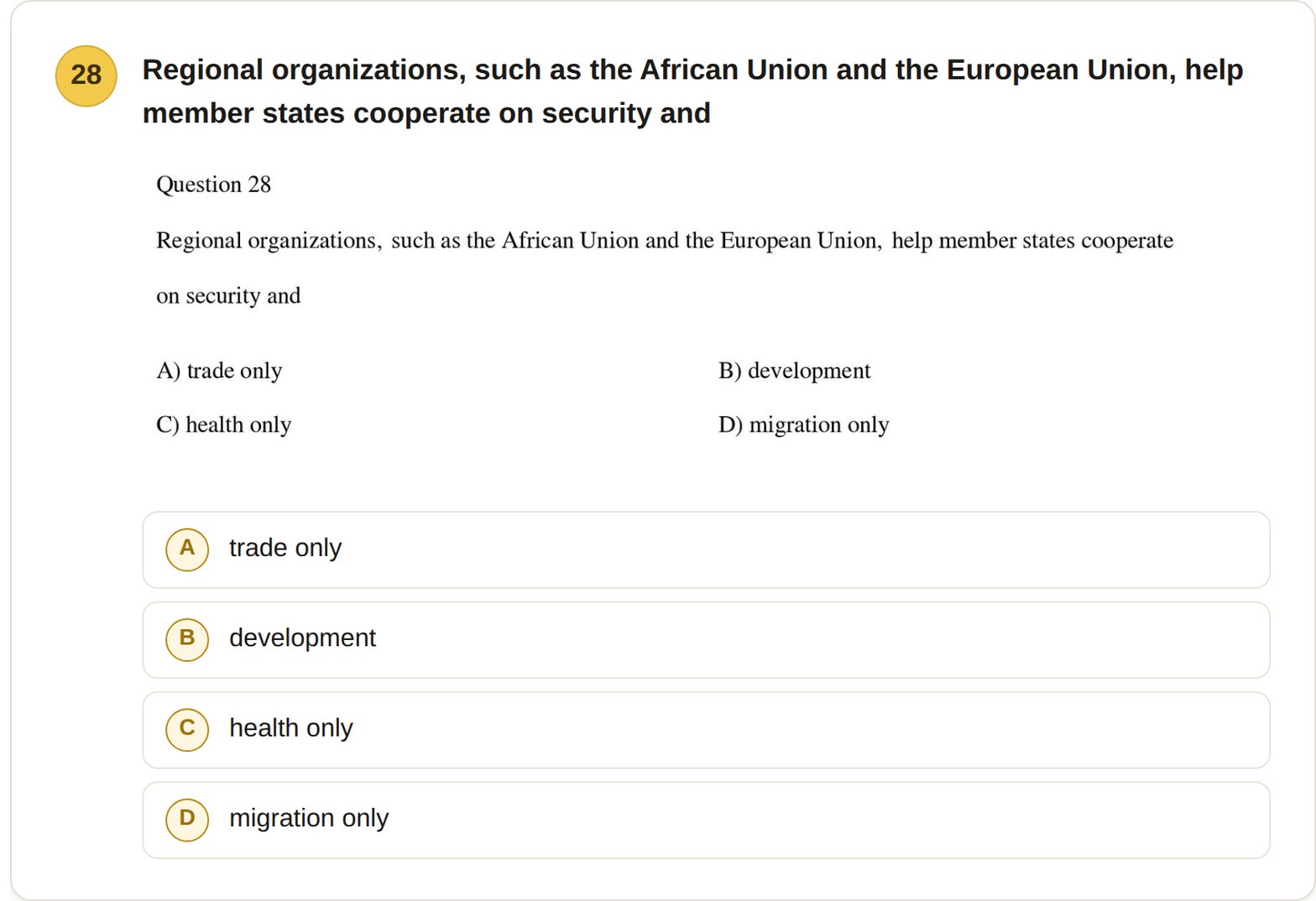
Regional organizations, such as the African Union and the European Union, help member states cooperate on security and
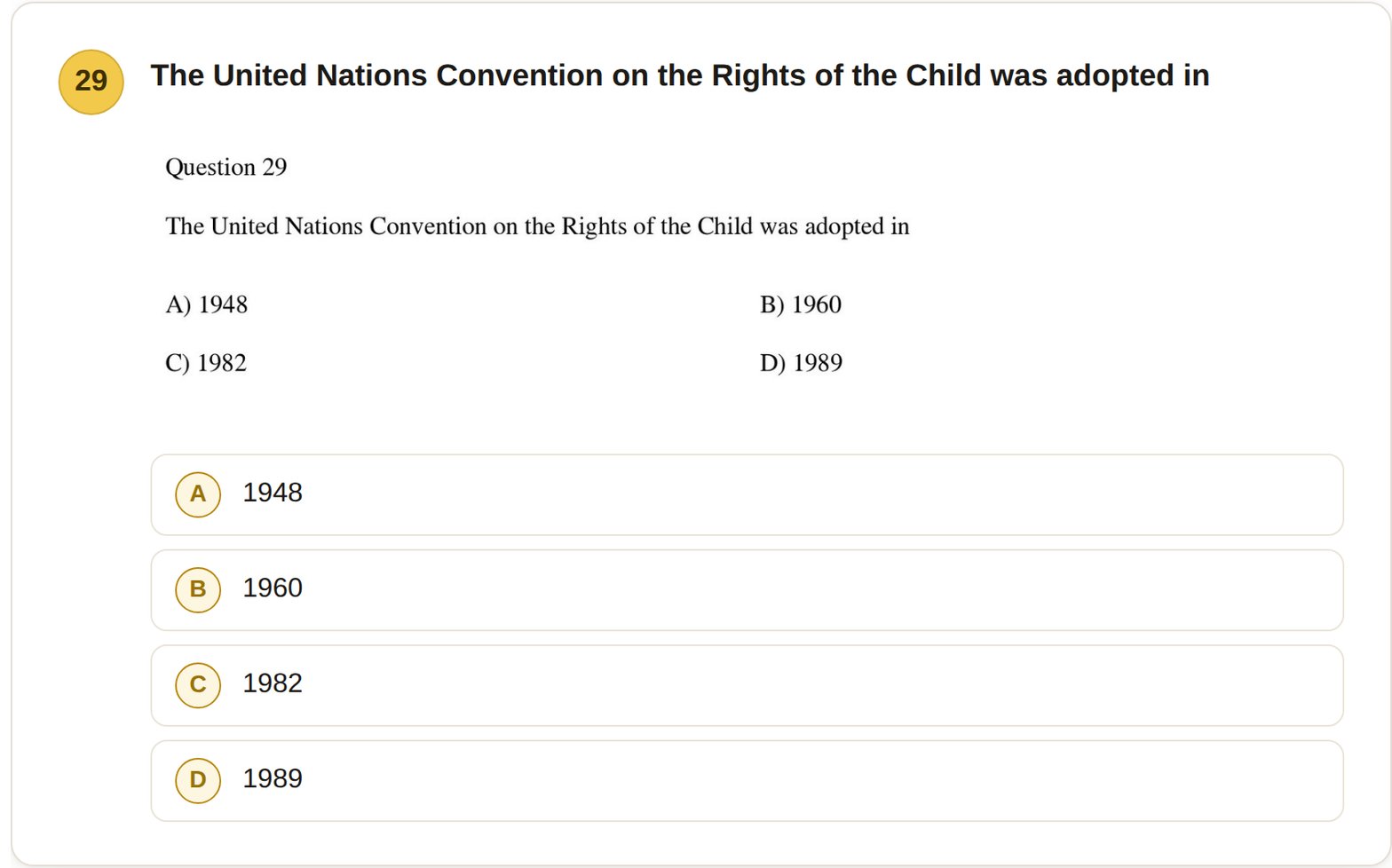
The United Nations Convention on the Rights of the Child was adopted in
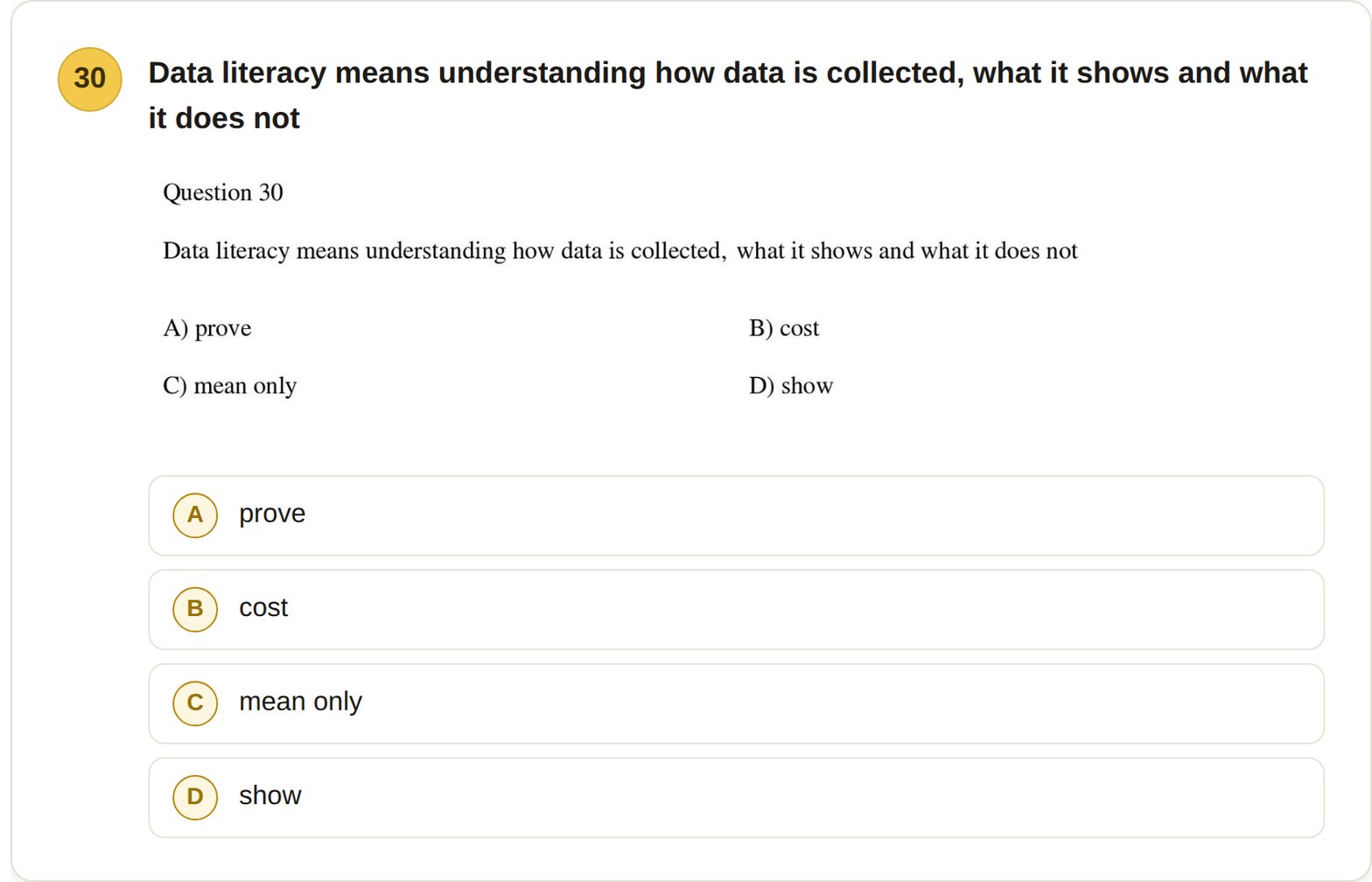
Data literacy means understanding how data is collected, what it shows and what it does not
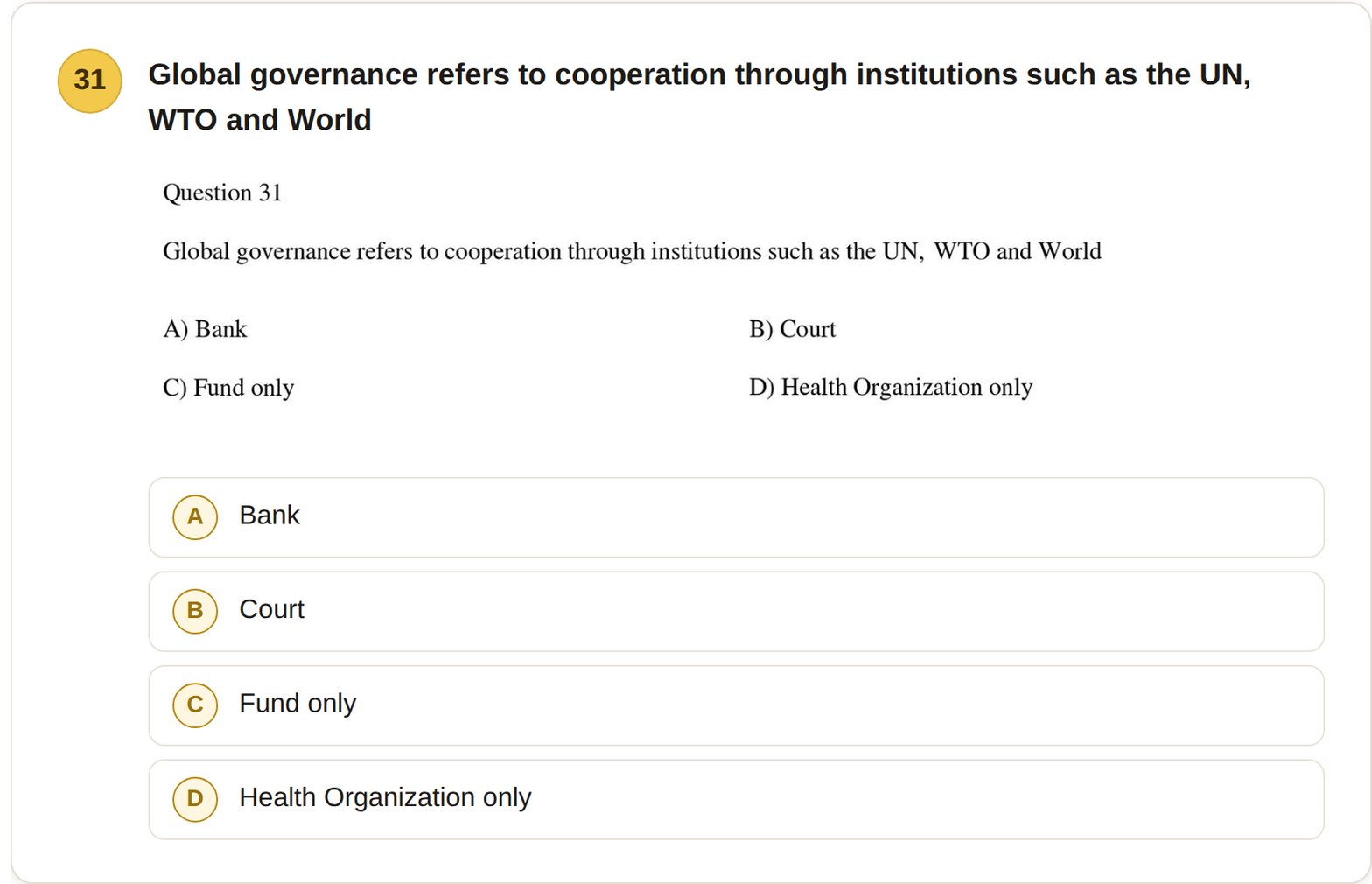
Global governance refers to cooperation through institutions such as the UN, WTO and World
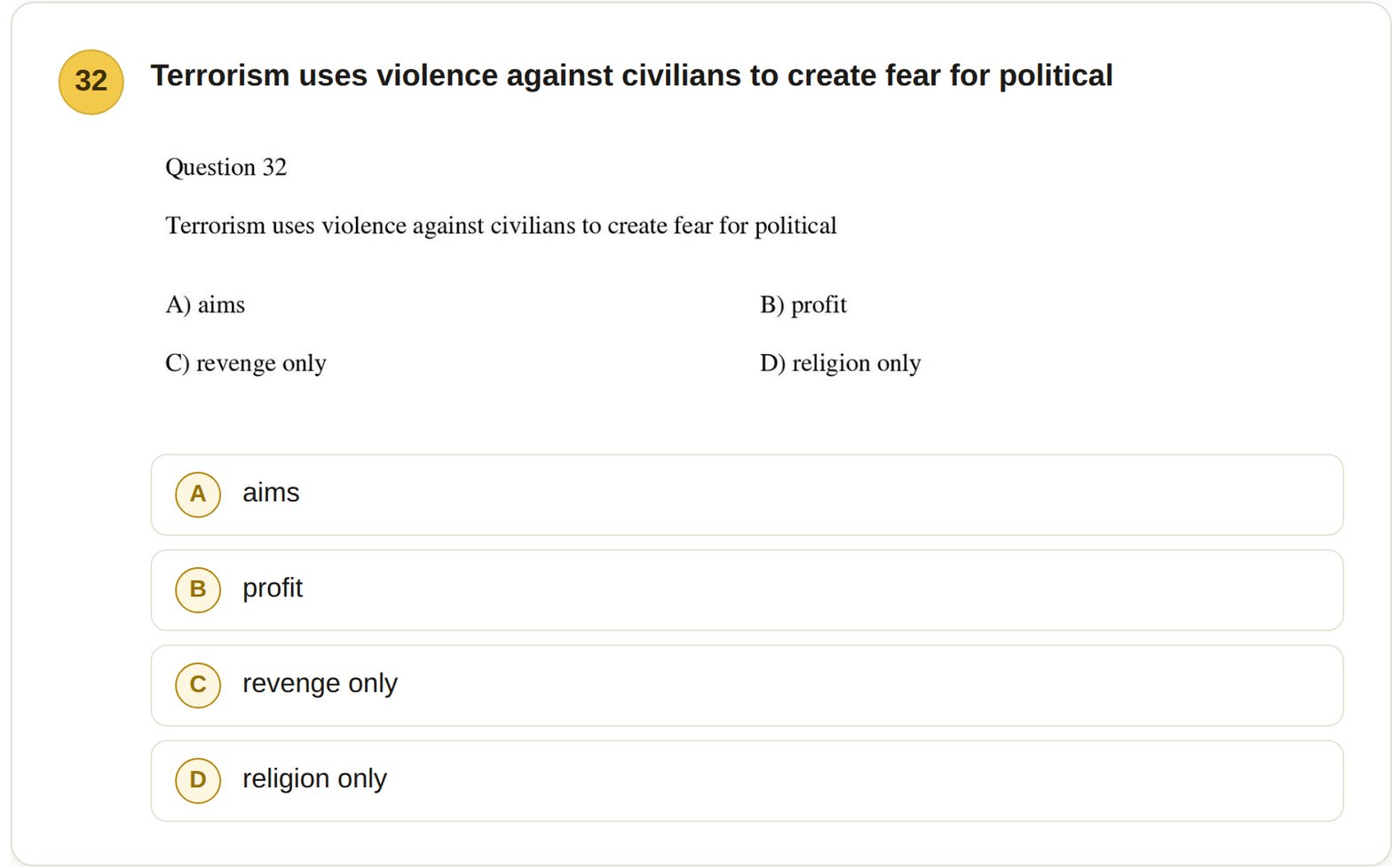
Terrorism uses violence against civilians to create fear for political
Vaccination programs have reduced diseases such as smallpox, polio and
Global information can unite people across borders through shared stories, campaigns and scientific
Debt in developing countries can limit spending on health and education when repayments consume government
Canada claims sovereignty over the Northwest Passage, which the United States and others regard as an international
Inequality within countries can be measured by comparing incomes of rich and poor
Moderation by platforms involves removing or labelling harmful or false
The Sustainable Development Goals, adopted in 2015, set 17 global goals for ending poverty, protecting the planet and ensuring peace and
Hard power is influence through military force or economic
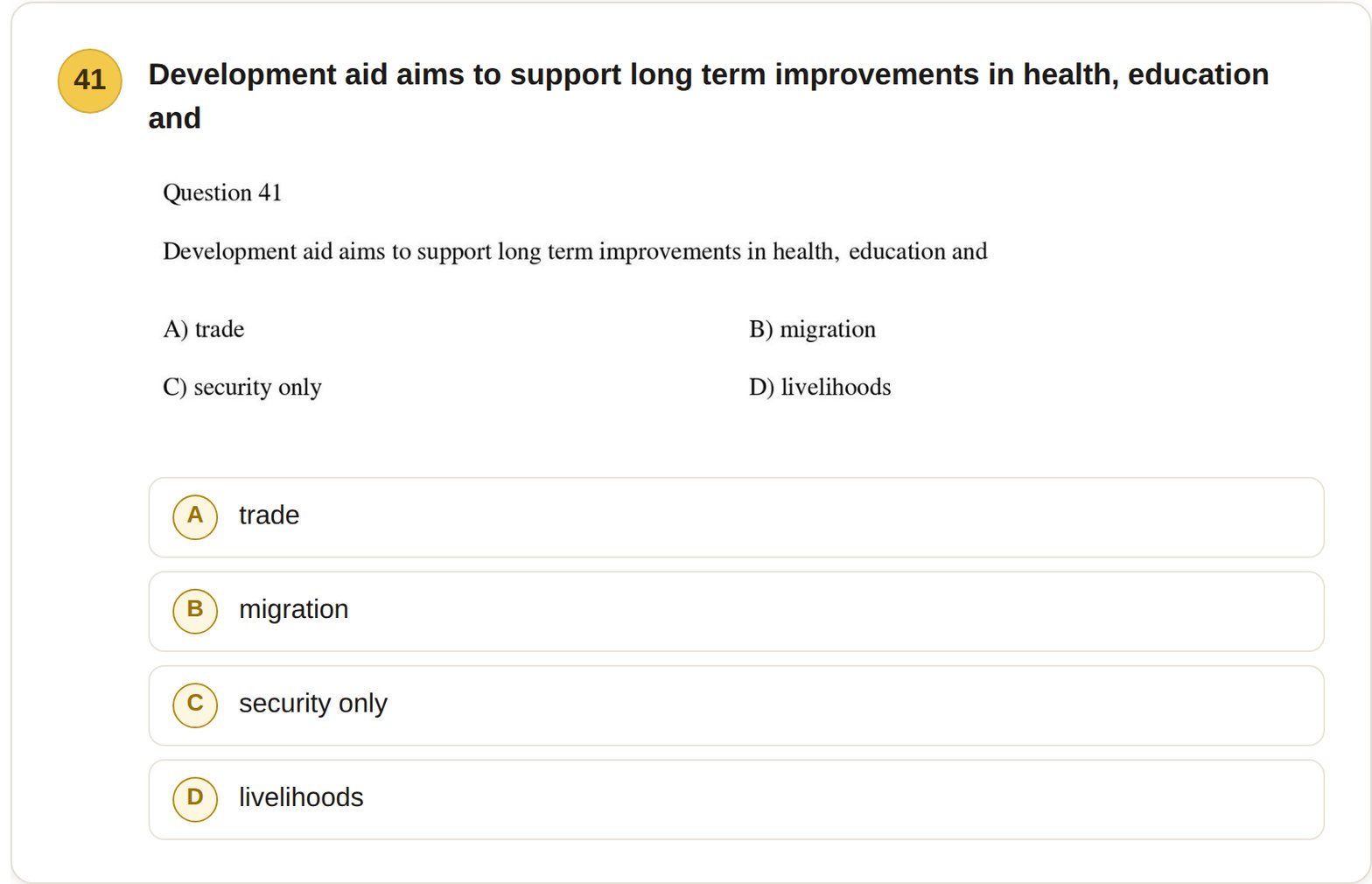
Development aid aims to support long term improvements in health, education and
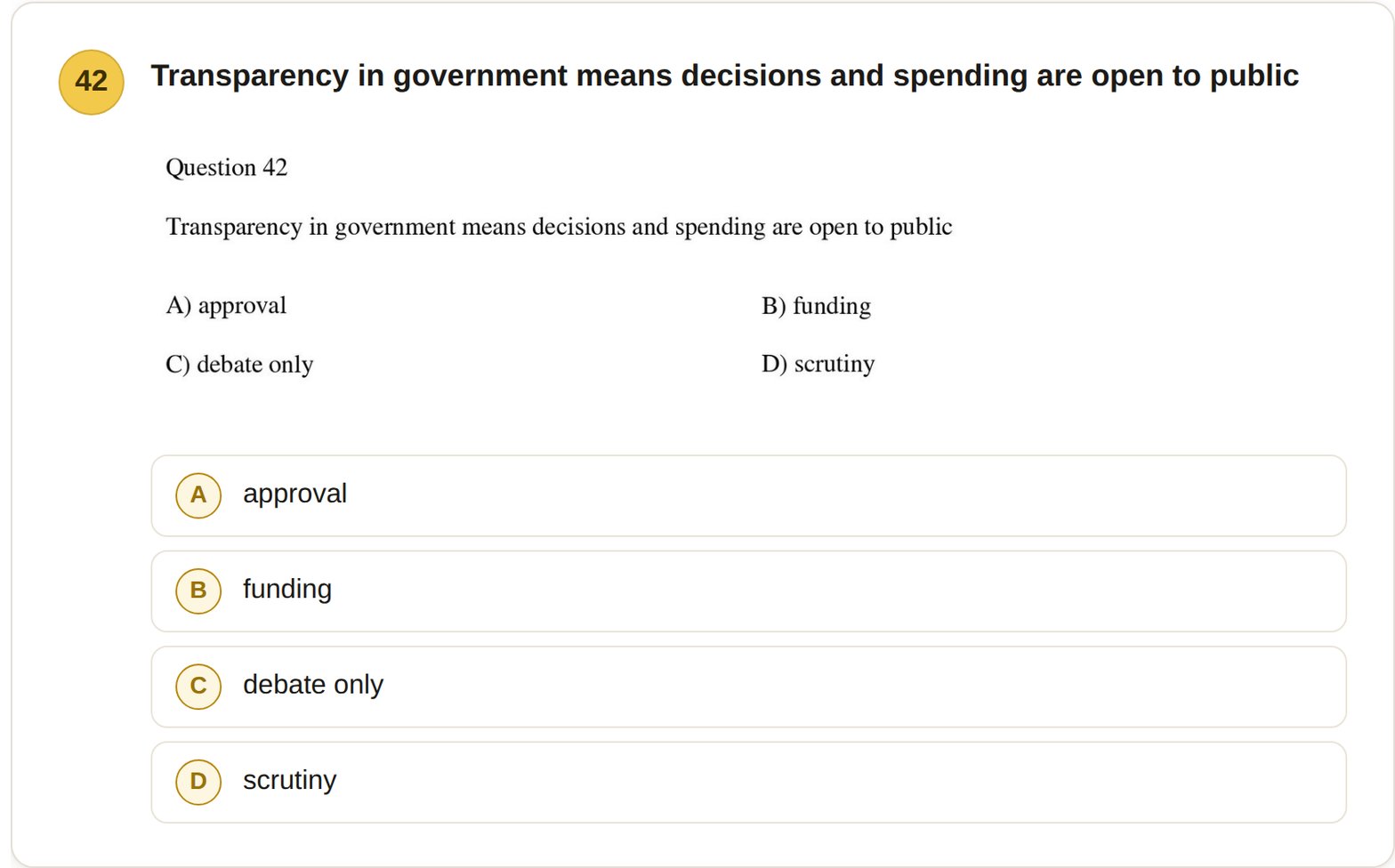
Transparency in government means decisions and spending are open to public
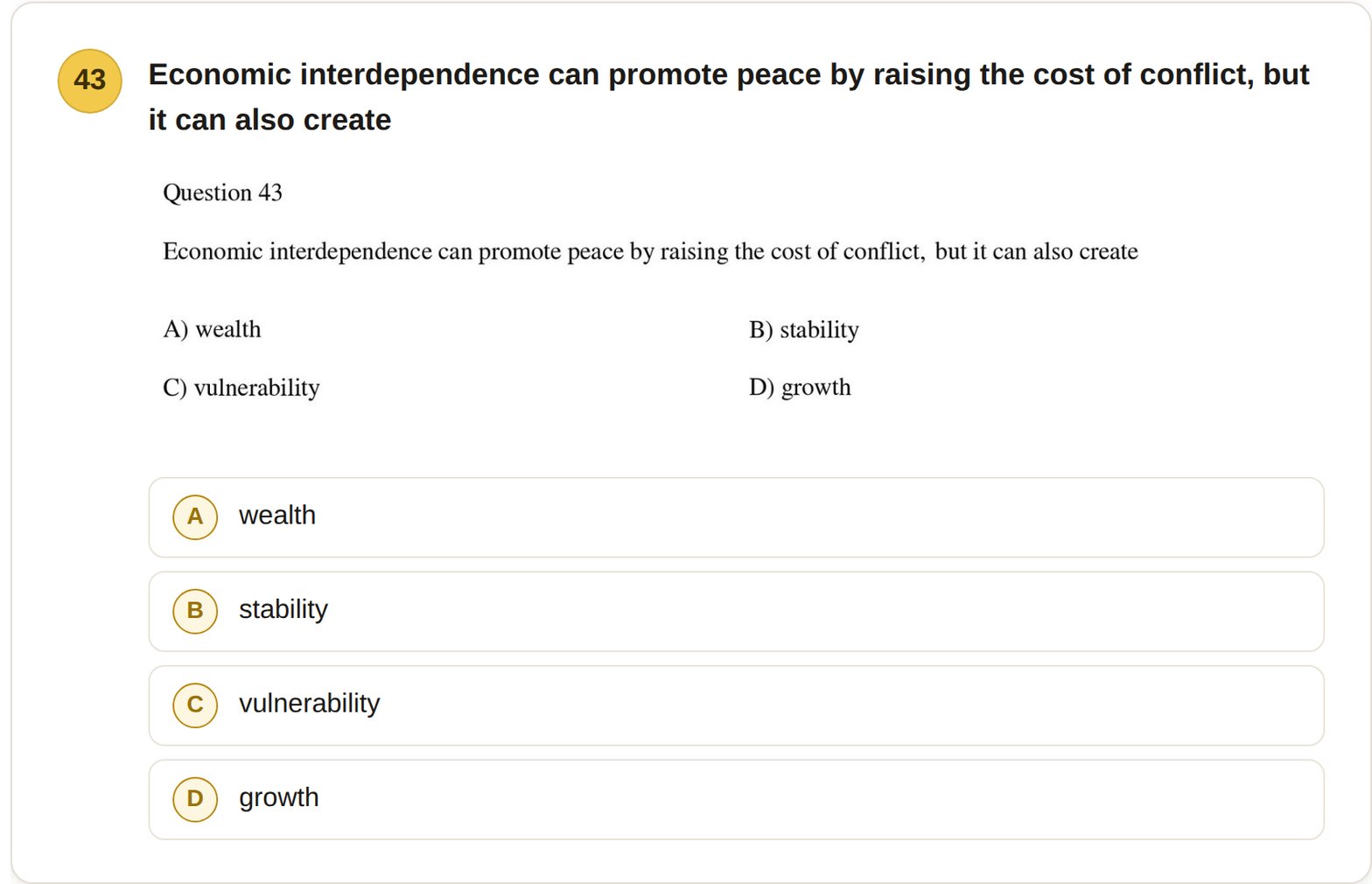
Economic interdependence can promote peace by raising the cost of conflict, but it can also create
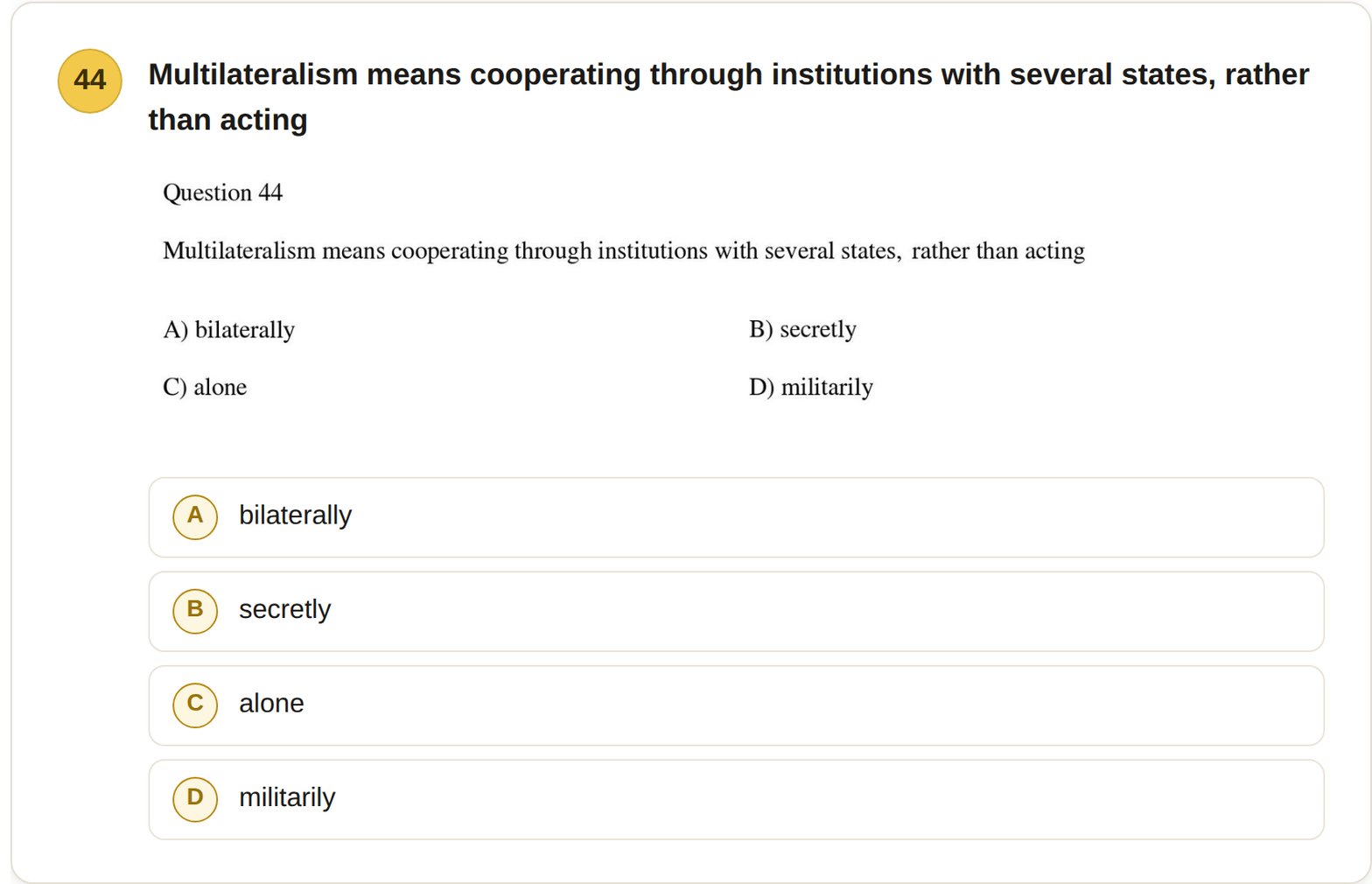
Multilateralism means cooperating through institutions with several states, rather than acting
Ethical questions in World Issues include who benefits, who bears costs and whose voices are
Media convergence means different media forms, such as text, audio and video, come together on digital
A trade surplus occurs when a country exports more than it
Peace in geopolitics is not only the absence of war, but also justice, security and conditions for human
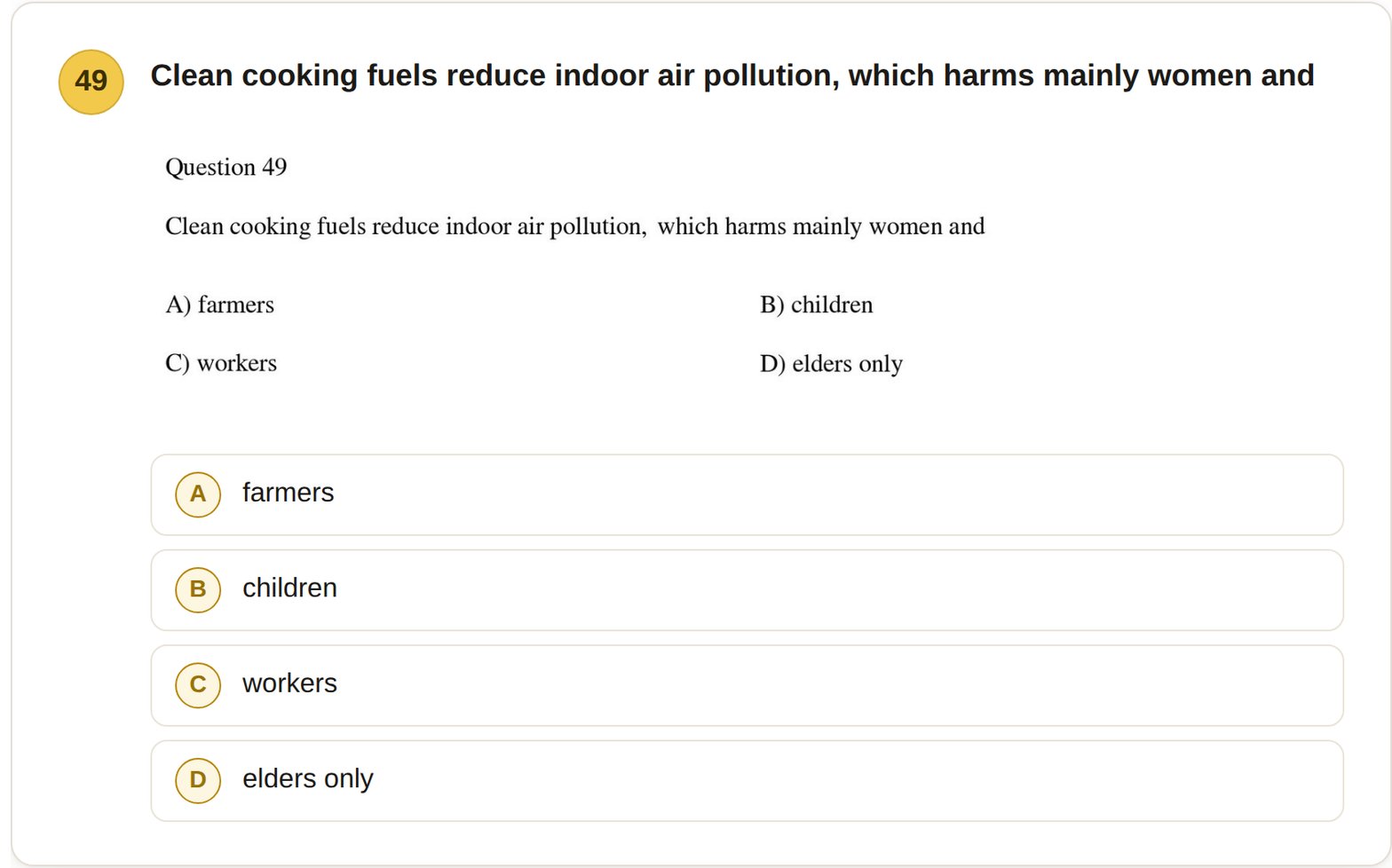
Clean cooking fuels reduce indoor air pollution, which harms mainly women and
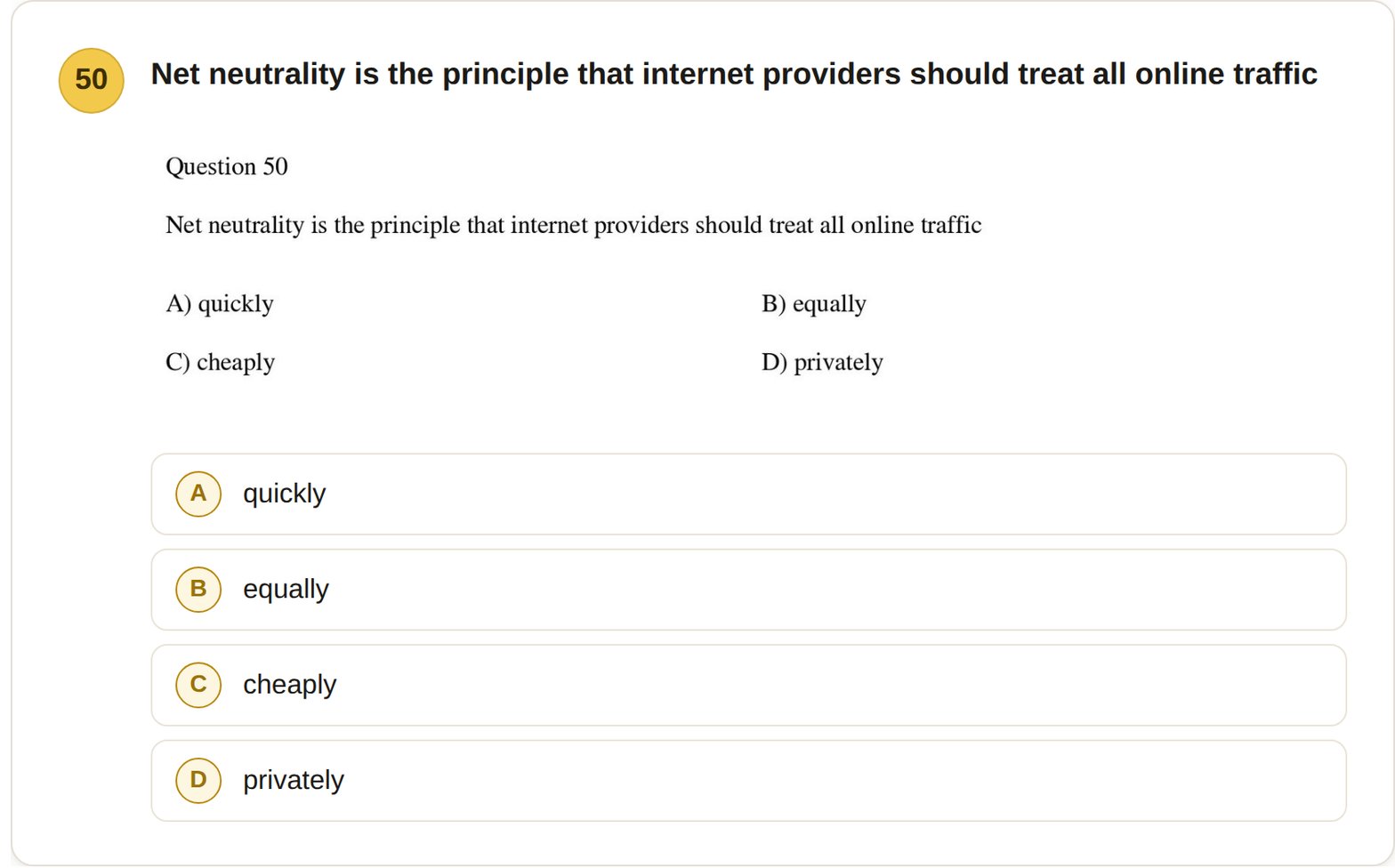
Net neutrality is the principle that internet providers should treat all online traffic
Your score: 0 / 50