1
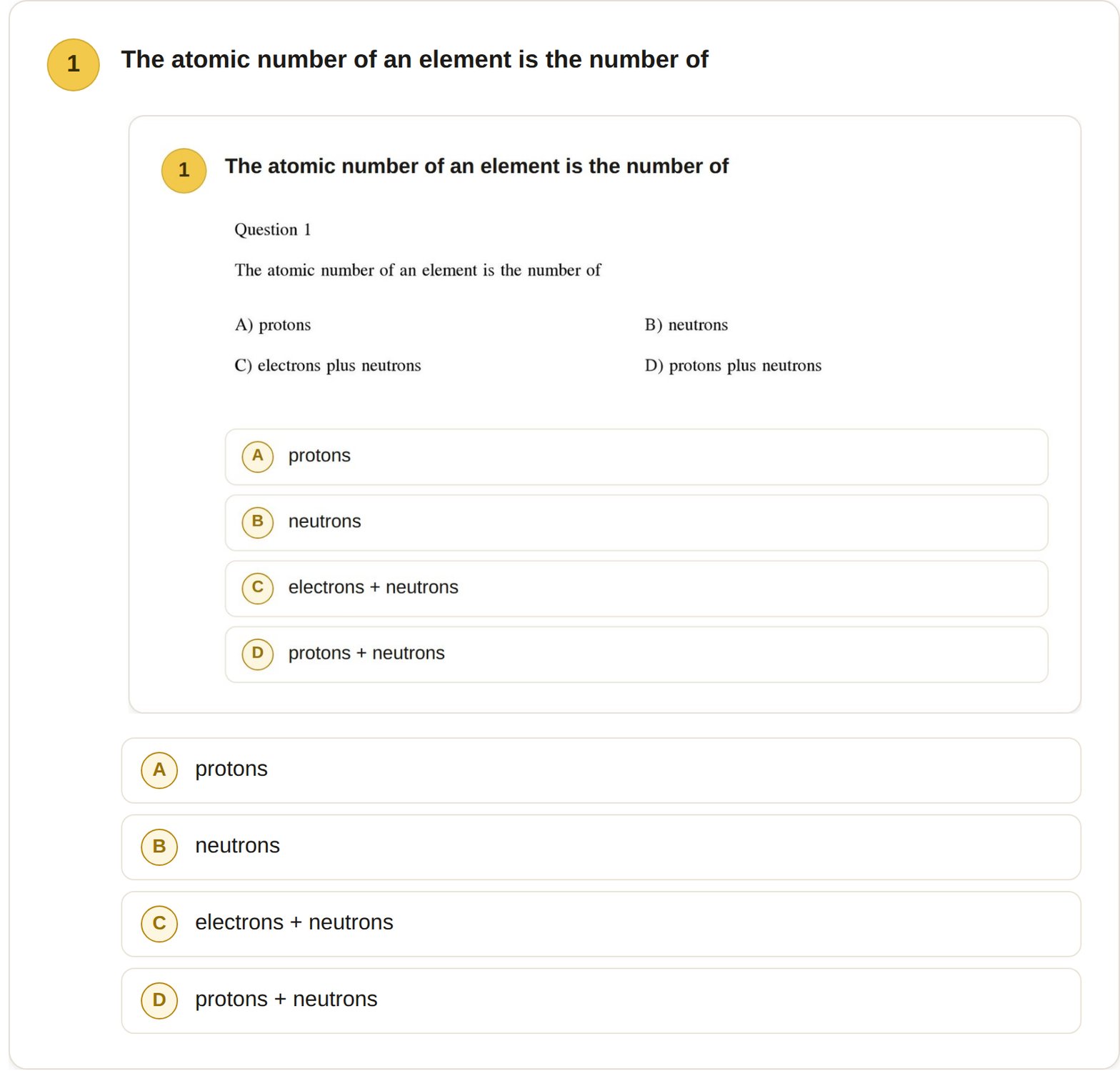
The atomic number of an element is the number of
North Carolina Chemistry · Unit 1 · 10 questions
This practice test was made by AI and there may be mistakes. If a question or answer looks wrong, use the Flag a mistake button to let Brett know so he can fix it.
The atomic number of an element is the number of
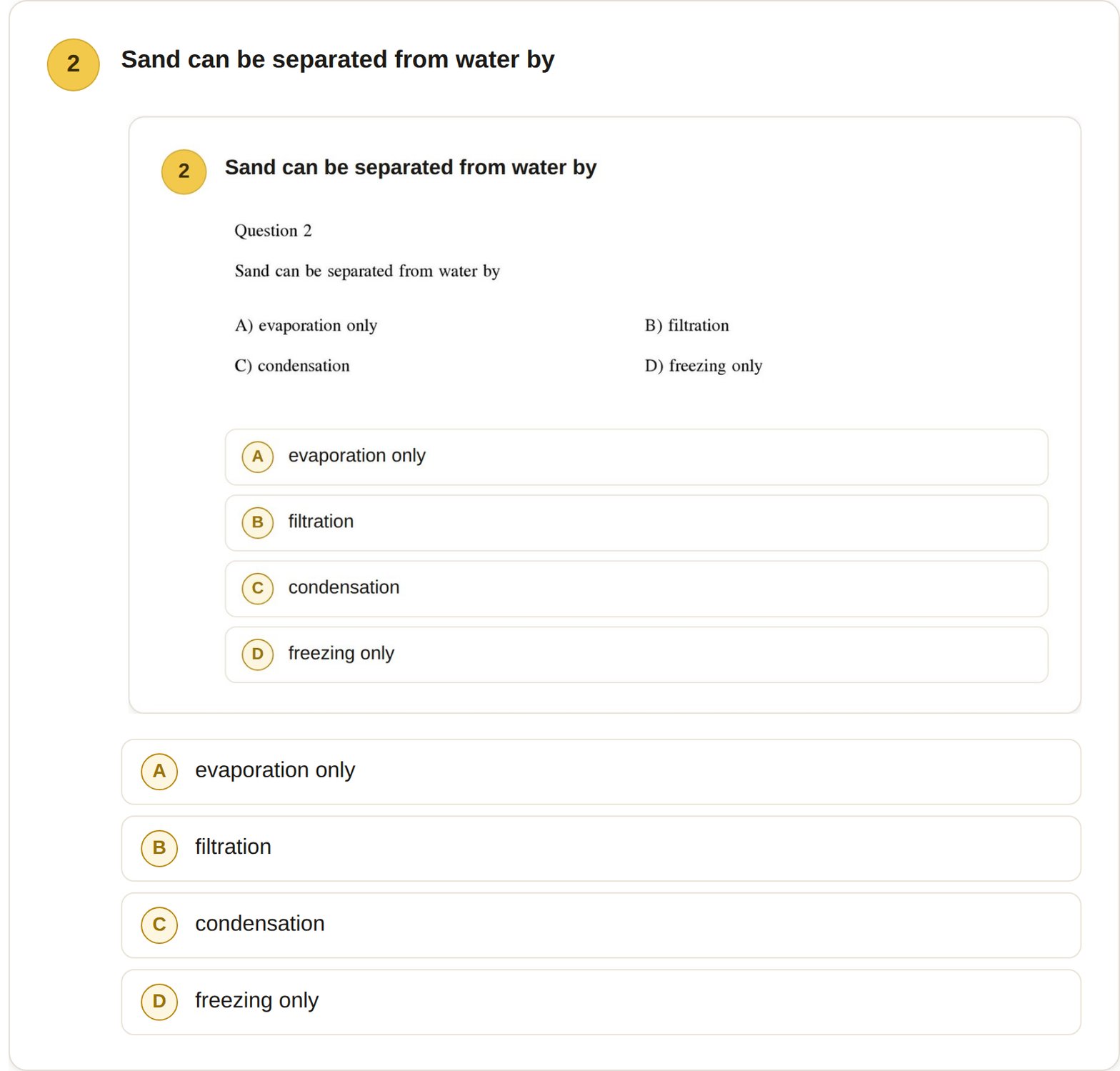
Sand can be separated from water by
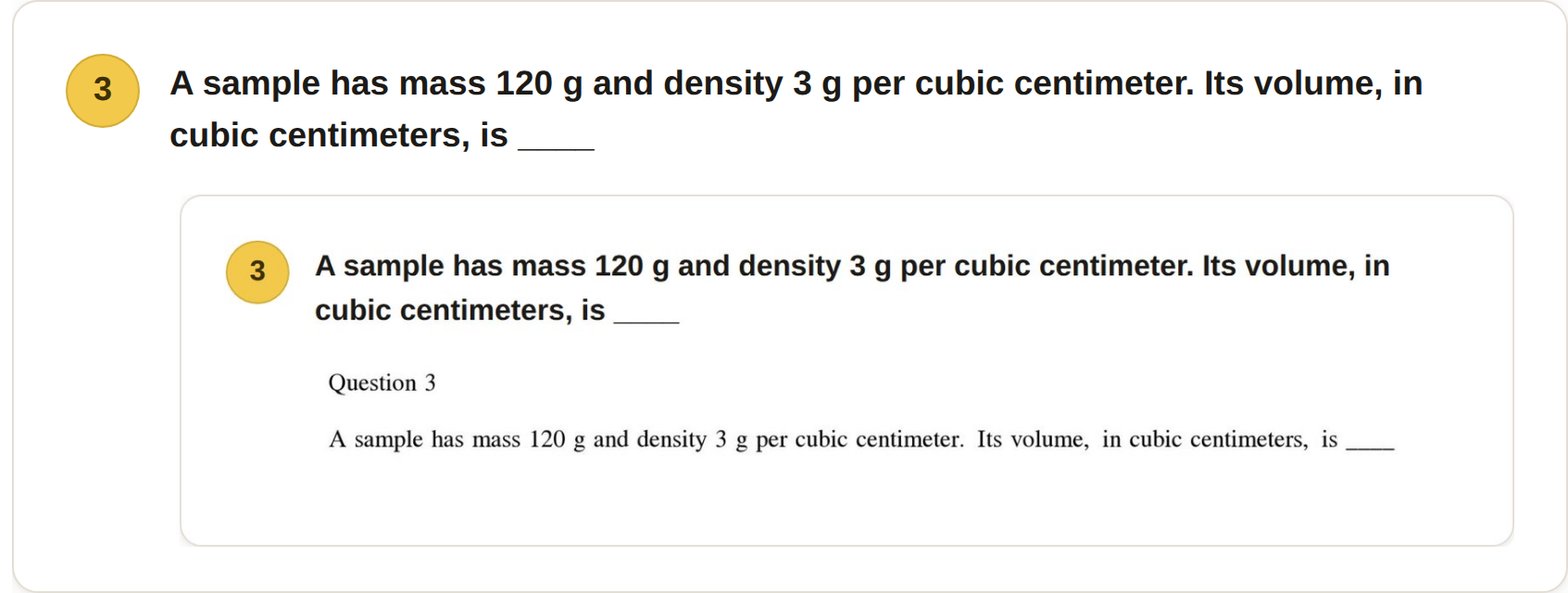
A sample has mass 120 g and density 3 g per cubic centimeter. Its volume, in cubic centimeters, is ____
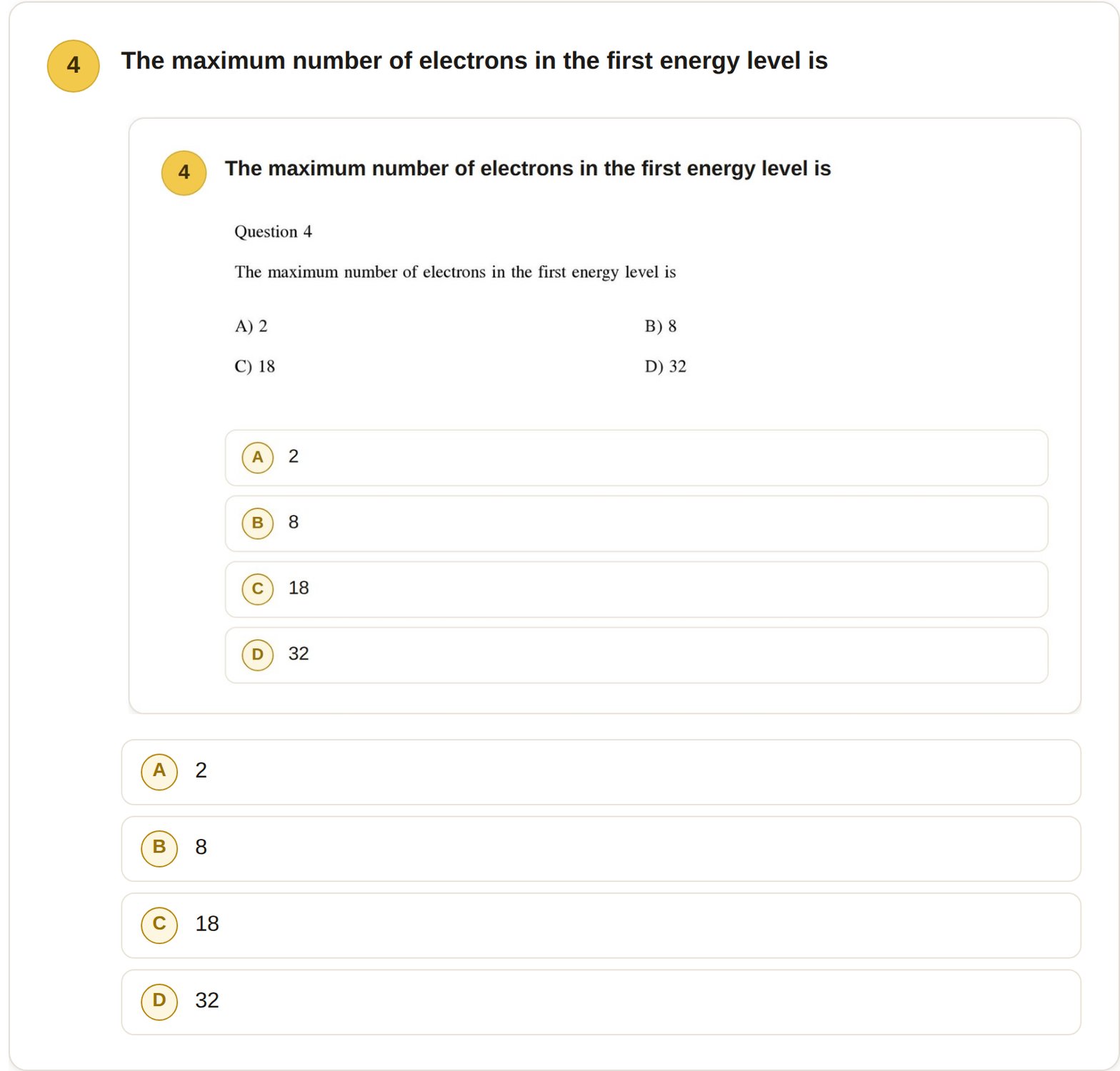
The maximum number of electrons in the first energy level is
Metals are typically
Using whole number atomic masses (C = 12, O = 16), the molar mass of carbon dioxide, in grams per mole, is ____
Carbon-12 and carbon-14 differ in their number of
Which of these is a homogeneous mixture
An atom has mass number 27 and 14 neutrons. The number of protons in the atom is ____
Elements in the periodic table are arranged in order of increasing
Your score: 0 / 10