1
According to Source I, what is the main idea of the passage?
British Literature - Practice Test | North Carolina English 12 · Unit 1 · 25 questions
This practice test was made by AI and there may be mistakes. If a question or answer looks wrong, use the Flag a mistake button so it can be fixed.
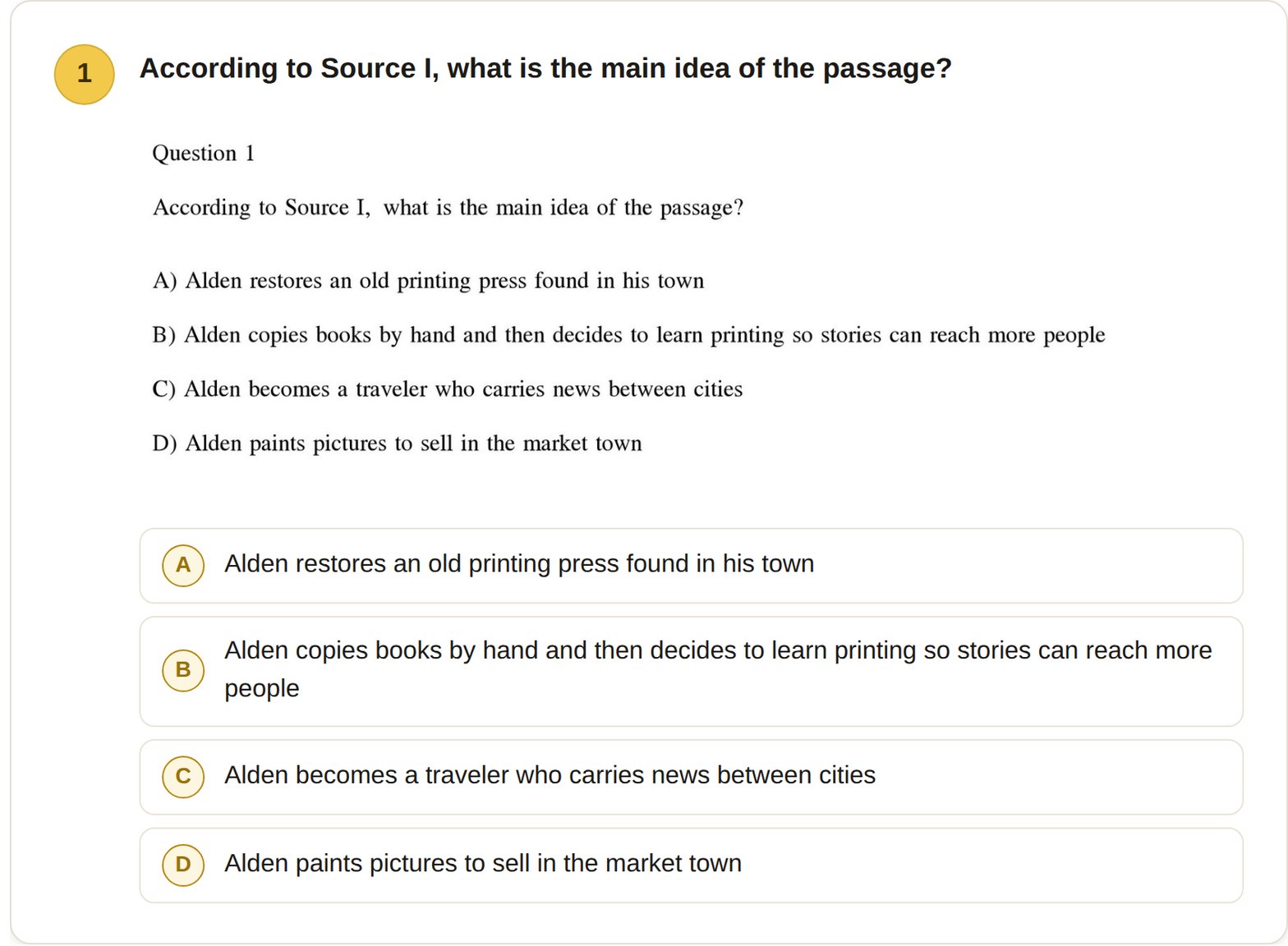
According to Source I, what is the main idea of the passage?
In a stone room above the market town, a young scribe named Alden copied books by hand. Each morning he sharpened his quills, mixed his ink, and settled at a slanted desk beside a narrow window. The work was slow. A single page could take a whole day, and one careless stroke could spoil hours of labor.
Alden did not mind the slowness. He loved the way a finished page looked, with its even lines and bright first letter painted in red and gold. He believed that books kept memory alive, carrying stories and laws from one generation to the next, long after the people who first told them were gone.
One winter, a traveler brought news of a printing press in a distant city, a machine that could make many copies of a book in days. Alden felt both wonder and fear. He wondered what would happen to scribes like him, yet he also imagined books reaching people who had never owned one. By spring, he had decided to learn the new craft, not to fight it, because he wanted stories to travel farther than his own hand could carry them.
According to Source I, which word best describes Alden?
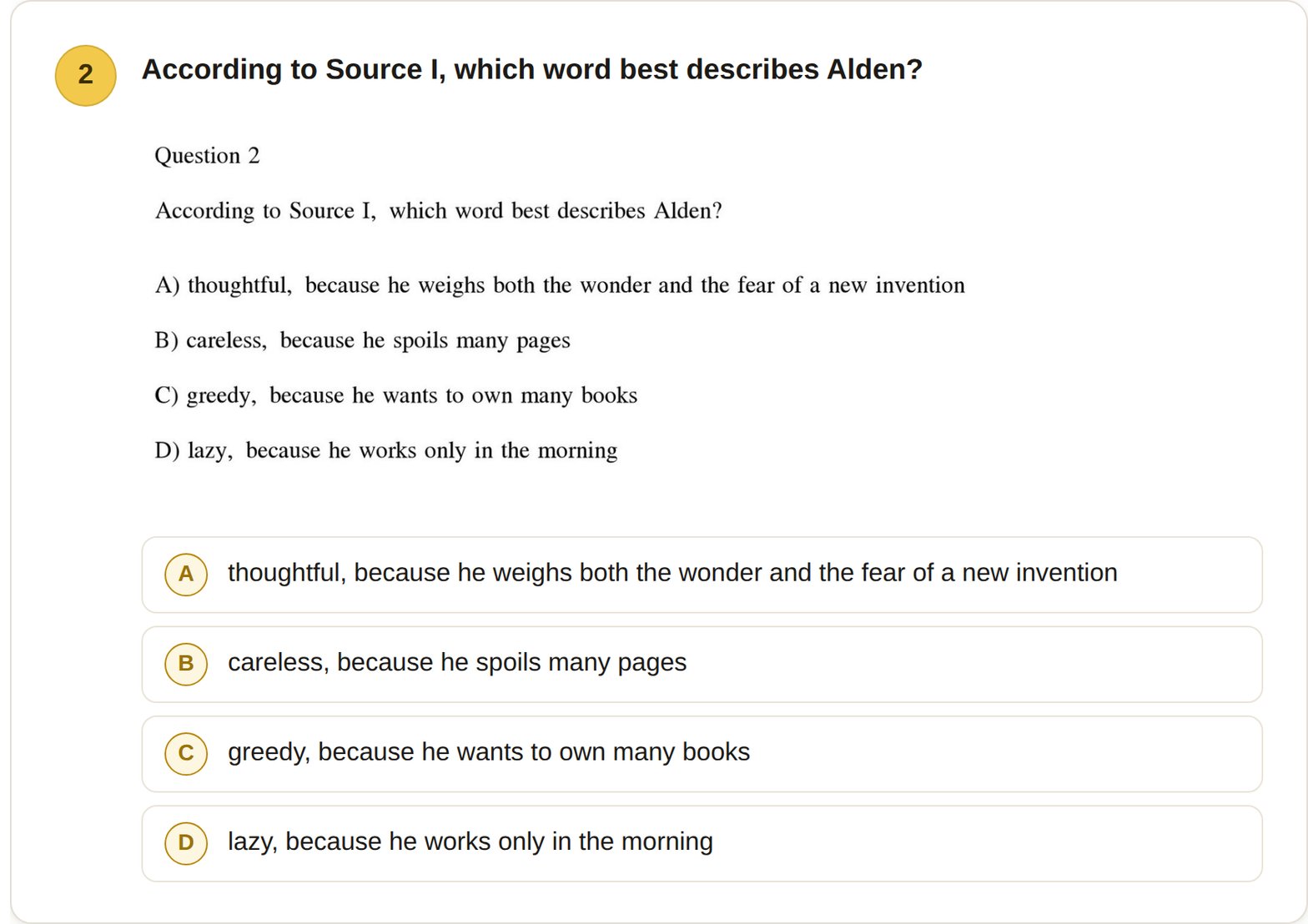
In a stone room above the market town, a young scribe named Alden copied books by hand. Each morning he sharpened his quills, mixed his ink, and settled at a slanted desk beside a narrow window. The work was slow. A single page could take a whole day, and one careless stroke could spoil hours of labor.
Alden did not mind the slowness. He loved the way a finished page looked, with its even lines and bright first letter painted in red and gold. He believed that books kept memory alive, carrying stories and laws from one generation to the next, long after the people who first told them were gone.
One winter, a traveler brought news of a printing press in a distant city, a machine that could make many copies of a book in days. Alden felt both wonder and fear. He wondered what would happen to scribes like him, yet he also imagined books reaching people who had never owned one. By spring, he had decided to learn the new craft, not to fight it, because he wanted stories to travel farther than his own hand could carry them.
According to Source I, why does Alden value his work as a scribe?
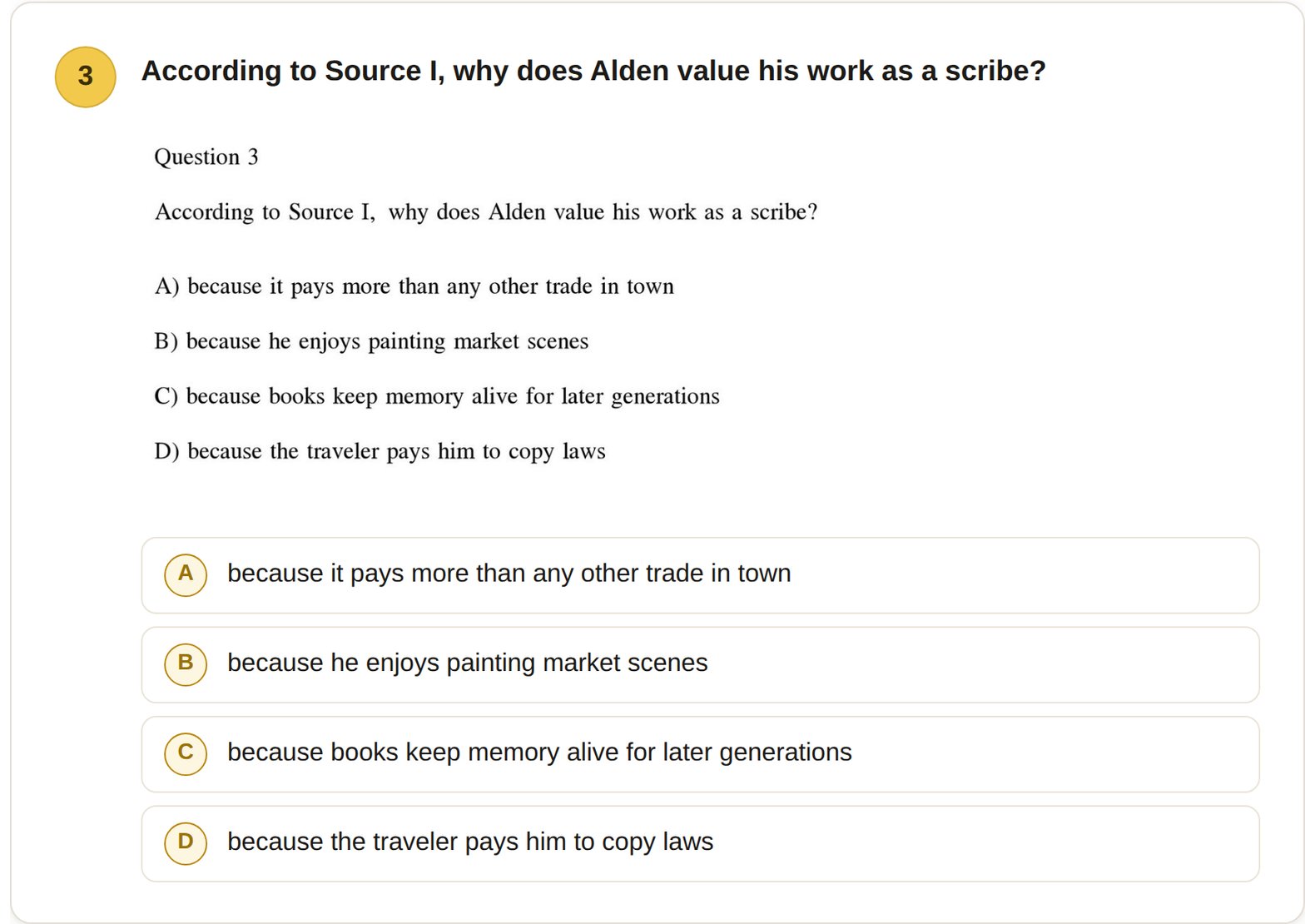
In a stone room above the market town, a young scribe named Alden copied books by hand. Each morning he sharpened his quills, mixed his ink, and settled at a slanted desk beside a narrow window. The work was slow. A single page could take a whole day, and one careless stroke could spoil hours of labor.
Alden did not mind the slowness. He loved the way a finished page looked, with its even lines and bright first letter painted in red and gold. He believed that books kept memory alive, carrying stories and laws from one generation to the next, long after the people who first told them were gone.
One winter, a traveler brought news of a printing press in a distant city, a machine that could make many copies of a book in days. Alden felt both wonder and fear. He wondered what would happen to scribes like him, yet he also imagined books reaching people who had never owned one. By spring, he had decided to learn the new craft, not to fight it, because he wanted stories to travel farther than his own hand could carry them.
According to Source I, what can the reader infer about Alden's decision in spring?
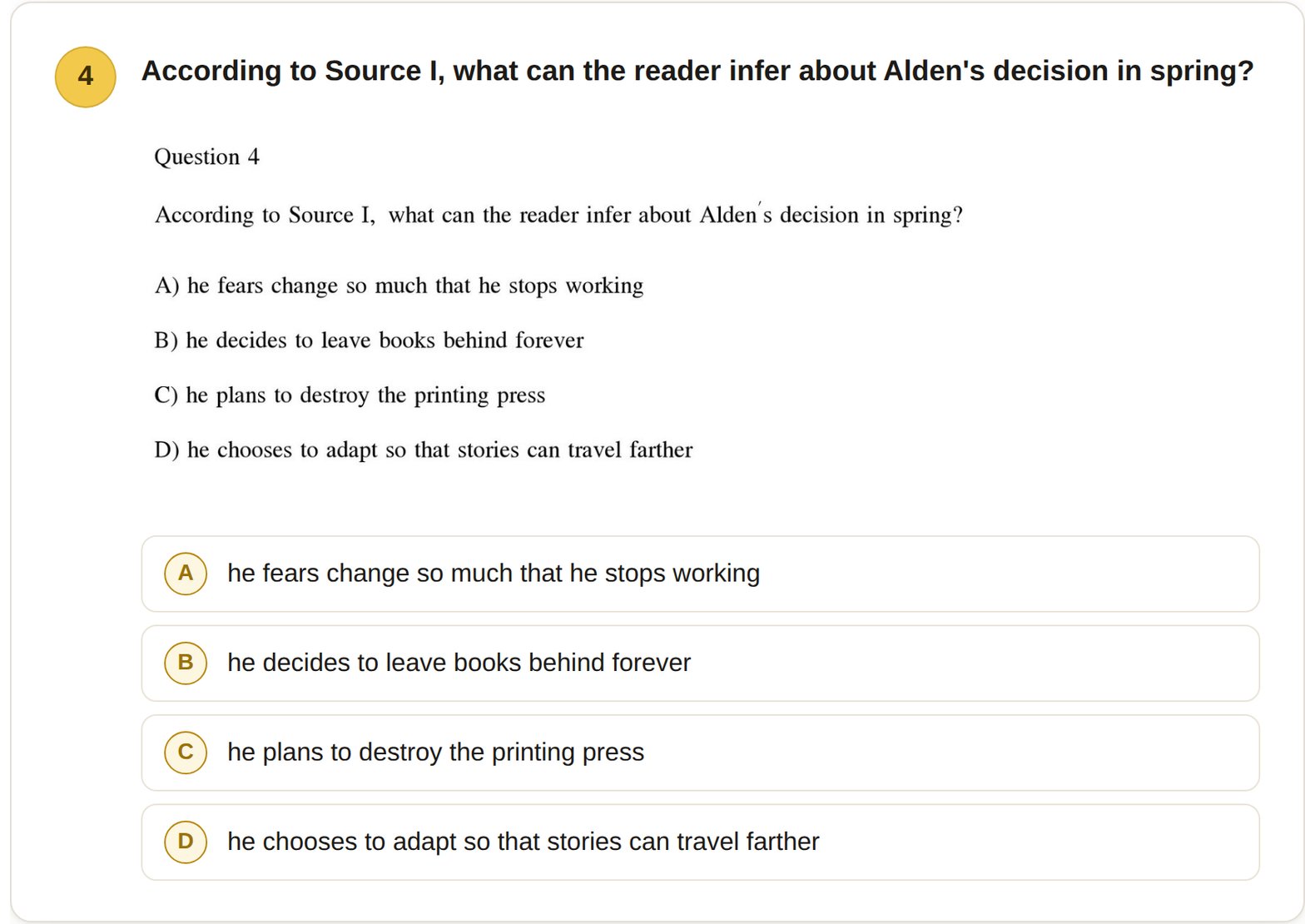
In a stone room above the market town, a young scribe named Alden copied books by hand. Each morning he sharpened his quills, mixed his ink, and settled at a slanted desk beside a narrow window. The work was slow. A single page could take a whole day, and one careless stroke could spoil hours of labor.
Alden did not mind the slowness. He loved the way a finished page looked, with its even lines and bright first letter painted in red and gold. He believed that books kept memory alive, carrying stories and laws from one generation to the next, long after the people who first told them were gone.
One winter, a traveler brought news of a printing press in a distant city, a machine that could make many copies of a book in days. Alden felt both wonder and fear. He wondered what would happen to scribes like him, yet he also imagined books reaching people who had never owned one. By spring, he had decided to learn the new craft, not to fight it, because he wanted stories to travel farther than his own hand could carry them.
According to Source I, the narrow window in the stone room most likely symbolizes
In a stone room above the market town, a young scribe named Alden copied books by hand. Each morning he sharpened his quills, mixed his ink, and settled at a slanted desk beside a narrow window. The work was slow. A single page could take a whole day, and one careless stroke could spoil hours of labor.
Alden did not mind the slowness. He loved the way a finished page looked, with its even lines and bright first letter painted in red and gold. He believed that books kept memory alive, carrying stories and laws from one generation to the next, long after the people who first told them were gone.
One winter, a traveler brought news of a printing press in a distant city, a machine that could make many copies of a book in days. Alden felt both wonder and fear. He wondered what would happen to scribes like him, yet he also imagined books reaching people who had never owned one. By spring, he had decided to learn the new craft, not to fight it, because he wanted stories to travel farther than his own hand could carry them.
According to Source II, the line about heather bending like listeners is an example of
The wind walks low across the moor at dusk,
and heather bends like listeners bowing their heads.
A path of pale stone climbs toward the hill,
where the last light gathers and quietly fades.
I have walked this way in joy and in grief,
and the moor has kept both, asking nothing in return.
According to Source II, which word best describes the mood of the poem?
The wind walks low across the moor at dusk,
and heather bends like listeners bowing their heads.
A path of pale stone climbs toward the hill,
where the last light gathers and quietly fades.
I have walked this way in joy and in grief,
and the moor has kept both, asking nothing in return.
According to Source II, what does the speaker suggest about the moor?
The wind walks low across the moor at dusk,
and heather bends like listeners bowing their heads.
A path of pale stone climbs toward the hill,
where the last light gathers and quietly fades.
I have walked this way in joy and in grief,
and the moor has kept both, asking nothing in return.
According to Source II, how many lines does the poem have?
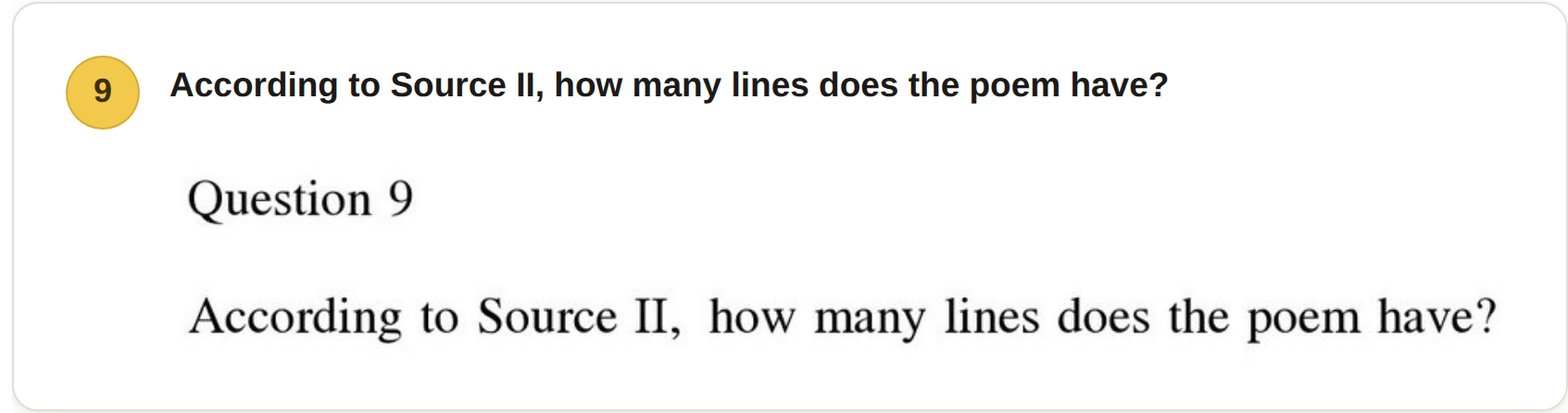
The wind walks low across the moor at dusk,
and heather bends like listeners bowing their heads.
A path of pale stone climbs toward the hill,
where the last light gathers and quietly fades.
I have walked this way in joy and in grief,
and the moor has kept both, asking nothing in return.
According to Source III, what is the main idea of the passage?
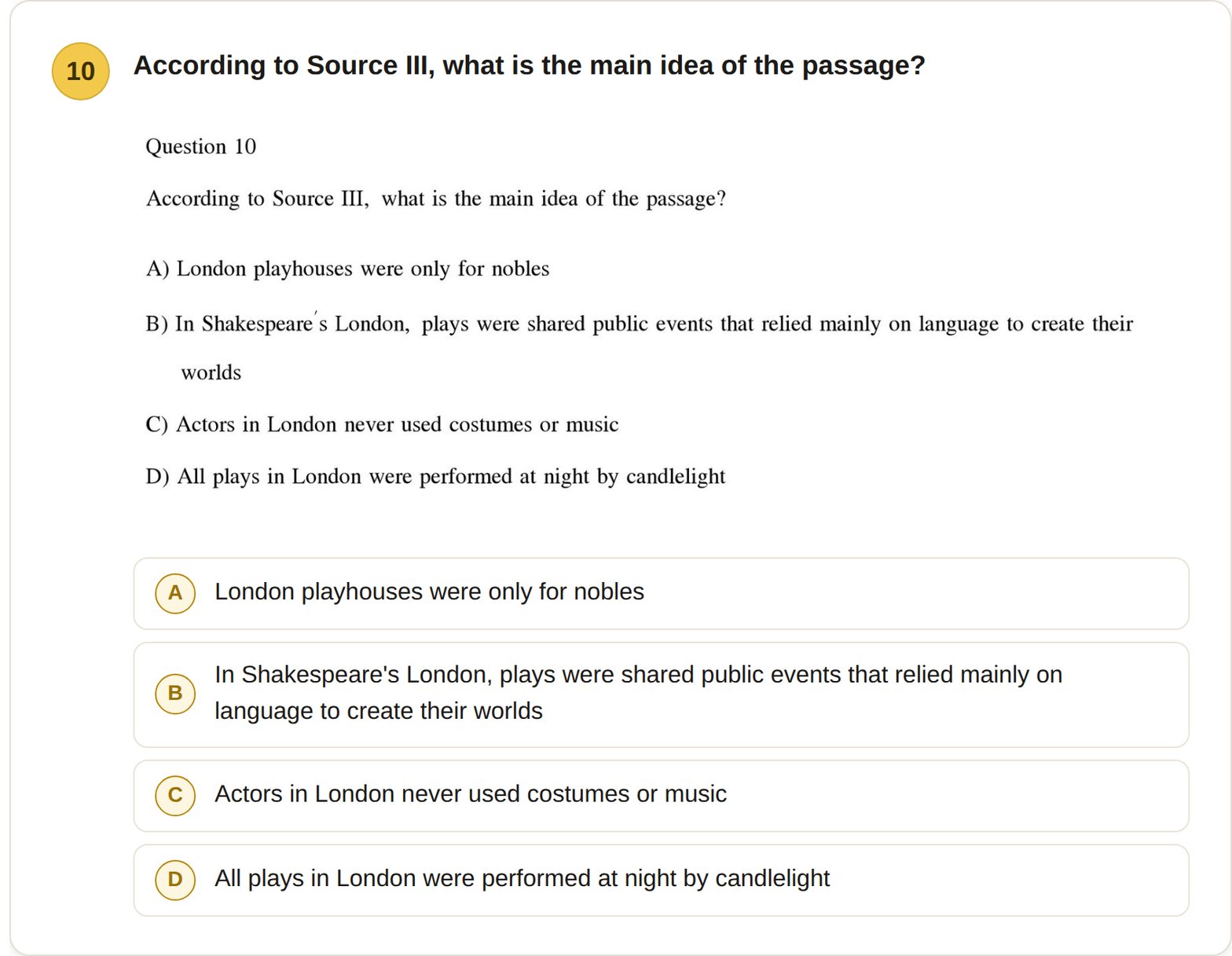
In Shakespeare's London, a play was a shared public event. People from many walks of life crowded into an open air playhouse: merchants, apprentices, soldiers, and nobles. The cheapest places were in the yard, where groundlings stood through the whole play, close to the stage.
Because there were few sets and no electric lights, language had to do much of the work. Actors used words to tell the audience whether a scene took place at night, on a battlefield, or in a forest. Costumes, music, and gesture helped, but the spoken lines carried the story.
Plays were performed in the afternoon, in daylight, so actors could see the crowd and the crowd could see them. A successful play depended on holding that crowd's attention, which is one reason Shakespeare's plays mix comedy and tragedy, highborn characters and common ones, and fast action with quiet speeches.
According to Source III, who were the groundlings?
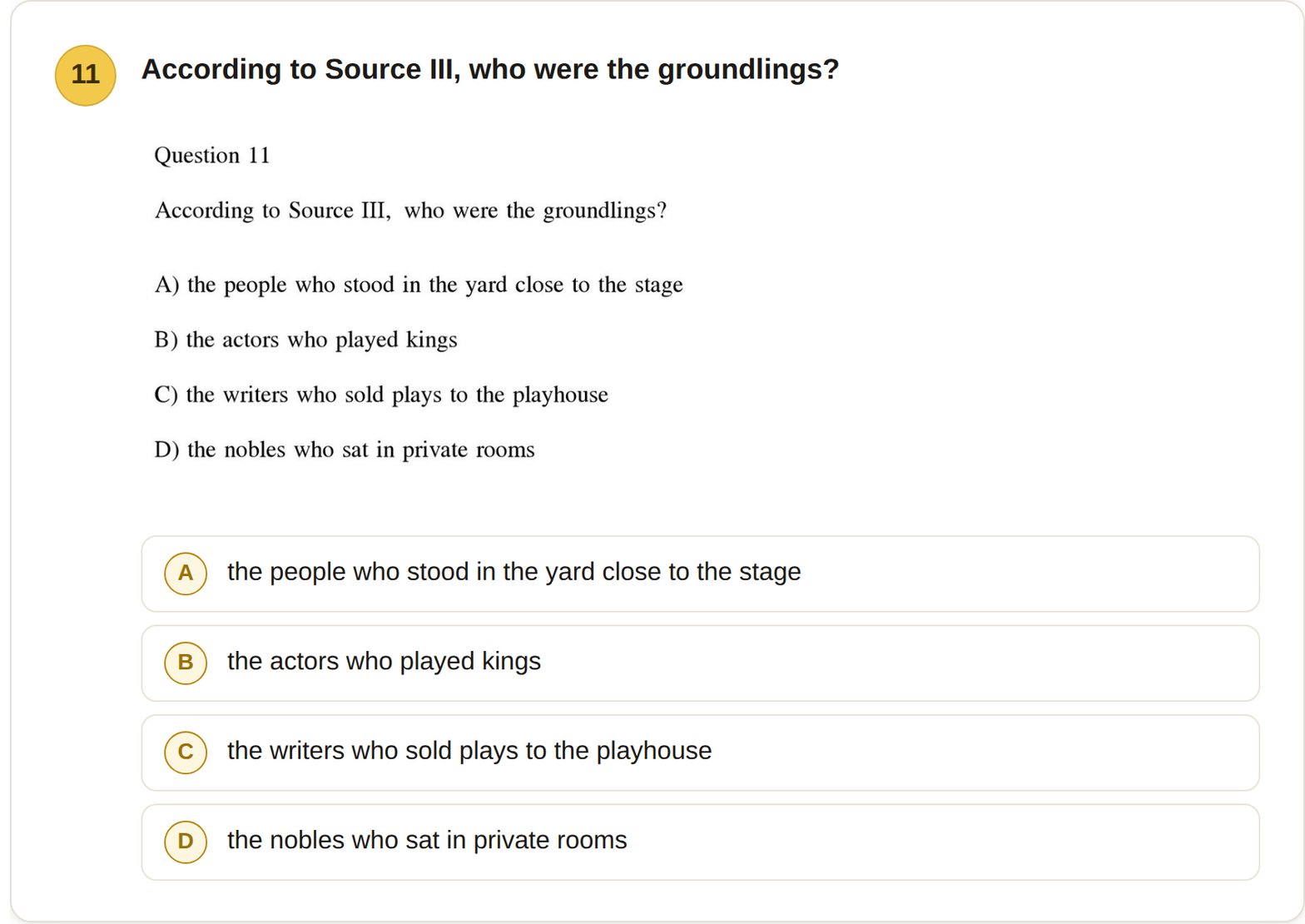
In Shakespeare's London, a play was a shared public event. People from many walks of life crowded into an open air playhouse: merchants, apprentices, soldiers, and nobles. The cheapest places were in the yard, where groundlings stood through the whole play, close to the stage.
Because there were few sets and no electric lights, language had to do much of the work. Actors used words to tell the audience whether a scene took place at night, on a battlefield, or in a forest. Costumes, music, and gesture helped, but the spoken lines carried the story.
Plays were performed in the afternoon, in daylight, so actors could see the crowd and the crowd could see them. A successful play depended on holding that crowd's attention, which is one reason Shakespeare's plays mix comedy and tragedy, highborn characters and common ones, and fast action with quiet speeches.
According to Source III, why did language have to do much of the work in these plays?
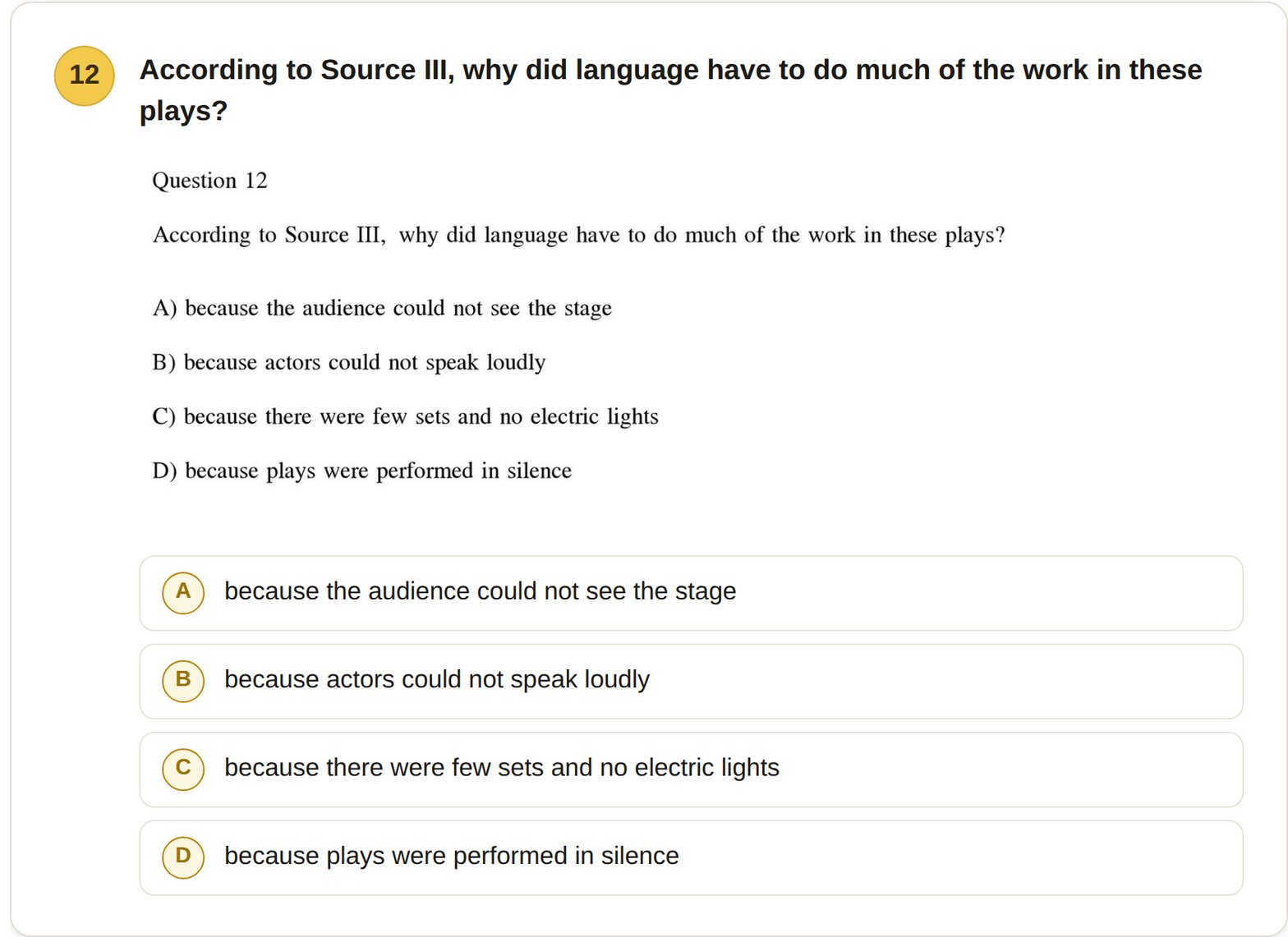
In Shakespeare's London, a play was a shared public event. People from many walks of life crowded into an open air playhouse: merchants, apprentices, soldiers, and nobles. The cheapest places were in the yard, where groundlings stood through the whole play, close to the stage.
Because there were few sets and no electric lights, language had to do much of the work. Actors used words to tell the audience whether a scene took place at night, on a battlefield, or in a forest. Costumes, music, and gesture helped, but the spoken lines carried the story.
Plays were performed in the afternoon, in daylight, so actors could see the crowd and the crowd could see them. A successful play depended on holding that crowd's attention, which is one reason Shakespeare's plays mix comedy and tragedy, highborn characters and common ones, and fast action with quiet speeches.
According to Source III, why did Shakespeare's plays mix comedy and tragedy?
In Shakespeare's London, a play was a shared public event. People from many walks of life crowded into an open air playhouse: merchants, apprentices, soldiers, and nobles. The cheapest places were in the yard, where groundlings stood through the whole play, close to the stage.
Because there were few sets and no electric lights, language had to do much of the work. Actors used words to tell the audience whether a scene took place at night, on a battlefield, or in a forest. Costumes, music, and gesture helped, but the spoken lines carried the story.
Plays were performed in the afternoon, in daylight, so actors could see the crowd and the crowd could see them. A successful play depended on holding that crowd's attention, which is one reason Shakespeare's plays mix comedy and tragedy, highborn characters and common ones, and fast action with quiet speeches.
Beowulf is best described as
In Chaucer's Canterbury Tales, the frame story is that
A kenning in Old English poetry is
A Shakespearean sonnet has how many lines?
Blank verse, used by Milton in Paradise Lost, is
Which statement best describes dramatic irony?
Jane Austen's novels are best known for
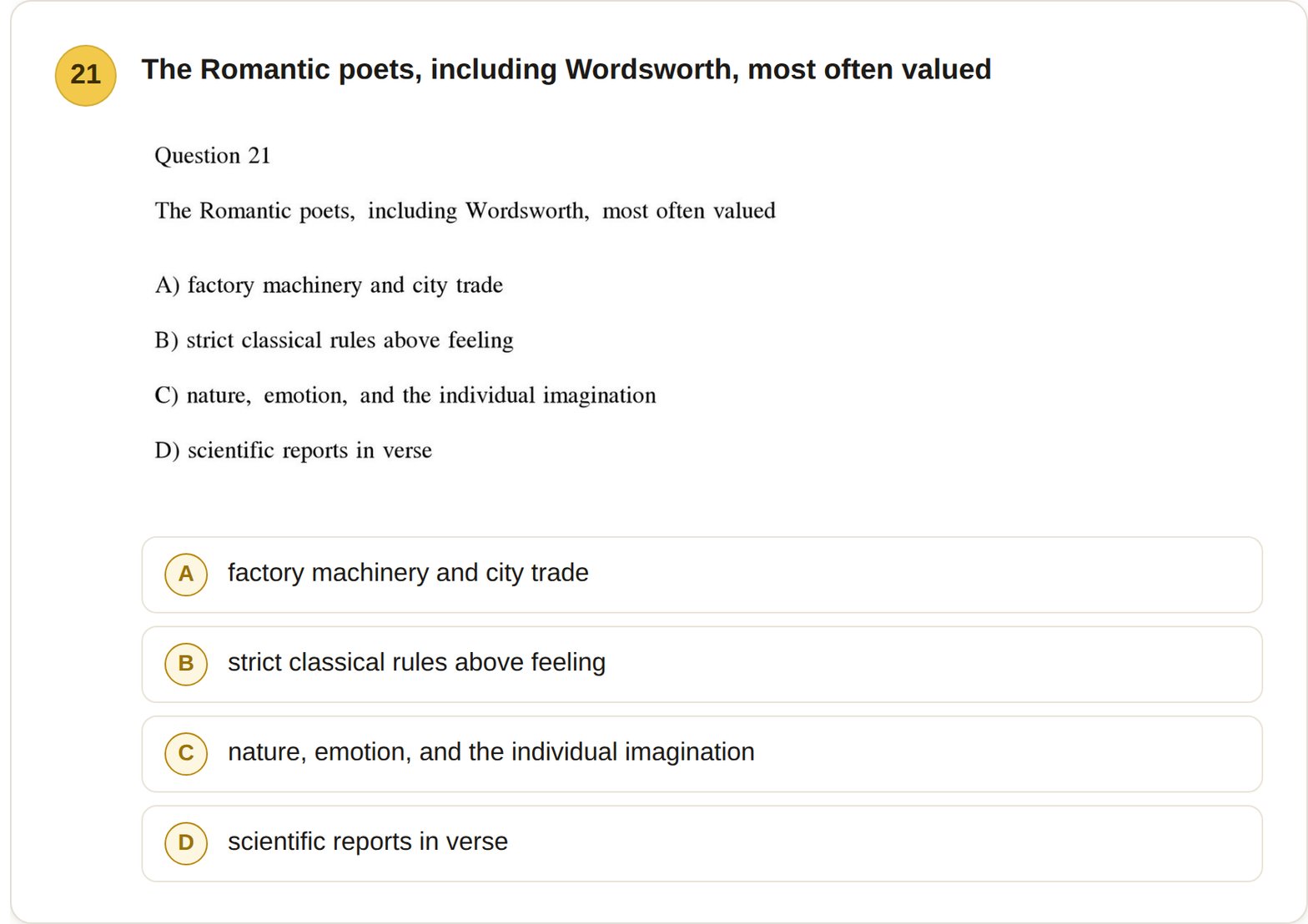
The Romantic poets, including Wordsworth, most often valued
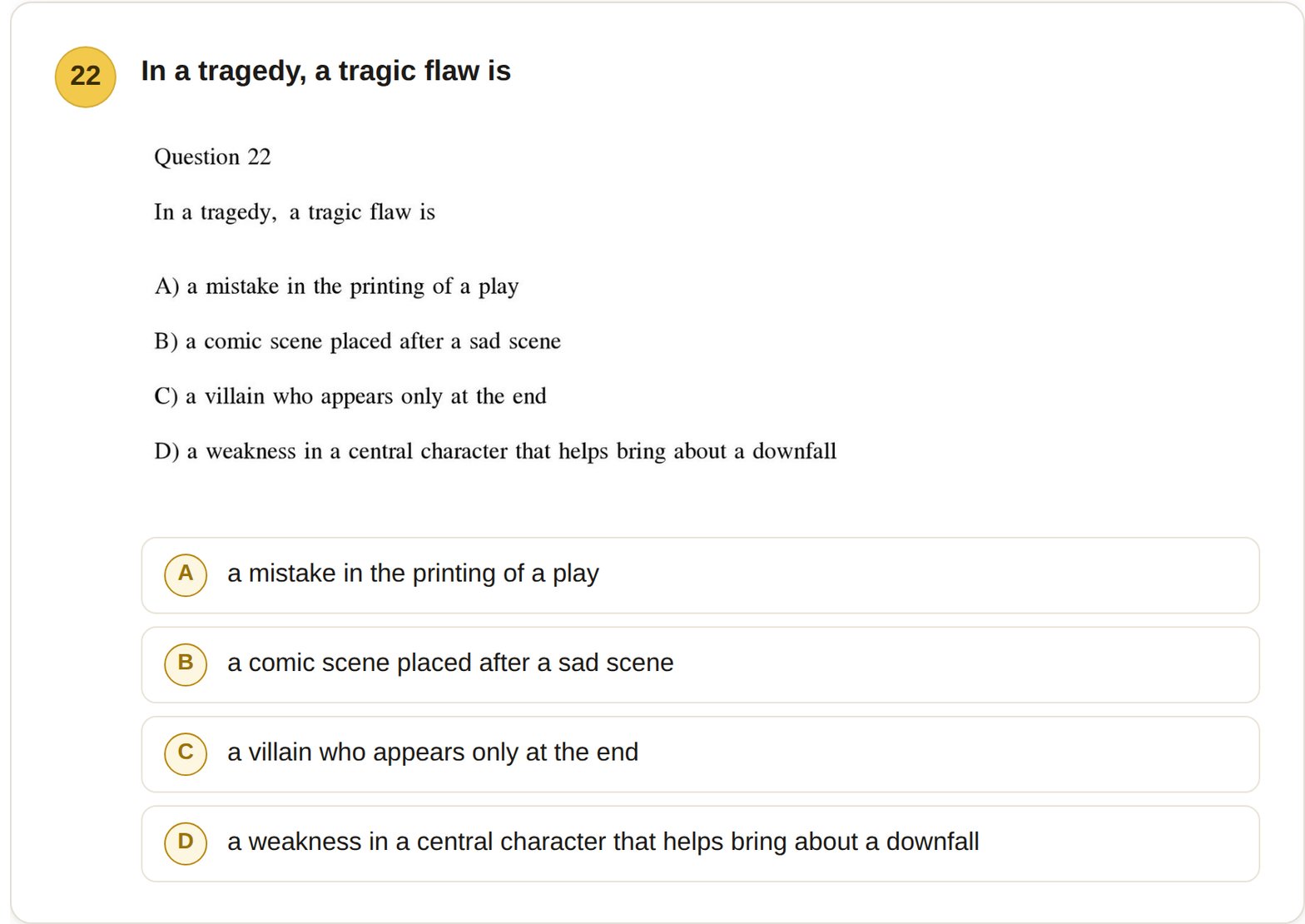
In a tragedy, a tragic flaw is
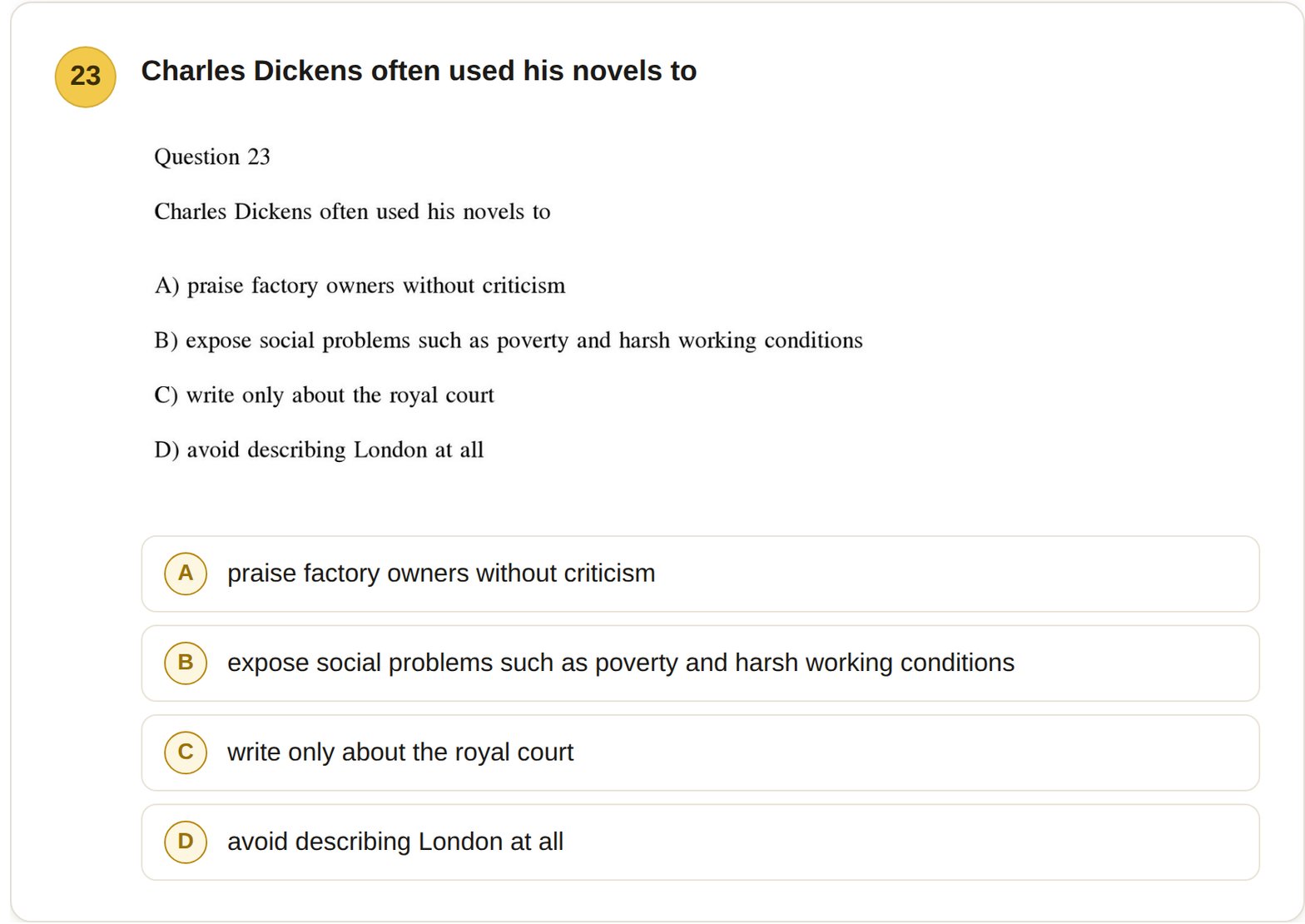
Charles Dickens often used his novels to
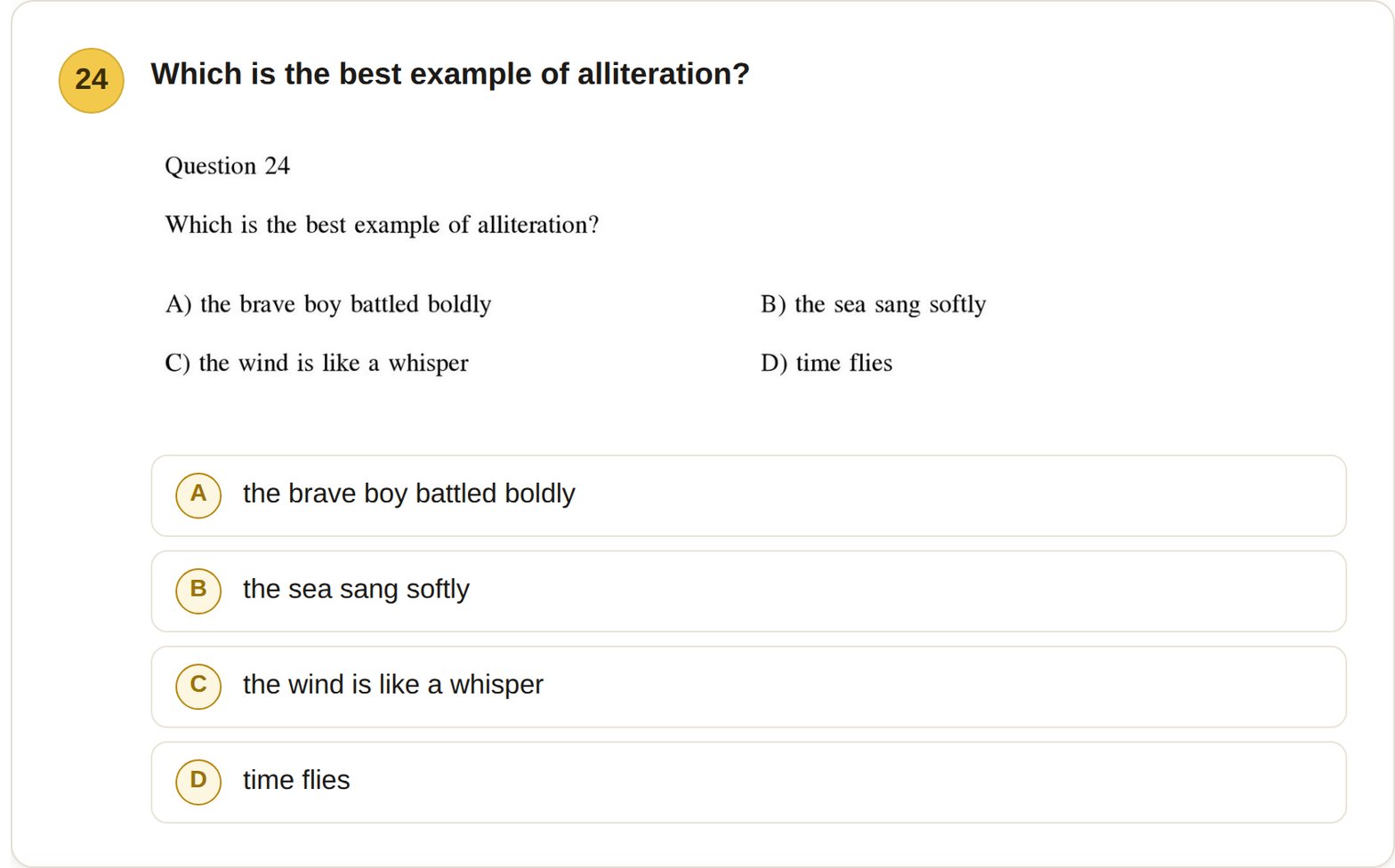
Which is the best example of alliteration?
The main purpose of a soliloquy is to
Your score: 0 / 25